1~14 item / All 14 items
Displayed results

Added to bookmarks
Bookmarks listBookmark has been removed
Bookmarks listYou can't add any more bookmarks
By registering as a member, you can increase the number of bookmarks you can save and organize them with labels.
Free membership registration
Contact this company
Contact Us Online1~14 item / All 14 items

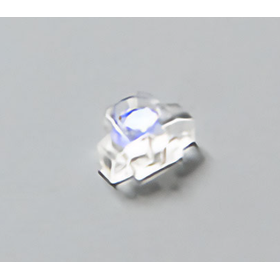
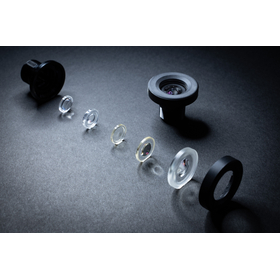
"While we want to ensure the performance of the sensors, cost and weight are challenges... We need complex shapes that are difficult to achieve with glass lenses... Since we are in the development stage, we would like to prototype in small lots first." Do you have such concerns? We specialize in the injection molding of plastic lenses and respond to our customers' diverse needs. Our strength lies in our integrated production system, which allows us to complete everything in-house, from optical design to mold making, molding, coating, and evaluation. This enables us to shorten development lead times and reduce costs. Our precise molding technology can also achieve high precision for complex shapes such as aspheric and freeform lenses.
Added to bookmarks
Bookmarks listBookmark has been removed
Bookmarks listYou can't add any more bookmarks
By registering as a member, you can increase the number of bookmarks you can save and organize them with labels.
Free membership registration
Lens Unit Contract Development and Manufacturing Services Feature 1: Lens unit design considering optical performance and assembly precision We handle everything from optical design to manufacturing and assembly of lens units in-house. This system enables us to improve productivity and stabilize quality, allowing us to provide high-precision lens units with minimized assembly errors. Feature 2: Total design proposals (optical design and mechanical design) To meet customer specifications, we offer a wide range of proposals not only for optical design but also for mechanical design, including the lens barrel. Previous design examples can be viewed on the detailed page. Feature 3: Flexible response for development only or small lot manufacturing We can flexibly accommodate diverse needs such as "I only want to outsource development," "I want to manufacture in small lots," or "I only need parts manufacturing." If you have any issues related to lens unit projects, please feel free to consult us.
Added to bookmarks
Bookmarks listBookmark has been removed
Bookmarks listYou can't add any more bookmarks
By registering as a member, you can increase the number of bookmarks you can save and organize them with labels.
Free membership registration
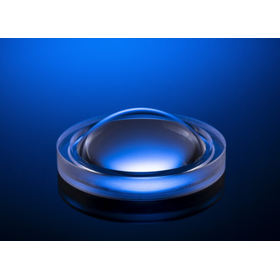
Fresnel lenses are used in a wide range of fields, but due to their fine and complex shapes, ultra-precision machining technology is required to manufacture them. Characteristics of Fresnel Lenses Conventional lenses are formed into spherical, aspherical, or free-form surfaces to change the direction of light and focus or diffuse it. However, Fresnel lenses achieve a thin and lightweight design by dividing the lens into concentric rings and creating steps, allowing them to retain the function of "bending light" while eliminating unnecessary thickness. Additionally, large-diameter lenses that are difficult to achieve with conventional lenses can be relatively easily manufactured with Fresnel lenses. In terms of applications, they are used in many fields due to their thin and lightweight characteristics, as well as their ability to focus and diffuse light, such as in projectors, lighting, and VR/AR-related technologies. For more details, please proceed to the URL!
Added to bookmarks
Bookmarks listBookmark has been removed
Bookmarks listYou can't add any more bookmarks
By registering as a member, you can increase the number of bookmarks you can save and organize them with labels.
Free membership registration
Proposal for Prototype Plastic Lenses Optimal Methods Differ for Mass Production and Prototyping - During mass production: Injection molding is optimal from a cost perspective. - During prototyping: Due to high mold costs, the cost per unit becomes very high for small-scale production. Method Suitable for Prototyping: "Machining" Machining is ideal for small-scale prototyping as it does not require molds. However, the following conditions are necessary to achieve high-quality lenses: - Dedicated ultra-precision machining equipment - Constant temperature room maintaining ±0.2℃ - Factory environment with a special structure to suppress external vibrations - Machining technology well-versed in plastic properties and optical characteristics Strengths of Juraron Industries Our company meets all these conditions. - Adopted by many major manufacturers - Provides high-precision lenses without compromising optical characteristics - Safe to request small-scale prototyping through machining Recommended for: - Those who want to conduct small-scale prototyping with low risk - Those seeking high-precision optical performance - Those who want to evaluate and verify prototypes before mass production
Added to bookmarks
Bookmarks listBookmark has been removed
Bookmarks listYou can't add any more bookmarks
By registering as a member, you can increase the number of bookmarks you can save and organize them with labels.
Free membership registration
If the specific specifications of the optical system are unclear, we will propose a concrete optical configuration and specifications while listening to your requests. Based on the extensive experience of our designers, we can quickly provide a preliminary configuration proposal, so please feel free to consult with us first.
Added to bookmarks
Bookmarks listBookmark has been removed
Bookmarks listYou can't add any more bookmarks
By registering as a member, you can increase the number of bookmarks you can save and organize them with labels.
Free membership registration
We provide products with stable quality that meet our customers' requests, from optical design and mold making to prototyping and mass production. Our company has established a production system that operates 24 hours a day in a clean room with controlled temperature and humidity, achieving globally competitive manufacturing costs even with domestic production. 【Production Achievements】 - Lenses for optical pickups - Lenses for cameras - Lenses for smartphones - Lenses for printers - Lenses for VR - Lenses for head-up displays - Lenses for head-mounted displays - Sensor lenses for factory automation - Lenses for LED lighting - Various other lenses
Added to bookmarks
Bookmarks listBookmark has been removed
Bookmarks listYou can't add any more bookmarks
By registering as a member, you can increase the number of bookmarks you can save and organize them with labels.
Free membership registration
At Juraron Industries, in addition to the design, prototyping, and molding of optical plastic lenses, we have been engaged in high-precision mold design and manufacturing for many years. Utilizing the machining know-how we have accumulated in ultra-precision microfabrication, we employ nano-processing machines to meet the needs of our customers who require nano-level precision. *For more details, please refer to the PDF document or feel free to contact us.*
Added to bookmarks
Bookmarks listBookmark has been removed
Bookmarks listYou can't add any more bookmarks
By registering as a member, you can increase the number of bookmarks you can save and organize them with labels.
Free membership registration
A micro lens array is a collection of lenses arranged by placing multiple single lenses side by side both vertically and horizontally. Generally, it refers to single lenses with an outer diameter of about φ1mm or less, and due to its appearance, it is sometimes called a fly eye lens. It is mainly used in lighting optical systems to split a single light source into multiple secondary light sources and to overlap multiple light beams from these secondary sources to achieve uniform illumination. Our diffuser lens has this MLA structure. When the size of the single lens is smaller than 1mm, it is common to use photolithography technology for manufacturing; however, we produce them by ultra-precision cutting of molds and using resin injection molding technology. *For more details, please feel free to contact us.
Added to bookmarks
Bookmarks listBookmark has been removed
Bookmarks listYou can't add any more bookmarks
By registering as a member, you can increase the number of bookmarks you can save and organize them with labels.
Free membership registration
The objective lens is the most important optical component that determines the basic performance and functionality of optical pickups. It plays a crucial role as a lens that focuses laser light down to a sub-micron order spot to read digital signals (pits) on optical discs. Our company has established a system to produce high-quality products and provides objective lenses with stable quality.
Added to bookmarks
Bookmarks listBookmark has been removed
Bookmarks listYou can't add any more bookmarks
By registering as a member, you can increase the number of bookmarks you can save and organize them with labels.
Free membership registration
A collimator lens is a lens that parallelizes the light emitted from a semiconductor laser. It is used in various components such as CD players and laser pointers, playing a very important role. Therefore, meticulous design is essential to meet the customer's applications and preferences.
Added to bookmarks
Bookmarks listBookmark has been removed
Bookmarks listYou can't add any more bookmarks
By registering as a member, you can increase the number of bookmarks you can save and organize them with labels.
Free membership registration
When receiving the light returned from the optical disc with a light-receiving element, it is necessary to make the spot shape elliptical. Therefore, this lens has one side shaped like a cylinder (kamaboko shape). We provide sensor lenses that fully meet our customers' needs.
Added to bookmarks
Bookmarks listBookmark has been removed
Bookmarks listYou can't add any more bookmarks
By registering as a member, you can increase the number of bookmarks you can save and organize them with labels.
Free membership registration
Optical lenses used in various industrial fields for distance detection, position detection, on/off detection, and more. Our company utilizes the technology we have cultivated over many years to design and manufacture optical lenses required for diverse industrial devices. Furthermore, we are also available for consultations from the design stage, so if you have any concerns about your knowledge regarding lenses, please feel free to contact us.
Added to bookmarks
Bookmarks listBookmark has been removed
Bookmarks listYou can't add any more bookmarks
By registering as a member, you can increase the number of bookmarks you can save and organize them with labels.
Free membership registration
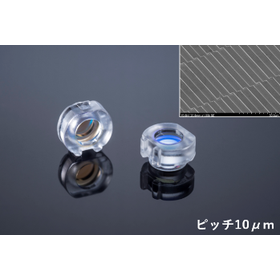
A rectangular diffraction grating is a type of diffraction optical element (DOE) that has a cross-sectional shape with periodically formed rectangular grooves. Generally, rectangular groove diffraction gratings are produced through photolithography processes such as etching; however, our company is capable of manufacturing rectangular diffraction gratings with groove widths of about 10μm through machining processes. As shown in the photo, we have a track record of producing diffraction gratings for optical discs.
Added to bookmarks
Bookmarks listBookmark has been removed
Bookmarks listYou can't add any more bookmarks
By registering as a member, you can increase the number of bookmarks you can save and organize them with labels.
Free membership registration
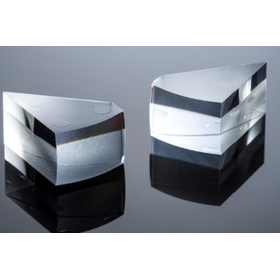
A prism is a wedge-shaped optical element made of a plane that forms an angle with the incident and exit surfaces of light. It is used to change the direction of light passing through by utilizing refraction (deflection), to change the direction of light of different wavelengths by utilizing dispersion (spectroscopy), or to align the direction of light (coherence). The prism in the photo is designed so that the incident light undergoes total internal reflection at a surface tilted at 45 degrees, changing its direction by 90 degrees, and the lens surface formed at the prism's exit surface alters the way the light spreads. Thus, composite elements of prisms and lenses are also possible.
Added to bookmarks
Bookmarks listBookmark has been removed
Bookmarks listYou can't add any more bookmarks
By registering as a member, you can increase the number of bookmarks you can save and organize them with labels.
Free membership registration