136~180 item / All 195 items
Displayed results

Filter by category
Added to bookmarks
Bookmarks listBookmark has been removed
Bookmarks listYou can't add any more bookmarks
By registering as a member, you can increase the number of bookmarks you can save and organize them with labels.
Free membership registration
Contact this company
Contact Us OnlineBefore making an inquiry
Download PDF136~180 item / All 195 items
Filter by category

In the electronics industry, as products become smaller and more high-performance, the precision and reliability of insulating components are crucial. Especially in electronic devices used in high-frequency and high-voltage environments, ensuring insulation performance is essential. Inadequate insulating components can lead to leakage currents or short circuits, potentially resulting in product failures and decreased safety. Our resin lathe machining (NC automatic lathe) provides insulating components tailored to our customers' needs, contributing to improved product reliability. 【Application Scenarios】 - Housing components for electronic devices - Connector components - Insulating spacers - Bushings 【Benefits of Implementation】 - Provision of highly insulating components - High reliability through precise shape processing - Cost reduction through mass production systems - Compatibility with a variety of materials
Added to bookmarks
Bookmarks listBookmark has been removed
Bookmarks listYou can't add any more bookmarks
By registering as a member, you can increase the number of bookmarks you can save and organize them with labels.
Free membership registration
In the aerospace industry, high heat resistance and reliability are required. In particular, for parts used in harsh environments, material selection and precise processing are crucial. Inappropriate materials or processing can lead to performance degradation or failure of the components. Our resin lathe machining (NC automatic lathe) accommodates heat-resistant plastic materials (such as PEEK) and meets the needs of the aerospace field with precision machining technology. 【Application Scenarios】 - Parts used in high-temperature environments - Internal components of aircraft and spacecraft - Parts around engines 【Benefits of Implementation】 - Provision of parts with excellent heat resistance and chemical resistance - Improved product reliability due to high dimensional accuracy - Cost reduction through mass production system
Added to bookmarks
Bookmarks listBookmark has been removed
Bookmarks listYou can't add any more bookmarks
By registering as a member, you can increase the number of bookmarks you can save and organize them with labels.
Free membership registration
In the automotive industry, there is a strong demand for lightweight components to improve fuel efficiency and reduce CO2 emissions. It is particularly important to achieve weight reduction while maintaining strength. Our resin lathe machining utilizes lightweight and high-strength plastic materials and can accommodate complex shapes, contributing to the lightweighting of automotive parts. We possess NC automatic lathes and are capable of mass production. 【Application Scenarios】 - Engine components - Interior parts - Exterior parts - Other components requiring weight reduction 【Benefits of Implementation】 - Improved fuel efficiency through weight reduction of parts - Reduction of CO2 emissions - Cost reduction through a decrease in the number of parts - Increased design flexibility
Added to bookmarks
Bookmarks listBookmark has been removed
Bookmarks listYou can't add any more bookmarks
By registering as a member, you can increase the number of bookmarks you can save and organize them with labels.
Free membership registration
In the medical device industry, precise machining of components is required to ensure the safety and reliability of products. This is especially important for medical devices that directly affect patient health, where the dimensional accuracy of parts and selection of materials are crucial. Improper machining or material selection can lead to device malfunctions or performance degradation. Our resin lathe cutting (NC automatic lathe) supports the manufacturing of precision components for medical devices with high accuracy and compatibility with a variety of materials. 【Application Scenarios】 - Medical testing equipment - Surgical instruments - Precision medical devices 【Benefits of Implementation】 - Improved reliability of devices through high-precision component supply - Enhanced design flexibility by accommodating a variety of plastic materials - Cost reduction through mass production systems
Added to bookmarks
Bookmarks listBookmark has been removed
Bookmarks listYou can't add any more bookmarks
By registering as a member, you can increase the number of bookmarks you can save and organize them with labels.
Free membership registration
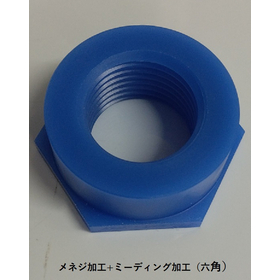
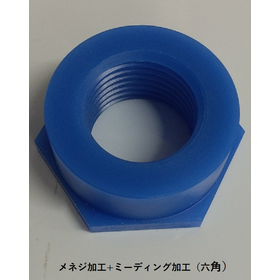
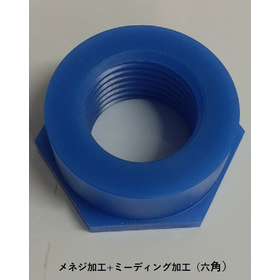
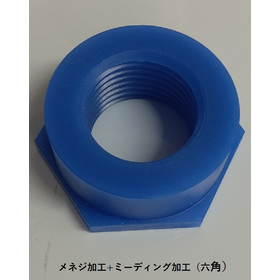
If you have a large quantity of lathe machining, please leave it to us. Our company has NC automatic lathes. We can work with a wide range of plastics, with our main achievements being POM, MC Nylon, and PEEK. Depending on the shape and lot size, switching from NC lathes to automatic lathes can lead to cost reductions. We can process not only simple bush shapes but also shapes that require internal threading and milling, as shown in the photos. Please feel free to consult with us first.
Added to bookmarks
Bookmarks listBookmark has been removed
Bookmarks listYou can't add any more bookmarks
By registering as a member, you can increase the number of bookmarks you can save and organize them with labels.
Free membership registration
In experimental fields, precise machining of components is required. Particularly in experiments using plastic materials, the accuracy of dimensions and reproducibility of shapes significantly impact the experimental results. Inaccurate machining can lead to experimental failures and decreased reliability of data. Our NC router machining can handle plastic sheets up to 1400*2900, allowing for drilling and milling processes for thickness and step machining. We can achieve a thickness tolerance of approximately ±0.05, contributing to improved accuracy in experiments. 【Application Scenarios】 - Production of experimental jigs - Production of prototypes - Production of research components 【Benefits of Implementation】 - Improved experimental accuracy through high-precision component machining - Compatibility with a variety of plastic materials - Flexible response to small lots and diverse varieties
Added to bookmarks
Bookmarks listBookmark has been removed
Bookmarks listYou can't add any more bookmarks
By registering as a member, you can increase the number of bookmarks you can save and organize them with labels.
Free membership registration
In the gaming industry, parts that balance durability and design are in demand. Particularly for parts that are used repeatedly or have complex shapes, high precision and quality are essential. Improper processing can lead to part damage or performance degradation. Our NC router processing can accommodate plastic sheets up to 1400*2900mm and allows for various processes such as drilling, milling, and thickness processing. This enables us to provide high-quality parts tailored to our customers' needs. 【Usage Scenarios】 - Game console enclosures - Figure parts - Model parts - Playground equipment parts 【Benefits of Implementation】 - Improved product quality through high-precision part processing - Enhanced design capabilities by accommodating diverse shapes - Cost-effective processing
Added to bookmarks
Bookmarks listBookmark has been removed
Bookmarks listYou can't add any more bookmarks
By registering as a member, you can increase the number of bookmarks you can save and organize them with labels.
Free membership registration
In the aerospace industry, jigs require high precision and durability. In particular, appropriate material selection and precise processing techniques are crucial to achieve both lightweight and strength. Inadequate jigs can lead to delays in the manufacturing process and quality issues. Our NC router processing can handle plastic sheets up to 1400*2900mm, enabling drilling and milling for thickness and step processing. We achieve a thickness tolerance of approximately ±0.05mm, meeting the stringent demands of the aerospace sector. 【Application Scenarios】 - Manufacturing of aircraft components - Jigs related to space development - Inspection jigs 【Benefits of Implementation】 - Quality improvement through high-precision processing - Compatibility with a variety of plastic materials - Enhanced cost performance
Added to bookmarks
Bookmarks listBookmark has been removed
Bookmarks listYou can't add any more bookmarks
By registering as a member, you can increase the number of bookmarks you can save and organize them with labels.
Free membership registration
In the medical device industry, precision and safety in component processing are essential. Particularly for parts related to patient safety, the accuracy of dimensions and the reliability of materials are crucial. Improper processing can lead to equipment malfunctions and health risks for patients. Our NC router processing can handle plastic sheets up to 1400*2900mm, enabling various operations such as drilling and milling for thickness and step processing. We achieve a thickness tolerance of approximately ±0.05mm, providing the high-precision processing required for medical device components. 【Application Scenarios】 - Components for medical testing equipment - Components for surgical instruments - Components for patient monitoring devices 【Benefits of Implementation】 - Improved reliability of equipment through high-precision component processing - Compatibility with a variety of plastic materials - Flexible support from prototyping to mass production
Added to bookmarks
Bookmarks listBookmark has been removed
Bookmarks listYou can't add any more bookmarks
By registering as a member, you can increase the number of bookmarks you can save and organize them with labels.
Free membership registration
In the electronics industry, enclosures are a crucial element that influences product protection, design, and functionality. The material and processing precision of the enclosure significantly affect the product's durability, heat dissipation, and susceptibility to electromagnetic interference. Particularly in compact and high-performance electronic devices, precise processing of enclosures and adaptability to various materials are required. Our NC router processing can handle various plastic sheet materials such as Bakelite, PVC, acrylic, and polycarbonate, with processing capabilities of up to 1400*2900mm. We provide processing tailored to customer needs, including drilling and milling for thickness and step processing. We can also achieve a thickness tolerance of approximately ±0.05mm. This enhances the design flexibility of electronic device enclosures and contributes to improved product quality. 【Application Scenarios】 - Prototyping and mass production of electronic device enclosures - Enclosures for various sensors and measuring instruments - Enclosures for industrial controllers - Enclosures for communication devices 【Benefits of Implementation】 - Increased design flexibility for enclosures - Realization of high-quality enclosures - Improved cost performance - Short delivery times
Added to bookmarks
Bookmarks listBookmark has been removed
Bookmarks listYou can't add any more bookmarks
By registering as a member, you can increase the number of bookmarks you can save and organize them with labels.
Free membership registration
In the automotive industry, the interior components require a balance between design and functionality. In particular, the selection of materials and processing precision that consider durability, safety, and comfort is crucial. Defects in interior components can lead to a decrease in safety and comfort. Our NC router processing accommodates various plastic materials such as bake, PVC, acrylic, and polycarbonate, providing processing tailored to our customers' needs. 【Usage Scenarios】 - Dashboard - Interior trim - Console panel - Trim 【Benefits of Implementation】 - Compatibility with diverse materials - High processing precision - Improved cost performance
Added to bookmarks
Bookmarks listBookmark has been removed
Bookmarks listYou can't add any more bookmarks
By registering as a member, you can increase the number of bookmarks you can save and organize them with labels.
Free membership registration
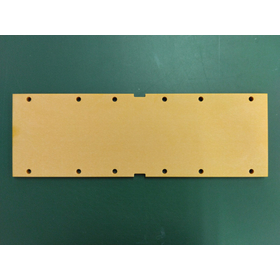
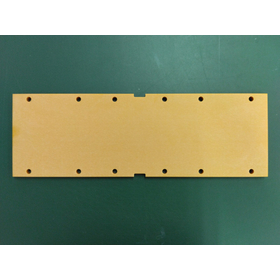
This is an introduction to plastic cutting processing using an NC router. We can process plastic sheets up to a maximum size of 1400*2900. In addition to drilling, we can perform milling operations for thickness processing and step processing. Regarding thickness processing, there may be a full-back pull mark, but we can achieve thickness tolerances of around ±0.05. Furthermore, we can process not only large items but also multiple small parts at once, making it cost-effective. Please contact us for more details.
Added to bookmarks
Bookmarks listBookmark has been removed
Bookmarks listYou can't add any more bookmarks
By registering as a member, you can increase the number of bookmarks you can save and organize them with labels.
Free membership registration
In the energy industry, the durability of equipment used in harsh environments, such as plants and storage tanks, is crucial. In particular, resistance to temperature changes and chemicals is required, and the reliability of welds affects the lifespan of the equipment. Plastic welding processing is essential to meet these demands. 【Application Scenes】 - Tanks in chemical plants - Fuel storage tanks - Piping systems 【Benefits of Implementation】 - Improved chemical resistance and impact resistance - Ensured durability for long-term use - Reduced risk of leaks
Added to bookmarks
Bookmarks listBookmark has been removed
Bookmarks listYou can't add any more bookmarks
By registering as a member, you can increase the number of bookmarks you can save and organize them with labels.
Free membership registration
In the automotive industry, weight reduction is a crucial issue for improving fuel efficiency and reducing CO2 emissions. The adoption of plastic components contributes to weight reduction, but the method of joining them poses challenges. Our plastic welding processing accommodates various plastic materials, such as PVC, PP, and fluoropolymer resins, achieving high strength and durability. This contributes to the lightweighting of automotive parts while simultaneously enhancing product reliability. 【Application Scenes】 - Bumpers - Interior components - Tanks - Piping 【Effects of Implementation】 - Improved fuel efficiency through weight reduction - Reduction in the number of parts - Increased design flexibility
Added to bookmarks
Bookmarks listBookmark has been removed
Bookmarks listYou can't add any more bookmarks
By registering as a member, you can increase the number of bookmarks you can save and organize them with labels.
Free membership registration
In the environmental field, high corrosion resistance is required for tanks and piping that come into contact with chemicals and corrosive substances. Particularly, leaks and damage can lead to environmental pollution, making reliable welding technology crucial. Our plastic welding processing accommodates various materials such as PVC, PP, and fluororesin, enhancing corrosion resistance. We use resin welding rods and can handle items from small to large. We also conduct water leak tests and air leak tests to ensure high quality. 【Application Scenarios】 - Chemical tanks - Wastewater treatment facilities - Chemical plants - Plating baths 【Benefits of Implementation】 - Improved corrosion resistance - Long-term product lifespan - Reduced risk of environmental pollution - Cost savings
Added to bookmarks
Bookmarks listBookmark has been removed
Bookmarks listYou can't add any more bookmarks
By registering as a member, you can increase the number of bookmarks you can save and organize them with labels.
Free membership registration
In the food industry, the integrity and durability of tanks and piping are essential for maintaining a hygienic environment. Particularly in areas that come into direct contact with food, the safety of materials and the reliability of welding are crucial. Improper welding can lead to contamination and leaks, increasing the risk of product quality deterioration and foodborne illnesses. Our plastic welding processing uses materials that comply with food hygiene standards and provides safe products with high technical expertise. 【Application Scenarios】 - Tanks in food manufacturing plants - Piping for food transportation - Joints in kitchen equipment 【Benefits of Implementation】 - Compliance with food hygiene standards - Reduction of contamination risks - Preservation of product quality
Added to bookmarks
Bookmarks listBookmark has been removed
Bookmarks listYou can't add any more bookmarks
By registering as a member, you can increase the number of bookmarks you can save and organize them with labels.
Free membership registration
In the semiconductor manufacturing industry, the reliability of the ultrapure water supply system is crucial. Ultrapure water is essential for cleaning and cooling in the semiconductor manufacturing process, and maintaining its purity depends on the materials and joining methods used for pipes and tanks. Plastic welding plays an important role in joining plastic materials that excel in chemical resistance and corrosion resistance, helping to maintain a pure water environment. Our plastic welding services cater to various plastic materials, including PVC, PP, and fluoropolymer resins, providing optimal solutions tailored to our customers' needs. 【Application Scenarios】 - Ultrapure water tanks - Ultrapure water piping - Various fittings 【Benefits of Implementation】 - Improved reliability of ultrapure water systems - Reduced risk of foreign substance contamination - Long-term cost savings
Added to bookmarks
Bookmarks listBookmark has been removed
Bookmarks listYou can't add any more bookmarks
By registering as a member, you can increase the number of bookmarks you can save and organize them with labels.
Free membership registration
In the chemical industry, tanks and piping that can withstand chemicals and corrosive substances are essential. These facilities require high chemical resistance to prevent leaks and damage, ensuring a safe working environment. Plastic welding processing addresses these challenges by accommodating various chemical-resistant plastic materials such as PVC, PP, and fluoropolymer resins. Our plastic welding processing provides optimal solutions tailored to our customers' needs. 【Application Scenarios】 - Chemical storage tanks - Corrosive substance transport piping - Laboratory equipment - Wastewater treatment facilities 【Benefits of Implementation】 - Improved chemical resistance - Extended equipment lifespan - Ensured safety - Cost reduction
Added to bookmarks
Bookmarks listBookmark has been removed
Bookmarks listYou can't add any more bookmarks
By registering as a member, you can increase the number of bookmarks you can save and organize them with labels.
Free membership registration
This is an introduction to plastic welding for tanks and piping. Welding is performed using resin welding rods. We can accommodate items ranging from small to large. Quality inspections can be conducted depending on the product size, as follows: ■ Liquid tanks... Water leakage test by filling with water. ■ Air tanks... Air leakage test by submerging in water. For more details, please contact us.
Added to bookmarks
Bookmarks listBookmark has been removed
Bookmarks listYou can't add any more bookmarks
By registering as a member, you can increase the number of bookmarks you can save and organize them with labels.
Free membership registration
In the semiconductor manufacturing industry, the durability and precision of chamber components are essential. Particularly for chamber parts exposed to high-temperature and high-pressure environments, high resistance and precise shapes are crucial for the stability of the manufacturing process. Inadequate components can lead to chamber failures or performance degradation. Lost-wax precision casting allows for the manufacturing of complex-shaped parts with high accuracy, contributing to cost reduction. 【Application Scenarios】 - Chamber components - Vacuum chamber components - Plasma chamber components 【Benefits of Implementation】 - Cost reduction - Reduction of assembly processes through component integration - Manufacturing of complex-shaped parts - Compatibility with a wide range of materials
Added to bookmarks
Bookmarks listBookmark has been removed
Bookmarks listYou can't add any more bookmarks
By registering as a member, you can increase the number of bookmarks you can save and organize them with labels.
Free membership registration
In the machine tool industry, the quality and cost of molds are critical factors that influence product performance and competitiveness. Particularly for molds that require high precision, manufacturing methods capable of accommodating complex shapes are essential. Lost-wax precision casting is suitable for producing molds with complex shapes, including undercuts, and three-dimensional curved shapes that are difficult to machine. This enhances the design flexibility of molds and contributes to improved product performance. 【Application Scenarios】 - Production of molds for machine tools - Production of molds with complex shapes - Production of small quantities of diverse molds 【Effects of Implementation】 - Reduction in mold production costs - Increased design flexibility of molds - Improvement in product quality
Added to bookmarks
Bookmarks listBookmark has been removed
Bookmarks listYou can't add any more bookmarks
By registering as a member, you can increase the number of bookmarks you can save and organize them with labels.
Free membership registration
In the energy industry, blades are an essential element for efficient energy generation. The performance of blades significantly impacts energy efficiency and product lifespan. In particular, blades used in harsh environments require high durability and precise shapes. Lost wax precision casting is suitable for manufacturing complex-shaped blades and contributes to cost reduction and performance enhancement. 【Application Scenarios】 - Wind turbine blades - Turbine blades - Other blades for energy-related equipment 【Effects of Implementation】 - Manufacturing complex-shaped blades at low cost - Cost reduction through the integration of multiple components - Improved product performance due to high-precision shapes
Added to bookmarks
Bookmarks listBookmark has been removed
Bookmarks listYou can't add any more bookmarks
By registering as a member, you can increase the number of bookmarks you can save and organize them with labels.
Free membership registration
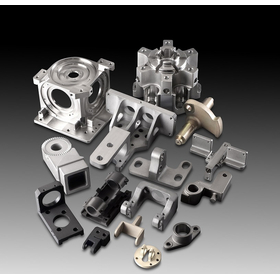
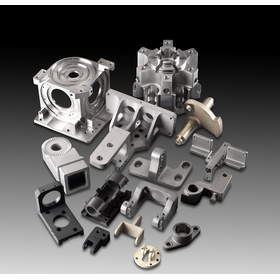
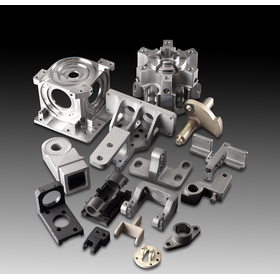
This is an introduction to lost-wax precision casting. It is a method suitable for reducing costs of complex machined parts with high repeatability, as well as parts assembled from multiple components using screws or welding. Additionally, the ability to cast various materials is one of its attractions. Please feel free to consult us. 【Cost Reduction Examples】 ■ Cost reduction by switching from machining ■ Cost reduction by integrating a three-point structure with screws (eliminating the assembly process) ■ Cost reduction by integrating a five-point structure with welding 【Features of Lost-Wax】 ■ Capable of manufacturing complex shapes, including undercuts. ■ Mass production of three-dimensional curved shapes that are difficult to machine is possible. ■ Handles a wide range of materials including carbon steel, stainless steel, alloy steel, aluminum alloy, and copper alloy. 【What is Lost-Wax Casting?】 Unlike methods such as die casting or sand casting, a wax model is first formed using an aluminum mold. This is then coated with a refractory material, and after curing, it is heated and the wax is removed (lost-wax), creating a cavity in the mold that matches the shape of the wax model, into which metal is poured. Although it is a molded product, it can accommodate both small production runs (from 5 pieces) and larger quantities.
Added to bookmarks
Bookmarks listBookmark has been removed
Bookmarks listYou can't add any more bookmarks
By registering as a member, you can increase the number of bookmarks you can save and organize them with labels.
Free membership registration
In the tool industry, product durability and precision are required. Particularly for tool components subjected to high loads, high strength and dimensional accuracy significantly influence product performance. Traditional manufacturing methods have faced challenges in terms of cost and time when producing complex shapes and high-precision parts. Metal injection molding (MIM) addresses these issues. 【Application Scenarios】 - Tool components requiring high strength - Tool components with complex shapes - Tool components needed for mass production 【Benefits of Implementation】 - Achieves high strength and dimensional accuracy - Enables mass production of complex-shaped parts - Contributes to cost reduction and shorter delivery times
Added to bookmarks
Bookmarks listBookmark has been removed
Bookmarks listYou can't add any more bookmarks
By registering as a member, you can increase the number of bookmarks you can save and organize them with labels.
Free membership registration
In the energy industry, nozzle applications require high durability and precise shapes. Particularly for nozzles used in high-temperature and high-pressure environments, the selection of materials and manufacturing precision significantly affect the product's performance. Inappropriate nozzles can lead to decreased energy efficiency and early deterioration of equipment. Our Metal Injection Molding (MIM) produces complex-shaped nozzles with high precision to meet customer needs. 【Application Scenarios】 - Fuel injection nozzles - Gas burner nozzles - Cooling nozzles 【Benefits of Implementation】 - Achievement of high-precision nozzles - Improved durability - Adaptation to small quantities and diverse varieties
Added to bookmarks
Bookmarks listBookmark has been removed
Bookmarks listYou can't add any more bookmarks
By registering as a member, you can increase the number of bookmarks you can save and organize them with labels.
Free membership registration
In the electronics industry, connectors are required to have complex shapes and high precision due to the miniaturization and high density of products. The quality of connectors significantly impacts the overall performance of electronic devices, making dimension accuracy and reliable components essential. Metal Injection Molding (MIM) is the optimal manufacturing method to meet these demands. 【Application Scenarios】 - Connectors for small electronic devices - High-density mounting connectors - Connectors for precision instruments 【Benefits of Implementation】 - Mass production of complex-shaped connectors - Improved product quality due to high dimensional accuracy - Enhanced durability through surface treatment
Added to bookmarks
Bookmarks listBookmark has been removed
Bookmarks listYou can't add any more bookmarks
By registering as a member, you can increase the number of bookmarks you can save and organize them with labels.
Free membership registration
In the aerospace industry, turbine components require high precision and durability. Especially for turbine parts used in high-temperature and high-pressure environments, their performance is directly linked to the safety of aircraft, making a reliable manufacturing process essential. Metal Injection Molding (MIM) is suitable for the production of aerospace turbine components because it can mass-produce parts with complex shapes with high precision. 【Application Scenarios】 - Aerospace turbine blades - Turbine nozzles - Other complex-shaped turbine components 【Benefits of Implementation】 - Improved turbine performance through high-precision part manufacturing - Increased design flexibility through the production of complex-shaped parts - Cost reduction by establishing a mass production system
Added to bookmarks
Bookmarks listBookmark has been removed
Bookmarks listYou can't add any more bookmarks
By registering as a member, you can increase the number of bookmarks you can save and organize them with labels.
Free membership registration
In the energy industry, particularly in fuel injection nozzles, high precision and durability are required. The shape of the nozzle, which affects combustion efficiency, is intricate and complex, making high quality essential. Metal Injection Molding (MIM) is a manufacturing method that meets these demands. 【Application Scenarios】 - Manufacturing of fuel injection nozzles - Mass production of parts requiring high precision 【Effects of Implementation】 - Precise reproduction of complex shapes - Quality improvement due to high dimensional accuracy - Cost reduction through mass production
Added to bookmarks
Bookmarks listBookmark has been removed
Bookmarks listYou can't add any more bookmarks
By registering as a member, you can increase the number of bookmarks you can save and organize them with labels.
Free membership registration
In the information and communication industry, particularly in optical fiber components, high precision and durability are required. Optical fiber components are responsible for transmitting optical signals, and even slight dimensional deviations or surface roughness can lead to signal attenuation or connection failures. Metal Injection Molding (MIM) addresses these challenges by enabling the manufacture of high-quality optical fiber components with high dimensional accuracy and excellent surface treatment. Daiichi Shoko's MIM contributes to improving the reliability of our customers' products. 【Usage Scenarios】 - Optical fiber connectors - Optical transceiver components - Optical communication modules 【Benefits of Implementation】 - Improved product quality due to high dimensional accuracy - Enhanced optical signal transmission efficiency through surface treatment - Establishment of a flexible production system to accommodate small quantities and diverse varieties
Added to bookmarks
Bookmarks listBookmark has been removed
Bookmarks listYou can't add any more bookmarks
By registering as a member, you can increase the number of bookmarks you can save and organize them with labels.
Free membership registration
In the electronics industry, connectors are crucial components that influence product performance and reliability. As miniaturization and high density progress, connectors require high precision and durability. In particular, stability in signal transmission and robustness to withstand long-term use are essential. Metal Injection Molding (MIM) is the optimal manufacturing method to meet these demands. 【Application Scenarios】 - Connectors for small electronic devices - Connectors requiring high-density mounting - Connectors that demand durability 【Benefits of Implementation】 - Improved product quality due to high dimensional accuracy - Capability to handle complex shapes such as sharp edges and irregular holes - Enhanced durability through heat treatment and surface treatment equivalent to that of cast materials
Added to bookmarks
Bookmarks listBookmark has been removed
Bookmarks listYou can't add any more bookmarks
By registering as a member, you can increase the number of bookmarks you can save and organize them with labels.
Free membership registration
In the automotive engine parts industry, miniaturization and high performance are advancing, and complex-shaped parts are in demand. High strength that can withstand the high temperature and high pressure environment inside the engine, as well as precise dimensional accuracy, are important. Metal Injection Molding (MIM) is the optimal manufacturing method to meet these requirements. 【Application Scenes】 - Turbocharger parts - Injector parts - Valve seats - Other complex-shaped engine parts 【Effects of Introduction】 - Mass production of complex-shaped parts with high precision - A wide range of material options to meet various performance requirements - High strength and durability - Contribution to cost reduction
Added to bookmarks
Bookmarks listBookmark has been removed
Bookmarks listYou can't add any more bookmarks
By registering as a member, you can increase the number of bookmarks you can save and organize them with labels.
Free membership registration
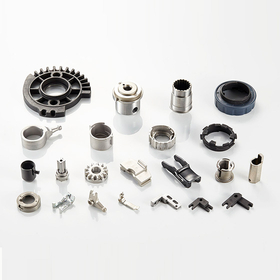
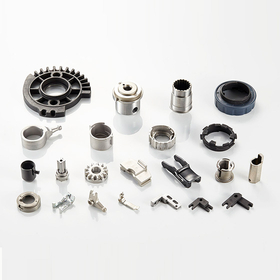
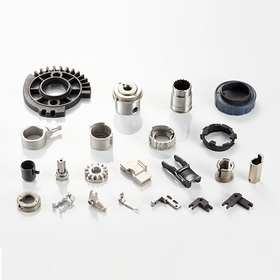
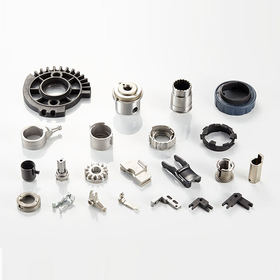
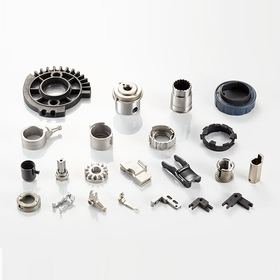
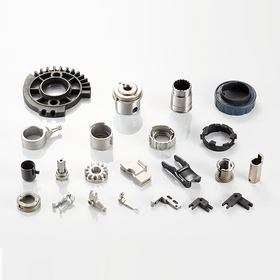
This is an introduction to Metal Injection Molding (MIM). It is a method suitable for mass production of complex shapes with product weights of approximately 10g to 20g. (When exceeding 30g, it tends to be more cost-effective to perform additional processing on precision cast products.) The method offers high freedom of shape, allowing for sharp edges, irregular holes, and three-dimensional shapes. We can accommodate quantities starting from several hundred pieces per lot. We specialize in small quantities of diverse products. Please feel free to consult with us. 【Features of Metal Injection Molding (MIM)】 ■ High dimensional accuracy can be achieved. ■ Surface roughness is approximately Rmax 8μm, and it is possible to achieve sub-micron surface roughness with processes like glossy barrel finishing. ■ Heat treatment and surface treatment equivalent to that of melted materials are possible. 【What is Metal Injection Molding (MIM)?】 It is a method that combines the technologies of plastic injection molding and metal powder metallurgy. It achieves mechanical strength close to that of melted materials, which cannot be obtained through powder sintering. Metal powder is injected together with resin to form the shape. After that, solvent debinding is performed, followed by vacuum sintering. At this stage, the product dimensions shrink, requiring expertise and experience.
Added to bookmarks
Bookmarks listBookmark has been removed
Bookmarks listYou can't add any more bookmarks
By registering as a member, you can increase the number of bookmarks you can save and organize them with labels.
Free membership registration
In the display industry, covers and enclosures that balance product protection and design are in demand. It is important to protect the display from impacts and external influences while maintaining the product's design integrity. Vacuum forming and pressure forming can meet these needs. 【Application Scenes】 - Display covers - Protective cases - Enclosures 【Benefits of Implementation】 - Improved protection performance - Enhanced design quality - Potential cost reduction
Added to bookmarks
Bookmarks listBookmark has been removed
Bookmarks listYou can't add any more bookmarks
By registering as a member, you can increase the number of bookmarks you can save and organize them with labels.
Free membership registration
In the electronics industry, product protection and design are essential. Covers play a crucial role in protecting internal precision equipment from external impacts and environmental factors. In particular, lightweight covers with high design flexibility are indispensable for enhancing product competitiveness. Vacuum and pressure forming is the optimal solution to meet these needs. 【Usage Scenarios】 - Enclosures for electronic devices - Various covers - Products that aim for thinness and lightweight design 【Benefits of Implementation】 - Cost-effective cover production - Quick product supply - Improved design flexibility
Added to bookmarks
Bookmarks listBookmark has been removed
Bookmarks listYou can't add any more bookmarks
By registering as a member, you can increase the number of bookmarks you can save and organize them with labels.
Free membership registration
In the aerospace industry, there are many components that require lightweight construction and high durability. In particular, reducing the weight of parts is essential for improving the performance of the aircraft. Plastic molding is gaining attention as an alternative to metal components, but due to the need for complex shapes and high precision, selecting the appropriate molding method is crucial. Vacuum and pressure molding is suitable for manufacturing aerospace components because it allows for the relatively inexpensive production of lightweight and highly designed parts. 【Application Scenarios】 - Interior components of aircraft - Exterior components of drones - Parts for space exploration vehicles 【Benefits of Implementation】 - Improved fuel efficiency due to weight reduction - Enhanced design quality - Cost reduction
Added to bookmarks
Bookmarks listBookmark has been removed
Bookmarks listYou can't add any more bookmarks
By registering as a member, you can increase the number of bookmarks you can save and organize them with labels.
Free membership registration
In the home appliance industry, enclosures that balance design and functionality are in demand. The appearance of a product influences consumers' purchasing intentions, and the protective performance of the product is also important. Vacuum forming is easy to use, while pressure forming can incorporate sharp lines and other design elements. These molding methods enable the realization of enclosures that achieve diverse designs and functionality. 【Usage Scenarios】 - Back cover of flat-screen TVs - Door panels of refrigerators - Exterior parts of air conditioners 【Benefits of Implementation】 - Increased design flexibility - Cost reduction - Short delivery times
Added to bookmarks
Bookmarks listBookmark has been removed
Bookmarks listYou can't add any more bookmarks
By registering as a member, you can increase the number of bookmarks you can save and organize them with labels.
Free membership registration
In the food packaging industry, maintaining food freshness and ensuring safety are crucial. The shape and material of containers are essential to meet these demands, while also requiring lightweight designs and cost reductions. Vacuum and pressure forming contribute to addressing these challenges by allowing flexible shape design and accommodating a variety of materials. It enables the molding of thin-walled shapes and large containers, making it ideal for manufacturing containers that balance food protection and visual appeal. 【Application Scenes】 - Food trays - Food covers - Food packaging containers 【Benefits of Implementation】 - Reduction in transportation costs due to lightweight containers - Increased product value through diverse designs - Adaptation to small-scale production - Improved food freshness retention and safety
Added to bookmarks
Bookmarks listBookmark has been removed
Bookmarks listYou can't add any more bookmarks
By registering as a member, you can increase the number of bookmarks you can save and organize them with labels.
Free membership registration
In the display industry, covers that balance product protection and design are in demand. Particularly in the case of displays that are becoming thinner, lightweight and strong covers are essential. Vacuum and pressure forming can meet these needs. 【Usage Scenarios】 - Display enclosures - Various covers - Protective cases 【Benefits of Implementation】 - Improved design - Weight reduction - Cost savings
Added to bookmarks
Bookmarks listBookmark has been removed
Bookmarks listYou can't add any more bookmarks
By registering as a member, you can increase the number of bookmarks you can save and organize them with labels.
Free membership registration
In the seedling industry, the protection and efficient management of seedlings are required. In particular, appropriate shapes that do not hinder the growth of seedlings and durability that prevents damage during transport are important. Inappropriate trays or cases can lead to poor seedling growth and increased transportation costs. Vacuum and pressure forming addresses these challenges in the production of seedling trays and cases. 【Usage Scenarios】 - Seedling trays - Cases for transporting seedlings - Protective covers for seedlings 【Benefits of Implementation】 - Cost-effective production - Short delivery times - Improved protection and management of seedlings
Added to bookmarks
Bookmarks listBookmark has been removed
Bookmarks listYou can't add any more bookmarks
By registering as a member, you can increase the number of bookmarks you can save and organize them with labels.
Free membership registration
In the aerospace industry, there are many components that require lightweight construction and high durability. In particular, reducing the weight of the aircraft contributes to improved fuel efficiency and cost reduction. Additionally, depending on the shape of the components, complex designs may be required. Vacuum and pressure forming can meet these needs. 【Application Scenarios】 - Covers for aircraft and spacecraft - Interior components - Structural components that require lightweight construction 【Effects of Implementation】 - Improved fuel efficiency due to weight reduction - Ability to accommodate complex shapes - Flexible response to small-scale production - Cost reduction
Added to bookmarks
Bookmarks listBookmark has been removed
Bookmarks listYou can't add any more bookmarks
By registering as a member, you can increase the number of bookmarks you can save and organize them with labels.
Free membership registration
In the electronics industry, there is a demand for lighter products and improved design aesthetics. The casing is a crucial element that not only protects the product but also influences the brand image. To achieve complex shapes and designs that are difficult with sheet metal processing, vacuum and pressure forming are effective methods. Vacuum forming is suitable for thin-walled and simple-shaped casings, while pressure forming can accommodate thick-walled and complex-shaped casings. These forming methods enhance design flexibility and enable product differentiation. 【Application Scenarios】 - Casings for electronic devices - Covers - Trays 【Benefits of Implementation】 - Increased design flexibility - Weight reduction - Cost savings
Added to bookmarks
Bookmarks listBookmark has been removed
Bookmarks listYou can't add any more bookmarks
By registering as a member, you can increase the number of bookmarks you can save and organize them with labels.
Free membership registration
In the automotive interior industry, parts that balance design and functionality are in demand. In particular, weight reduction and cost reduction are important challenges. Vacuum and pressure forming enable flexible shape design and low-cost manufacturing to address these challenges. 【Application Scenes】 - Instrument panels - Door trims - Interior trims - Console boxes 【Effects of Introduction】 - Increased design freedom - Improved fuel efficiency through weight reduction - Reduction in mold costs - Adaptation to small-scale production Daiichi Shoko proposes the optimal forming methods tailored to customer needs and provides high-quality products.
Added to bookmarks
Bookmarks listBookmark has been removed
Bookmarks listYou can't add any more bookmarks
By registering as a member, you can increase the number of bookmarks you can save and organize them with labels.
Free membership registration
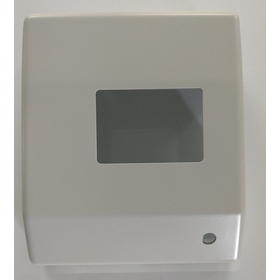
This is an introduction to vacuum forming and pressure forming. For those who are not familiar with vacuum forming, most thin plastic trays are made using this method. Common examples include egg cartons. In pressure forming, where compressed air is used, thicker plastics can be utilized, allowing for the production of product covers and trays. **Advantages of Vacuum and Pressure Forming** - The molds are less expensive compared to other plastic forming methods (pressure forming tends to be more expensive than vacuum forming). - The production time for molds is shorter compared to other plastic forming methods. - It is suitable for small-scale production. - It can create thin-walled shapes (1-6 mm) and large products with wide surface areas. **Disadvantages of Vacuum and Pressure Forming** - There can be variations in thickness and precision, and partial thickness changes are not possible. - There is a significant amount of material waste. - Post-processing is essential. - It is not possible to create integrated shapes such as bosses or ribs. If you would like to convert covers made from sheet metal into resin or have questions about what shapes can be created, please feel free to contact us. We will provide proposals tailored to your needs.
Added to bookmarks
Bookmarks listBookmark has been removed
Bookmarks listYou can't add any more bookmarks
By registering as a member, you can increase the number of bookmarks you can save and organize them with labels.
Free membership registration
In the automotive industry, there is a demand for both lightweight design and durability, and these elements are important even in components such as ducts. Particularly in ducts exposed to high temperatures and vibrations, the selection of materials and molding methods significantly affects product performance. Improper molding can lead to component damage or performance degradation. Our extrusion blow molding (direct blow molding) addresses these challenges and enables the production of high-quality ducts. 【Application Scenarios】 - Manufacturing of automotive ducts - Production of components that balance lightweight design and durability - Creation of components that can withstand high-temperature environments 【Benefits of Implementation】 - Improved fuel efficiency due to weight reduction - Extended product lifespan due to increased durability - Performance optimization through enhanced design flexibility
Added to bookmarks
Bookmarks listBookmark has been removed
Bookmarks listYou can't add any more bookmarks
By registering as a member, you can increase the number of bookmarks you can save and organize them with labels.
Free membership registration
Introducing extrusion blow molding (direct blow molding). What kind of molding method is extrusion blow molding, and what can be made with it? Everyday items you encounter, such as detergent bottles found in supermarkets, are made using extrusion blow molding. With extrusion blow molding, containers with handles can also be formed without secondary processing. If you are considering the production of hollow products like tanks or bottles, or if you have concerns about production methods, please feel free to contact us. 【What is extrusion blow molding?】 Extrusion blow molding is a hot parison method where melted resin is extruded into a cylindrical shape (commonly known as a parison) and air is directly blown into it before it cools, which is also referred to as direct blow molding. Typically, air is blown in from the top, but there are also methods that blow air from the sides or bottom. It is a historically old molding method that is used in various fields, including food containers, oil tanks, and automotive parts.
Added to bookmarks
Bookmarks listBookmark has been removed
Bookmarks listYou can't add any more bookmarks
By registering as a member, you can increase the number of bookmarks you can save and organize them with labels.
Free membership registration