1~9 item / All 9 items
Displayed results
Filter by category

Added to bookmarks
Bookmarks listBookmark has been removed
Bookmarks listYou can't add any more bookmarks
By registering as a member, you can increase the number of bookmarks you can save and organize them with labels.
Free membership registrationContact this company
Inquiry Form1~9 item / All 9 items
Filter by category
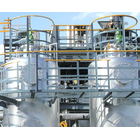
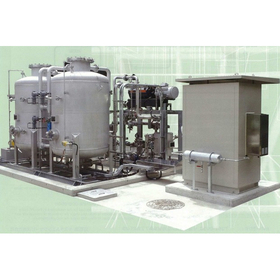
We would like to introduce a case study of a "VOC recovery device" that adsorbs VOCs generated within the factory and reduces emissions into the atmosphere for customers considering CO2 reduction. The customer was previously treating VOCs through combustion in their facilities, and the introduction of this device was aimed at reducing environmental impact within the factory and making effective use of resources. After the introduction, the existing combustion device serves as a backup, and VOC treatment in the factory is carried out with this VOC recovery device. This allows for the reduction of fuel and CO2 required during combustion, while also effectively utilizing resources by recovering VOCs in a liquefied form. 【Case Overview】 ■ Unit Composition: Unit including SUS tanks, piping, and framework ■ Industry: Chemical plant ■ Challenge: Achieving both VOC reduction and CO2 reduction ■ Effect: Reduced CO2 emissions from the combustion device and kept VOC emission concentration below 100 ppm, while also enabling the liquefied recovery of VOCs. ■ Response Details: We inquired about the customer's gas conditions, proposed a device tailored to those conditions, and assessed the environmental impact reduction effects along with the usage of utilities. *For more details, please feel free to contact us.
Added to bookmarks
Bookmarks listBookmark has been removed
Bookmarks listYou can't add any more bookmarks
By registering as a member, you can increase the number of bookmarks you can save and organize them with labels.
Free membership registration
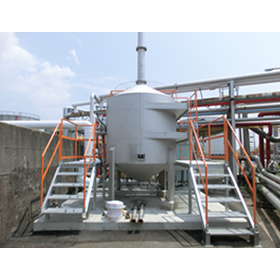
We would like to introduce a case study of the "Activated Carbon Adsorption Tower (VOC Adsorption Tower)" implemented at a chemical plant to adsorb dilute gases generated within the factory and reduce their emission into the atmosphere. Although the gases are dilute and in trace amounts, they are highly toxic, prompting the consideration of implementation for the safety of the working environment and reduction of environmental impact. Therefore, we selected adsorbents based on the gas conditions and designed the system to fit the customer's layout. Additionally, we calculated the timing for adsorbent replacement, making it easier for the customer to plan. After implementation, emissions into the atmosphere were reduced to below 5 ppb, achieving a reduction in environmental impact and ensuring safety in the working environment. 【Case Overview】 ■ Unit Composition: Unit including SUS tank, piping, and framework ■ Industry Implemented: Chemical Plant ■ Challenges: Safety of the working environment and reduction of environmental impact ■ Effect: Emissions into the atmosphere reduced to below 5 ppb ■ Response Details: - Selection of adsorbents based on gas conditions and design tailored to customer layout - Calculation of adsorbent replacement timing *For more details, please feel free to contact us.
Added to bookmarks
Bookmarks listBookmark has been removed
Bookmarks listYou can't add any more bookmarks
By registering as a member, you can increase the number of bookmarks you can save and organize them with labels.
Free membership registration
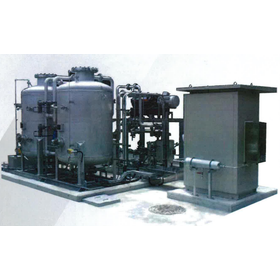
We would like to introduce a case study of our "Pressure Swing Adsorption (PSA) Equipment" implemented at a comprehensive chemical manufacturer. The company had previously been using temperature swing adsorption (TSA) equipment with activated carbon to recover and treat exhaust gases containing vinyl chloride monomer. However, due to the high adsorption heat of activated carbon, they had to process a large volume of diluted gas, resulting in large equipment size and significant energy consumption due to the large amount of steam used during desorption. Additionally, they faced issues with equipment corrosion caused by chlorine. While addressing equipment corrosion, they explored alternative systems and determined that our product could be applied to their process, leading to full-scale operation starting in the 2011 fiscal year. They successfully reduced steam consumption by 3,700 tons compared to the previous year and achieved over a 90% reduction in VCM emissions from the adsorption equipment. [Customer Feedback] ■ We were able to introduce a much more compact exhaust gas treatment system with lower environmental impact. *For more details, please refer to the related links or feel free to contact us.
Added to bookmarks
Bookmarks listBookmark has been removed
Bookmarks listYou can't add any more bookmarks
By registering as a member, you can increase the number of bookmarks you can save and organize them with labels.
Free membership registration
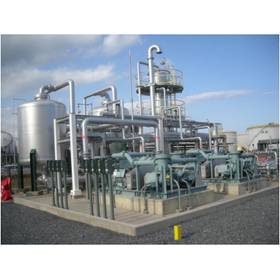
We would like to introduce a case study of our "Recovery Device (PSA Method)" implemented at a major oil company. The company manufactures petrochemical base products, and as of 2000, the VOC emissions were 820 tons/year. The majority of the VOC emissions were due to the solvent discharge of dichloromethane used in the resin manufacturing process, and in 2002, they introduced our product. Our product uses silica gel as the adsorbent, and the desorption of the adsorbed solvent is performed by vacuum. With two adsorption towers, it alternates between adsorption and desorption, achieving continuous operation and significant reductions. [Reasons for Adoption] - Wide applicable concentration range for the target gas - High removal and recovery rate (over 99%) - No wastewater containing solvents is generated as no steam is used for heating during desorption and regeneration - Using silica gel as the adsorbent helps suppress temperature rise due to adsorption heat - Gradual deterioration, leading to an expected long lifespan *For more details, please refer to the related links or feel free to contact us.
Added to bookmarks
Bookmarks listBookmark has been removed
Bookmarks listYou can't add any more bookmarks
By registering as a member, you can increase the number of bookmarks you can save and organize them with labels.
Free membership registration
The "Volatile Organic Solvent Gas Recovery Device" is a system developed to recover volatile organic solvent gases and prevent air pollution. It uses non-combustible adsorbents and does not utilize heat sources such as steam, resulting in an extremely low risk of fire, while maintaining high safety even when flammable gases are introduced. Additionally, the simple process and skid-mounted structure minimize the required land area and installation costs. 【Features】 ■ High safety ■ High removal rate ■ Sophisticated equipment configuration ■ Dry operation ■ Low-pressure operation *For more details, please download the PDF or feel free to contact us.
Added to bookmarks
Bookmarks listBookmark has been removed
Bookmarks listYou can't add any more bookmarks
By registering as a member, you can increase the number of bookmarks you can save and organize them with labels.
Free membership registration
"SES-VRU" is a product that uses a special adsorbent for the liquid recovery of VOC vapors generated under various conditions. By changing the adsorbent, the method of filling the adsorbent, and the method of recovering desorbed gas, it is possible to recover a wide variety of VOCs in liquid form. By implementing this system, there are benefits such as compliance with VOC emission regulations and the reuse of recovered VOCs. 【Features】 ■ Simple process ■ High safety ■ High VOC recovery rate ■ Optimization of the adsorption tower ■ Fully automated operation *For more details, please download the PDF or feel free to contact us.
Added to bookmarks
Bookmarks listBookmark has been removed
Bookmarks listYou can't add any more bookmarks
By registering as a member, you can increase the number of bookmarks you can save and organize them with labels.
Free membership registration
The "demonstration gas recovery device" is a system designed to ultimately confirm whether it can be operated and designed on a commercial scale. Based on the basic design data obtained from the experimental gas recovery device, it verifies whether the target gas can be recovered under conditions closer to those of an actual gas recovery device. Additionally, this device is movable, allowing for easy relocation. 【Features】 ■ Confirms whether the target gas can be recovered ■ Movable for easy transportation ■ Uses electrically operated valves, eliminating the need for an air source *For more details, please refer to the PDF document or feel free to contact us.
Added to bookmarks
Bookmarks listBookmark has been removed
Bookmarks listYou can't add any more bookmarks
By registering as a member, you can increase the number of bookmarks you can save and organize them with labels.
Free membership registration
The "Experimental Gas Recovery Device" allows for experiments to obtain basic data necessary to achieve a specified recovery rate by changing the type and amount of adsorbent, as well as modifying operating conditions such as adsorption and desorption times. Data from this device serves as a primary assessment to determine whether it can be realized as a practical application. It is a compact device that can be easily moved, making it suitable for installation in universities, research institutes, etc., where experiments can be conducted. 【Features】 ■ Capable of obtaining basic data and conducting experiments to achieve a specified recovery rate ■ Compact ■ Easily movable ■ Does not require an air source as it uses electrically operated valves *For more details, please refer to the PDF materials or feel free to contact us.
Added to bookmarks
Bookmarks listBookmark has been removed
Bookmarks listYou can't add any more bookmarks
By registering as a member, you can increase the number of bookmarks you can save and organize them with labels.
Free membership registration
The "VOC-VRU" is a device that collects volatile organic solvent gases from inert gases, thereby increasing the purity of the inert gas and enabling its reuse. The organic solvent gases that can be recovered from the inert gas are the same as those that can be processed by organic solvent gas recovery devices, but this device uses a newly developed adsorbent. Due to its simple process and skid-mounted design, it requires a small footprint and can be constructed at a low cost. 【Features】 ■ Reusable inert gas ■ High recovery rate ■ Compact equipment and low capital investment ■ Dry operation ■ Atmospheric pressure operation *For more details, please refer to the PDF document or feel free to contact us.
Added to bookmarks
Bookmarks listBookmark has been removed
Bookmarks listYou can't add any more bookmarks
By registering as a member, you can increase the number of bookmarks you can save and organize them with labels.
Free membership registration