1~17 item / All 17 items
Displayed results
Filter by category

Added to bookmarks
Bookmarks listBookmark has been removed
Bookmarks listYou can't add any more bookmarks
By registering as a member, you can increase the number of bookmarks you can save and organize them with labels.
Free membership registration
Contact this company
Contact Us Online1~17 item / All 17 items
Filter by category

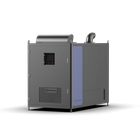
14% reduction in annual electricity consumption, 55% savings on maintenance costs. Significant cost reduction and high-quality air achieved through high-efficiency operation. A product that is rapidly being adopted in industrial plants worldwide has arrived in Japan. ■ Amid the soaring energy costs and rising prices putting heavy pressure on manufacturing sites, we contribute to cost reduction through energy savings and the challenges of decarbonization management. - The rotating shaft floats due to the magnetic field reaction of permanent magnets. - Since it is in a floating state, it rotates without contact, resulting in zero friction resistance. Since there is no friction resistance... - High-efficiency rotation = energy savings - Fewer failures = reduced maintenance - No lubrication oil required = zero oil - Low noise and low vibration = environmental improvement [Unique Cooling System] - Cooling occurs only within the unit due to its special structure. - No separate cooler installation required (cost reduction). [Zero Oil] - Certified with the highest grade of international quality standard 'Oil Class Zero.' - No need for oil filters or separators (cost reduction). [Reduced Maintenance] No need to replace consumable parts like bearings and oil seals or to change oil. (Normal maintenance only requires air filter replacement.)
Added to bookmarks
Bookmarks listBookmark has been removed
Bookmarks listYou can't add any more bookmarks
By registering as a member, you can increase the number of bookmarks you can save and organize them with labels.
Free membership registration
The "Sun Purification Center Ume no Sato" is a facility specializing in the treatment of seasoning liquid generated during the production of pickled plums, a specialty product of Wakayama Prefecture. The high-salinity wastewater (up to 15% salt concentration) produced during the production process of seasoned pickled plums was previously disposed of as industrial waste outside the region. The facility was established in response to the desire to "process this seasoning wastewater locally." The seasoning liquid collected from the pickled plum processing factory is adjusted to a pH suitable for microbial treatment, and organic matter is decomposed and removed through treatment with specialized microorganisms (halophilic bacteria). The microbial treatment process is repeated, and after removing fine debris, it is confirmed that the water meets discharge standards before being released into rivers. In the event of any abnormal readings, there is a fail-safe measure in place that automatically halts the discharge into the river. [Case Study] ■ Proposal Introduction of custom-made microorganisms that efficiently decompose even at high salt concentrations. ■ Implementation Effect The organic matter concentration of the treated water was significantly reduced below discharge standards, resulting in a reduction of approximately 43% in the treatment costs of the seasoning wastewater, leading to cost savings.
Added to bookmarks
Bookmarks listBookmark has been removed
Bookmarks listYou can't add any more bookmarks
By registering as a member, you can increase the number of bookmarks you can save and organize them with labels.
Free membership registration
Kowa Shoji is engaged in the proposal business for water treatment equipment and odor treatment equipment. As the export of waste plastics to overseas becomes stricter, the construction of processing plants in Japan is progressing rapidly. Last year, our company received orders from two companies for recycling plants for business-related PET bottles. Since an alkaline chemical solution is used during the cleaning process, the wastewater becomes strongly alkaline. Both companies are located in regions with very strict discharge standards for rivers and marine areas, which is why we proposed a treatment method that complies with the discharge standards of the rivers. 【Treatment Method】 Pressurized flotation treatment → Fluid carrier → Membrane separation → Discharge (partially reused) → Sedimentation → Dewatering → Industrial waste disposal 【Implementation Effects】 ■ 50% of the daily discharge water volume is reused Company U: 480 m³ → 240 m³ Company T: 720 m³ → 360 m³ The volume of industrial waste was reduced by concentrating the wastewater and applying dewatering treatment. *For more details, please refer to the PDF document or feel free to contact us.
Added to bookmarks
Bookmarks listBookmark has been removed
Bookmarks listYou can't add any more bookmarks
By registering as a member, you can increase the number of bookmarks you can save and organize them with labels.
Free membership registration
Kowa Trading has been involved in environmental protection equipment and systems for many years, solving the problems faced by customers with various wastewater treatment facilities. This time, we are introducing several examples in our "Case Studies" that resolved the issues of customers with wastewater treatment challenges and also led to cost reductions. [Contents] ■ Case Studies - A manufacturing company using waste oil as raw material - A ship bottom paint manufacturer - A pickled plum manufacturing company - A food factory ■ Product Introduction ■ Company Introduction *For more details, please refer to the PDF document or feel free to contact us.
Added to bookmarks
Bookmarks listBookmark has been removed
Bookmarks listYou can't add any more bookmarks
By registering as a member, you can increase the number of bookmarks you can save and organize them with labels.
Free membership registration
"OUR-N" is a smart technology that monitors the nitrification reaction in SBR through oxygen utilization rate measurement. By continuously measuring the oxygen consumption rate of microorganisms in SBR (Sequencing Batch Reactor) facilities, it appropriately controls the on/off of the blower, reducing energy consumption during aeration by 30-40% compared to conventional methods. (Based on field test results at wastewater treatment plants) Utilizing the oxygen consumption rate of microorganisms, it enables monitoring of the endpoint of the nitrification reaction and control of the aeration on/off. [Features] ■ Continuous measurement of the oxygen consumption rate of microorganisms in SBR facilities ■ Appropriate control of the blower on/off ■ Reduction of energy consumption during aeration by 30-40% compared to conventional methods *For more details, please refer to the PDF materials or feel free to contact us.
Added to bookmarks
Bookmarks listBookmark has been removed
Bookmarks listYou can't add any more bookmarks
By registering as a member, you can increase the number of bookmarks you can save and organize them with labels.
Free membership registration
At a food factory that produces frozen dumplings and gyudon ingredients, issues arose due to the deterioration of sludge sedimentation, leading to sludge overflow and odor problems. Complaints were received from nearby residents, and we were consulted on how to address the situation. Among various countermeasure proposals, we chose a method focused on oil removal and made our suggestions. (We also considered sludge reduction in our proposal.) We utilized a special oil-decomposing microorganism to treat the oil and suspended solids (SS). As a result, the sedimentation of the sludge improved, and the quality of the treated water increased. Complaints from nearby residents ceased entirely, and a sludge reduction rate of 77% was achieved. 【Case Study】 ■ Food Factory ■ Issues - Deterioration of sludge sedimentation leading to sludge overflow and odor generation - Large amounts of animal and vegetable oils mixed in, making treatment difficult *For more details, please refer to the PDF document or feel free to contact us.
Added to bookmarks
Bookmarks listBookmark has been removed
Bookmarks listYou can't add any more bookmarks
By registering as a member, you can increase the number of bookmarks you can save and organize them with labels.
Free membership registration
There was a request from a plant manufacturer to treat the concentrated water that comes from the RO membrane treatment of leachate from a landfill. The requester had a plan to reuse the leachate treatment water from the landfill, but the salinity of the treated water was too high for reuse. Therefore, we proposed to treat the concentrated liquid, which accounts for 40% of the treated water discharged from the RO membrane, using a vacuum distillation unit called "Gen," to separate the concentrated liquid into distilled water and salt. As a result, the landfill, which had difficulty securing water in the mountains, was able to conserve valuable water resources and easily secure the necessary water volume through this method. [Case Study] ■ Request: To treat the concentrated water that comes from the RO membrane treatment of leachate from the landfill ■ Proposal: Proposed the vacuum distillation unit "Gen" ■ Implementation Effect: Valuable water resources were conserved, and securing the necessary water volume became easier. *For more details, please refer to the PDF document or feel free to contact us.
Added to bookmarks
Bookmarks listBookmark has been removed
Bookmarks listYou can't add any more bookmarks
By registering as a member, you can increase the number of bookmarks you can save and organize them with labels.
Free membership registration
The seasoned plum waste liquid had high salt and BOD concentrations, leading to ongoing troubles and increasing costs. Additionally, the seasoned waste liquid was also strong acid waste, and processing it as industrial waste resulted in significantly high costs. At that time, the daily volume of waste liquid classified as industrial waste was 3m3, with a processing cost of ¥90,000 per day. Therefore, we proposed the "Bio-RESE" system using special microorganisms (halophiles) that can handle high-salt waste liquids. Without changing the capacity of the existing aeration tank, we repurposed the circulation tank from an overflow tank to establish the BJ system. As a result, we achieved a BOD decomposition of 450 kg per day. [Case Study] ■ Industry: Manufacturing of pickled plums, a local industry in Wakayama ■ Inquiry: Treatment of seasoned waste liquid *For more details, please refer to the PDF document or feel free to contact us.
Added to bookmarks
Bookmarks listBookmark has been removed
Bookmarks listYou can't add any more bookmarks
By registering as a member, you can increase the number of bookmarks you can save and organize them with labels.
Free membership registration
The "Sun Purification Center Ume no Sato," designed by our company, is a facility specialized in the treatment of seasoning liquid generated during the production of pickled plums, a specialty product of Wakayama Prefecture. The high-salinity wastewater (up to 15% salt concentration) produced from the process of making seasoned pickled plums was previously disposed of as industrial waste outside the region. In response to the demand to "process the seasoning wastewater locally," it was decided to construct the facility in Ichinose, Kamitonda Town. The seasoning liquid collected from the pickled plum processing factory is adjusted to a pH suitable for microbial treatment, and organic matter is decomposed and removed using specialized microorganisms (halophilic bacteria). The microbial treatment process is repeated, and after removing fine debris, it is confirmed that the treated water meets the discharge standards before being released into the river. In the event of any abnormal readings, there are comprehensive measures in place to automatically halt the discharge into the river. [Case Study] ■ Proposal - Introduction of custom-made microorganisms that efficiently decompose even at high salt concentrations. ■ Implementation Effect - The concentration of organic matter in the treated water was significantly reduced below the discharge standards. *For more details, please refer to the PDF document or feel free to contact us.
Added to bookmarks
Bookmarks listBookmark has been removed
Bookmarks listYou can't add any more bookmarks
By registering as a member, you can increase the number of bookmarks you can save and organize them with labels.
Free membership registration
A feed manufacturing company that uses waste oil (such as vegetable oil and fish oil) as raw material requested to increase the dissolved oxygen (DO) in the biological treatment tank without changing the airflow of the blower. The issue at this company's treatment facility is that fluctuations in the characteristics of the wastewater lead to variations in the load on the biological treatment process. Therefore, we proposed upgrading to a master diffuser, which has a higher oxygen transfer efficiency than the existing disc-type diffuser. To increase the DO without changing the existing aeration airflow (9.7 m³/min), it is necessary to enhance the oxygen transfer efficiency, which is why we switched from the current disc-type diffuser to the master diffuser (MD). The MD can produce fine bubbles with high oxygen transfer efficiency at a lower energy cost. [Case Study] - Feed manufacturing company using waste oil (such as vegetable oil and fish oil) - Request: Increase the DO in the biological treatment tank without changing the blower's airflow - Proposal: Master diffuser with higher oxygen transfer efficiency than the disc-type diffuser *For more details, please refer to the PDF document or feel free to contact us.
Added to bookmarks
Bookmarks listBookmark has been removed
Bookmarks listYou can't add any more bookmarks
By registering as a member, you can increase the number of bookmarks you can save and organize them with labels.
Free membership registration
At Kowa Shoji, we handle the "Vacuum Dehydration Drying Device" that purifies waste liquid through dehydration and drying. This device separates moisture from concentrated waste liquids and high-water-content sludge using a vacuum distillation method, contributing to the reduction of industrial waste volume and the reuse of wastewater. The drive unit is maintenance-free with only a pump, and pre-adjustment of the treated sludge is unnecessary, allowing for automatic operation in both "batch" and "continuous" modes. Additionally, by adding a weighing unit, the concentration ratio can be set arbitrarily, improving efficiency. 【Features】 ■ Automatic operation in both "batch" and "continuous" modes ■ Maintenance-free drive unit with only a pump ■ Fully automatic operation with an automatic discharge mechanism for residual sludge ■ Possible moisture content of 1-5% in the processed cake ■ In batch operation, adjustment of moisture levels is possible *For more details, please refer to the PDF document or feel free to contact us.
Added to bookmarks
Bookmarks listBookmark has been removed
Bookmarks listYou can't add any more bookmarks
By registering as a member, you can increase the number of bookmarks you can save and organize them with labels.
Free membership registration
The high-efficiency aeration device "Master Diffuser" is an aeration device that can efficiently supply oxygen in the aeration tank of wastewater treatment facilities. By bringing the air blown into the tank into contact with specially shaped blades, it generates fine bubbles with excellent oxygen transfer efficiency (dissolution efficiency) while vigorously stirring the tank. This contributes to maintaining good microbial activity in the aeration tank. 【Features】 ■ Improvement of tank environment It improves the tank environment through high oxygen dissolution efficiency and strong stirring effects. ■ Energy-saving effect Compared to disk types, it has less load and can reduce power consumption by about 30%. ■ Maintenance-free It features a structure that is resistant to clogging. Made of SUS304 and 66 nylon, it is highly durable. ■ Suppression of settled sludge It lifts sludge from the bottom and stirs it within the tank, suppressing settled sludge. *For more details, please refer to the PDF document or feel free to contact us.
Added to bookmarks
Bookmarks listBookmark has been removed
Bookmarks listYou can't add any more bookmarks
By registering as a member, you can increase the number of bookmarks you can save and organize them with labels.
Free membership registration
The "Master Diffuser" is a diffusion device that efficiently supplies oxygen in aeration tanks of wastewater treatment facilities. By making the air blown into the tank come into contact with specially shaped blades, it generates fine bubbles with excellent oxygen transfer efficiency (dissolution efficiency) while vigorously stirring the tank. This contributes to maintaining good microbial activity in the aeration tank. 【Features】 ■ Improvement of tank environment It improves the tank environment through high oxygen dissolution efficiency and strong stirring effects. ■ Energy-saving effect Compared to disk types, it has less load and can reduce power consumption by about 30%. ■ Maintenance-free It features a structure that is resistant to clogging. Made of SUS304 and 66 nylon, it is highly durable. ■ Suppression of settled sludge It lifts sludge from the bottom and stirs it within the tank, suppressing settled sludge.
Added to bookmarks
Bookmarks listBookmark has been removed
Bookmarks listYou can't add any more bookmarks
By registering as a member, you can increase the number of bookmarks you can save and organize them with labels.
Free membership registrationSince microorganisms consume oxygen to process organic matter, sufficient oxygen is required in biological wastewater treatment. If adequate oxygen cannot be supplied during the aeration process, the efficiency of organic matter treatment decreases, and biological treatment consumes a lot of energy during aeration. There are various methods to reduce electricity consumption during aeration, but generating fine bubbles to improve oxygen transfer efficiency is commonly used. The "Master Diffuser" can produce fine bubbles with high oxygen transfer efficiency at lower energy consumption. 【Internal Structure】 ■ The new three-dimensional cutter model blade achieves high oxygen transfer efficiency. The shape of the three-dimensional wave-type cutter model blade creates different pressures on the water and bubbles passing through the blade due to the principle of a cyclone, which reduces large bubbles to fine ones and enhances oxygen transfer efficiency. ■ Made from 66 nylon, ensuring high durability. *For more details, please refer to the PDF document or feel free to contact us.
Added to bookmarks
Bookmarks listBookmark has been removed
Bookmarks listYou can't add any more bookmarks
By registering as a member, you can increase the number of bookmarks you can save and organize them with labels.
Free membership registrationKowa Shoji is a trading company specializing in environmental solutions. We constantly keep abreast of the latest trends in environmental technology and propose the most suitable equipment and systems to our client companies. Contents listed: - [Custom-made microbial wastewater purification technology] Bio-Lase System - [Ultrafine tornado bubble generator] Aqua Blaster - [Plant-based cleaning solution] Safe Care - Thermal insulation and heat insulation paint - [Heat ray glass coating agent] Isle Shield *For more details, please download the PDF or feel free to contact us.
Added to bookmarks
Bookmarks listBookmark has been removed
Bookmarks listYou can't add any more bookmarks
By registering as a member, you can increase the number of bookmarks you can save and organize them with labels.
Free membership registration
The "Master Diffuser" is a low-resistance aeration device that achieves high oxygen transfer efficiency through a newly developed three-dimensional wave-shaped cutter model blade. 【Internal Structure】 ■ The three-dimensional wave-shaped cutter model blade realizes high oxygen transfer efficiency. ⇒ The shape of the three-dimensional wave-shaped cutter model blade generates different pressures on the water and bubbles passing through the blade, using the principle of a cyclone, which reduces large bubbles into finer ones and enhances oxygen transfer efficiency. ■ Material: Made of 66 nylon ⇒ Maintains high durability. *For more details, please refer to the PDF document or feel free to contact us.
Added to bookmarks
Bookmarks listBookmark has been removed
Bookmarks listYou can't add any more bookmarks
By registering as a member, you can increase the number of bookmarks you can save and organize them with labels.
Free membership registration
We introduce examples of wastewater treatment facilities, coagulation and sedimentation equipment for chemical plants, nitrification and denitrification facilities, and wastewater treatment projects for food processing companies, metal processing factories, and food processing plants using the 'Bio-RESE System.' 【Case Studies - Excerpt from Catalog】 ■ Wastewater Treatment Facility Project for Metal Processing Factory <BIO-RESE Installation> - Location: Osaka Prefecture - Wastewater Components: Oil-containing (mainly mineral oil) - Treatment Method: Custom-made microbial treatment Using mineral oil-decomposing bacteria to break down mineral oil, which has been considered difficult to decompose - Treatment Capacity: 150 m³/day *For more details, please refer to the PDF document or feel free to contact us.
Added to bookmarks
Bookmarks listBookmark has been removed
Bookmarks listYou can't add any more bookmarks
By registering as a member, you can increase the number of bookmarks you can save and organize them with labels.
Free membership registration