1~5 item / All 5 items
Displayed results

Added to bookmarks
Bookmarks listBookmark has been removed
Bookmarks listYou can't add any more bookmarks
By registering as a member, you can increase the number of bookmarks you can save and organize them with labels.
Free membership registration
Contact this company
Contact Us OnlineBefore making an inquiry
Download PDF1~5 item / All 5 items

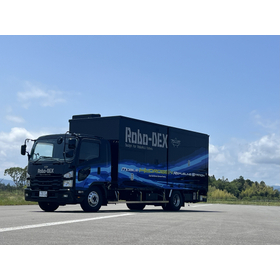
The hydrogen-fueled drone developed by our company can fly for long periods, but if the fuel cannot be easily refilled, there are still challenges to overcome. To address this issue, we have created this refilling truck! The truck is equipped with an explosion-proof chamber where empty tanks can be refilled.
Added to bookmarks
Bookmarks listBookmark has been removed
Bookmarks listYou can't add any more bookmarks
By registering as a member, you can increase the number of bookmarks you can save and organize them with labels.
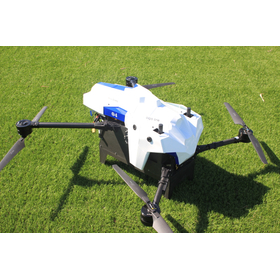
Free membership registration"Japan's first domestically produced hydrogen fuel cell drone developed & flight time increased by up to six times" The hydrogen fuel cell drone is a type of drone that uses hydrogen as fuel. It operates by supplying hydrogen from a high-pressure hydrogen container and using a fuel cell for flight. Compared to conventional battery-powered drones, it allows for longer flight times and is applied in logistics and wind power generation inspections. This technology is gaining attention for its consideration of the environment and its ability to achieve efficient flight times.
Added to bookmarks
Bookmarks listBookmark has been removed
Bookmarks listYou can't add any more bookmarks
By registering as a member, you can increase the number of bookmarks you can save and organize them with labels.
Free membership registration
The flight time of drones currently in circulation is mostly around 20 minutes, with the longest being limited to 30 minutes. Drones are expected to be utilized in logistics and infrastructure inspections, but the challenge lies in achieving long flight durations. To endure long flights, high-performance, long-lasting batteries are necessary; however, they add weight that affects flight, so it seems it will take a bit more time before practical implementation. Our company is currently collaborating with domestic and international drone companies to advance the development of fuel cell hybrid drones, which are gaining attention as next-generation drones. We are also actively seeking companies that would like to participate in this new development. *For more details, please refer to the related link page or feel free to contact us.*
Added to bookmarks
Bookmarks listBookmark has been removed
Bookmarks listYou can't add any more bookmarks
By registering as a member, you can increase the number of bookmarks you can save and organize them with labels.
Free membership registration
Although fuel cells are said to be the next-generation energy for drones, there are many user companies and organizations that are eager for long-duration flights right now. What is already in practical use is a hybrid drone powered by electricity generated from a 26cc two-stroke gasoline engine. The DJI "M600P" has been converted to hybrid. While there is some engine noise, we have succeeded in reducing vibrations. It can definitely fly for over 2 hours and can be equipped with several types of high-performance DJI cameras. In the future, by adding various units, it will become easy to perform long-duration tasks with drones. 【Features】 ■ Hybrid conversion of DJI "M600P" ■ Successful reduction of vibrations ■ Definitely capable of flying for over 2 hours ■ Can be equipped with several types of high-performance DJI cameras *For more details, please refer to the related link page or feel free to contact us.
Added to bookmarks
Bookmarks listBookmark has been removed
Bookmarks listYou can't add any more bookmarks
By registering as a member, you can increase the number of bookmarks you can save and organize them with labels.
Free membership registration
The "FCPM-2400" is a fuel cell power module that can achieve an output of 4.8kW by connecting two units in parallel. No additional hardware is required for parallel connection. It also successfully addresses the issue of flight time limitations imposed by batteries, extending the flight time of UAVs to about three times that of batteries. This provides a practical solution for those developing larger UAVs with greater payload capacities. 【Features】 - Easy to handle, lightweight, and highly durable - Generates clean DC power using hydrogen and air, offering excellent cost performance - Compared to battery-powered systems, it has a higher energy density per weight, and refueling with fuel takes only a few minutes *For more details, please download the PDF or feel free to contact us.
Added to bookmarks
Bookmarks listBookmark has been removed
Bookmarks listYou can't add any more bookmarks
By registering as a member, you can increase the number of bookmarks you can save and organize them with labels.
Free membership registration