1~11 item / All 11 items
Displayed results
Added to bookmarks
Bookmarks listBookmark has been removed
Bookmarks listYou can't add any more bookmarks
By registering as a member, you can increase the number of bookmarks you can save and organize them with labels.
Free membership registration
Contact this company
Contact Us Online1~11 item / All 11 items

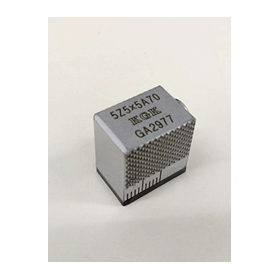
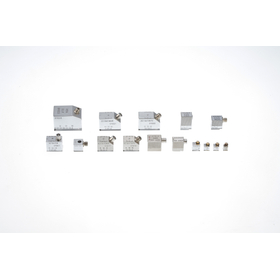
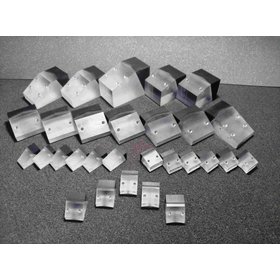
■Overview This is an angled beam probe primarily used for detecting defects in the thickness direction of welded joints, bars and pipes, shafts, and rails. The contact surface of the probe can also be machined to match the surface shape of the test object.
Added to bookmarks
Bookmarks listBookmark has been removed
Bookmarks listYou can't add any more bookmarks
By registering as a member, you can increase the number of bookmarks you can save and organize them with labels.
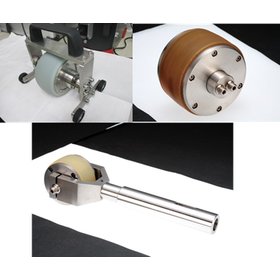
Free membership registration■Overview This is a probe that can perform flaw detection using a dry coupling method that does not require a contact medium (non-couplant). ■Features - No contact coupling paste required - Not affected by surface roughness - The contact surface is soft, allowing flexible contact with the test surface.
Added to bookmarks
Bookmarks listBookmark has been removed
Bookmarks listYou can't add any more bookmarks
By registering as a member, you can increase the number of bookmarks you can save and organize them with labels.
Free membership registration
■Overview These are dual element contact probes used for flaw detection of steel plates and round bars, and for applications such as flaw detection and thickness measurement of steel plates, pipes, and tanks. They also include dual element angle probes used for inspecting welded joints, and dual element longitudinal wave angle probes used for flaw detection of austenitic stainless steel welds. Customization of appearance and inter-axial distance is available.
Added to bookmarks
Bookmarks listBookmark has been removed
Bookmarks listYou can't add any more bookmarks
By registering as a member, you can increase the number of bookmarks you can save and organize them with labels.
Free membership registration
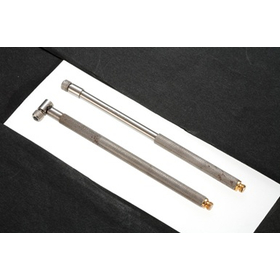
KGK, which developed the world's smallest probes "Chibi-ta-kun" and "Pechako-san," manufactures and sells insertion probes. These probes are used for thickness measurement and ultrasonic flaw detection by being inserted from the end faces of pipes such as heat exchanger tubes and hollow shafts. Additionally, insertion-type probes are useful for inspecting narrow and complex structures, such as the insertion parts of inspection jigs for aircraft engines. The insertion-type probes include various types, such as multi-channel probes that can be used in arrays, dual- element probes designed for thickness measurement, mirror-type reflective probes used for ultrasonic flaw detection and thickness measurement, angle-variable probes that can change the angle of the probe tip, and ultra-compact insertion probes. KGK designs and manufactures insertion-type probes tailored to the shape of the test specimen and the customer's requirements. Please contact us for more information.
Added to bookmarks
Bookmarks listBookmark has been removed
Bookmarks listYou can't add any more bookmarks
By registering as a member, you can increase the number of bookmarks you can save and organize them with labels.
Free membership registration
The probe, also known as a transducer, is an essential item for ultrasonic testing. KGK, as a specialized manufacturer of probes, has a wealth of experience in delivering a wide variety of probes. This document introduces special probes from KGK that are not listed in the catalog. To deepen your understanding of probes, we also provide some explanations about testing methods and probes, along with product introductions. We present unique and proven probes such as small probes, thin probes, array probes, longitudinal wave angled probes, variable angle probes, creeping probes, and others. Please use this material as a reference when considering probes.
Added to bookmarks
Bookmarks listBookmark has been removed
Bookmarks listYou can't add any more bookmarks
By registering as a member, you can increase the number of bookmarks you can save and organize them with labels.
Free membership registration
Special-purpose probes (custom probes, made-to-order probes) Examples of special-purpose probes: ● Low-frequency probes for applications such as flaw detection in Carbon composite, rubber, concrete, Engineered wood, etc. ● High-temperature probes for applications such as flaw detection and thickness measurement of high-temperature materials. ● Pencil-type probes suitable for thickness measurement in uneven surfaces. ● Insertion-type probes that can be used by being inserted into pipes. ● Roller probes (tire-type probes) that can be used for pulse reflection, transmission methods, etc. ● Airborne ultrasonic probes designed for flaw detection in air. ● Guided wave probes for guided wave flaw detection. ● We also accept inquiries for probes and fixtures for other special applications.
Added to bookmarks
Bookmarks listBookmark has been removed
Bookmarks listYou can't add any more bookmarks
By registering as a member, you can increase the number of bookmarks you can save and organize them with labels.
Free membership registration
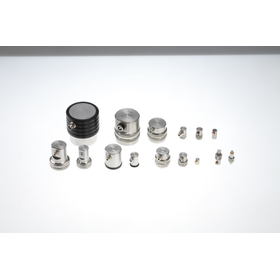
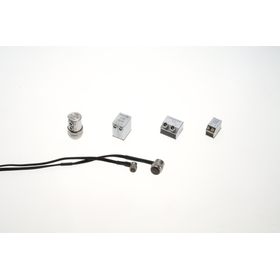
In 1988, KGK developed the world's smallest ultrasonic probes: the ultra-compact probe “Chibita-kun” and the ultra-thin probe “Pechako-san.” Since then, KGK has offered a standard lineup of ultra-compact probes designed for ultrasonic testing in narrow and extremely small areas. Despite their small size, these reliable probes provide solid quality and performance. For vertical inspection and immersion testing, you can use the world’s smallest probes, “Chibita-kun” and “Pechako-san,” and for angled inspections, you can choose from ultra-compact angled probes such as the UX, UM, and UA series, depending on your application. ● Ideal for testing in narrow spaces, etc. ● Ultra-small probes can scan surfaces that cannot be scanned with standard probes. ● ChibiTa-kun has φ2×3mmL (minimum) ● PechaKo-san has a thickness of 1mm ● We also welcome inquiries regarding size dimensions.
Added to bookmarks
Bookmarks listBookmark has been removed
Bookmarks listYou can't add any more bookmarks
By registering as a member, you can increase the number of bookmarks you can save and organize them with labels.
Free membership registration
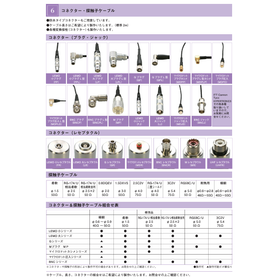
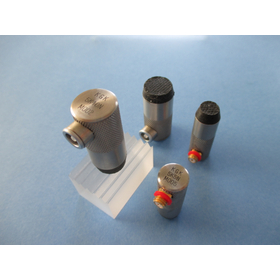
Ultrasonic flaw detection Probes Comprehensive Catalog Ultrasonic flaw detection is an essential non-destructive testing method used in various industries, including aerospace, automotive, railway, shipbuilding, construction (such as towers, bridges, roads, and buildings), as well as in the gas and power industries, for the manufacturing and maintenance inspection of products and equipment. The Inspection Technology Research Institute is a specialized manufacturer of ultrasonic flaw detection probes, which are indispensable for ultrasonic flaw detection. The comprehensive catalog includes various probes and probe cables, including standard contact probes and angle beam probes, as well as special-purpose probes.
Added to bookmarks
Bookmarks listBookmark has been removed
Bookmarks listYou can't add any more bookmarks
By registering as a member, you can increase the number of bookmarks you can save and organize them with labels.
Free membership registration
● This is a probe that can perform flaw detection in accordance with the TOFD method standard NDIS2424. ● A lineup of probes that can be adapted to a minimum plate thickness of 4mm. ● Capable of being manufactured in a frequency range of 1MHz to 20MHz.
Added to bookmarks
Bookmarks listBookmark has been removed
Bookmarks listYou can't add any more bookmarks
By registering as a member, you can increase the number of bookmarks you can save and organize them with labels.
Free membership registration
● This is a probe used for phased array UT, TFM, FMC (synthetic aperture focusing technique ), etc. ● Types include linear array, annular array, and matrix array. ● Standard support for 8 to 256 channels (other channel counts are also available upon request). ● There are many proven applications for straight beam inspection, angle beam inspection, immersion inspection, and using gel wedges, among others. ● Please consult us regarding frequency, transducer dimensions, channel count, connector shapes, etc.
Added to bookmarks
Bookmarks listBookmark has been removed
Bookmarks listYou can't add any more bookmarks
By registering as a member, you can increase the number of bookmarks you can save and organize them with labels.
Free membership registration
● Defects can also be detected with dry coupling. ● Scanning is possible with a small amount of water (mist spray level). ● Can be used to detect defects in samples where liquids cannot be applied. ● Gel wedges can be made to match the shape of conventional transducers or array probes. ● Can be made to match the shape of the sample. ● By using a gel sheet, shear waves can be propagated into the sample. ● The material of the gel sheet does not contain moisture (it is non-hygroscopic and does not absorb water).
Added to bookmarks
Bookmarks listBookmark has been removed
Bookmarks listYou can't add any more bookmarks
By registering as a member, you can increase the number of bookmarks you can save and organize them with labels.
Free membership registration