Problem Solving Case Catalog
We have compiled examples of issues raised by customers that have been resolved.

Inquiry about this news
Contact Us OnlineMore Details & Registration
Details & Registration
Added to bookmarks
Bookmarks listBookmark has been removed
Bookmarks listYou can't add any more bookmarks
By registering as a member, you can increase the number of bookmarks you can save and organize them with labels.
Free membership registration
Inquiry about this news
Contact Us OnlineMore Details & Registration
Details & Registration
Added to bookmarks
Bookmarks listBookmark has been removed
Bookmarks listYou can't add any more bookmarks
By registering as a member, you can increase the number of bookmarks you can save and organize them with labels.
Free membership registration
The "Mechanical Stitching Method" by Nichinichisui Road Machinery Co., Ltd. is a new technique that allows for the repair of metal cracks without the application of heat. By using special bolts and reinforcement plates, cracks are physically removed, and repairs are made without causing any thermal impact on the base material. Repairs can be carried out even in environments where open flames cannot be used. Since no heat is applied, the disassembly of equipment is minimized. ◎ For more details, please contact us. ◎ If a detailed technical explanation is needed, please contact us.
Added to bookmarks
Bookmarks listBookmark has been removed
Bookmarks listYou can't add any more bookmarks
By registering as a member, you can increase the number of bookmarks you can save and organize them with labels.
Free membership registration
The "Mechanical Stitching Method" by Nichinichisui Road Machinery Co., Ltd. is a new technique that allows for the repair of metal cracks without the application of heat. By using special bolts and reinforcement plates, cracks are physically removed, and repairs are made without affecting the base material with heat. Repairs can be carried out in environments where open flames cannot be used. Since no heat is applied, the disassembly of equipment is minimized. ◎ For more details, please contact us. ◎ If a detailed technical explanation is needed, please contact us.
Added to bookmarks
Bookmarks listBookmark has been removed
Bookmarks listYou can't add any more bookmarks
By registering as a member, you can increase the number of bookmarks you can save and organize them with labels.
Free membership registration
● The production time for cast prototypes can be shortened! Since model making is not required, the production time for prototypes, which previously took about a month, can be significantly reduced. ● Model costs can be reduced! By directly producing sand molds from 3D data, there is no need for model production costs. If changes to the model are necessary, they can be addressed by modifying the 3D data. ● Similar products with different shapes and dimensions can be prototyped simultaneously! Different products, such as similar shapes or varying dimensions, can be molded at the same time in one molding process. This allows for the verification of multiple types in a short period.
Added to bookmarks
Bookmarks listBookmark has been removed
Bookmarks listYou can't add any more bookmarks
By registering as a member, you can increase the number of bookmarks you can save and organize them with labels.
Free membership registration
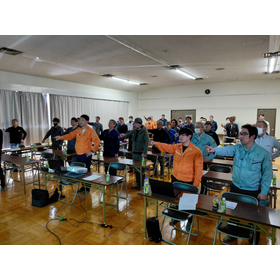
Last month, we held a spring safety conference hosted by our company. We have compiled the details and atmosphere of the day into a PDF. We would appreciate it if you could take a moment to read it.
Added to bookmarks
Bookmarks listBookmark has been removed
Bookmarks listYou can't add any more bookmarks
By registering as a member, you can increase the number of bookmarks you can save and organize them with labels.
Free membership registration
In recent years, as the importance of data integrity (DI) compliance in GMP environments has increased, there has been a growing call to deepen understanding of 21 CFR Part 11. This content introduces an on-demand presentation that organizes the background of Part 11, its relationship with DI, and its positioning in CSA guidance, while explaining the basic concepts of electronic records and electronic signatures. ■Content - Background and basic concepts of Part 11 - Relationship with data integrity (DI) - Positioning in CSA guidance - Basic requirements for electronic records/electronic signatures *This content is based on information as of March 17, 2026. *The information provided is intended for general informational purposes and does not guarantee specific compliance or suitability.
Added to bookmarks
Bookmarks listBookmark has been removed
Bookmarks listYou can't add any more bookmarks
By registering as a member, you can increase the number of bookmarks you can save and organize them with labels.
Free membership registration