Cost and CO2 reduction through wastewater treatment - Exhibiting at FOOMA JAPAN 2026
Methane fermentation wastewater treatment system "Tokutoku-bububu"

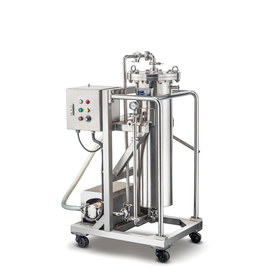
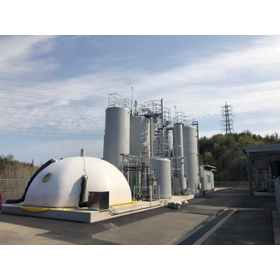
By changing wastewater treatment, both costs and CO2 emissions can be reduced. "Tokutoku-bububu" enables methane fermentation treatment of food wastewater.
"Tokutoku-bubububu" methane fermentation wastewater treatment is a method that utilizes microorganisms (anaerobic bacteria) that thrive in environments with little to no oxygen for wastewater treatment. This process converts the pollutants (organic matter) in the wastewater into methane gas. The generated methane gas has the same composition as city gas, and by using it as fuel for boilers and generators, it is possible to reduce the use of conventional fuels (fossil fuels). 【Features】 - The amount of excess sludge generated is minimal, allowing for simultaneous waste reduction. - Contributes to reducing running costs for electricity consumption and CO2 emissions. Reduction of fuel corresponds to Scope 1, reduction of electricity corresponds to Scope 2, and reduction of waste corresponds to Scope 3, making it a rapidly spreading technology for achieving decarbonization in factories. ◎ We will exhibit at FOOMA JAPAN 2026 (June 2-5, 2026 @ Tokyo Big Sight). Our product will also be on display, so please come visit us. *For more details, please download the catalog or contact us.
Inquire About This Product
basic information
Methane fermentation wastewater treatment has the advantage of generating energy from wastewater and consuming less power, making it a technology that can contribute to cost reduction as well as decarbonization. However, traditionally, only certain types of wastewater, such as those from sugar production and alcohol, were targeted for treatment. "Tokutoku-bububu" has significantly expanded the applicability of methane fermentation wastewater treatment, making it possible to apply it to most food wastewater. By implementing this system, it is possible to generate electricity from the methane gas obtained from wastewater while simultaneously greatly reducing the power consumption associated with wastewater treatment, lowering running costs, and contributing to decarbonization.
Price range
Delivery Time
※It takes several months to about a year to design for each object.
Applications/Examples of results
Most organic wastewater from food factories and some chemical factories is targeted. It can also be applied to wastewater containing oils, which has traditionally been difficult for methane fermentation. There are many industries with a track record of delivery, including soybean products, dairy products, Western confections, seasonings, fruit juices, and seafood processing. The gas generated is often used as boiler fuel within the factory, but there are also examples of operating generators and selling the generated electricity as renewable energy. We provide a system that creates profit from wastewater, which has not existed until now.
catalog(2)
Download All Catalogs
Company information

Since our establishment, we have provided innovative wastewater treatment technologies and products not only to end users but also to engineering manufacturers. In particular, our methane fermentation wastewater treatment system is a key technology for achieving decarbonization. We have also undertaken numerous enhancements and modifications to existing facilities, in addition to new installations. If you are currently facing issues or dissatisfaction with your wastewater facilities, or if you are considering capacity enhancements, please feel free to contact us.


![[Stable processing, reduction of electricity costs, sludge volume reduction, etc.] Food additive manufacturing factory](https://image.mono.ipros.com/public/product/image/066/2000696352/IPROS34995465976029830319.jpeg?w=280&h=280)


![Shardi Mixer for Pipe Cleaning [Revolutionizing Pipe Cleaning with Fine Bubbles]](https://image.mono.ipros.com/public/product/image/250/2000895680/IPROS39722310410349659214.png?w=280&h=280)