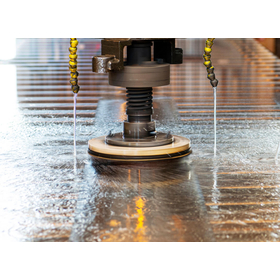
High-precision casting models that influence casting quality, compatible with various materials and complex shapes.

Complex shapes, cavities, and large parts can also be manufactured! Flexible response to design changes, ensuring stable quality and improved yield.
Casting is a processing method that involves pouring molten metal into a mold to create the desired shape, and the "origin" of this process is the casting model. The model serves as the master that determines the shape of the mold and directly impacts product accuracy, quality stability, and production efficiency. Here are the key points for choosing a 【casting model】! ■ Capable of handling complex shapes Casting is a highly flexible processing method, and with a model, it is possible to produce "various shapes" → significantly relaxes design constraints ■ Can accommodate small lots and single items Immediate response is possible with CAD data or drawings → suitable for prototypes and one-off items ■ Flexible response to design changes Since it is model-based, shape changes are easy → improves development speed ■ Stable quality and improved yield Model accuracy = product accuracy → reduces defects and reprocessing
Inquire About This Product
basic information
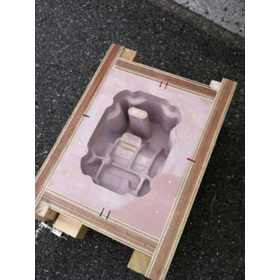
What is a casting model? A casting model is necessary for creating molds (sand molds). The process involves pouring molten metal into the impression left in the sand by the model to form a shape; this method is called casting, and the finished metal product is known as a casting. If a model can be produced, various shapes of metal products can also be manufactured. In cases where there are large holes or cavities, and simply embedding the model in sand makes it difficult to reveal the shape, it is possible to create the holes and cavities by attaching a core, which is a protruding part (core print), to the edge of the model beforehand and then fitting it in before casting. It is necessary to create a model for the outer shape and a box-shaped model called a core box for making the core. Sometimes, multiple models are required to produce a single casting. There are various types of models based on materials, such as wooden patterns, metal molds, and resin molds. Meisei Tecmo is continuously striving to meet the diverse needs for various models.
Price range
Delivery Time
Applications/Examples of results
■Examples of Casting Materials Casting can be made from various metals. - Flake Graphite Cast Iron (Gray Cast Iron) Cast iron is an alloy of iron that contains more than 2.1% carbon (C). Among them, gray cast iron has a low melting point and almost no shrinkage during solidification, making it suitable for casting. Due to the presence of graphite, it has vibration absorption properties, is hard yet easy to machine, is resistant to thermal shock, corrosion, and has wear resistance. - Ductile Cast Iron (Spheroidal Graphite Cast Iron) Ductile cast iron is a type of cast iron that has greater toughness than gray cast iron. - Aluminum Alloy With a specific gravity of about two-fifths that of cast iron, it allows for lighter castings of the same size compared to cast iron. The melting point of aluminum is about 660°C, which is lower than the melting point of cast iron at approximately 1150°C, making it suitable for die casting and mold casting. However, for small lots, short delivery times, or large items, it is also possible to create molds using models for production. - Stainless Steel Casting This is an alloy of iron with chromium, nickel, and other elements. It is resistant to rust and acid, and its properties can be altered by adjusting the composition or heat treatment to enhance machinability and wear resistance.
catalog(1)
Download All Catalogs
Company information

Meisei Tecmo is a manufacturer of casting models. We handle various cast products such as cast iron and aluminum. With our know-how in model production and collaboration with foundries, we support the provision of castings that meet our customers' needs. Please feel free to contact us if you have any requests.