We have compiled a list of manufacturers, distributors, product information, reference prices, and rankings for Catalyst Materials.
ipros is IPROS GMS IPROS One of the largest technical database sites in Japan that collects information on.

Catalyst Materials Product List and Ranking from 10 Manufacturers, Suppliers and Companies

Last Updated: Aggregation Period:Dec 31, 2025~Jan 27, 2026
This ranking is based on the number of page views on our site.

Catalyst Materials Manufacturer, Suppliers and Company Rankings

Last Updated: Aggregation Period:Dec 31, 2025~Jan 27, 2026
This ranking is based on the number of page views on our site.

  1. イールド Kyoto//Chemical
  2. GSアライアンス 冨士色素株式会社 内 Hyogo//Chemical
  3. 信州TLO Nagano//Educational and Research Institutions
  4. 4 EBINAX 旧 ヱビナ電化工業(株) Tokyo//Manufacturing and processing contract
  5. 5 ナノ・ミール Shizuoka//Chemical

Catalyst Materials Product ranking

Last Updated: Aggregation Period:Dec 31, 2025~Jan 27, 2026
This ranking is based on the number of page views on our site.

  1. Material for artificial photosynthesis: Carbon nitride (C3N4) GSアライアンス 冨士色素株式会社 内
  2. Freshness preservation using photocatalytic Titanistar for food. イールド
  3. High efficiency in artificial photosynthesis! Photocatalysts and photoelectrodes for water splitting [Shinshu University Engineering] 信州TLO
  4. 4 Photocatalytic material "Titanistar(R)" イールド
  5. 5 Photocatalytic Material for Agriculture: Titanistar® イールド

Catalyst Materials Product List

16~26 item / All 26 items

Displayed results

Freshness preservation using photocatalytic Titanistar for food.

The photocatalyst Titanister supports the preservation of food freshness.

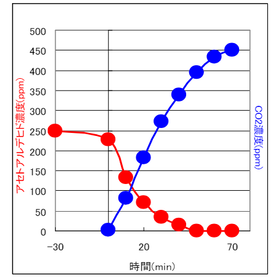
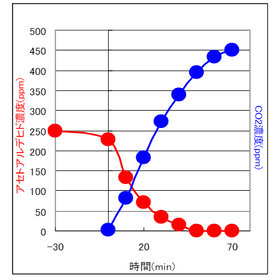
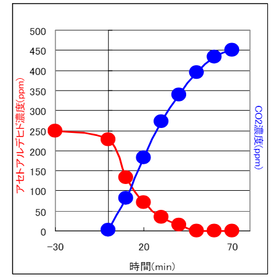
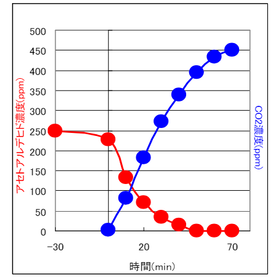
In the food industry, it is important to maintain product quality and provide consumers with safe food. In particular, preserving freshness is essential for extending the shelf life of food and reducing waste loss. Photocatalytic titania has the potential to break down substances that cause food spoilage and deterioration, thereby prolonging freshness. It is suitable for the decomposition of ethylene gas. 【Application Scenarios】 - Food storage and transportation - Food processing - Food packaging 【Effects of Implementation】 - Extension of food freshness preservation period - Reduction of food waste loss - Improvement of consumer satisfaction

  • others
  • Catalyst Materials

Added to bookmarks

Bookmarks list

Bookmark has been removed

Bookmarks list

You can't add any more bookmarks

By registering as a member, you can increase the number of bookmarks you can save and organize them with labels.

Free membership registration

Photocatalytic Material for Agriculture: Titanistar®

We protect crops from diseases with photocatalytic technology recognized by UN agencies!

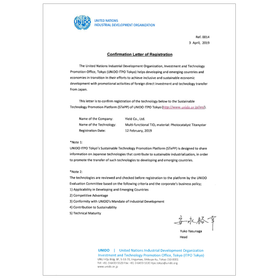
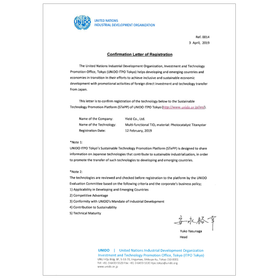
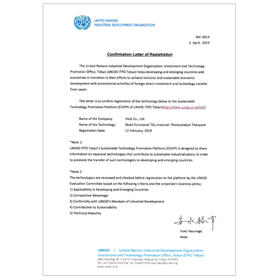
In the agricultural sector, crop diseases significantly affect yield and quality, becoming a serious issue. The occurrence of diseases can lead to increased pesticide use, which may heighten the environmental burden. The photocatalytic material "Titanistar(R)" has effects on water purification and air cleaning, and it may contribute to the suppression of bacteria and viruses that cause diseases. It has also received technical approval from the United Nations Industrial Development Organization (UNIDO), and its technological capabilities have been evaluated by third-party organizations. 【Usage Scenarios】 - Irrigation of crops - Air purification inside greenhouses 【Effects of Implementation】 - Reduction of disease risk - Potential contribution to the reduction of pesticide usage

  • Other polymer materials
  • Catalyst Materials

Added to bookmarks

Bookmarks list

Bookmark has been removed

Bookmarks list

You can't add any more bookmarks

By registering as a member, you can increase the number of bookmarks you can save and organize them with labels.

Free membership registration

Anti-fouling measures using photocatalytic Titanistar® for the fisheries sector.

Anti-fouling measures in the fisheries sector! Photocatalytic technology recognized by UN agencies.

In the fisheries industry, the attachment of marine organisms to fishing gear and aquaculture facilities (biofouling) has become a significant issue that leads to decreased productivity and increased costs. Particularly in areas with low water flow or high organic matter, biofouling tends to accelerate, necessitating effective countermeasures. Photocatalytic Titanister® contributes to water purification and water quality improvement, and is also expected to serve as a biofouling countermeasure. 【Application Scenarios】 - Fishing nets - Structures of aquaculture facilities - Other areas where the attachment of marine organisms is problematic 【Effects of Implementation】 - Suppression of marine organism attachment - Improved durability of fishing gear and facilities - Reduction of maintenance costs

  • Other polymer materials
  • Catalyst Materials

Added to bookmarks

Bookmarks list

Bookmark has been removed

Bookmarks list

You can't add any more bookmarks

By registering as a member, you can increase the number of bookmarks you can save and organize them with labels.

Free membership registration

Titanistar® for the Energy Industry

Achieve energy efficiency with photocatalytic technology recognized by UN agencies.

In the energy industry, improving the operational efficiency of equipment is essential. In particular, water quality management and air purification are crucial for maintaining equipment performance. Inadequate water quality or air conditions can lead to equipment degradation and a decrease in energy efficiency. The photocatalytic material "Titanister(R)" contributes to water purification, air cleaning, and measures against general bacteria and various viruses, supporting energy efficiency. 【Usage Scenarios】 - Purification of cooling water in power plants and facilities - Air purification in energy-related facilities - Streamlining wastewater treatment processes 【Benefits of Implementation】 - Prolonged equipment lifespan - Reduction in energy consumption - Achievement of stable operations

  • Other polymer materials
  • Catalyst Materials

Added to bookmarks

Bookmarks list

Bookmark has been removed

Bookmarks list

You can't add any more bookmarks

By registering as a member, you can increase the number of bookmarks you can save and organize them with labels.

Free membership registration

Freshness preservation with Titanistar for food products.

Preserve the freshness of food and suppress quality deterioration.

In the food industry, maintaining product freshness is essential for customer satisfaction and business continuity. In particular, temperature changes, humidity, and bacterial growth are factors that accelerate the deterioration of food quality. Inadequate freshness preservation measures can lead to product waste and complaints, potentially resulting in losses for the company. The photocatalytic material "Titanistar(R)" contributes to water purification, gas purification, and measures against general bacteria and various viruses, supporting the preservation of food freshness. 【Usage Scenarios】 - Food storage facilities - Transport containers - Manufacturing lines for processed foods 【Effects of Implementation】 - Suppression of food spoilage and deterioration - Extension of product quality retention period - Reduction of food waste

  • Other polymer materials
  • Catalyst Materials

Added to bookmarks

Bookmarks list

Bookmark has been removed

Bookmarks list

You can't add any more bookmarks

By registering as a member, you can increase the number of bookmarks you can save and organize them with labels.

Free membership registration

Titanistar® for Public Transportation

Virus measures for public transportation! Photocatalytic technology recognized by UN agencies.

In public transportation, virus countermeasures in vehicles and station premises are crucial to protect the safety and health of passengers. Especially in places used by an unspecified number of people, effective measures to reduce infection risks are required. The photocatalytic material "Titanista(R)" demonstrates a high virus suppression effect and contributes to enhancing the safety of public transportation. 【Usage Scenarios】 - Inside trains and buses - Station premises and waiting rooms - Ticket machines and handrails 【Effects of Implementation】 - Air purification inside vehicles and stations - Reduction of contact infection risks - Maintenance of a clean environment

  • Other polymer materials
  • Catalyst Materials

Added to bookmarks

Bookmarks list

Bookmark has been removed

Bookmarks list

You can't add any more bookmarks

By registering as a member, you can increase the number of bookmarks you can save and organize them with labels.

Free membership registration

Improvement of photocatalytic ability by inverse opal structure in nanomaterials

Creating inverse opal structures! Here we introduce examples that enhance photocatalytic capabilities.

An example of creating a two-layer TiO2/BiVO4 framework with an inverse opal structure to enhance photocatalytic ability. It has been confirmed that the photocatalytic ability increased by 8.5 times and 2.2 times compared to single-layer and single-film inverse opal structures, respectively. The high periodicity of the inverse opal structure allows for light absorption and exhibits high photocatalytic activity, but it traps slow photons within a narrow wavelength range. Therefore, the usable wavelengths are limited. To overcome this, a two-layer TiO2/BiVO4 inverse opal structure with different pore sizes was created to form two photonic band gaps, enabling the capture of slow photons. *For more detailed information, please refer to the related links. Feel free to contact us for further inquiries.*

  • others
  • Catalyst Materials

Added to bookmarks

Bookmarks list

Bookmark has been removed

Bookmarks list

You can't add any more bookmarks

By registering as a member, you can increase the number of bookmarks you can save and organize them with labels.

Free membership registration

Anti-fouling measures using photocatalytic Titanistar for fisheries.

Using photocatalytic technology recognized by UN agencies for anti-fouling measures in aquatic products.

In the fisheries industry, the attachment of marine organisms to fishing gear and aquaculture facilities (fouling) has become a challenge that leads to decreased production efficiency and increased costs. This issue tends to worsen, especially in areas with poor seawater flow or with fishing gear that is used for extended periods. Photocatalytic Titanister contributes to this antifouling measure, helping to maintain the quality of seafood. 【Usage Scenarios】 - Coating of fishing nets and aquaculture nets - Coating of walls and piping in aquaculture facilities - Coating of fishing vessel hulls 【Effects of Implementation】 - Suppression of marine organism attachment - Reduction of maintenance costs for fishing gear and facilities - Preservation of seafood quality

  • Other polymer materials
  • Catalyst Materials

Added to bookmarks

Bookmarks list

Bookmark has been removed

Bookmarks list

You can't add any more bookmarks

By registering as a member, you can increase the number of bookmarks you can save and organize them with labels.

Free membership registration

Photocatalytic Material for Agriculture: Titanistar®

Photocatalytic materials approved by UN agencies.

In the agricultural sector, crop diseases significantly impact yield and quality, becoming a source of concern for producers. In particular, measures against bacteria and viruses that cause diseases are crucial for stable agricultural management. The photocatalytic material "Titanistar(R)" has effects on water purification and air cleaning, and can be utilized as a countermeasure against substances that cause diseases. 【Usage Scenarios】 - Irrigation of crops - Air purification inside greenhouses 【Effects of Introduction】 - Reduction of disease risk - Improvement of crop quality

  • Other polymer materials
  • Catalyst Materials

Added to bookmarks

Bookmarks list

Bookmark has been removed

Bookmarks list

You can't add any more bookmarks

By registering as a member, you can increase the number of bookmarks you can save and organize them with labels.

Free membership registration

Photocatalytic Material for Schools: Titanistar(R)

Contributing to the improvement of the school environment! Photocatalytic technology recognized by UN agencies.

In the school environment, air purification and water quality improvement are necessary to protect the health of students and staff. Particularly, hygiene management in classrooms and water supply facilities is crucial. The photocatalytic material "Titanister(R)" contributes to improving the school environment by decomposing harmful substances in the air and impurities in the water, thereby providing a clean environment. It has also received technical approval from the United Nations Industrial Development Organization (UNIDO), recognizing its effectiveness. 【Usage Scenarios】 - Air purification in classrooms, gymnasiums, etc. - Water quality purification in pools - Hygiene management of water supply facilities - Deodorization and antibacterial treatment in restrooms 【Effects of Implementation】 - Suppression of viruses and bacteria in the air - Decomposition of water pollutants - Realization of a clean and comfortable learning environment - Reduction of infection risks

  • Other polymer materials
  • Catalyst Materials

Added to bookmarks

Bookmarks list

Bookmark has been removed

Bookmarks list

You can't add any more bookmarks

By registering as a member, you can increase the number of bookmarks you can save and organize them with labels.

Free membership registration

[Research Material] Global Market for Precious Metal Catalyst Materials

World Market for Precious Metal Catalyst Materials: Homogeneous Catalysis, Heterogeneous Catalysis, Petrochemicals, Medical, New Energy, Others

This research report (Global Noble Metal Catalytic Materials Market) investigates and analyzes the current state and outlook for the global noble metal catalyst materials market over the next five years. It includes information on the overview of the global noble metal catalyst materials market, trends of major companies (sales, selling prices, market share), market size by segment, market size by major regions, and distribution channel analysis. The market segments by type focus on homogeneous and heterogeneous catalytic actions, while the segments by application cover petrochemicals, healthcare, new energy, and others. The regional segments calculate the market size of noble metal catalyst materials by dividing them into North America, the United States, Europe, Asia-Pacific, Japan, China, India, South Korea, Southeast Asia, South America, the Middle East, and Africa. It also includes the market share of major companies in noble metal catalyst materials, product and business overviews, and sales performance.

  • Other services
  • Catalyst Materials

Added to bookmarks

Bookmarks list

Bookmark has been removed

Bookmarks list

You can't add any more bookmarks

By registering as a member, you can increase the number of bookmarks you can save and organize them with labels.

Free membership registration