We have compiled a list of manufacturers, distributors, product information, reference prices, and rankings for Nonwoven.
ipros is IPROS GMS IPROS One of the largest technical database sites in Japan that collects information on.

Nonwoven Product List and Ranking from 85 Manufacturers, Suppliers and Companies

Last Updated: Aggregation Period:Dec 24, 2025~Jan 20, 2026
This ranking is based on the number of page views on our site.

Nonwoven Manufacturer, Suppliers and Company Rankings

Last Updated: Aggregation Period:Dec 24, 2025~Jan 20, 2026
This ranking is based on the number of page views on our site.

  1. Oji Group Functional Materials Company Tokyo//Paper and pulp
  2. 廣瀬製紙 Kochi//Resin/Plastic
  3. 東レ Tokyo//fiber
  4. 4 司フエルト商事 Tokyo//fiber
  5. 5 三菱ガス化学ネクスト(旧日本ユピカ) 本社 Tokyo//Resin/Plastic

Nonwoven Product ranking

Last Updated: Aggregation Period:Dec 24, 2025~Jan 20, 2026
This ranking is based on the number of page views on our site.

  1. New material "Axtar PF" as a substitute for paper and film. 東レ
  2. Airlaid non-woven fabric / Dry pulp non-woven fabric (Kinocross) Oji Group Functional Materials Company
  3. Sample giveaway! Sound-absorbing and insulating material 'NOISELITE' 司フエルト商事
  4. 4 FRP Laminating Foam Nonwoven Fabric "Yupika Mat" 三菱ガス化学ネクスト(旧日本ユピカ) 本社
  5. 5 Long fiber non-woven fabric Colback フロイデンベルグ・スパンウェブ・ジャパン

Nonwoven Product List

91~105 item / All 188 items

Displayed results

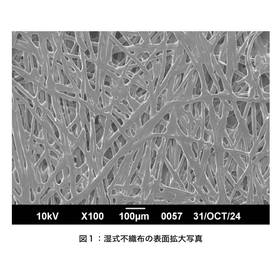
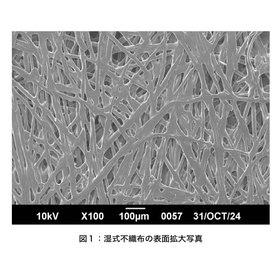
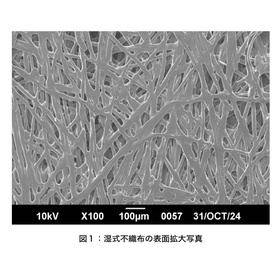
TH type (100% polyester wet non-woven fabric)

This is a wet non-woven fabric suitable for applications such as filter substrates, printing substrates, and tape substrates!

The "TH type" is a wet non-woven fabric made of 100% polyester, featuring characteristics such as dimensional stability and resin impregnation. It comes in high-density 05TH, low-density 15TH, and ultra-high-density S, with thermal dimensional stability stable up to 200°C. Additionally, due to its high smoothness and resin adhesion, it can be used not only for industrial applications but also across a wide range of other fields. 【Features】 ■ Printability and insulation ■ Dimensional stability ■ Chemical resistance ■ Weather resistance ■ Smoothness *For more details, please refer to the PDF document or feel free to contact us.

  • Paper and pulp products

Added to bookmarks

Bookmarks list

Bookmark has been removed

Bookmarks list

You can't add any more bookmarks

By registering as a member, you can increase the number of bookmarks you can save and organize them with labels.

Free membership registration

What is non-woven fabric?

I will explain the characteristics and properties of non-woven fabric, its advantages and disadvantages, and its history! [Presentation materials introducing Hirose Paper's wet non-woven fabric technology are currently available.]

Non-woven fabric is widely used not only for everyday applications such as masks and diapers but also as industrial materials, making it an indispensable material in our lives. This page provides a detailed explanation of what non-woven fabric is. 【Table of Contents】 1. What is non-woven fabric 2. Applications of non-woven fabric 3. Characteristics of non-woven fabric (Advantages and Disadvantages) 3.1. Advantages of non-woven fabric 3.2. Disadvantages of non-woven fabric 4. History of non-woven fabric 5. Raw materials for non-woven fabric 5.1. Natural fibers 5.2. Synthetic fibers *For detailed content of the column, please refer to the related links. We are also offering a presentation on Hirose Paper's wet non-woven fabric technology, which can be downloaded from the link below.*

  • Other polymer materials

Added to bookmarks

Bookmarks list

Bookmark has been removed

Bookmarks list

You can't add any more bookmarks

By registering as a member, you can increase the number of bookmarks you can save and organize them with labels.

Free membership registration

Types and Characteristics of Non-Woven Fabric Manufacturing Processes

We will provide a compact introduction and explanation of the types and characteristics of non-woven fabric manufacturing processes [Presentation materials on Hirose Paper's wet non-woven fabric are currently available].

The characteristics of non-woven fabric are greatly influenced by the arrangement and bonding state and strength of the fibers, but these elements are determined by the choices and operations in the manufacturing process. This page explains the general manufacturing process of non-woven fabric from two perspectives: "the order of the manufacturing process" and "the main methods used in each process and their impact on non-woven fabric." 【Table of Contents】 1. Overview of the non-woven fabric manufacturing process 2. Types and characteristics of methods used in the web formation process of non-woven fabric 3. Types and characteristics of methods used in the web bonding process of non-woven fabric 4. Types and characteristics of methods used in the finishing treatment process of non-woven fabric *Detailed content of the column can be viewed through related links. We are also offering introductory materials on Hirose Paper's wet non-woven fabric, which can be downloaded from the link below.

  • Other polymer materials

Added to bookmarks

Bookmarks list

Bookmark has been removed

Bookmarks list

You can't add any more bookmarks

By registering as a member, you can increase the number of bookmarks you can save and organize them with labels.

Free membership registration

Main uses of non-woven fabric.

I will briefly introduce and explain the main uses of non-woven fabric. [Presentation materials on Hirose Paper's wet non-woven fabric are currently available.]

Non-woven fabric refers to fabric that is processed into sheet form by entangling fibers, and it is a very unique material that exhibits various functions depending on the differences in raw materials and manufacturing methods. This page will provide a detailed explanation of how non-woven fabric is used in various applications, from everyday products to industrial uses such as automobiles. 【Table of Contents】 1. Overview of the manufacturing process of non-woven fabric 2. Specific applications by classification 2-1 Everyday related uses 2-2 Medical and hygiene uses 2-3 Industrial uses (for vehicles) 2-4 Other industrial uses 2-5 Civil engineering and construction uses 2-6 Others *Detailed content of the columns can be viewed through related links. We are also offering introductory materials on Hirose Paper's wet non-woven fabric, which can be downloaded from the link below.

  • Other polymer materials

Added to bookmarks

Bookmarks list

Bookmark has been removed

Bookmarks list

You can't add any more bookmarks

By registering as a member, you can increase the number of bookmarks you can save and organize them with labels.

Free membership registration

Types and characteristics of materials used in non-woven fabrics.

This document introduces and explains the types and characteristics of materials used in non-woven fabrics [Presentation materials on Hirose Paper's wet non-woven fabrics are currently available].

Non-woven fabric refers to cloth that is processed into sheet form by entangling the fibers of the raw materials used, and it has the characteristic that its functions vary depending on the type of materials used. In this article, we will take a detailed look at the specific types of materials that serve as the raw materials for non-woven fabric and how each material affects the functions of non-woven fabric. 【Table of Contents】 1. Classification and Characteristics of Materials 2. Natural Fibers 3. Chemical Fibers 3-1. Synthetic Fibers 3-2. Regenerated Fibers *For detailed content of the column, please refer to the related links. We are also offering a presentation document about Hirose Paper's wet non-woven fabric, which can be downloaded from the link below.

  • Other polymer materials

Added to bookmarks

Bookmarks list

Bookmark has been removed

Bookmarks list

You can't add any more bookmarks

By registering as a member, you can increase the number of bookmarks you can save and organize them with labels.

Free membership registration

Continuous use temperature 200-220°C, reliable performance even in high-temperature environments! Wet non-woven fabric.

PPS fiber 100% wet non-woven fabric provides excellent heat resistance at a high melting point of 280°C.

Hirose Paper Co., Ltd.'s PPS fiber 100% wet non-woven fabric "PS type" uses PPS (polyphenylene sulfide), a super engineering plastic. This material has a very high heat resistance with a melting point of 280°C and a maximum continuous use temperature of 200-220°C, which is superior compared to other polymers such as PET and PE. This characteristic makes it ideal for use in the energy and mobility sectors, where stable performance is required in high-temperature environments. Additionally, PPS has heat resistance similar to PTFE, a type of fluorinated compound (PFAS), contributing to the reduction of environmental impact. Furthermore, the PS type can be processed into thicknesses ranging from 29 to 195 μm, accommodating various applications. *For more details, please refer to the PDF document or feel free to contact us.*

  • Paper and pulp products

Added to bookmarks

Bookmarks list

Bookmark has been removed

Bookmarks list

You can't add any more bookmarks

By registering as a member, you can increase the number of bookmarks you can save and organize them with labels.

Free membership registration

Melting point 280℃ / Maximum continuous use temperature 200-220℃ PPS non-woven fabric

Exhibits excellent performance in heat resistance (melting point 280°C, maximum continuous use temperature 200-220°C) and flame retardancy (high self-extinguishing property with LoI=34)!

In thermal design under high-temperature environments, the "deformation and deterioration" of materials poses a significant risk of serious troubles. Hirose Paper's PPS non-woven fabric (PS type) is a wet non-woven fabric made from 100% PPS fibers, demonstrating high heat resistance with a melting point of 280°C. Even when exposed to high temperatures for extended periods, it is less likely to undergo dimensional changes, enabling stable thermal control design. Additionally, PPS has resistance to many organic solvents and alkalis. Compared to polymers such as PET and PE, it exhibits higher resistance to organic solvents and alkalis, making it a noteworthy alternative material to PTFE in terms of chemical resistance. *For more details, please refer to the PDF document or feel free to contact us.*

  • PPS20g.png
  • PPS100g.png
  • Paper and pulp products

Added to bookmarks

Bookmarks list

Bookmark has been removed

Bookmarks list

You can't add any more bookmarks

By registering as a member, you can increase the number of bookmarks you can save and organize them with labels.

Free membership registration

The reasons for fiber shrinkage and deformation due to heat and methods to suppress it.

The article also introduces the effects of annealing treatment on suppressing thermal shrinkage and thermal deformation, as well as its effects in non-woven fabrics.

Have you ever experienced that your clothes shrank or became wrinkled after putting them in the dryer? The dryer dries clothes by blowing hot air, but the fibers in the fabric can deform or shrink due to the heat, resulting in the entire garment shrinking or wrinkling. Similarly, non-woven fabrics, which are also made of fibers, can also shrink or deform when heated. In this article, we will explain the reasons why fibers shrink and deform due to heat, using non-woven fabrics as an example, as well as methods to suppress the shrinkage and deformation of fibers caused by heat. *For more detailed information, please refer to the related links. Feel free to contact us for more details.*

Added to bookmarks

Bookmarks list

Bookmark has been removed

Bookmarks list

You can't add any more bookmarks

By registering as a member, you can increase the number of bookmarks you can save and organize them with labels.

Free membership registration

Non-woven fabric "Thermal Bond Products"

It is commonly used for flower wraps, gift wrapping, and garment covers!

Thermal bond products are utilized in a remarkably wide range and large quantities in various scenes of our lives and industries. For needle-punched non-woven fabric for food molding trays, we demonstrate long-term performance and cost competitiveness. We collaborate with dye manufacturers and print manufacturers to research various processing of spunbond non-woven fabric for flower wraps and gift wrapping materials. Our company supports our customers' rich ideas by quickly and flexibly connecting them to concrete forms from design and development. 【Features】 ■ Various bags utilizing spunbond are developed in collaboration with bag manufacturers for quick response. ■ Research is also conducted on reusable products with cushioning functions through needle punching. ■ Needle-punched non-woven fabric for food molding trays demonstrates long-term performance and cost competitiveness. ■ We collaborate with dye manufacturers and print manufacturers to research various processing of spunbond non-woven fabric for flower wraps and gift wrapping materials. ■ Research is conducted on adding functions such as deodorization, dehumidification, and antibacterial properties to storage products like garment covers and bedding bags, and the use of recycled PET spunbond is also proposed. *For more details, please refer to the PDF materials or feel free to contact us.

  • Other consumables
  • others

Added to bookmarks

Bookmarks list

Bookmark has been removed

Bookmarks list

You can't add any more bookmarks

By registering as a member, you can increase the number of bookmarks you can save and organize them with labels.

Free membership registration

Non-woven fabric "Spunbond products"

Non-woven fabrics are useful in various aspects of life, such as building materials, weed control sheets, and filters!

"Spunbond products" are made using spunbond non-woven fabric suitable for building materials, weed control sheets, filters, and more. Our company manufactures spunbond products at domestic factory facilities. The product width ranges from 300 to 1100 mm, with a main basis weight of 12 to 150 g/m². The main materials are polyester/polypropylene, and the fiber specifications range from 1.5 to 10 dtex. 【Manufacturing Process】 ■ Resin chip input ■ Melting and spinning ■ Stretching and cooling ■ Laminating ■ Heat rolling ■ Winding *For more details, please refer to the PDF document or feel free to contact us.

  • Other consumables
  • others

Added to bookmarks

Bookmarks list

Bookmark has been removed

Bookmarks list

You can't add any more bookmarks

By registering as a member, you can increase the number of bookmarks you can save and organize them with labels.

Free membership registration

Non-woven fabric "Chemical Bond Products"

Filters, apparel interlinings, and packaging materials! We accommodate a wide variety of needs even in small lots!

"Chemical bond products" are suitable for filters, apparel interlinings, packaging materials, and more. Our company manufactures chemical bond products at domestic factories and factories in China. The product width ranges from 400 to 2200 mm, with a main basis weight of 15 to 200 g/m². 【Manufacturing Process (Domestic Factory Equipment)】 ■ Raw cotton input ■ Opening and blending ■ Carding ■ Resin impregnation ■ Drying ■ Winding *For more details, please refer to the PDF document or feel free to contact us.

  • Other consumables
  • others

Added to bookmarks

Bookmarks list

Bookmark has been removed

Bookmarks list

You can't add any more bookmarks

By registering as a member, you can increase the number of bookmarks you can save and organize them with labels.

Free membership registration

Abrasive Non-Woven Fabric "Polytex PS Wheel"

Achieve a finely finished surface! Ideal non-woven abrasive wheels for polishing curved surfaces.

■For catalog downloads and inquiries, please visit the following URL and click on "Request Materials" below. http://www.koyo-sha.co.jp/ This is our unique polishing wheel that combines non-woven abrasive wheels and liquid polishing agents through hybrid technology. 【Features】 ○ It provides a fine finish. The contact with the workpiece is gentle, and it conforms well to curved surfaces. ○ By adjusting the polishing pressure, it can be used at a wide range of peripheral speeds. ○ It generates little polishing heat, allowing for long continuous operation. 【Specifications】 ○ Abrasive: A ○ Product grit: #120, #150, #220, #320, #400, #500, #600

  • Other abrasives

Added to bookmarks

Bookmarks list

Bookmark has been removed

Bookmarks list

You can't add any more bookmarks

By registering as a member, you can increase the number of bookmarks you can save and organize them with labels.

Free membership registration

Polishing Non-Woven Fabric "Color Satin Buff Cloth"

Rich in flexibility, it acts gently on the workpiece! A polishing non-woven fabric that achieves a uniform finish.

Please download the catalog or make inquiries from the link below: [Request materials here]. http://www.koyo-sha.co.jp/ This is a tool that adheres abrasive particles to non-woven nylon fibers. It is highly flexible and acts gently on the workpiece, allowing for a uniform finish.

  • Other abrasives

Added to bookmarks

Bookmarks list

Bookmark has been removed

Bookmarks list

You can't add any more bookmarks

By registering as a member, you can increase the number of bookmarks you can save and organize them with labels.

Free membership registration

[Sample Book Giveaway] Sponge, Rubber, Resin Sheets, Non-woven Fabric, etc.

We are giving away a sample book of products we handle, such as sponges and rubber sheets!

This catalog features samples of products handled by Sanwa Techno. It offers a rich lineup including sponges, rubber sheets, resin sheets, non-woven fabrics and fibers, double-sided tape, and original products. If you would like a sample book, please apply through the inquiry form. 【Contents (excerpt)】 ■ Polyurethane sponge ■ Polyethylene sponge ■ Rubber sponge (closed cell & semi-open cell) ■ Other sponges ■ Rubber sheets *For more details, please refer to the PDF document or feel free to contact us.

  • fiber
  • Adhesive tape
  • Other consumables

Added to bookmarks

Bookmarks list

Bookmark has been removed

Bookmarks list

You can't add any more bookmarks

By registering as a member, you can increase the number of bookmarks you can save and organize them with labels.

Free membership registration

[Free Sample Available] Non-woven Fabric "Spunbond Non-woven Fabric"

Stop, tie, connect, bond.

Polyester long fibers and polypropylene long fibers are used to create a two-component structure of olefin-based spunbond non-woven fabric, which is utilized in various fields. Olefin-based spunbond is easy to heat seal and has excellent adhesive strength. Being olefin-based, it is a high-strength material suitable for food packaging and a wide range of packaging materials. It is also suitable for compounding with other materials, allowing for diverse applications. 【Features】 [Polyester Spunbond] ○ Has strength close to that of woven fabrics ○ Excellent dimensional stability under humidity ○ Superior heat shrinkage resistance and heat degradation resistance ○ Weather resistance, moisture retention, breathability, and water permeability; edges do not fray during cutting ○ Easy secondary processing at high temperatures For more details, please contact us or download the catalog.

Added to bookmarks

Bookmarks list

Bookmark has been removed

Bookmarks list

You can't add any more bookmarks

By registering as a member, you can increase the number of bookmarks you can save and organize them with labels.

Free membership registration