We have compiled a list of manufacturers, distributors, product information, reference prices, and rankings for battery.
ipros is IPROS GMS IPROS One of the largest technical database sites in Japan that collects information on.

battery(ma) - List of Manufacturers, Suppliers, Companies and Products

Last Updated: Aggregation Period:Dec 24, 2025~Jan 20, 2026
This ranking is based on the number of page views on our site.

battery Product List

136~150 item / All 200 items

Displayed results

Hydrogen Fuel Cell "E-2500"

Parallel, modular, N+1 compatible! Hydrogen fuel cells that can be expanded for high-capacity applications.

The "E-2500" is a hydrogen fuel cell that ensures a highly reliable and stable power supply with overwhelming cost performance during disasters and emergencies. It can be expanded for high-capacity applications with parallel, modular, and N+1 configurations. It features self-diagnostic functions and multiple voltage options. It can be used for 3G, 4G wireless communications, SCADA, BCP (Business Continuity Planning) measures, transportation systems (signals/signs), and monitoring/safety systems. 【Monitoring and Control】 ■ Remote Communication: System configuration and status/trends and operational data ■ Communication Standards: USB/dry contacts/Ethernet/SNMP/Web interface ■ Options: Wireless modem CDMA/GSM/Ethernet switch/AC 100V *For more details, please refer to the PDF materials or feel free to contact us.

Added to bookmarks

Bookmarks list

Bookmark has been removed

Bookmarks list

You can't add any more bookmarks

By registering as a member, you can increase the number of bookmarks you can save and organize them with labels.

Free membership registration

Hydrogen Fuel Cell "E-1100"

In disasters and emergencies, overwhelming cost performance! Scalable for high-capacity applications with parallel, modular design.

The "E-1100" is a hydrogen fuel cell that ensures a highly reliable and stable power source with overwhelming cost performance during disasters and emergencies. It can be expanded for high-capacity applications in a parallel, modular configuration. It can be used for 3G, 4G wireless, SCADA, emergency power for hydrogen stations, microwave communication, flight guidance ILS, and more. 【Monitoring and Control】 ■ Remote Communication: System configuration and status/trends and operational data ■ Communication Standards: USB/dry contacts/Ethernet/SNMP/Web interface/front display ■ Options: Wireless modem CDMA/GSM/Ethernet switch/AC 100V *For more details, please refer to the PDF document or feel free to contact us.

Added to bookmarks

Bookmarks list

Bookmark has been removed

Bookmarks list

You can't add any more bookmarks

By registering as a member, you can increase the number of bookmarks you can save and organize them with labels.

Free membership registration

[Market Research Report] Global Market for Fuel Cells for Military Unmanned Aerial Vehicles (UAVs)

"Free samples" are currently being offered! Please check the application method from the [PDF download] button, or apply directly from the related links.

The military unmanned aerial vehicle (UAV) fuel cell market is expected to grow to $232.91 million from 2023 to 2028, with a CAGR of 9.82% during the forecast period. This report highlights the emergence of formira's "hydrogen-on-demand" technology as one of the key factors driving the growth of the military UAV fuel cell market in the coming years. Additionally, the standardization of fuels that could serve as alternatives to lithium-ion batteries and gasoline-based fuels, along with the flexibility of fuel types used in fuel cells, will lead to significant demand in the market.

  • Other services

Added to bookmarks

Bookmarks list

Bookmark has been removed

Bookmarks list

You can't add any more bookmarks

By registering as a member, you can increase the number of bookmarks you can save and organize them with labels.

Free membership registration

Business-use Lithium-ion Battery Case Study Collection Gift (English Version)

A collection of case studies on commercial lithium-ion batteries that achieve lightweight, long lifespan, and high safety.

The commercial lithium-ion battery displays charging and fully charged status with LED indicators and alerts for abnormalities through blinking states. When the LED is lit red during "fully charged," it indicates that balance charging is in progress. A red LED lit during "charging" indicates that the output switch is on or that charging is not possible. It continuously detects the charge and discharge status and usage environment, notifying you of any abnormalities with the LED. We are currently offering a collection of case studies (English version) for free. 【How to Use】 [Using the Battery] ○ Connect the load (DC-driven device) to the '24V output' connector. ○ Turn the '24V output' switch ON. [Charging the Battery] ○ Turn the '24V output' switch OFF. ○ Connect the plug of the dedicated charger to the 'charger input' connector. (Charging starts when the AC plug of the charger is connected to an AC outlet.) For more details, please contact us or download the catalog. *This catalog is in English.

  • Secondary Cells/Batteries
  • Lithium-ion battery

Added to bookmarks

Bookmarks list

Bookmark has been removed

Bookmarks list

You can't add any more bookmarks

By registering as a member, you can increase the number of bookmarks you can save and organize them with labels.

Free membership registration

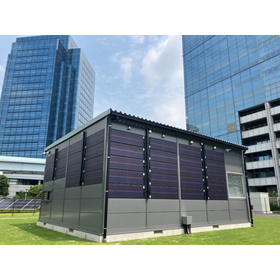
Next, the attached layer flexible thin-film solar cell "Haru-PV".

This is a construction project that involves directly attaching flexible solar cells to the roofs and walls of existing buildings and structures without the need for a new location.

Ultra-lightweight flexible PV + special processing of the adhesive layer = Haru -PV ◎ Features - Eliminates the need for frames, piles, and bonding materials. - By eliminating the above materials, it reduces component CO2 emissions and transportation costs. - Lighter than conventional panels, with no risk of shattering. 【Are you facing these issues?】 - Want to install solar panels but cannot secure enough space. - Want to install solar panels on curved surfaces. - Do not want to damage the surface where solar panels will be installed. We propose solar power generation utilizing existing structures in a country with limited flat installation areas. *For more details, please download the materials or contact us.

  • Solar power generator

Added to bookmarks

Bookmarks list

Bookmark has been removed

Bookmarks list

You can't add any more bookmarks

By registering as a member, you can increase the number of bookmarks you can save and organize them with labels.

Free membership registration

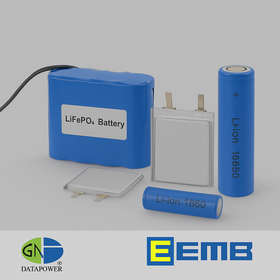
Lithium polymer rechargeable battery pack / 3.7V single cell EEMB manufactured BA

【Proposals from a rich lineup of standard products】 【IEC62133 / UL1642 safety certification obtained】 【MOQ negotiable】

Introducing a lightweight, slim, and highly safe lithium-ion polymer single battery pack (with protection circuit) suitable for small devices such as IoT and wearables, housed in an aluminum laminated pouch. 【Product Features】 - Widely adopted by major domestic electronics manufacturers, including medical device manufacturers. - If specifications comply with the list of products that have obtained IEC62133-2(2017) / UL1642 safety certification, it can reduce costs and labor. - Choose from a wide range of standard products (default design: 3.7V / tens to 8700mAh). - Safe due to lithium-ion polymer composition (no ignition or explosion in nail penetration tests). - Exempt from PSE regulations (cell volume energy density: below 400Wh/L). - Minimum order quantity varies by product type, so please consult us. - Custom solutions outside the standard lineup are also available upon request. - We can provide test reports for required safety certifications in various countries and regions, UN transport recommendations, and regulations on chemical substances contained in products. - We can accommodate customer-specified specifications, such as connector specifications for lead wire sections. Please feel free to consult us.

Added to bookmarks

Bookmarks list

Bookmark has been removed

Bookmarks list

You can't add any more bookmarks

By registering as a member, you can increase the number of bookmarks you can save and organize them with labels.

Free membership registration

High-performance perovskite solar cells fabricated at high speed and low temperature.

High performance, self-organization, passivation, solution process, anti-solvent free, high durability, surface free energy, p-i bulk film formation.

Perovskite refers to a type of crystal structure composed of halogen elements such as lead or tin combined with iodine or bromine, along with organic alkyl ammonium ions. The perovskite structure is used as the light-absorbing layer in perovskite solar cells. The perovskite layer, which can be formed easily and at low temperatures through a solution process, has a thickness of 0.3 μm, which is about 1/500th the thickness of single and multicrystalline silicon solar cells that typically range from 150 to 200 μm, making it resource-efficient. By utilizing the electrostatic interactions between poly-electrolytes and nanoparticles, as well as self-assembled monolayers of phosphoric compounds, it becomes possible to fabricate high-performance perovskite solar cells quickly and easily on textured transparent conductive films at low temperatures. Additionally, by adding fluorine-based materials with low surface free energy to the perovskite precursor and simply applying and heating it, the materials can spontaneously segregate to the perovskite surface, allowing for passivation of the perovskite surface. This leads to enhanced performance of the solar cells and promises improved durability.

Added to bookmarks

Bookmarks list

Bookmark has been removed

Bookmarks list

You can't add any more bookmarks

By registering as a member, you can increase the number of bookmarks you can save and organize them with labels.

Free membership registration

Rich track record of adoption! Industrial lithium secondary battery lineup BA

Free materials summarizing a rich lineup! Introducing industrial batteries that are available in small lots, high quality, versatile, and customizable.

Our company offers high-performance lithium-ion batteries that are highly reliable and versatile. They are adopted across a wide range of industries, from consumer to industrial applications, medical devices, smart devices, and IoT equipment. We can propose both standard and custom products from a rich lineup of multiple manufacturers all at once. We accommodate various formats, from individual cells to pack products, providing solutions tailored to specific applications and specifications. 【Features】 - Achieve environmental considerations by replacing primary batteries - Years of handling experience and technical support system - Total support from technical selection before implementation to prototyping and mass production - Small lot and short delivery time support - Various certifications available, including UN38.3, IEC62133, PSE, CE, UL, etc. - We also offer consultations regarding storage methods after purchase If you are an engineer facing challenges in battery selection, please feel free to consult with us. You can check our comprehensive catalog of products by clicking the download button.

Added to bookmarks

Bookmarks list

Bookmark has been removed

Bookmarks list

You can't add any more bookmarks

By registering as a member, you can increase the number of bookmarks you can save and organize them with labels.

Free membership registration

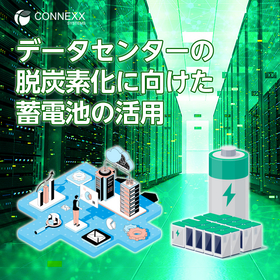
Utilization of renewable energy and storage batteries for the decarbonization of data centers.

Data centers consume vast amounts of electricity, so sustainable energy solutions are needed.

The utilization of storage batteries plays a very important role in the decarbonization of data centers. Data centers consume vast amounts of electricity, necessitating sustainable energy solutions. In particular, storage batteries contribute to achieving carbon neutrality when used in combination with renewable energy. ▼ Background of Decarbonization ▷ Growing Power Consumption of Data Centers Data centers are consuming enormous amounts of electricity due to the increase in cloud services, AI technologies, and related services. It is said that in the future, the electricity demand of domestic data centers could reach 10-20% of the entire country's demand, placing a significant burden on the environment. As a result, many data center operators are working towards reducing carbon dioxide (CO2) emissions by promoting the use of renewable energy and the introduction of storage batteries. ▼ Role of Storage Batteries Storage batteries not only support stable power supply for data centers in conjunction with renewable energy but also directly contribute to decarbonization.

  • Lithium-ion battery

Added to bookmarks

Bookmarks list

Bookmark has been removed

Bookmarks list

You can't add any more bookmarks

By registering as a member, you can increase the number of bookmarks you can save and organize them with labels.

Free membership registration

Disaster preparedness in schools and the use of industrial storage batteries in decarbonization-leading regions.

The introduction of storage batteries in schools in decarbonization-leading regions brings multifaceted benefits such as improved energy efficiency, enhanced safety during disasters, and promotion of environmental education.

"Decarbonization Leading Regions" refers to areas designated by the Japanese government as regions that undertake particularly advanced initiatives aimed at reducing greenhouse gas emissions. In these regions, efforts are made to introduce renewable energy suited to local characteristics, utilize energy efficiently, and implement advanced technologies for decarbonization, serving as model cases for future nationwide deployment. Additionally, these initiatives promote economic growth in the region and contribute to the construction of a sustainable society. ▼ Effects of Introducing Industrial Storage Batteries in Schools School facilities are important public facilities in the community and serve various roles. In decarbonization leading regions, the use of industrial storage batteries in school facilities becomes one of the important initiatives that contribute to energy efficiency, securing power during disasters, and furthering environmental education. ▼ Benefits of Introducing Industrial Storage Batteries in School Facilities - Collaboration with the community + strengthening disaster prevention functions as evacuation centers (BCP measures / securing power during emergencies) - Reduction of environmental impact - Educational materials for environmental education - Reduction of electricity costs after installation - Effective use of space

  • Lithium-ion battery

Added to bookmarks

Bookmarks list

Bookmark has been removed

Bookmarks list

You can't add any more bookmarks

By registering as a member, you can increase the number of bookmarks you can save and organize them with labels.

Free membership registration

Industrial storage batteries contributing to the decarbonization of school facilities and disaster prevention.

Promoting measures against global warming, environmental education, and initiatives aimed at decarbonization, as well as the introduction of industrial storage batteries as a power source during disasters, are effective.

▼Benefits of Introducing Storage Batteries in School Facilities With the promotion of the Ministry of Education, Culture, Sports, Science and Technology, the introduction of storage batteries in school facilities is progressing. Not only schools and community centers but also welfare facilities are highly likely to serve as evacuation centers, leading to an increase in facilities considering the introduction of renewable energy equipment and storage batteries as disaster response measures. About half of public elementary and junior high schools have been in operation for over 40 years, and as the aging of school facilities reaches its peak, there is a demand for environmental burden reduction measures in school facilities aimed at achieving carbon neutrality by 2050 through "energy conservation" via high insulation and efficient air conditioning, as well as "energy creation" using renewable energy. Furthermore, as a disaster prevention and mitigation measure against increasingly severe disasters, it has become essential to strengthen the evacuation functions of facilities, including indoor gymnasiums that serve as local evacuation centers. The introduction of industrial storage batteries combined with solar power generation in school facilities is expected to not only secure power supply during emergencies and enhance evacuation functions but also serve as educational materials for environmental education, reduce costs, and lower environmental impact. More school facilities are considering the introduction of renewable energy equipment and storage batteries as disaster response measures.

  • Lithium-ion battery

Added to bookmarks

Bookmarks list

Bookmark has been removed

Bookmarks list

You can't add any more bookmarks

By registering as a member, you can increase the number of bookmarks you can save and organize them with labels.

Free membership registration

Introduction of industrial storage batteries to school facilities in decarbonization leading regions.

The introduction of storage batteries in schools in decarbonization-leading regions brings multifaceted benefits such as improved energy efficiency, enhanced safety during disasters, and promotion of environmental education.

"Decarbonization Leading Regions" refers to areas designated by the Japanese government as regions that are particularly engaged in advanced efforts to reduce greenhouse gas emissions. In these regions, initiatives such as the introduction of renewable energy tailored to local characteristics, efficient energy utilization, and the adoption of advanced technologies for decarbonization are being implemented, serving as model cases aimed at nationwide deployment in the future. Additionally, these efforts contribute to the economic growth of the region and the establishment of a sustainable society. ▼ Effects of Introducing Industrial Storage Batteries in Schools School facilities are important public facilities in the community and serve various roles. In decarbonization leading regions, the use of industrial storage batteries in school facilities becomes one of the important initiatives that lead to energy efficiency, securing power during disasters, and further contributes to environmental education. ▼ Benefits of Introducing Industrial Storage Batteries in School Facilities - Collaboration with the community + strengthening disaster prevention functions as evacuation centers (BCP measures / securing power during emergencies) - Reduction of environmental impact - Educational materials for environmental education - Reduction of electricity costs after installation - Effective use of space

  • Lithium-ion battery

Added to bookmarks

Bookmarks list

Bookmark has been removed

Bookmarks list

You can't add any more bookmarks

By registering as a member, you can increase the number of bookmarks you can save and organize them with labels.

Free membership registration

[Discontinued] Step-up and Step-down Charging Charger "DC-1220SPa"

The input can use both DC 12V and 24V systems, as well as PV panels, and it can boost the voltage to charge the sub-battery even when the main battery is low.

●This charger is a device that charges the DC12V sub-battery from the main battery used for engine start and PV panels installed in the vehicle. It can charge by stepping down/up from a wide range of input voltages, and when using a 12V main battery, it can reduce the load on the vehicle's alternator by also using PV panels for input. ○Charges the DC12V sub-battery from DC12V to DC24V vehicles ○Due to the boost function, it can charge from a lower voltage battery to a higher voltage DC12V battery ○Compatible with lead, AGM, and lithium-ion batteries ○Charging control from PV panels is achieved with MPPT technology for high efficiency ○Soft start function when the sub-battery voltage is low ○Charges from the main battery in conjunction with the vehicle's engine key ○Input low voltage output cutoff and automatic recovery function ○Four LEDs allow confirmation of operating status, charging status, output voltage level, and input voltage level ○Low noise equivalent to VCCI Class B ○Can be placed vertically using the included bracket as well as horizontally ○With the optional temperature sensor, it has a function to detect the temperature of the sub-battery and cut off the output.

  • Charger
  • others

Added to bookmarks

Bookmarks list

Bookmark has been removed

Bookmarks list

You can't add any more bookmarks

By registering as a member, you can increase the number of bookmarks you can save and organize them with labels.

Free membership registration