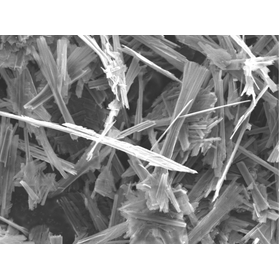
We have compiled a list of manufacturers, distributors, product information, reference prices, and rankings for Nanofiber.
ipros is IPROS GMS IPROS One of the largest technical database sites in Japan that collects information on.

Nanofiber Product List and Ranking from 16 Manufacturers, Suppliers and Companies | IPROS GMS

Last Updated: Aggregation Period:May 27, 2026~Jun 23, 2026
This ranking is based on the number of page views on our site.

Nanofiber Manufacturer, Suppliers and Company Rankings

Last Updated: Aggregation Period:May 27, 2026~Jun 23, 2026
This ranking is based on the number of page views on our site.

  1. ALMEDIO INC. Tokyo//Other manufacturing
  2. メック ナノファイバー事業 Fukuoka//Industrial Machinery
  3. ヤギ Osaka//fiber
  4. 4 モリマシナリー セルロース開発室 Okayama//Industrial Machinery
  5. 5 null/null

Nanofiber Product ranking

Last Updated: Aggregation Period:May 27, 2026~Jun 23, 2026
This ranking is based on the number of page views on our site.

  1. Improvement of thermal conductivity and electrical conductivity - Carbon Nanofiber (CNF) ALMEDIO INC.
  2. NANOXERA® (Nanoxera) Nanofiber ヤギ
  3. Carbon Nanofibers (CNF) for Electronic Devices ALMEDIO INC.
  4. Carbon nano/microfibers that are easily dispersible even at high concentrations. ALMEDIO INC.
  5. Conductive carbon nanofibers (high dispersion) ALMEDIO INC.

Nanofiber Product List

1~30 item / All 35 items

Displayed results

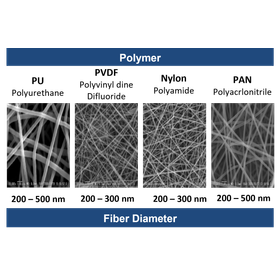
<Medical> <Regenerative Medicine> Flow of Nanofiber Sample Preparation

Please consult us about materials, sizes, thicknesses, fiber diameters, and other aspects of sample production!

We would like to introduce the process of sample production for the nanofibers we handle. First, please contact us by phone or email, and our staff will inquire about the materials, sizes, basis weight/thickness, fiber diameter, and other details. After that, we will prepare the materials and conduct preliminary tests to determine whether fiberization is possible. 【Sample Production Process】 1. Inquiry by phone or email 2. Information gathering by our staff 3. Preparation of materials 4. Preliminary testing 5. Specification discussion and quotation 6. Order placement 7. Sample production and delivery *For more details, please contact us by phone or through the inquiry form. Tel. 0942-41-2200 HP: https://www.mecc-jp.com/nano/contact/

  • Other polymer materials
  • Other contract services
  • Nanofiber

Added to bookmarks

Bookmarks list

Bookmark has been removed

Bookmarks list

You can't add any more bookmarks

By registering as a member, you can increase the number of bookmarks you can save and organize them with labels.

Free membership registration

Application of PCL and PLGA Nanofibers in Healthcare

Wide-ranging possibilities for applications as wound materials, waterproof materials, drug-carrying materials, and formulation materials, etc.

We would like to introduce the application of nanofibers in healthcare. Professor Funakubo's group at Tokyo Denki University, Faculty of Science and Technology, is conducting research on the production of artificial blood vessels and artificial organs in the field of regenerative medicine. The use of nanofibers in this research is considered advantageous for creating three-dimensional structures and serving as scaffold materials for cells. 【Examples of Applications】 ■ Artificial Blood Vessels ■ Artificial Organs ■ Scaffold Materials for Cells *For more details, please contact us by phone or through the inquiry form. Tel. 0942-41-2200 HP: https://www.mecc-jp.com/nano/contact/

  • fiber
  • Other polymer materials
  • Organic Natural Materials
  • Nanofiber

Added to bookmarks

Bookmarks list

Bookmark has been removed

Bookmarks list

You can't add any more bookmarks

By registering as a member, you can increase the number of bookmarks you can save and organize them with labels.

Free membership registration

PVA PEO nanofiber sample preparation

Please consult us about materials, sizes, thickness, fiber diameter, and other aspects of sample production!

We would like to introduce the process of sample production for the nanofibers we handle. First, please contact us via phone or email, and our staff will inquire about the materials, sizes, basis weight/thickness, and fiber diameter. After that, we will prepare the materials and conduct preliminary tests to determine whether fiberization is possible. 【Sample Production Process】 1. Inquiry via phone or email 2. Information gathering by our staff 3. Preparation of materials 4. Preliminary testing 5. Specification discussion and quotation 6. Order placement 7. Sample production and delivery *For more details, please contact us by phone or through the inquiry form. Tel. 0942-41-2200 HP: https://www.mecc-jp.com/nano/contact/

  • Other polymer materials
  • Other contract services
  • fiber
  • Nanofiber

Added to bookmarks

Bookmarks list

Bookmark has been removed

Bookmarks list

You can't add any more bookmarks

By registering as a member, you can increase the number of bookmarks you can save and organize them with labels.

Free membership registration

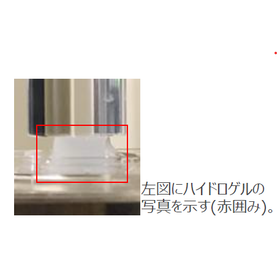
Tohoku Univ. Technology :Fabrication of cellulose hydrogels:T25-018

High-strength hydrogels fabricated by precise control of cellulose nanofibrils

Cellulose nanofibril (CNF) is a highly crystalline microfibril derived from wood fiber. It is an environmentally friendly innovative material with excellent mechanical properties such as light weight, high strength, and low thermal expansion. Owing to these characteristics, it is expected to be applied to automotive components, electronic devices, gas barrier materials, and medical materials. A technology to fabricate single filaments composed of CNF has been also developed, and long filaments with high strength have been obtained.  Based on the previously obtained knowledges and established methodology, functional materials using CNF have been developed in various fields, including the present invention relates to the fabrication of hydrogels. There are several hydrogel fabrication methods such as using electrophoresis and freeze-crosslinking, however, they were not suitable for mass production, and a new method was anticipated.  As a result of intensive research, a method for precisely controlling the CNF orientation and the internal structure of hydrogels was developed, which realizes the contamination-free and high-strength hydrogels. It was found that the strength of gels can be designed from isotropic to anisotropic by tuning the fabrication conditions.

Added to bookmarks

Bookmarks list

Bookmark has been removed

Bookmarks list

You can't add any more bookmarks

By registering as a member, you can increase the number of bookmarks you can save and organize them with labels.

Free membership registration

Fluffy Nano [Sample Available]

The ultra-fine fibers of the nanofiber absorb oil up to about 35 times their own weight! You can tear off and use any amount you like.

You can tear off the desired amount of cotton-like nanofiber for handling oil after cooking, as well as for wiping off oil that has adhered to plates and trays. The nanofiber can absorb about 35 times its own weight in oil, making it very economical. Additionally, due to the properties of polypropylene, it only absorbs oil. *It does not absorb water. This is a new type of oil treatment material that differs from the previous solidifying or pouring types. It is also possible to supply just the contents depending on the quantity.

  • Textile Processing Machinery
  • Nanofiber

Added to bookmarks

Bookmarks list

Bookmark has been removed

Bookmarks list

You can't add any more bookmarks

By registering as a member, you can increase the number of bookmarks you can save and organize them with labels.

Free membership registration

Chitin nanofiber / Chitosan nanofiber

Introducing a new material that can be mixed into food, beverages, cosmetics, and pharmaceuticals as a functional ingredient.

"Chitin Nanofiber/Chitosan Nanofiber" is a translucent, gel-like substance that is uniformly dispersed in water. Therefore, unlike conventional chitin and chitosan, it can be mixed as a functional ingredient in food, beverages, cosmetics, and pharmaceuticals. By taking it, various effects have been reported, such as alleviating inflammation by suppressing the production of substances related to inflammation and inhibiting the rise in cholesterol and lipid concentrations in the blood, making it a wonderful new material with great potential. Please feel free to consult us for any technical details or inquiries. [Applications] ■ Increases skin moisture levels ■ Reduces inflammation in wounds and promotes tissue regeneration ■ Expands the epithelium and promotes tissue growth in healthy skin ■ Protects the skin from external stimuli ■ Has a hair growth-promoting effect *For more details, please refer to the PDF materials or feel free to contact us. *If you would like a paid sample, please inquire.

Added to bookmarks

Bookmarks list

Bookmark has been removed

Bookmarks list

You can't add any more bookmarks

By registering as a member, you can increase the number of bookmarks you can save and organize them with labels.

Free membership registration

NANOXERA® (Nanoxera) *Please inquire about samples.

Mass-produced nanofiber products established through joint research between a manufacturer with world-class nanofiber manufacturing technology and a national university.

The products manufactured by the TOPTEC Group, which possesses world-class technological capabilities and experience in mass-produced nanofiber products using the electrospinning method, are highly regarded globally. Yagi Co., Ltd. has launched the nanofiber products manufactured by its group company, LIME, under the name "NANOXERA(R)," and has begun global promotional activities since the fiscal year 2020. *For more details, please download the materials or feel free to contact us.*

  • fiber
  • Nanofiber

Added to bookmarks

Bookmarks list

Bookmark has been removed

Bookmarks list

You can't add any more bookmarks

By registering as a member, you can increase the number of bookmarks you can save and organize them with labels.

Free membership registration

NANOXERA® (Nanoxera) Nanofiber

Fruit bag with excellent breathability.

This is an introduction to the technology 'NANOXERA' that produces nanofiber fibers through the electrospinning method (electric field spinning method). By using nanofiber fibers in part of fruit bags and cultivation bags, excellent breathability and waterproofing are achieved due to the fine mesh structure. The nanofiber coating acts as a "ventilation window," allowing temperature differences between day and night to be conveyed to the fruits, thereby improving productivity. 【Features】 ■ Excellent breathability ■ Waterproofing *For more details, please refer to the related link page or feel free to contact us.

  • filter
  • Nanofiber

Added to bookmarks

Bookmarks list

Bookmark has been removed

Bookmarks list

You can't add any more bookmarks

By registering as a member, you can increase the number of bookmarks you can save and organize them with labels.

Free membership registration

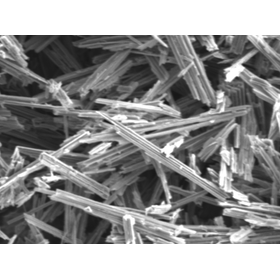
Reinforcement carbon nanofiber

Milled fibers with a diameter of 200 to 800 nm and a length of 1 to 15 µm, having a fibrous aspect ratio.

This is a milled fiber with a diameter of 200 to 800 nm and a length of 1 to 15 µm, exhibiting a fibrous aspect ratio. The diameter of carbon nanotubes (CNT) ranges from 0.4 to 50 nm, and they are known to be prone to aggregation; however, this carbon nanofiber (CNF) is characterized by its ease of high-concentration addition and dispersion. By adding CNF in high concentrations to resin, it is possible to enhance electrical conductivity, thermal conductivity, rigidity, lubricity, and shielding properties, making it feasible to consider alternatives to metals. Additionally, by utilizing thermoplastic resins, it can be molded at high speed and become a sustainable composite material. As a powder filler, it has a thermal conductivity of over 100 W/mK and a volume resistivity of less than 10^-5 Ωm.

  • others
  • Nanofiber

Added to bookmarks

Bookmarks list

Bookmark has been removed

Bookmarks list

You can't add any more bookmarks

By registering as a member, you can increase the number of bookmarks you can save and organize them with labels.

Free membership registration

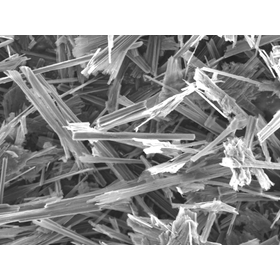
Conductive carbon nanofibers

Milled fibers with a diameter of 200 to 800 nm and a length of 1 to 20 µm, having a fibrous aspect ratio.

It is a milled fiber with a diameter of 200 to 800 nm and a length of 1 to 20 µm, having a fibrous aspect ratio. This material has a higher degree of graphitization than carbon nanofibers used for reinforcement, allowing for higher thermal and electrical conductivity. As a powder filler, it has a thermal conductivity of over 500 W/mK and a volume resistivity of less than 10^-5 Ωm.

  • others
  • Nanofiber

Added to bookmarks

Bookmarks list

Bookmark has been removed

Bookmarks list

You can't add any more bookmarks

By registering as a member, you can increase the number of bookmarks you can save and organize them with labels.

Free membership registration

High-conductivity carbon nanofibers

Milled fibers with a diameter of 200 to 800 nm and a length of 1 to 20 µm, having a fibrous aspect ratio.

It is a milled fiber with a diameter of 200 to 800 nm and a length of 1 to 20 µm, having a fibrous aspect ratio. This material can achieve higher thermal conductivity and electrical conductivity than carbon nanofibers used for conductivity. As a powder filler, it has a thermal conductivity of over 900 W/mK and a volume resistivity of less than 10^-6 Ωm.

  • others
  • Nanofiber

Added to bookmarks

Bookmarks list

Bookmark has been removed

Bookmarks list

You can't add any more bookmarks

By registering as a member, you can increase the number of bookmarks you can save and organize them with labels.

Free membership registration

Application of Nanofibers: "Functional Addition"

By applying it as a composite material, it is possible to spin fibers with various added functionalities!

We will introduce the application of nanofibers with "functional enhancement." In recent years, research has shown that fibers can be spun with various functionalities by using not only simple nanofibers alone but also composite materials between fibers, composite materials with particles, and coatings of functional substances. 【Examples of Applications】 ■ Composite materials between fibers ■ Composite materials with particles ■ Coatings of functional substances *For more details, please contact us by phone or through the inquiry form. Tel. 0942-41-2200 HP: https://www.mecc-jp.com/nano/contact/

  • fiber
  • Nanofiber

Added to bookmarks

Bookmarks list

Bookmark has been removed

Bookmarks list

You can't add any more bookmarks

By registering as a member, you can increase the number of bookmarks you can save and organize them with labels.

Free membership registration

Applications of Nanofibers: Healthcare

Wide-ranging possibilities for applications as wound materials, waterproof materials, drug-carrying materials, and formulation materials, etc.

We would like to introduce the application of nanofibers in healthcare. Professor Funakubo's group at Tokyo Denki University, Faculty of Science and Technology, is researching the production of artificial blood vessels and artificial organs in the field of regenerative medicine. It is believed that using nanofibers in this research has advantages in creating three-dimensional structures and serving as scaffold materials for cells. [Application Examples] ■ Artificial Blood Vessels ■ Artificial Organs ■ Scaffold Materials for Cells *For more details, please contact us by phone or through the inquiry form. Tel. 0942-41-2200 HP: https://www.mecc-jp.com/nano/contact/

  • fiber
  • Nanofiber

Added to bookmarks

Bookmarks list

Bookmark has been removed

Bookmarks list

You can't add any more bookmarks

By registering as a member, you can increase the number of bookmarks you can save and organize them with labels.

Free membership registration

Flow of sample production for battery nanofibers

Please consult us about materials, sizes, thickness, fiber diameter, and other aspects of sample production!

We would like to introduce the process of sample production for the nanofibers we handle. First, please contact us by phone or email, and our staff will inquire about the materials, sizes, basis weight/thickness, and fiber diameter. After that, we will prepare the materials and conduct preliminary tests to determine whether fiberization is possible. 【Sample Production Process】 1. Inquiry by phone or email 2. Information gathering by our staff 3. Preparation of materials 4. Preliminary testing 5. Specification discussion and quotation 6. Order placement 7. Sample production and delivery *For more details, please contact us by phone or through the inquiry form. Tel. 0942-41-2200 HP: https://www.mecc-jp.com/nano/contact/

  • Other polymer materials
  • Other contract services
  • Lithium-ion battery
  • Nanofiber

Added to bookmarks

Bookmarks list

Bookmark has been removed

Bookmarks list

You can't add any more bookmarks

By registering as a member, you can increase the number of bookmarks you can save and organize them with labels.

Free membership registration

Application of Nanofibers in Healthcare

Wide-ranging possibilities for applications as wound materials, waterproof materials, drug carrier materials, formulation materials, etc.

We would like to introduce the application of nanofibers in "healthcare." Professor Funakubo's group at Tokyo Denki University, Faculty of Science and Technology, is researching the production of artificial blood vessels and artificial organs in the field of regenerative medicine. The use of nanofibers in this research is considered advantageous for creating three-dimensional structures and serving as scaffold materials for cells. [Examples of Applications] ■ Artificial Blood Vessels ■ Artificial Organs ■ Scaffold Materials for Cells *For more details, please contact us by phone or through the inquiry form. Tel. 0942-41-2200 HP: https://www.mecc-jp.com/nano/contact/

  • fiber
  • Other polymer materials
  • Organic Natural Materials
  • Nanofiber

Added to bookmarks

Bookmarks list

Bookmark has been removed

Bookmarks list

You can't add any more bookmarks

By registering as a member, you can increase the number of bookmarks you can save and organize them with labels.

Free membership registration

Non-allergenic β-chitin nanofibers

Dispersion in water and sheet molding are possible with hydrogel.

This product is a non-allergenic nanofiber that serves as an alternative to allergenic α-chitin. Made from squid sourced from Sanriku, it is produced based on our proprietary technology developed in chitin and chitosan manufacturing. It is finer than α-chitin derived from crab and cellulose nanofibers, and the fibers form a network, resulting in a jelly-like, viscous hydrogel. Additionally, due to its high biocompatibility, it is expanding its applications in medical devices for wound covering functions and as a culture substrate for iPS and ES cells, and it is expected to be a material for regenerative medicine, a pioneering research field worldwide. 【Features】 ■ Non-allergenic ■ Hydrogel ■ Low protein content *For more details, please download the PDF or feel free to contact us.

Added to bookmarks

Bookmarks list

Bookmark has been removed

Bookmarks list

You can't add any more bookmarks

By registering as a member, you can increase the number of bookmarks you can save and organize them with labels.

Free membership registration

Titanium oxide / Titanium carbide nan tubes / nanofibers

Transforming from nanocarbon to nanoceramics (such as titania).

This is a technology for synthesizing ceramic nanomaterials via template carbon nanomaterials. By heavily doping titanium into nanocarbon, it can be converted into titanium carbide alloy, and the resulting TiC has a shape almost identical to that of nanocarbon. TiC is one of the highly conductive ceramic materials, and when TiC is burned, it becomes titanium dioxide (TiO2). In this case as well, the original shape is almost maintained, resulting in the production of nano-titanium oxide. Using vertically aligned CNTs, vertically aligned titanium oxide nanotubes can be produced.

  • Composite Materials
  • Nanofiber

Added to bookmarks

Bookmarks list

Bookmark has been removed

Bookmarks list

You can't add any more bookmarks

By registering as a member, you can increase the number of bookmarks you can save and organize them with labels.

Free membership registration

Next-generation gene cell therapy purification technology Nanofiber AstreAdept

Next-generation purification nanofibers optimal for the purification of plasmid and viral particles.

In the world of bioprocessing, traditional porous methods used for antibody purification have been mainstream for decades, but they are unsuitable for the purification of large molecules such as lentiviruses, plasmids, and exosomes used in gene cell therapy, making purification difficult. Astrea Bioseparations has developed a next-generation bioprocessing device utilizing cutting-edge nanofiber technology called "AstreAdept." The upcoming nanofibers will be created by electrospinning a blend of two types of polymers, combining cellulose-based and non-cellulose-based materials. Due to their nanoscale size, they have a high surface area-to-volume ratio, making them very attractive. AstreAdept achieves the following: Efficiency: AstreAdept compresses processes, reducing time and costs. Innovative technology: It utilizes nanofibers and convection to enable fast and highly efficient washing. Wide applicability: A scalable solution that can accommodate everything from research to manufacturing. Optimization of exosome purification, bacteriophage, plasmid purification, and the purification of single-stranded pDNA and mRNA before and after IVT.

  • Other purification and extraction
  • High Performance Liquid Chromatograph
  • Chromatographic resins and packing materials
  • Nanofiber

Added to bookmarks

Bookmarks list

Bookmark has been removed

Bookmarks list

You can't add any more bookmarks

By registering as a member, you can increase the number of bookmarks you can save and organize them with labels.

Free membership registration

Book: Practical Technology for Cellulose Nanofibers

Leading experts explain the technologies necessary for the practical application of cellulose nanofibers, market and application outlook, and international standardization.

Kota Ogura / Sugino Machine Co., Ltd. Tetsuo Kondo / Kyushu University Kenji Tajima / Hokkaido University Ryota Koze / Tokyo University of Agriculture and Technology Akihiro Yamamoto / Morimachine Co., Ltd. Kentaro Abe / Kyoto University Yutaka Morikawa / Aichi Industrial Science and Technology Comprehensive Center Masako Ito / Aichi Industrial Science and Technology Comprehensive Center Tetsuya Uchida / Okayama University Jun Araki / Shinshu University Keita Sakakibara / Kyoto University Takashi Tsujii / Kyoto University Akio Kumagai / National Institute of Advanced Industrial Science and Technology Shinichiro Iwamoto / National Institute of Advanced Industrial Science and Technology Takashi Endo / National Institute of Advanced Industrial Science and Technology Ken Senba / Kyoto City Industrial Technology Research Institute (Local Independent Administrative Institution) Takahiro Uesaka / Kyoto City Industrial Technology Research Institute (Local Independent Administrative Institution) Kenichi Hamada / DIC Corporation Hiroyuki Yano / Kyoto University Fumihiro Nakatsubo / Kyoto University Kazuto Kamino / Daiichi Kogyo Seiyaku Co., Ltd. Mariko Yoshioka / Kyoto University Ryo Ishiguro / Japan Steel Works, Ltd. Satoshi Nakamura / Japan Steel Works, Ltd. Takashi Date / Nippon Paper Industries Co., Ltd. Asahiro Hase / Hyogo Prefectural Institute of Technology Haruo Matsumura / Asahi Research Center Co., Ltd. Akira Ono / National Institute of Advanced Industrial Science and Technology

  • Company:S&T出版
  • Price:10,000 yen-100,000 yen
  • Technical and Reference Books
  • Nanofiber

Added to bookmarks

Bookmarks list

Bookmark has been removed

Bookmarks list

You can't add any more bookmarks

By registering as a member, you can increase the number of bookmarks you can save and organize them with labels.

Free membership registration

Non-aqueous cellulose nanofiber "Senaf"

We also provide samples of pulp that has been disintegrated in the desired organic medium!

"SENAF" is a new non-aqueous dispersion CNF that directly disintegrates pulp treated with hydrophobic processing in an organic medium (in liquid). In addition to three standard samples, we also provide samples of pulp disintegrated in your desired organic medium. Before the disintegration process, we can have detailed discussions regarding material selection and disintegration degree, and collaborative research is also possible. We propose CNFs and collaborative research that meet various needs. 【Features】 ■ CNF disintegrated using our unique technology ■ By directly disintegrating in an organic medium, it demonstrates excellent dispersibility in hydrophobic materials such as liquid resins, rubber, and oils ■ We also provide samples of pulp disintegrated in your desired organic medium *For more details, please refer to the PDF document or feel free to contact us.

  • Other polymer materials
  • Nanofiber

Added to bookmarks

Bookmarks list

Bookmark has been removed

Bookmarks list

You can't add any more bookmarks

By registering as a member, you can increase the number of bookmarks you can save and organize them with labels.

Free membership registration

Nanofiber & Nanoparticle Production Device "FLUIDNATEK Tool"

A system suitable for the research and manufacturing of nanofibers and nanoparticles. For the development of functional foods and the enhancement of drug functionality.

The "FLUIDNATEK" series is a device capable of producing nanoparticles and nanofibers using electrospinning/electrospray methods. It offers a lineup of various devices from lab scale to manufacturing scale, allowing for seamless scale-up from research to production. Micro and nanoparticles can be produced from a wide range of materials, including biopolymers, proteins, carbohydrates, polymers, synthetic polymers, natural polymers, sol-gel materials, ceramics, and glass. 【Features】 ■ Adaptable to various scales from research, pilot, to industrial production ■ Applicable to a very wide range of materials and solvents ■ Capable of scaling up all electrospinning processes (including coaxial and multi-axis) ■ Optional environmental chamber with humidity and temperature control *For more details, please refer to the PDF document or feel free to contact us.

  • Other physicochemical equipment
  • Nanofiber

Added to bookmarks

Bookmarks list

Bookmark has been removed

Bookmarks list

You can't add any more bookmarks

By registering as a member, you can increase the number of bookmarks you can save and organize them with labels.

Free membership registration

Observation of CNF (Cellulose Nanofiber) using TEM.

Introducing the observation results of the structure of cellulose nanofibers (CNF)!

We would like to introduce our observation of cellulose nanofibers (CNF) using transmission electron microscopy (TEM). Utilizing the know-how we have cultivated in observing resin materials with TEM, we conducted observations on commercially available cellulose nanofiber (CNF) samples. As a result, it was found that commercial CNF1 consists of several thin microfibrils bundled together, while commercial CNF2 consists of one or a few microfibrils bundled together. 【Structure】 ■ Commercial CNF1 - A CNF sample made up of several thin microfibrils, approximately a few nanometers in diameter, bundled together to form fibers about 100 nm wide. ■ Commercial CNF2 - A CNF sample consisting of a bundle of one microfibril or a few microfibrils. *For more details, please refer to the related links or feel free to contact us.

  • Contract Analysis
  • Nanofiber

Added to bookmarks

Bookmarks list

Bookmark has been removed

Bookmarks list

You can't add any more bookmarks

By registering as a member, you can increase the number of bookmarks you can save and organize them with labels.

Free membership registration

New material "Cellulose Nanofiber"

A new lightweight and durable material! It is one-fifth the weight of steel and has five times the strength.

"Cellulose nanofiber" is a natural-derived new material that can be obtained by finely breaking down cellulose-based biomass. Our company manufactures lignocellulose nanofiber, which contains cellulose nanofiber and lignin. Please feel free to consult us if you have any requests. 【Features】 ■ One-fifth the weight of steel with five times the strength ■ Low thermal expansion, one-fiftieth that of glass ■ Large specific surface area ■ Usable as new reinforcing fibers, filter fibers, etc. ■ Naturally derived from wood and pulp *For more details, please download the PDF or feel free to contact us.

  • fiber
  • Wood products
  • Other polymer materials
  • Nanofiber

Added to bookmarks

Bookmarks list

Bookmark has been removed

Bookmarks list

You can't add any more bookmarks

By registering as a member, you can increase the number of bookmarks you can save and organize them with labels.

Free membership registration

Carbon nano/microfibers that are easily dispersible even at high concentrations.

Development of functional materials to replace metals! Adding to resins to enhance electrical conductivity, thermal conductivity, rigidity, lubricity, and shielding properties! Prototype samples are also available.

This is an introduction to the "Carbon Nanofiber/Carbon Microfiber" that our company handles. The "Carbon Nanofiber" manufactured by Almedio has a fiber-like aspect ratio with a diameter of 200 to 800 nm and a length of 1 to 20 µm. By adding CNF in high concentrations to resins, improvements in electrical conductivity, thermal conductivity, rigidity, lubricity, and shielding properties can be achieved, making it possible to consider alternatives to metals. We also offer "Carbon Microfiber" with a diameter of 5 to 10 µm and a length of 10 to 25 µm, available in both [reinforcement] and [conductive] lineups. 【Features of Carbon Nanofiber】 ■ Diameter: 200 to 800 nm ■ Length: 1 to 20 µm ■ Easy to add in high concentrations ■ Easy to disperse ■ Possible to consider alternatives to metals *For more details, please refer to the PDF document or feel free to contact us.

  • fiber
  • Nanofiber

Added to bookmarks

Bookmarks list

Bookmark has been removed

Bookmarks list

You can't add any more bookmarks

By registering as a member, you can increase the number of bookmarks you can save and organize them with labels.

Free membership registration

Conductive carbon nanofibers (high dispersion)

Milled fibers with a diameter of 200 to 800 nm and a length of 1 to 15 µm, having a fibrous aspect ratio.

It is a milled fiber with a diameter of 200 to 800 nm and a length of 1 to 15 µm, having a fibrous aspect ratio. This material has higher dispersibility than carbon nanofibers used for conductivity and can achieve higher thermal and electrical conductivity. As a powder filler, it has a thermal conductivity of over 550 W/mK and a volume resistivity of less than 10^-5 Ωm.

  • others
  • Nanofiber

Added to bookmarks

Bookmarks list

Bookmark has been removed

Bookmarks list

You can't add any more bookmarks

By registering as a member, you can increase the number of bookmarks you can save and organize them with labels.

Free membership registration

Inorganic cellulose nanofiber

Inorganic cellulose nanofiber material (sCNF) is the only technology of its kind in the world!

- Coating the surface with silica, which is harmless to the human body, using ethanol and water as solvents → As it is an environmentally friendly material, it allows for consideration of the environment. - Excellent dispersion within polymers → Even with a small amount used, it has the effect of reinforcing the physical properties of plastics, making it possible to reduce the amount of plastic used by about 10-30%. When applied to automotive interior and exterior materials, it can reduce usage by up to about 50%. - High flame retardancy → Minimizing the use of flame retardants! - Used solvents can be recovered and reused, and plastics applied with our materials can be recycled more than six times while maintaining dispersion, minimizing discoloration, and preserving mechanical properties → Cost reduction effect is excellent!

Added to bookmarks

Bookmarks list

Bookmark has been removed

Bookmarks list

You can't add any more bookmarks

By registering as a member, you can increase the number of bookmarks you can save and organize them with labels.

Free membership registration

Improvement of thermal conductivity and electrical conductivity - Carbon Nanofiber (CNF)

Multifunctional high-performance composites with high electrical conductivity, thermal conductivity, strength, elasticity, sliding properties, and electromagnetic wave absorption, achieved by blending with high-concentration, easily dispersible CNF.

Our company develops, produces, and sells carbon nanofibers (CNF), which are expected to be utilized in a wide range of industries. These are milled fibers with an aspect ratio of diameter = 200–800 nm and length = 1–20 µm. The diameter of carbon nanotubes (CNT) ranges from 0.4 to 50 nm, and they are known to easily aggregate; however, our carbon nanofibers (CNF) are characterized by their ease of high-concentration addition and dispersion. By adding CNF in high concentrations to resins, it is possible to enhance electrical conductivity, thermal conductivity, rigidity, lubricity, and electromagnetic wave absorption, making it feasible to consider alternatives to metals. ■ Main Applications - Conductive additives for lithium-ion batteries - Static electricity prevention applications, etc. - Heat dissipation sheets and films - High-strength and high-elasticity applications - Materials for 3D printers (improving the strength of printed products) - Electromagnetic wave absorption and reflection suppression in high-frequency bands - Corrosion resistance Compounding processing with thermoplastic resins (such as PP, PE, PA, PBT, PPS, POM, PEEK, etc.) is also possible. *For more details, please refer to the PDF data available by downloading the catalog.

  • Composite Materials
  • Secondary Cells/Batteries
  • plastic
  • Nanofiber

Added to bookmarks

Bookmarks list

Bookmark has been removed

Bookmarks list

You can't add any more bookmarks

By registering as a member, you can increase the number of bookmarks you can save and organize them with labels.

Free membership registration

Carbon Nanofibers (CNF) for Electronic Devices

Improved thermal conductivity! CNF enables metal alternatives.

In the electronics industry, effective heat dissipation measures are required due to the increasing density of devices. Materials with low heat dissipation performance can lead to a decline in device performance and potential failures. Our carbon nanofibers (CNF) are easy to disperse at high concentrations and can enhance thermal conductivity when added to resins, thereby improving heat dissipation performance. Metal alternatives can also be considered. 【Application Scenarios】 - Heat dissipation sheets and films 【Benefits of Implementation】 - Improved device performance - Extended product lifespan

  • Composite Materials
  • Secondary Cells/Batteries
  • plastic
  • Nanofiber

Added to bookmarks

Bookmarks list

Bookmark has been removed

Bookmarks list

You can't add any more bookmarks

By registering as a member, you can increase the number of bookmarks you can save and organize them with labels.

Free membership registration