We have compiled a list of manufacturers, distributors, product information, reference prices, and rankings for Residual chlorine meter.
ipros is IPROS GMS IPROS One of the largest technical database sites in Japan that collects information on.

Residual chlorine meter Product List and Ranking from 12 Manufacturers, Suppliers and Companies | IPROS GMS

Last Updated: Aggregation Period:Jun 03, 2026~Jun 30, 2026
This ranking is based on the number of page views on our site.

Residual chlorine meter Manufacturer, Suppliers and Company Rankings

Last Updated: Aggregation Period:Jun 03, 2026~Jun 30, 2026
This ranking is based on the number of page views on our site.

  1. タクミナ Osaka//Industrial Machinery
  2. セントラル科学 Tokyo//Trading company/Wholesale
  3. 東亜ディーケーケー 本社、営業所(札幌・仙台・千葉・名古屋・大阪・広島・四国・北九州)、事業所(狭山、東大和) Tokyo//Testing, Analysis and Measurement
  4. 4 null/null
  5. 5 シロ産業 Osaka//Industrial Electrical Equipment

Residual chlorine meter Product ranking

Last Updated: Aggregation Period:Jun 03, 2026~Jun 30, 2026
This ranking is based on the number of page views on our site.

  1. Residual Chlorine Meter "RM" タクミナ
  2. Residual Chlorine Meter 'Accurate Measurement with One Finger! Digital Residual Chlorine Tester DCT' タクミナ
  3. Low concentration residual chlorine meter
  4. Pocket Residual Chlorine Meter 'DR300' 東亜ディーケーケー 本社、営業所(札幌・仙台・千葉・名古屋・大阪・広島・四国・北九州)、事業所(狭山、東大和)
  5. 4 Residual Chlorine Meter "Compliant with Water Purification Testing Method! DPD Tester CLT10" タクミナ

Residual chlorine meter Product List

31~47 item / All 47 items

Displayed results

[Case Study Collection] ATI Residual Chlorine Meter

This is a collection of case studies on ATI residual chlorine meters.

We have compiled case studies that leverage the features of diaphragm-type polarographic sensors.

  • Other measurement, recording and measuring instruments
  • Residual chlorine meter

Added to bookmarks

Bookmarks list

Bookmark has been removed

Bookmarks list

You can't add any more bookmarks

By registering as a member, you can increase the number of bookmarks you can save and organize them with labels.

Free membership registration

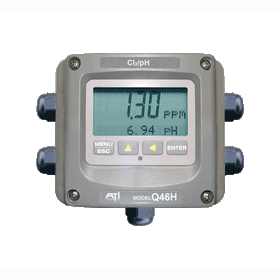
ATI Q46H/62-63 Type Residual Chlorine Meter for Beverage Manufacturing

For quality control of drinking water. Direct measurement of residual chlorine without the need for reagents.

In the beverage industry, managing water quality during the manufacturing process is crucial to ensure product safety. In particular, the concentration of residual chlorine is an important indicator for maintaining a balance between sterilization effectiveness and safety. Inadequate measurement of residual chlorine concentration can lead to product quality deterioration and health risks for consumers. The ATI Q46H/62-63 type residual chlorine meter can directly measure free chlorine, effective chlorine, and combined chlorine (monochloramine) without the need for reagents. This contributes to the efficient management of drinking water quality and the provision of safe products. 【Application Scenarios】 - Water quality management in beverage manufacturing - Cleaning water management in food factories - Measurement of residual chlorine in groundwater and well water 【Benefits of Implementation】 - Improved quality management through accurate understanding of residual chlorine concentration - Reduction in reagent purchase costs - Decreased operational burden through measurement efficiency

  • Other measurement, recording and measuring instruments
  • Residual chlorine meter

Added to bookmarks

Bookmarks list

Bookmark has been removed

Bookmarks list

You can't add any more bookmarks

By registering as a member, you can increase the number of bookmarks you can save and organize them with labels.

Free membership registration

ATI Q46H/62-63 Type Residual Chlorine Meter for Pharmaceuticals

High-precision residual chlorine measurement in pure water production without the need for reagents.

In the pharmaceutical industry, the accurate management of residual chlorine concentration is essential to ensure product quality during the production of pure water. Residual chlorine plays a crucial role in reducing the risk of microbial contamination in the manufacturing process, but excessive residual chlorine can negatively impact product quality. The ATI Q46H/62-63 type residual chlorine meter can directly measure residual chlorine without the use of reagents, contributing to the simplification of measurements and improvement of accuracy. 【Usage Scenarios】 - Pure water production plants - Pharmaceutical manufacturing processes - Research facilities 【Benefits of Implementation】 - Improved product quality through accurate monitoring of residual chlorine concentration - Reduction in reagent purchase costs and management workload - Increased reliability of measurement data

  • Other measurement, recording and measuring instruments
  • Residual chlorine meter

Added to bookmarks

Bookmarks list

Bookmark has been removed

Bookmarks list

You can't add any more bookmarks

By registering as a member, you can increase the number of bookmarks you can save and organize them with labels.

Free membership registration

Residual Chlorine Meter for Cooling Towers ATI Q46H/62-63 Model

Diaphragm-type sensor contributes to legionella measures in cooling towers.

In the cooling tower industry, water quality management is crucial to suppress the growth of Legionella bacteria. Particularly in cooling towers where temperatures are high and water tends to stagnate, proper management of residual chlorine concentration is essential to reduce the risk of Legionnaires' disease. Inadequate water quality management can promote the growth of Legionella bacteria and potentially cause health hazards. The ATI Q46H/62-63 type residual chlorine meter employs a diaphragm-type sensor and can directly measure residual chlorine concentration without the need for reagents. 【Usage Scenarios】 - Water quality management for cooling towers - Measures against Legionella bacteria - Measurement of free chlorine, effective chlorine, and combined chlorine (monochloramine) 【Benefits of Implementation】 - Reduction of Legionnaires' disease risk - Increased efficiency in water quality management - Accurate understanding of residual chlorine concentration

  • Other measurement, recording and measuring instruments
  • Residual chlorine meter

Added to bookmarks

Bookmarks list

Bookmark has been removed

Bookmarks list

You can't add any more bookmarks

By registering as a member, you can increase the number of bookmarks you can save and organize them with labels.

Free membership registration

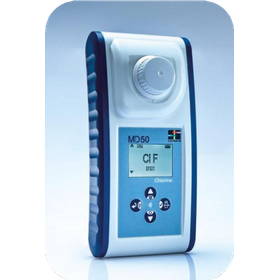
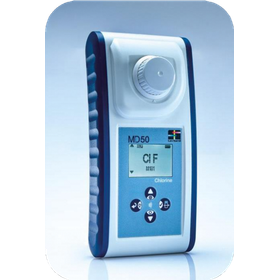
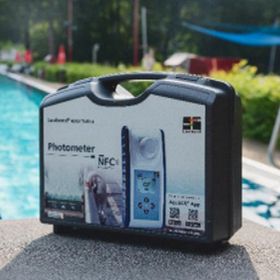
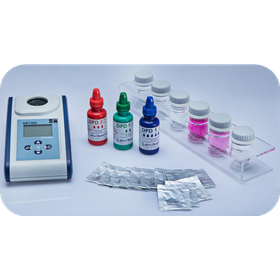
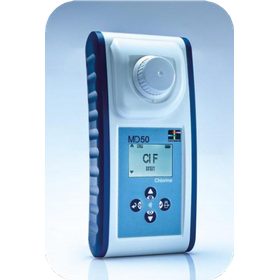
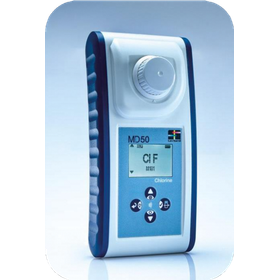
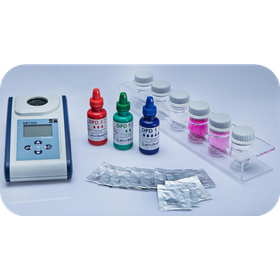
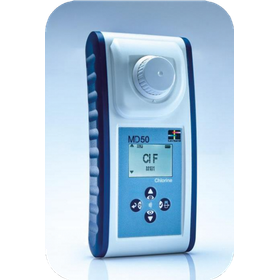
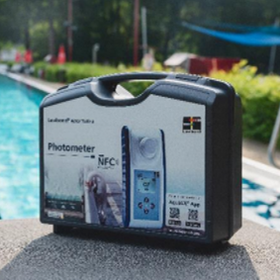
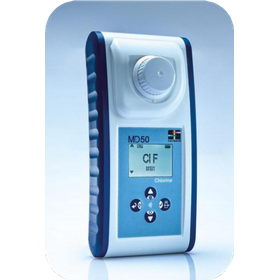
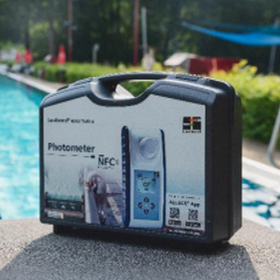
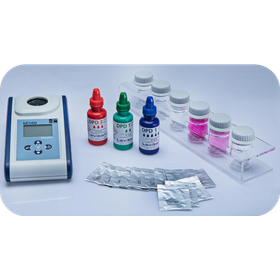
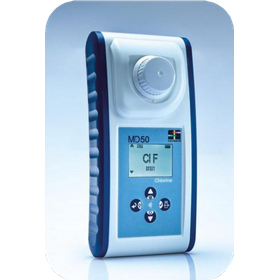
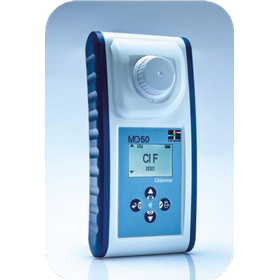
Portable Residual Chlorine Meter MD50 for Waterworks Bureau

Easily and accurately measure the residual chlorine in tap water. For on-site water quality management.

In the water quality management of the waterworks bureau, accurate measurement of residual chlorine concentration is essential for the safe supply of water. Measuring residual chlorine concentration is important not only for confirming disinfection effectiveness but also for preventing health impacts from excessive chlorine. If accurate measurements cannot be made, the reliability of water quality management may be compromised, potentially increasing health risks for residents. The MD50 residual chlorine meter is a portable device that can be used as a testing method for tap water. It enables rapid measurements on-site and contributes to the efficiency of water quality management. 【Usage Scenarios】 - Measurement of residual chlorine in tap water - Water quality management at water purification plants - Water quality monitoring in distribution networks 【Benefits of Introduction】 - Rapid and accurate measurement of residual chlorine concentration - Streamlined collection and management of measurement data on-site - Improved reliability of water quality management and risk reduction

  • MD50ケース.png
  • MD50残留塩素.png
  • Residual chlorine meter
  • Water quality testing
  • Other water quality analysis
  • Residual chlorine meter

Added to bookmarks

Bookmarks list

Bookmark has been removed

Bookmarks list

You can't add any more bookmarks

By registering as a member, you can increase the number of bookmarks you can save and organize them with labels.

Free membership registration

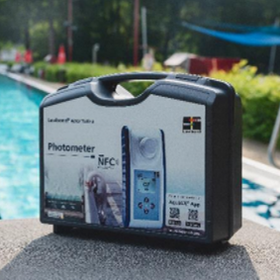
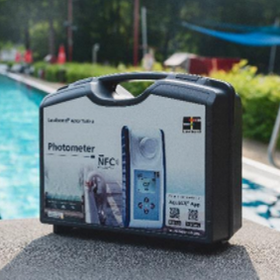
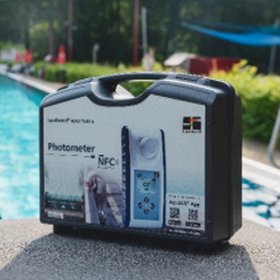
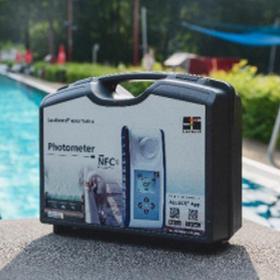
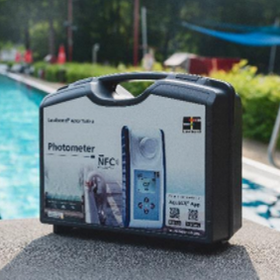
Portable Residual Chlorine Meter MD50 for Pools

For pool water quality management. Accurate residual chlorine measurement with easy operation.

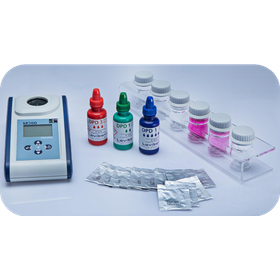
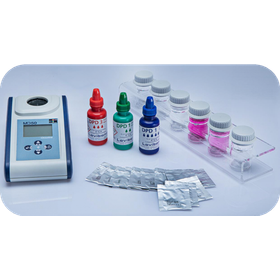
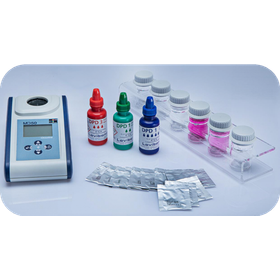
In pool hygiene management, water quality control is extremely important for protecting the health of users. In particular, the concentration of residual chlorine is a crucial indicator for evaluating pool water quality, and it is necessary to maintain an appropriate concentration. If the residual chlorine concentration is low, bacteria and viruses can proliferate, potentially harming the health of users. On the other hand, if the residual chlorine concentration is too high, it may cause irritating odors and skin irritation. The MD50 residual chlorine meter adopts the DPD spectrophotometric method and can measure free, total, and combined residual chlorine with a single device. With accurate and reproducible measurements, it supports pool water quality management. 【Usage Scenarios】 - Pool water quality testing - Water quality check before swimming - Water quality management records 【Benefits of Implementation】 - Accurate understanding of residual chlorine concentration - Streamlining of water quality management - Ensuring the health and safety of users

  • MD50ケース.png
  • MD50残留塩素.png
  • Residual chlorine meter
  • Water quality testing
  • Other water quality analysis
  • Residual chlorine meter

Added to bookmarks

Bookmarks list

Bookmark has been removed

Bookmarks list

You can't add any more bookmarks

By registering as a member, you can increase the number of bookmarks you can save and organize them with labels.

Free membership registration

Portable Residual Chlorine Meter MD50 for Aquaculture

For water quality management in aquaculture ponds. Reduces fish disease risks.

In aquaculture, proper management of water quality is essential to suppress the occurrence of fish diseases. In particular, measuring the residual chlorine concentration is important to maintain the disinfection effect that prevents the proliferation of pathogens. If the residual chlorine concentration is low, the disinfection effect weakens, increasing the risk of fish diseases. On the other hand, if the residual chlorine concentration is too high, there are concerns about adverse effects on the fish. The portable residual chlorine meter MD50 quickly and accurately measures the residual chlorine concentration in aquaculture ponds, reducing the risk of fish diseases. 【Usage Scenarios】 - Water quality testing in aquaculture ponds - Investigating causes during fish disease outbreaks - Monitoring water treatment processes 【Benefits of Implementation】 - Early detection and response to fish diseases - Maintaining fish health - Improving productivity in aquaculture facilities

  • MD50ケース.png
  • MD50残留塩素.png
  • Residual chlorine meter
  • Water quality testing
  • Other water quality analysis
  • Residual chlorine meter

Added to bookmarks

Bookmarks list

Bookmark has been removed

Bookmarks list

You can't add any more bookmarks

By registering as a member, you can increase the number of bookmarks you can save and organize them with labels.

Free membership registration

Portable Residual Chlorine Meter MD50 for Water Purification Plants

For quality control of tap water. A portable residual chlorine meter for on-site use.

At water purification plants, it is essential to accurately understand the quality of raw water and to carry out appropriate water purification processes. In particular, the concentration of residual chlorine is an important indicator of disinfection effectiveness and needs to be managed without excess or deficiency. If the measurement of residual chlorine concentration is inaccurate, disinfection effectiveness may be insufficient, increasing the risk of water quality contamination. Additionally, excessive chlorine may lead to the generation of carcinogenic substances. The portable residual chlorine meter MD50 employs the DPD spectrophotometric method and can measure free, total, and combined residual chlorine with a single device. It is also compatible with drinking water testing, achieving accurate and highly reproducible measurements. 【Usage Scenarios】 - Raw water testing - Management of residual chlorine in the water purification process - Water quality testing of drinking water 【Benefits of Implementation】 - Rapid residual chlorine measurement on-site - Optimization of water purification processes based on accurate data - Increased efficiency in water quality management and cost reduction

  • MD50ケース.png
  • MD50残留塩素.png
  • Residual chlorine meter
  • Water quality testing
  • Other water quality analysis
  • Residual chlorine meter

Added to bookmarks

Bookmarks list

Bookmark has been removed

Bookmarks list

You can't add any more bookmarks

By registering as a member, you can increase the number of bookmarks you can save and organize them with labels.

Free membership registration

Portable Residual Chlorine Meter MD50 for Building Management

Easy measurement of residual chlorine in water tanks! A portable residual chlorine meter that is strong on-site.

In building management, the hygienic management of water storage tanks is extremely important for protecting the health of residents. According to the Water Supply Act, it is necessary to properly manage the residual chlorine concentration in water storage tanks, but the complexity of measurement and the reliability of measuring instruments can pose challenges. The MD50 residual chlorine meter is a portable residual chlorine meter that can also be used for tap water testing, balancing accurate measurement with ease of use in the field. This allows building managers to quickly and accurately grasp the residual chlorine concentration in water storage tanks and carry out appropriate water quality management. 【Usage Scenarios】 - Regular inspections of water storage tanks - Rapid investigation during water quality anomalies - Maintenance of water supply equipment 【Benefits of Implementation】 - Optimization of water quality management through accurate measurement of residual chlorine concentration - Reduction of measurement time and improvement of work efficiency - High reliability in the field due to IP67 waterproof performance

  • MD50ケース.png
  • MD50残留塩素.png
  • Residual chlorine meter
  • Water quality testing
  • Other water quality analysis
  • Residual chlorine meter

Added to bookmarks

Bookmarks list

Bookmark has been removed

Bookmarks list

You can't add any more bookmarks

By registering as a member, you can increase the number of bookmarks you can save and organize them with labels.

Free membership registration

Portable Residual Chlorine Meter MD50 for Research Institutions

Portable residual chlorine meter to improve the reliability of experimental data.

In research institutions, accurate water quality measurements are essential. In particular, residual chlorine concentration has a significant impact on experimental results, so reliable measurements are required. Inaccurate measurements can compromise the reproducibility of experiments and lead to incorrect conclusions. The portable residual chlorine meter MD50 adopts the DPD spectrophotometric method and can measure free, total, and combined residual chlorine with a single device. Accurate and reproducible measurements contribute to improving the reliability of experimental data. 【Usage Scenarios】 - Experiments related to water quality - Verification of residual chlorine concentration in reagent preparation - Quality control of water for experiments 【Effects of Implementation】 - Improved reliability of experimental data through accurate residual chlorine measurements - Ensured reproducibility of measurement results - Increased experimental efficiency through rapid measurements

  • MD50ケース.png
  • MD50残留塩素.png
  • Residual chlorine meter
  • Water quality testing
  • Other water quality analysis
  • Residual chlorine meter

Added to bookmarks

Bookmarks list

Bookmark has been removed

Bookmarks list

You can't add any more bookmarks

By registering as a member, you can increase the number of bookmarks you can save and organize them with labels.

Free membership registration

[For Water Supply] ATI Q46H/62-63 Type Residual Chlorine Meter

Accurately measure residual chlorine in tap water with a membrane-type sensor.

In the water supply industry, water quality management is crucial for ensuring a safe water supply. In particular, the concentration of residual chlorine must be strictly managed as an indicator of disinfection effectiveness. If the residual chlorine concentration is too low, the safety of the water is compromised, and if it is too high, there are concerns about its effects on human health. The ATI Q46H/62-63 type residual chlorine meter employs a diaphragm-type sensor, allowing for direct measurement of residual chlorine without the use of reagents. This enables accurate and rapid water quality management, contributing to the supply of safe water. 【Application Scenarios】 - Measurement of residual chlorine concentration at water purification plants - Monitoring of residual chlorine concentration in distribution networks - Management of residual chlorine concentration in water storage tanks 【Benefits of Implementation】 - Optimization of water quality management through accurate understanding of residual chlorine concentration - Reduction in reagent purchase costs - Prompt response to abnormalities due to rapid measurement

  • Other measurement, recording and measuring instruments
  • Residual chlorine meter

Added to bookmarks

Bookmarks list

Bookmark has been removed

Bookmarks list

You can't add any more bookmarks

By registering as a member, you can increase the number of bookmarks you can save and organize them with labels.

Free membership registration

[For the food industry] ATI Q46H/62-63 type residual chlorine meter

Accurately manage the sterilization process in food manufacturing without the need for reagents.

In the food industry, hygiene management during the manufacturing process is extremely important, and proper management of residual chlorine concentration during the sterilization process is essential to ensure product quality and safety. If the residual chlorine concentration is inappropriate, the sterilization effect may be insufficient, increasing the risk of food poisoning. The ATI Q46H/62-63 type residual chlorine meter employs a diaphragm-type polarographic sensor, allowing for the direct measurement of free chlorine, active chlorine, and combined chlorine (monochloramine) without the need for reagents. This enables accurate monitoring of residual chlorine concentration during the sterilization process in food manufacturing and facilitates appropriate management. 【Usage Scenarios】 - Monitoring residual chlorine concentration during the sterilization process in food factories - Measuring residual chlorine concentration in drinking water sterilization treatment - Managing residual chlorine concentration in food washing water 【Benefits of Implementation】 - Reduction in reagent purchase costs - Stabilization of product quality through improved measurement accuracy - Early detection of abnormalities through rapid measurement - Increased lifespan due to diaphragm-type sensors

  • Other measurement, recording and measuring instruments
  • Residual chlorine meter

Added to bookmarks

Bookmarks list

Bookmark has been removed

Bookmarks list

You can't add any more bookmarks

By registering as a member, you can increase the number of bookmarks you can save and organize them with labels.

Free membership registration

[For Pool Use] ATI Q46H/62-63 Type Residual Chlorine Meter

Accurate pool water quality management with a diaphragm-type sensor.

In pool hygiene management, water quality is extremely important for protecting the health of users. In particular, the concentration of residual chlorine is one of the key indicators for evaluating pool water quality. Maintaining an appropriate residual chlorine concentration is essential to suppress the growth of bacteria and viruses, providing a safe swimming environment. If measuring the residual chlorine concentration is cumbersome, management can become complicated, leading to potential oversights. The ATI Q46H/62-63 type residual chlorine meter requires no reagents and can directly measure free chlorine, effective chlorine, and combined chlorine. This streamlines pool water quality management and ensures user safety. 【Usage Scenarios】 - Measuring residual chlorine concentration in pools - Water quality management in bathing facilities - Monitoring circulation filtration systems 【Benefits of Implementation】 - Improved safety through accurate water quality management - Reduction in reagent costs - Reduced management burden through efficient measurement

  • Other measurement, recording and measuring instruments
  • Residual chlorine meter

Added to bookmarks

Bookmarks list

Bookmark has been removed

Bookmarks list

You can't add any more bookmarks

By registering as a member, you can increase the number of bookmarks you can save and organize them with labels.

Free membership registration

[For Boilers] ATI Q46H/62-63 Type Residual Chlorine Meter

A diaphragm-type sensor measures residual chlorine in boiler water to prevent corrosion.

In the boiler industry, it is important to properly manage the residual chlorine concentration in boiler water to prevent corrosion of pipes and equipment. Corrosion can shorten the lifespan of equipment and increase the risk of operational shutdowns. The ATI Q46H/62-63 type residual chlorine meter employs a diaphragm-type sensor to accurately measure the residual chlorine concentration in boiler water, contributing to corrosion prevention. 【Application Scenarios】 - Boiler water treatment plants - Cooling water systems - Pure water production processes 【Benefits of Implementation】 - Reduction of equipment issues due to corrosion - Extension of equipment lifespan - Achievement of stable operations

  • Other measurement, recording and measuring instruments
  • Residual chlorine meter

Added to bookmarks

Bookmarks list

Bookmark has been removed

Bookmarks list

You can't add any more bookmarks

By registering as a member, you can increase the number of bookmarks you can save and organize them with labels.

Free membership registration

ATI Q46H/62-63 Type Residual Chlorine Meter for Wastewater Treatment

A diaphragm-type sensor accurately measures residual chlorine in effluent water.

In the wastewater treatment industry, strict management of the quality of discharged water is required. In particular, the concentration of residual chlorine is an important indicator for assessing environmental impact. Maintaining an appropriate residual chlorine concentration contributes not only to compliance with regulations but also to environmental conservation. The ATI Q46H/62-63 type residual chlorine meter employs a diaphragm-type sensor and can directly measure free chlorine, total chlorine, and combined chlorine without the need for reagents. 【Usage Scenarios】 - Management of discharged water at wastewater treatment plants - Management of discharged water from septic tanks - Water quality testing 【Benefits of Implementation】 - Optimization of water quality management through accurate measurement of residual chlorine concentration - Reduction of reagent costs - Improvement of measurement accuracy through pH correction functionality

  • Other measurement, recording and measuring instruments
  • Residual chlorine meter

Added to bookmarks

Bookmarks list

Bookmark has been removed

Bookmarks list

You can't add any more bookmarks

By registering as a member, you can increase the number of bookmarks you can save and organize them with labels.

Free membership registration

Portable Water Quality Tester Residual Chlorine Meter MD100

The moly preservation feature allows for the storage of 16 measurement data. It is a compact residual chlorine meter.

The MD100 series is a portable water quality meter with a lightweight, compact, and simple design, featuring no moving parts around the measurement area. It utilizes long-lasting LED lamps and high-precision interference filters for reliable measurements. It allows for easy operation and can perform highly reproducible measurements in a short time. The measurement items can be used in various applications, including water purification management such as residual chlorine and pH, boiler water management such as silica, and wastewater management such as COD. It uses Lovibond tablet reagents, powder reagents, and liquid reagents, which guarantee long-term stability of 5 to 10 years for measurements.

  • Air purifiers
  • Residual chlorine meter

Added to bookmarks

Bookmarks list

Bookmark has been removed

Bookmarks list

You can't add any more bookmarks

By registering as a member, you can increase the number of bookmarks you can save and organize them with labels.

Free membership registration

Portable Residual Chlorine Meter 'RC-24P' [Rental]

Residual chlorine meter that can be easily measured in the field.

Residual chlorine requires on-site testing due to the significant changes over time of chlorine compounds used for disinfection in tap water and similar sources. 【Features】 ■ No reagents needed, easy measurement of residual chlorine in tap water and similar sources ■ Can perform sampling and immersion measurements

  • Water quality testing
  • Residual chlorine meter

Added to bookmarks

Bookmarks list

Bookmark has been removed

Bookmarks list

You can't add any more bookmarks

By registering as a member, you can increase the number of bookmarks you can save and organize them with labels.

Free membership registration

Related Categories of Residual chlorine meter