We have compiled a list of manufacturers, distributors, product information, reference prices, and rankings for Surface property evaluation device.
ipros is IPROS GMS IPROS One of the largest technical database sites in Japan that collects information on.

Surface property evaluation device - List of Manufacturers, Suppliers, Companies and Products | IPROS GMS

Surface property evaluation device Product List

1~7 item / All 7 items

Displayed results

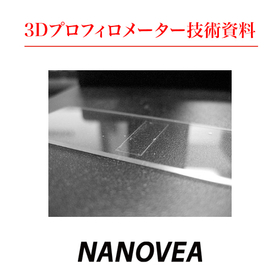
3D Profilometer Technical Documentation: Measurement of Transparent Films on Transparent Substrates

This is a PDF document on 'Measurement of Transparent Films on Transparent Substrates.' Please download it for details.

If both the "thickness" and "surface roughness" of a transparent thin film material coated on a transparent substrate can be measured with a single device, it would be very convenient for both development and quality control. It is clear that this is difficult because conventional stylus-based contact surface profilometers find it challenging to accurately measure soft films. On the other hand, other optical technologies also struggle to measure transparent thin films on transparent substrates. While there are other devices that can measure the thickness of this thin film, they do not have the capability to measure roughness.

  • 3D measuring device
  • Surface property evaluation device

Added to bookmarks

Bookmarks list

Bookmark has been removed

Bookmarks list

You can't add any more bookmarks

By registering as a member, you can increase the number of bookmarks you can save and organize them with labels.

Free membership registration

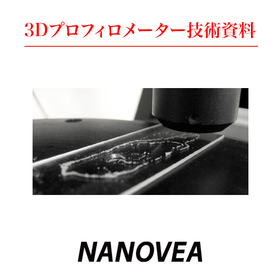
3D Profilometer Technical Documentation: Study of Coating Surface Morphology

This is a PDF document on the study of the morphology of painted surfaces. Please download it for more details.

Among the functions of coatings, surface protection and decorative properties play an important role in various industries such as automotive, marine, military, and construction. To achieve required characteristics such as corrosion resistance, UV protection, and wear resistance, the formulation and structure of coatings need to be carefully analyzed, improved, and optimized.

  • Optical Measuring Instruments
  • Surface property evaluation device

Added to bookmarks

Bookmarks list

Bookmark has been removed

Bookmarks list

You can't add any more bookmarks

By registering as a member, you can increase the number of bookmarks you can save and organize them with labels.

Free membership registration

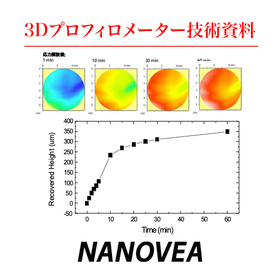
3D Profilometer Technical Document: Recovery of Rubber After Compressive Permanent Deformation

This is a PDF document on the recovery of rubber samples after compressive permanent deformation. Please download it for details.

The compressive permanent deformation of materials, as defined in ASTM D395i, is the permanent change in shape that remains when the previously applied compressive load is removed. Rubber is subjected to significant compressive stress in a wide range of applications, such as mounting to machinery, vibration dampers, valves, faucets, and bearings, in media such as air or liquids. The ability to retain elastic properties after prolonged compressive stress is crucial for the quality and functionality of the service. For example, a compression faucet relies on a rubber washer to seal the valve seat. The elasticity of the rubber sealing washer ensures the proper functioning of the faucet. Leaks occur when the rubber washer, seal, or gasket in the valve assembly wears out and loses elasticity. Therefore, it is important to evaluate the compressive permanent deformation of rubber after prolonged compressive stress.

  • Optical Measuring Instruments
  • Surface property evaluation device

Added to bookmarks

Bookmarks list

Bookmark has been removed

Bookmarks list

You can't add any more bookmarks

By registering as a member, you can increase the number of bookmarks you can save and organize them with labels.

Free membership registration

3D Profilometer Technical Document: Wear Test of Polymer Coating and Glass

This is a PDF document on the "Nano-level Wear Test of Polymer Coating and Glass." Please download it for more details.

Due to new advancements in technology, the size of components and their surface characteristics are continuously evolving towards greater delicacy across virtually all industries. This is particularly evident in the components of biomedical and microelectronics, as well as in understanding their surface interactions. For industries that require precision in delicate surface structures, it is extremely important to understand changes in material surfaces and to provide the intended surface interactions. The delicacy of component surfaces and their sizes has made traditional tribological (friction-related) research challenging, creating a need for new and appropriate wear/friction results, not only for research but also for quality control purposes. Therefore, there is an increasing necessity to accurately measure surface interactions due to wear/friction under smaller loads and in smaller applications.

  • Optical Measuring Instruments
  • Surface property evaluation device

Added to bookmarks

Bookmarks list

Bookmark has been removed

Bookmarks list

You can't add any more bookmarks

By registering as a member, you can increase the number of bookmarks you can save and organize them with labels.

Free membership registration

3D Profilometer Technical Documentation: Verification of CAD Models and Processed Products

This is a PDF document for "Verification and Validation of CAD Models and Processed Products." Please download it for details.

The demand for precision machining to create shaped components with complex geometries has dramatically increased across various industries. For example, in aerospace, medical, automotive, technology parts, as well as machinery and instruments, the constant demand for innovation and precision is driving the evolution of new technologies. As a result, the establishment of advanced quality inspection techniques to rigorously examine processed products and ensure they meet design specifications has become essential.

  • Optical Measuring Instruments
  • Surface property evaluation device

Added to bookmarks

Bookmarks list

Bookmark has been removed

Bookmarks list

You can't add any more bookmarks

By registering as a member, you can increase the number of bookmarks you can save and organize them with labels.

Free membership registration

3D Profilometer Technical Document: Actual Measurement of Micro-sized "Spherical Particles"

This is a PDF document of the actual measurement of micro-sized 'spherical particles.' Please download it for details.

The term "micro-sphere" (micro-spherical particle) is widely used in various fields such as materials science and pharmacology, referring to spherical particles made from various natural and synthetic materials with diameters in the micrometer range (1μm to 1000μm (1mm)). Micro-spheres are produced in solid and hollow forms and are developed using diverse materials such as plastics and glass. Hollow micro-spheres are often used as additives to reduce the density of materials. Solid micro-spheres have numerous applications depending on their constituent materials and sizes. Micro-spheres are a type of fine particle.

  • Optical Measuring Instruments
  • Surface property evaluation device

Added to bookmarks

Bookmarks list

Bookmark has been removed

Bookmarks list

You can't add any more bookmarks

By registering as a member, you can increase the number of bookmarks you can save and organize them with labels.

Free membership registration

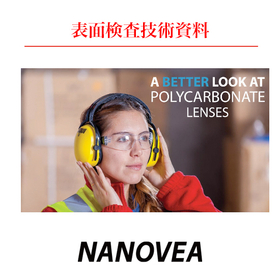
Surface Inspection Technical Document: Various Properties of Polycarbonate Lenses

This is a PDF document on the various properties of polycarbonate lenses. Please download it for more details.

Polycarbonate lenses are widely used in many optical applications. Their advantages, such as high impact resistance, lightweight, and low cost during mass production, make them more practical than traditional glass for various uses. Among these applications, there are standards that require safety (e.g., safety glasses), complexity (e.g., Fresnel lenses), and durability (e.g., traffic signal lenses), which can be difficult to meet without using plastic. The ability to meet many requirements at a low cost while maintaining sufficient optical properties distinguishes plastic lenses in this field. However, polycarbonate lenses also have limitations. The main concern for consumers is their susceptibility to scratches. To compensate for this, additional processing is done to apply scratch-resistant coatings. Nanobear utilizes our three measurement devices (profilometer, tribometer, indenter) to verify the important characteristics of polycarbonate lenses.

  • Flaw detection testing
  • Optical microscope
  • Other inspection equipment and devices
  • Surface property evaluation device

Added to bookmarks

Bookmarks list

Bookmark has been removed

Bookmarks list

You can't add any more bookmarks

By registering as a member, you can increase the number of bookmarks you can save and organize them with labels.

Free membership registration