1~18 item / All 18 items
Displayed results
Filter by category

Added to bookmarks
Bookmarks listBookmark has been removed
Bookmarks listYou can't add any more bookmarks
By registering as a member, you can increase the number of bookmarks you can save and organize them with labels.
Free membership registration
Contact this company
Inquiry FormBefore making an inquiry
Download Profile1~18 item / All 18 items
Filter by category
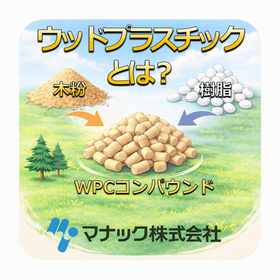
Wood Plastic Composite (WPC) is a material that combines wood powder or wood fibers with thermoplastic resin. It is characterized by having the natural texture derived from wood as well as the moldability and durability of plastic. Generally, wood powder, resin, compatibilizers, and other additives are melted and mixed using a kneader or twin-screw extruder, and then pelletized for use. The resins used are mainly polyethylene and polypropylene.
Added to bookmarks
Bookmarks listBookmark has been removed
Bookmarks listYou can't add any more bookmarks
By registering as a member, you can increase the number of bookmarks you can save and organize them with labels.
Free membership registration
Q: What is wood plastic composite (WPC)? A: Wood plastic composite (WPC) is a material that combines wood powder or wood fibers with thermoplastic resin. It is characterized by having the natural texture derived from wood as well as the moldability and durability of plastic. Generally, wood powder, resin, compatibilizers, and other additives are melted and mixed using a kneader or twin-screw extruder, then pelletized for use in various molding processes. The resins used are mainly polyethylene and polypropylene.
Added to bookmarks
Bookmarks listBookmark has been removed
Bookmarks listYou can't add any more bookmarks
By registering as a member, you can increase the number of bookmarks you can save and organize them with labels.
Free membership registration
In the food packaging industry, materials that can achieve both food quality preservation and environmental consideration are in demand. In particular, packaging materials with high barrier properties are essential for long-term food storage and protection during transportation. Traditional petroleum-based plastics, while excellent in barrier properties, have the challenge of high environmental impact. The Selbrid® standard grade contributes to reducing environmental impact by incorporating up to 55wt% wood powder and reducing the use of petroleum-derived resins. 【Usage Scenarios】 - Food trays - Food containers 【Benefits of Implementation】 - Reduction of CO2 emissions through the use of biomass-derived materials - Compatibility with existing molding equipment - Differentiation through wood-based aesthetics
Added to bookmarks
Bookmarks listBookmark has been removed
Bookmarks listYou can't add any more bookmarks
By registering as a member, you can increase the number of bookmarks you can save and organize them with labels.
Free membership registration
In the automotive industry, reducing the weight of components has become a crucial challenge for improving fuel efficiency and reducing environmental impact. In particular, the lightweighting of body and interior parts is essential for decreasing the overall weight of the vehicle and enhancing fuel efficiency. Traditional materials have faced the challenge of balancing lightweighting with strength and durability. The Celbrid® standard grade incorporates up to 55wt% wood powder, reducing the use of petroleum-derived resins while being compatible with injection molding and extrusion, making it possible to replace existing polypropylene-based materials. It also provides aesthetic qualities derived from wood, contributing to Scope 3 compliance. 【Application Scenes】 - Automotive interior parts (door trims, instrument panels, etc.) - Other parts where lightweighting is required 【Benefits of Implementation】 - Improved fuel efficiency due to lightweighting - Reduced environmental impact (decrease in CO2 emissions) - Increased added value through wood-derived aesthetics - Potential cost reduction through replacement of existing materials
Added to bookmarks
Bookmarks listBookmark has been removed
Bookmarks listYou can't add any more bookmarks
By registering as a member, you can increase the number of bookmarks you can save and organize them with labels.
Free membership registration
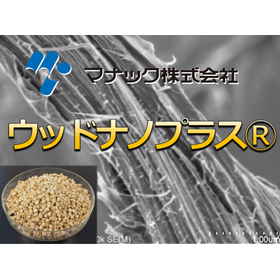
"Wood Nano Plus" is a molding compound in which wood-based filler materials with both nano and micron sizes are uniformly dispersed in thermoplastic resins such as polypropylene.
Added to bookmarks
Bookmarks listBookmark has been removed
Bookmarks listYou can't add any more bookmarks
By registering as a member, you can increase the number of bookmarks you can save and organize them with labels.
Free membership registration
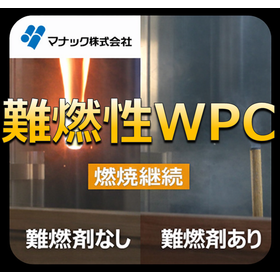
This is a material that imparts flame retardant properties to wood plastic composite (WPC) with a high content of wood powder. It enables applications in areas where flame retardancy is required while maintaining a wood-like feel and environmental friendliness. By reducing the amount of petroleum-derived resin used, it also contributes to biomass utilization and CO2 emission reduction. It is compatible with injection molding and is expected to be used in a wide range of fields, including automotive interior parts, electrical and electronic components, and building materials. Despite the high wood powder content, it has stable moldability, and flame retardant grade design is possible according to application needs. It achieves performance equivalent to UL94 V-0 at a thickness of 3.2 mm (depending on conditions).
Added to bookmarks
Bookmarks listBookmark has been removed
Bookmarks listYou can't add any more bookmarks
By registering as a member, you can increase the number of bookmarks you can save and organize them with labels.
Free membership registration
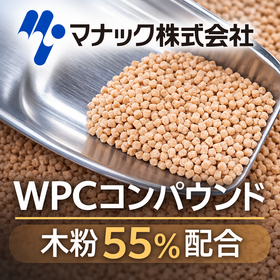
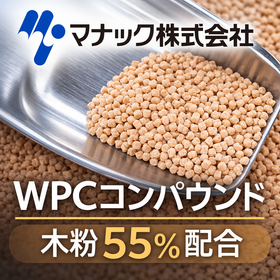
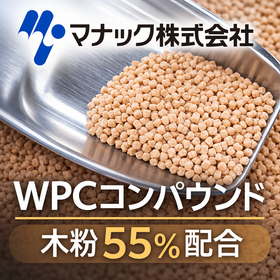
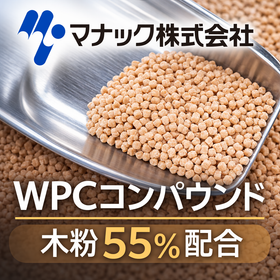
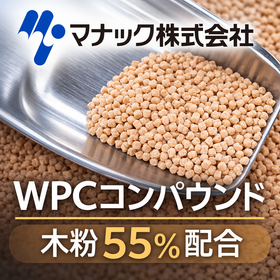
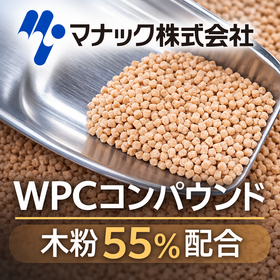
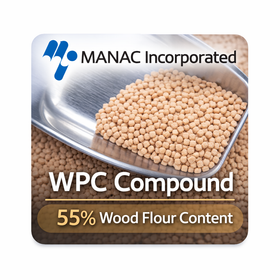
This is a WPC (Wood Plastic Composite) compound with a high content of wood powder. It contains up to 55 wt% wood powder, significantly reducing the use of petroleum-derived resins while being suitable for injection molding and extrusion. It can be relatively easily replaced with existing polypropylene-based materials and is being considered for use in automotive parts, building materials, and everyday products as an environmentally friendly material. This grade emphasizes the aesthetic qualities derived from wood. It can also contribute to CO2 reduction through the utilization of biomass, making it suitable for material selection that considers Scope 3 compliance. *We can also provide suggestions for formulation design based on specific applications.*
Added to bookmarks
Bookmarks listBookmark has been removed
Bookmarks listYou can't add any more bookmarks
By registering as a member, you can increase the number of bookmarks you can save and organize them with labels.
Free membership registration
This is a WPC (Wood Plastic Composite) compound with a high content of wood powder. It contains up to 55 wt% wood powder, significantly reducing the use of petroleum-derived resins while being suitable for injection molding and extrusion. It can be relatively easily replaced with existing polypropylene-based materials, and its consideration for use as an environmentally friendly material is progressing in the automotive parts, building materials, and daily goods sectors. In addition to the aesthetic qualities derived from wood, it also contributes to CO2 reduction through the utilization of biomass, making it suitable for material selection that takes Scope 3 into account. *We can also propose formulation designs tailored to specific applications.
Added to bookmarks
Bookmarks listBookmark has been removed
Bookmarks listYou can't add any more bookmarks
By registering as a member, you can increase the number of bookmarks you can save and organize them with labels.
Free membership registration
It suppresses the combustion of plastics, rubber, fibers, paper, wood, and more. It is active in various situations such as home appliances, building materials, and vehicles.
Added to bookmarks
Bookmarks listBookmark has been removed
Bookmarks listYou can't add any more bookmarks
By registering as a member, you can increase the number of bookmarks you can save and organize them with labels.
Free membership registration
In the home appliance industry, efforts to reduce environmental impact are accelerating, and the sustainability of casing materials is being emphasized. In particular, there is a demand for reducing CO2 emissions throughout the entire product lifecycle, making the transition to environmentally friendly materials essential. Wood Plastic Composite (WPC) contributes to CO2 reduction through the use of wood-based aesthetics and biomass utilization, making it an ideal choice for materials that consider Scope 3 compliance. 【Usage Scenarios】 - Casing for home appliances - As an environmentally friendly material - CO2 emission reduction 【Benefits of Implementation】 - Reduction in the use of petroleum-based resins - Wood-based aesthetics - Contribution to Scope 3 compliance
Added to bookmarks
Bookmarks listBookmark has been removed
Bookmarks listYou can't add any more bookmarks
By registering as a member, you can increase the number of bookmarks you can save and organize them with labels.
Free membership registration
In the civil engineering industry, particularly in the field of retaining walls, there is a demand for both environmental impact reduction and durability. Traditional concrete retaining walls have a high CO2 emission during the manufacturing process, posing challenges to the environment. Additionally, consideration for the landscape is also important. Our Wood Plastic Composite (WPC) incorporates up to 55wt% wood powder, contributing to environmental impact reduction by reducing the amount of petroleum-based resin used. It also possesses wood-like aesthetic qualities, enabling the realization of retaining walls that consider the landscape. 【Application Scenes】 * Retaining walls * Slope protection * Riverbank construction 【Benefits of Implementation】 * Reduction of CO2 emissions * Improvement of landscape through wood-like aesthetics * Ease of replacement from existing polypropylene-based materials
Added to bookmarks
Bookmarks listBookmark has been removed
Bookmarks listYou can't add any more bookmarks
By registering as a member, you can increase the number of bookmarks you can save and organize them with labels.
Free membership registration
In the port industry, there is a demand for the durability of fenders that support the safe berthing and unberthing of vessels, as well as a reduction in environmental impact. Traditional fenders boast high durability but use petroleum-based plastics, which pose environmental challenges. Our Wood Plastic Composite (WPC) incorporates up to 55wt% wood powder, significantly reducing the use of petroleum-based resins and contributing to environmental impact reduction. [Application Scene] - Fenders [Effects of Introduction] - Reduction of environmental impact - Aesthetic qualities derived from wood
Added to bookmarks
Bookmarks listBookmark has been removed
Bookmarks listYou can't add any more bookmarks
By registering as a member, you can increase the number of bookmarks you can save and organize them with labels.
Free membership registration
In the playground equipment industry, safety and durability, along with environmental considerations, are being prioritized. Particularly for equipment parts that children directly touch, materials with low environmental impact are required alongside safety. Traditional plastic materials can pose challenges regarding their environmental impact. Our Wood Plastic Composite (WPC) contributes to reducing environmental burden by incorporating up to 55wt% wood powder and reducing the amount of petroleum-derived resin used. It also provides a wood-like aesthetic, enhancing the appeal of playground equipment. 【Usage Scenarios】 - Playground equipment in parks - Equipment for kindergartens and nurseries - Parts for indoor play facilities 【Benefits of Implementation】 - Enhances corporate image as an environmentally friendly product - Contributes to the reduction of CO2 emissions - Increases product added value with a warm, wood-like design
Added to bookmarks
Bookmarks listBookmark has been removed
Bookmarks listYou can't add any more bookmarks
By registering as a member, you can increase the number of bookmarks you can save and organize them with labels.
Free membership registration
In the furniture industry, efforts to reduce environmental impact are being prioritized, and sustainability is also required in frame materials. Wood Plastic Composite (WPC) is gaining attention as an alternative to wood materials because it can balance aesthetic qualities derived from wood with contributions to CO2 reduction. Our WPC minimizes the use of petroleum-based resins while accommodating injection molding and extrusion, making it easy to replace existing polypropylene-based materials. 【Usage Scenarios】 - Furniture frames - Wood alternatives - Environmentally friendly products 【Benefits of Implementation】 - Contributes to reducing environmental impact - Design that utilizes wood-like texture - Molding possible with existing equipment
Added to bookmarks
Bookmarks listBookmark has been removed
Bookmarks listYou can't add any more bookmarks
By registering as a member, you can increase the number of bookmarks you can save and organize them with labels.
Free membership registration
In the construction industry, exterior materials that can achieve both environmental load reduction and design quality are in demand. It is particularly important that these materials excel in durability and weather resistance while showcasing the texture of wood. Traditional plastic materials have the challenge of high environmental impact, leading to an increased need for alternative materials. Our wood-plastic composite (WPC) incorporates up to 55wt% wood powder, significantly reducing the use of petroleum-derived resins, thus contributing to environmental considerations. It also provides wood-like aesthetics, serving as a new option for exterior materials. 【Usage Scenarios】 - Exterior wall materials - Decking materials - Fences - Louvers 【Benefits of Implementation】 - Environmental load reduction (CO2 reduction) - Wood-like aesthetics - Ease of replacement from existing materials
Added to bookmarks
Bookmarks listBookmark has been removed
Bookmarks listYou can't add any more bookmarks
By registering as a member, you can increase the number of bookmarks you can save and organize them with labels.
Free membership registration
"Wood Plastic Composite" is a composite material made from wood powder and plastic. 【Advantages】 - It allows for the effective use of unused wood resources. - Wood powder is lighter compared to glass fibers and talc. - It can improve the ratio of plant-derived raw materials. 【Product Lineup】 - Celbride(R): A grade using general-purpose wood powder. - Wood Nanoplast(R): A grade using special wood powder that improves impact resistance. - Flame-retardant Wood Plastic Composite: A grade that has been flame-retardant treated (equivalent to UL94 V-0).
Added to bookmarks
Bookmarks listBookmark has been removed
Bookmarks listYou can't add any more bookmarks
By registering as a member, you can increase the number of bookmarks you can save and organize them with labels.
Free membership registration
"Etak(R) Safety Coat(R)" is a commercial disinfecting and antibacterial coating agent developed in collaboration with Professor Hiroki Futakawa from Hiroshima University Graduate School of Dental and Pharmaceutical Sciences, incorporating the antibacterial and disinfecting component "Etak(R)." Immediately after spraying, it disinfects using the alcohol effect. After the alcohol dries, "Etak(R)" is fixed and coats the surface of the sprayed item, providing antibacterial effects that last for one week. [Features] ■ Long-lasting ■ Powerful disinfection and antibacterial properties ■ Colorless, transparent, and non-sticky *For more details, please download the PDF or feel free to contact us.
Added to bookmarks
Bookmarks listBookmark has been removed
Bookmarks listYou can't add any more bookmarks
By registering as a member, you can increase the number of bookmarks you can save and organize them with labels.
Free membership registration
Our company supplies raw materials to various advanced technology industries, including flame retardants, pharmaceuticals, veterinary medicines, food additives, photographic materials, high-performance materials, dyes, and fragrances. We are divided into three business segments: the flame retardant business, fine chemicals business, and health support business. Leveraging our accumulated expertise and development capabilities in bromination and iodination, we respond to the high functionality of various materials as a partner in advanced technology industries such as electronics, information technology, and pharmaceuticals. In the future, we will focus more on proposal-based research and development, aiming to expand our business through downstream product development and value addition. Please leave raw materials and other needs to us. 【Business Overview】 ■ Flame Retardant Business ■ Fine Chemicals Business ■ Health Support Business *For more details, please refer to our catalog or feel free to contact us.
Added to bookmarks
Bookmarks listBookmark has been removed
Bookmarks listYou can't add any more bookmarks
By registering as a member, you can increase the number of bookmarks you can save and organize them with labels.
Free membership registration