1~45 item / All 57 items
Displayed results
Filter by category

Added to bookmarks
Bookmarks listBookmark has been removed
Bookmarks listYou can't add any more bookmarks
By registering as a member, you can increase the number of bookmarks you can save and organize them with labels.
Free membership registrationContact this company
Inquiry Form1~45 item / All 57 items
Filter by category

"Free Guide Specializing in the 'Safety' of Lithium-Ion Batteries Now Available" In the development of industrial equipment and energy storage systems, addressing the 'fire risk' and 'lifespan' of lithium-ion batteries is essential. This document clearly explains from a technical perspective how the chemical differences in cathode materials (such as ternary, lithium iron phosphate, and titanium oxide) lead to variations in safety and performance. ■ Contents of this document: - Mechanism of thermal runaway: Why is the release of 'oxygen' dangerous? - Performance comparison map of the five main types (NMC/LFP/LTO, etc.) - Key points to evaluate in safety tests (nail penetration, heating, etc.) - Guide on how to choose the optimal battery for different applications Please make use of this for initial comparative studies in development or as a technical resource for internal use.
Added to bookmarks
Bookmarks listBookmark has been removed
Bookmarks listYou can't add any more bookmarks
By registering as a member, you can increase the number of bookmarks you can save and organize them with labels.
Free membership registration
In the development of drones, the "size" and "weight" of the power source are the biggest challenges. Our company collaborates closely with manufacturers on enclosure design, proposing cell layouts and shape designs that minimize dead space. By adopting high energy density cells, we strongly support compactness. We participate in specification discussions from the design stage and build a consistent partnership from prototype to mass production as your dedicated "standard battery."
Added to bookmarks
Bookmarks listBookmark has been removed
Bookmarks listYou can't add any more bookmarks
By registering as a member, you can increase the number of bookmarks you can save and organize them with labels.
Free membership registration
In the development of new robots, the "size" and "weight" of the power supply are the biggest challenges. Our company collaborates closely with manufacturers on enclosure design, proposing cell layouts and shape designs that minimize dead space. By adopting high-energy-density cells, we strongly support the miniaturization and lowering of vehicles. We participate in specification discussions from the design stage and build a consistent partnership from prototype to mass production as your dedicated "standard-equipped battery."
Added to bookmarks
Bookmarks listBookmark has been removed
Bookmarks listYou can't add any more bookmarks
By registering as a member, you can increase the number of bookmarks you can save and organize them with labels.
Free membership registration
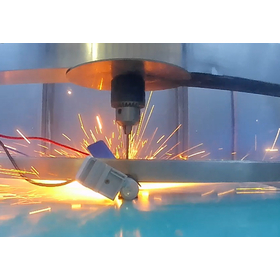
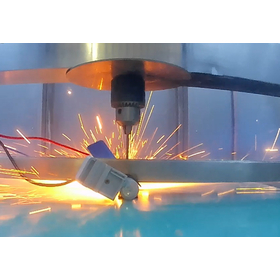
We will conduct the safety evaluation "nail penetration test" due to internal short circuits, which is essential for lithium-ion battery development, on behalf of your company. In a dedicated explosion-proof testing room, we control the nail penetration speed and depth. We can measure the voltage and temperature behavior during the test, and it is also possible to record the ignition and smoke generation processes with a camera. We respond to requests such as "we do not have explosion-proof facilities in-house" and "we want to keep detailed data of the testing process." In the case of a full-scale testing organization, the testing costs can be quite high. Our company aims to keep testing costs down by meeting the needs for simpler tests. 【Example of provided data】 Voltage and temperature change profiles Photographs of the appearance before and after the test Video recordings of the test Simple reports based on pass/fail criteria
Added to bookmarks
Bookmarks listBookmark has been removed
Bookmarks listYou can't add any more bookmarks
By registering as a member, you can increase the number of bookmarks you can save and organize them with labels.
Free membership registration
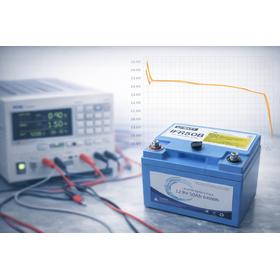
We will address the lack of testing equipment and manpower in your company's development and evaluation phases. We also support next-generation devices such as lithium-ion secondary batteries and all-solid-state batteries. Our specialized technicians provide flexible support, from basic property evaluations to complex pattern tests designed for actual operation. 【Examples of Support】 - Charge and discharge characteristic tests (capacity confirmation, rate characteristics, cycle characteristics) - Simulation tests using custom patterns
Added to bookmarks
Bookmarks listBookmark has been removed
Bookmarks listYou can't add any more bookmarks
By registering as a member, you can increase the number of bookmarks you can save and organize them with labels.
Free membership registration
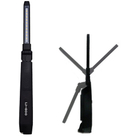
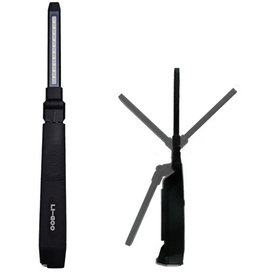
This is a work light equipped with a flexible arm, ideal for detailed assembly tasks and product inspections in recessed areas. With a powerful magnet (or clamp) for secure attachment and a high-rigidity arm that holds the desired angle firmly, it always provides an optimal lighting environment. 【Features】 - Stress-free angle adjustment It uses a high-holding power flex arm that is less likely to droop even in vibration-prone environments, allowing for work with both hands without obstruction. - High color rendering LED With natural light close to sunlight, it enables accurate color identification of wiring and checking for fine scratches. - Robustness to withstand harsh environments Its dustproof and drip-proof structure allows for safe use near machine tools where cutting fluids and oils may splatter. - Energy-efficient and low heat generation There is no discomfort from heat during long hours of close work, contributing to reduced air conditioning load.
Added to bookmarks
Bookmarks listBookmark has been removed
Bookmarks listYou can't add any more bookmarks
By registering as a member, you can increase the number of bookmarks you can save and organize them with labels.
Free membership registration
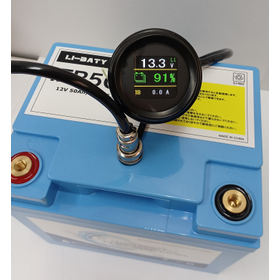
The "detailed understanding of internal conditions," which was difficult with conventional lead-acid batteries, can be achieved by replacing them with lithium-ion batteries equipped with CAN communication. This allows for feedback of not only voltage and current but also precise SOC (state of charge) and temperature information to the upper system, supporting the "complete visualization" of the power source. 【Features】 - Zero downtime through anomaly detection: SOH (state of health) is continuously monitored via CAN communication. This predicts the battery's lifespan and prevents line stoppages due to failures. - Optimization of charging management: Operations can perform the shortest rapid charging at the necessary timing based on accurate SOC data, maximizing operational efficiency. - Smooth integration into existing equipment: Existing chargers and other devices can be used as they are. "Visualization" can be achieved simply by replacing the battery.
Added to bookmarks
Bookmarks listBookmark has been removed
Bookmarks listYou can't add any more bookmarks
By registering as a member, you can increase the number of bookmarks you can save and organize them with labels.
Free membership registration
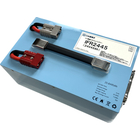
【Overview】 This is an industrial lithium-ion battery system that supports external control and monitoring via CAN communication (CAN 2.0B). It is equipped with a proprietary BMS (Battery Management System) that can transmit precise data such as voltage, current, temperature, SOC (State of Charge), and SOH (State of Health) to the upper controller in real-time. 【Features】 - Advanced system integration: Easily integrated into existing systems such as AGVs (Automated Guided Vehicles) through the CAN protocol. - Safety and longevity: Balancing control for each cell reduces variations in charging and discharging, preventing issues such as overcharging and over-discharging. - Improved maintenance efficiency: The ability to monitor battery degradation through communication functions enables planned maintenance and replacement scheduling.
Added to bookmarks
Bookmarks listBookmark has been removed
Bookmarks listYou can't add any more bookmarks
By registering as a member, you can increase the number of bookmarks you can save and organize them with labels.
Free membership registration
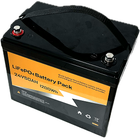
PLB's battery packs are based on high-performance LFP (lithium iron phosphate) cells produced in-house and are equipped with an advanced BMS (Battery Management System). They create an optimal power environment for sites where reliability is essential, ranging from industrial equipment to energy storage systems. 【Product Features】 - High reliability through integrated production: Complete in-house process from cell to pack assembly All processes, including raw material processing, cell manufacturing, BMS development, and pack assembly, are completed in-house at PLB. Data from each process is linked, ensuring high-quality traceability. - Advanced BMS: Balancing safety and longevity In addition to overcharge, over-discharge, and overcurrent protection, the system includes a cell balancing function that optimizes voltage balance between cells. This maximizes the performance of the cells and contributes to the longevity of the system. - Excellent environmental resistance: Stable operation under harsh temperature conditions Utilizing the characteristics of the internal cells and considering heat dissipation in the enclosure design, the product is suitable for outdoor installation and use in harsh industrial environments.
Added to bookmarks
Bookmarks listBookmark has been removed
Bookmarks listYou can't add any more bookmarks
By registering as a member, you can increase the number of bookmarks you can save and organize them with labels.
Free membership registration
PLB's lithium battery products have the following excellent features: - Wide operating temperature: Capable of withstanding harsh environments from -40°C to 60°C Covers a wide operating temperature range from freezing cold regions to hot and humid environments, maintaining stable output. - Excellent low-temperature characteristics: Discharge at -40°C and charging from -20°C Supports discharge down to -40°C, even in low-temperature environments where typical lithium-ion batteries struggle. Additionally, it is designed for cold regions, supporting 0.5C charging between -20°C and -10°C. - 5C ultra-fast charging: Achieves operational recovery in the shortest time Supports extremely high-rate fast charging at 5C, boasting a charging efficiency of over 94%. It is ideal for applications such as logistics robots (AGV/AMR) and electric mobility, where minimizing downtime is crucial. - Efficient energy management: Low-loss design with over 94% charging efficiency Maintains high energy efficiency even during fast charging, enabling efficient operation while minimizing heat generation.
Added to bookmarks
Bookmarks listBookmark has been removed
Bookmarks listYou can't add any more bookmarks
By registering as a member, you can increase the number of bookmarks you can save and organize them with labels.
Free membership registration
To maximize the operational efficiency of automated guided vehicles (AGV/AMR), reducing charging time is essential. Our company offers the development and manufacturing of high-output lithium-ion battery packs that support rapid charging with high current. ■ Cell selection and thermal design based on "topping up" charging The biggest issue with rapid charging is "heat generation." In addition to selecting high-output cells with extremely low internal resistance, we design pack structures that pursue heat dissipation efficiency. This minimizes degradation due to heat and enables full-time operation through "topping up" charging during brief stop times (breaks or loading times). ■ Customization of dedicated BMS (protection circuit) for high current To ensure safety during rapid charging, we equip our systems with a dedicated BMS that features high-precision state of charge (SOC) monitoring and temperature management functions. We closely collaborate with manufacturers' charging systems to achieve optimal control of current and voltage values (such as CAN/RS485 communication). ■ Reliable data provision to reduce evaluation workload We provide essential evidence for manufacturers' product development, such as cycle life data during rapid charging and temperature rise evaluations. This equips your next-generation model with the powerful weapon of "rapid charging," shortening the time to market.
Added to bookmarks
Bookmarks listBookmark has been removed
Bookmarks listYou can't add any more bookmarks
By registering as a member, you can increase the number of bookmarks you can save and organize them with labels.
Free membership registration
In the development of new AGVs/AMRs, the "size" and "weight" of the power supply are the biggest challenges. Our company collaborates closely with manufacturers on enclosure design, proposing cell layouts and shape designs that minimize dead space. By adopting high energy density cells, we strongly support the miniaturization and lowering of the vehicle. We participate in the specification discussions from the design stage and build a consistent partnership from prototype to mass production as your dedicated "standard battery."
Added to bookmarks
Bookmarks listBookmark has been removed
Bookmarks listYou can't add any more bookmarks
By registering as a member, you can increase the number of bookmarks you can save and organize them with labels.
Free membership registration
We provide batteries designed for environments where standard batteries tend to experience performance degradation, such as cold storage warehouses and high-temperature manufacturing lines. By selecting cells and BMS suitable for your usage environment, we maintain stable voltage supply even under harsh conditions. We address complaints about existing batteries, such as "extremely poor performance in winter" and "rapid degradation due to heat." We offer optimal cell selection and pack design for users operating AGVs under specific environmental conditions.
Added to bookmarks
Bookmarks listBookmark has been removed
Bookmarks listYou can't add any more bookmarks
By registering as a member, you can increase the number of bookmarks you can save and organize them with labels.
Free membership registration
Is it already time to replace your lithium-ion battery? We solve concerns such as "genuine parts are too expensive" and "delivery times are long." We ensure compatibility with the battery currently in use in terms of voltage, capacity, and communication protocols (such as CAN), and we provide battery packs with equal or better output characteristics. Of course, we offer existing lineup products, and if there is nothing equivalent or better than what you are currently using, we can also create custom solutions. With prompt support and cost reduction proposals through optimized cell selection, we significantly reduce the maintenance costs for multiple AGVs you own.
Added to bookmarks
Bookmarks listBookmark has been removed
Bookmarks listYou can't add any more bookmarks
By registering as a member, you can increase the number of bookmarks you can save and organize them with labels.
Free membership registration
Why not replace the lead-acid batteries currently in use with lithium-ion batteries? They have a lifespan that is approximately 3 to 5 times longer than lead batteries, significantly reducing the frequency of replacements. Additionally, they support fast charging and topping up, so there’s no worry about running out of battery even in 24-hour operations. We can also accommodate size designs that fit existing battery boxes. This is a solution that simultaneously achieves reduced environmental impact (carbon neutrality) and lower operational costs.
Added to bookmarks
Bookmarks listBookmark has been removed
Bookmarks listYou can't add any more bookmarks
By registering as a member, you can increase the number of bookmarks you can save and organize them with labels.
Free membership registration
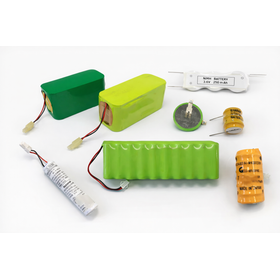
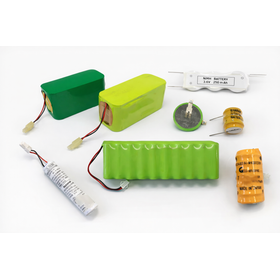
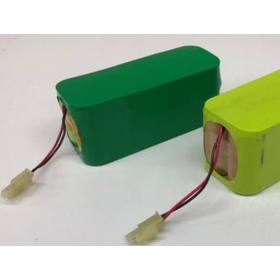
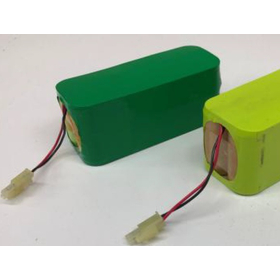
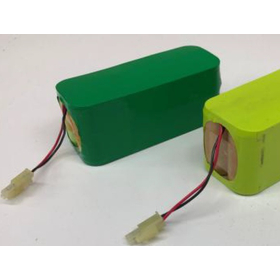
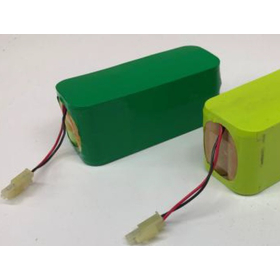
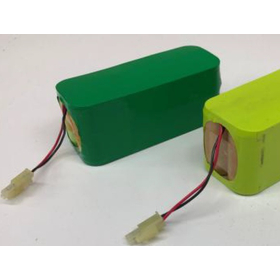
In product development, batteries often face the constraint of needing to fit into the "remaining space inside the casing." Our company manufactures fully customized compact battery packs, tailored to your device design, from battery type selection to shape and wiring specifications. ■ Wide Range of Battery Support We accommodate a wide range of batteries, including mainstream lithium-ion batteries (Li-ion), as well as nickel-cadmium batteries (Ni-cd) and nickel-metal hydride batteries (Ni-MH), which still have strong demand in industrial settings. We propose the optimal cells based on voltage, current characteristics, cycle life, and other application requirements. ■ Advanced Customization Capabilities We offer flexible responses to detailed specification changes, including optimization of shape through changes in cell arrangement (series or parallel), connector specifications, and lead wire lengths. ■ Commitment to Small Lots and Diverse Varieties If you have a case where "we need a small quantity of a few to several dozen units, and major manufacturers have turned us down," you can rest assured. We respond swiftly, from prototype production of a single unit to small-scale mass production. If you want "a special shape" or "to create a compatible product for an old model at a low cost," please feel free to consult with us.
Added to bookmarks
Bookmarks listBookmark has been removed
Bookmarks listYou can't add any more bookmarks
By registering as a member, you can increase the number of bookmarks you can save and organize them with labels.
Free membership registration
Quickly respond to the prototype needs of "wanting to move first" in new product development. We provide optimal cell selection and circuit design, starting with lithium-ion batteries, contributing to the acceleration of product development.
Added to bookmarks
Bookmarks listBookmark has been removed
Bookmarks listYou can't add any more bookmarks
By registering as a member, you can increase the number of bookmarks you can save and organize them with labels.
Free membership registration
Restore alternative battery packs that fit existing spaces using the latest cells. This allows you to avoid costly equipment replacements and enables ongoing maintenance. Small batch production We flexibly respond to the need for "just a few as spares." Large order quantities are not necessary. Complete reproduction of shape and connectors We meticulously reproduce special-shaped plastic cases, unique connectors, and even the lengths of lead wires. Performance improvement with the latest cells Compared to older cells from the past, the latest cells have higher energy density, which can provide added value such as "extended operating time" and "longer lifespan" even in the same size. Design based on physical analysis is also possible Even if specifications or drawings are not available, we can design a replacement by taking in your used battery pack. Please understand that we may not be able to meet all requests.
Added to bookmarks
Bookmarks listBookmark has been removed
Bookmarks listYou can't add any more bookmarks
By registering as a member, you can increase the number of bookmarks you can save and organize them with labels.
Free membership registration
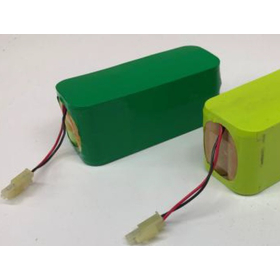
We will restore and manufacture nickel-cadmium and nickel-hydride battery packs that have been discontinued by the manufacturer with equivalent performance. For those who are struggling with "I still want to use the equipment, but there are no batteries," we support longevity with small-scale production starting from just one unit.
Added to bookmarks
Bookmarks listBookmark has been removed
Bookmarks listYou can't add any more bookmarks
By registering as a member, you can increase the number of bookmarks you can save and organize them with labels.
Free membership registration
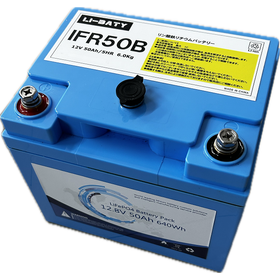
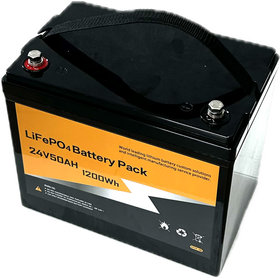
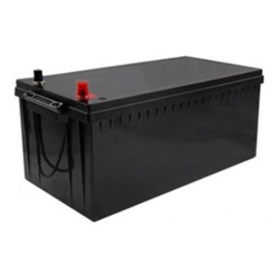
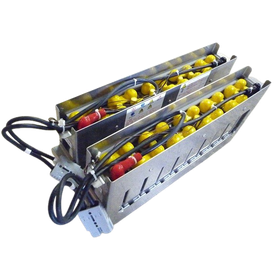
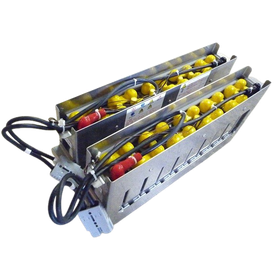
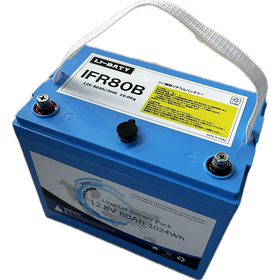
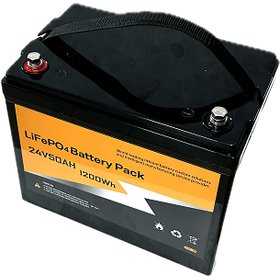
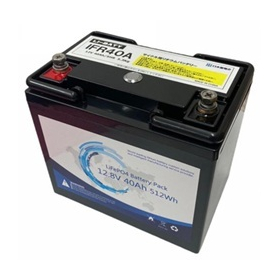
Lead batteries have a short cycle life and gradually experience capacity decline, requiring management and maintenance. Would you consider switching to lithium batteries to reduce maintenance and replacement costs? <Advantages compared to lead-acid batteries> - Lightweight: Can be reduced to less than half the weight of a standard lead battery. - Long operating time: Can maintain high voltage for longer, resulting in extended operating time until the equipment's cutoff voltage. - Reduced replacement frequency: Durable against deep discharges, significantly extending cycle life compared to lead batteries. - Easy storage: Low self-discharge means no need for recharging after vacations or equipment maintenance. - Strong against temperature variations: Can be used in temperature environments ranging from 5°C to 40°C. - Cost control: Initial costs are high, but running costs can be minimized. - No need for equipment changes: The main equipment and surrounding devices such as chargers can be used as is.
Added to bookmarks
Bookmarks listBookmark has been removed
Bookmarks listYou can't add any more bookmarks
By registering as a member, you can increase the number of bookmarks you can save and organize them with labels.
Free membership registration
Lead batteries have a short cycle life and gradually experience capacity degradation, requiring management and maintenance. Would you consider switching to lithium batteries to reduce maintenance and replacement costs? <Advantages compared to lead-acid batteries> - Lightweight: Can be reduced to less than half the weight of a standard lead battery. - Long operating time: Can maintain high voltage for a longer period, resulting in extended operating time until the equipment's cutoff voltage. - Reduced replacement frequency: Durable against deep discharges, significantly extending cycle life compared to lead batteries. - Easy storage: Low self-discharge means no need for recharging after vacations or equipment maintenance. - Resistant to temperature variations: Can be used in temperature environments ranging from 5°C to 40°C. - Cost control: Initial costs are high, but running costs can be minimized. - No need for equipment changes: The main equipment and surrounding devices such as chargers can be used as is.
Added to bookmarks
Bookmarks listBookmark has been removed
Bookmarks listYou can't add any more bookmarks
By registering as a member, you can increase the number of bookmarks you can save and organize them with labels.
Free membership registration
Lead batteries have a short cycle life and gradually experience capacity degradation, requiring management and maintenance. Would you consider switching to lithium batteries to reduce maintenance and replacement costs? <Advantages compared to lead-acid batteries> - Lightweight: Can be reduced to less than half the weight of a standard lead battery. - Long operating time: Can maintain high voltage for longer, resulting in extended operating time until the equipment's cutoff voltage. - Reduced replacement frequency: Durable against deep discharges, significantly extending cycle life compared to lead batteries. - Easy storage: Low self-discharge means no need for recharging after vacations or equipment maintenance. - Resistant to temperature changes: Can be used in temperature environments ranging from 5°C to 40°C. - Cost control: Initial costs are high, but running costs can be kept low. - No need for equipment changes: Existing equipment and peripherals like chargers can be used as is.
Added to bookmarks
Bookmarks listBookmark has been removed
Bookmarks listYou can't add any more bookmarks
By registering as a member, you can increase the number of bookmarks you can save and organize them with labels.
Free membership registration
Lead batteries have a short cycle life and gradually experience capacity degradation, requiring management and maintenance. Would you consider switching to lithium batteries to reduce maintenance and replacement costs? <Advantages compared to lead-acid batteries> - Lightweight: Can be reduced to less than half the weight of conventional lead batteries. - Long operating time: Can maintain high voltage for a longer period, resulting in extended operating time until the equipment's stop voltage. - Reduced replacement frequency: Durable against deep discharges, significantly extending cycle life compared to lead batteries. - Easy storage: Low self-discharge means no need for recharging after vacations or equipment maintenance. - Resistant to temperature changes: Can be used in temperature environments ranging from 5°C to 40°C. - Cost control: Initial costs are high, but running costs can be controlled. - No need for equipment changes: The main equipment and surrounding devices such as chargers can be used as they are.
Added to bookmarks
Bookmarks listBookmark has been removed
Bookmarks listYou can't add any more bookmarks
By registering as a member, you can increase the number of bookmarks you can save and organize them with labels.
Free membership registration
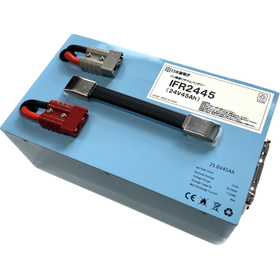
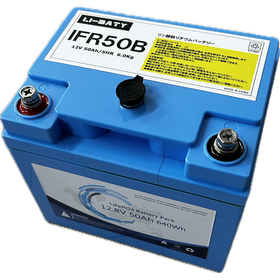
This product is a lithium-ion battery optimized for charging and discharging characteristics, communication functions, and safety design, intended for use in AGVs and AMRs. It is widely adopted in many transport systems as a replacement for lead batteries or as a power source for new AGV implementations.
Added to bookmarks
Bookmarks listBookmark has been removed
Bookmarks listYou can't add any more bookmarks
By registering as a member, you can increase the number of bookmarks you can save and organize them with labels.
Free membership registration
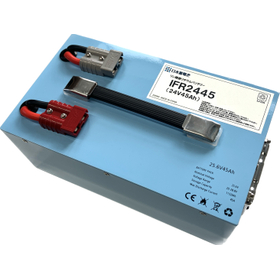
This product is a lithium-ion battery optimized for charge and discharge characteristics, communication functions, and safety design, intended for use in industrial vehicles. It is widely adopted in many transport systems as a replacement for lead batteries or as a power source for new AGV implementations.
Added to bookmarks
Bookmarks listBookmark has been removed
Bookmarks listYou can't add any more bookmarks
By registering as a member, you can increase the number of bookmarks you can save and organize them with labels.
Free membership registration
Batteries installed in picking carts, small transport equipment, and various devices require limited space, sufficient capacity, and safety. At our company, we leverage the technology developed for AGV and AMR batteries to design and manufacture battery packs for small devices, considering specifications on a case-by-case basis.
Added to bookmarks
Bookmarks listBookmark has been removed
Bookmarks listYou can't add any more bookmarks
By registering as a member, you can increase the number of bookmarks you can save and organize them with labels.
Free membership registration
The nickel-cadmium and nickel-hydride batteries used in AGVs are robust and durable, but signs of deterioration such as the occurrence of defective cells and an increase in charging cycles are often observed after about four years of use. Additionally, the maintenance workload is significant, placing a burden on the site. Furthermore, due to the manufacturer's supply system, issues with delivery times and difficulties in procurement have led to an increasing number of users having to consider updating or discontinuing their AGV equipment. We will resolve these issues through the implementation of lithium units.
Added to bookmarks
Bookmarks listBookmark has been removed
Bookmarks listYou can't add any more bookmarks
By registering as a member, you can increase the number of bookmarks you can save and organize them with labels.
Free membership registration
Alkaline batteries for AGVs are very expensive. Due to the high replacement costs, some companies are considering discontinuing AGVs. What we propose this time is the activation of alkaline batteries. NiCd and NiMH batteries inevitably experience a decrease in capacity due to the effects of memory. Depending on the usage environment, cell degradation occurs in about four years. Activation treatment achieves capacity recovery, increased charge and discharge capabilities, and voltage stabilization. It also has cost-saving effects and is very economical.
Added to bookmarks
Bookmarks listBookmark has been removed
Bookmarks listYou can't add any more bookmarks
By registering as a member, you can increase the number of bookmarks you can save and organize them with labels.
Free membership registration
Old equipment still often comes with NiCad and nickel-metal hydride battery packs. Some battery packs are already discontinued, and the manufacturer can no longer provide them. This can be very troublesome when you want to continue using equipment that is still operational. If we can take the actual item, it is possible to manufacture a replacement (new product). <Advantages of Replacement> 1. You can directly replace the existing product. (If it has lead wires or connectors, we can almost always make a proposal.) 2. The size and usability remain the same, and we can also propose an increase in capacity. *Please note that there may be cases where we can only propose up to the same capacity. 3. If connector terminals for discontinued batteries can be obtained, we can accommodate that. (We can also handle reinstallation of existing connectors.) 4. There may be cost reductions compared to purchasing from the manufacturer.
Added to bookmarks
Bookmarks listBookmark has been removed
Bookmarks listYou can't add any more bookmarks
By registering as a member, you can increase the number of bookmarks you can save and organize them with labels.
Free membership registration
Alkaline batteries for AGVs are very expensive. Due to the high replacement costs, some companies are considering discontinuing AGVs. What we propose this time is the activation of alkaline batteries. NiCd and NiMH batteries inevitably experience a decrease in capacity due to the effects of memory. Depending on the usage environment, cell degradation occurs in about four years. The activation treatment achieves capacity recovery, increased charge and discharge capability, and voltage stabilization. It also has cost-saving effects and is very economical.
Added to bookmarks
Bookmarks listBookmark has been removed
Bookmarks listYou can't add any more bookmarks
By registering as a member, you can increase the number of bookmarks you can save and organize them with labels.
Free membership registration
Lead batteries have a short cycle life and gradually experience capacity degradation, requiring management and maintenance. Would you consider switching to lithium batteries to reduce maintenance and replacement costs? <Advantages compared to lead-acid batteries> - Lightweight: Can be reduced to less than half the weight of a standard lead battery. - Long operating time: Can maintain high voltage for a longer period, resulting in extended operating time until the equipment's stop voltage. - Reduced replacement frequency: Durable against deep discharges, significantly extending cycle life compared to lead batteries. - Easy storage: Low self-discharge means no need for recharging after vacations or equipment maintenance. - Resistant to temperature variations: Can be used in temperature environments ranging from 5°C to 40°C. - Cost control: Initial costs are high, but running costs can be controlled. - No need for equipment changes: The main equipment and surrounding devices, such as chargers, can be used as is.
Added to bookmarks
Bookmarks listBookmark has been removed
Bookmarks listYou can't add any more bookmarks
By registering as a member, you can increase the number of bookmarks you can save and organize them with labels.
Free membership registration
Lead batteries have a short cycle life and gradually experience capacity degradation, requiring management and maintenance. Would you consider switching to lithium batteries to reduce maintenance and replacement costs? <Advantages compared to lead-acid batteries> - Lightweight: Can be reduced to less than half the weight of a standard lead battery. - Long operating time: Can maintain high voltage for a longer period, resulting in extended operating time until the equipment's stop voltage. - Reduced replacement frequency: Durable against deep discharges, significantly extending cycle life compared to lead batteries. - Easy storage: Low self-discharge means no need for recharging after vacations or equipment maintenance. - Strong against temperature variations: Can be used in temperature environments ranging from 5°C to 40°C. - Cost control: Initial costs are high, but running costs can be minimized. - No need for equipment changes: Existing equipment and peripherals such as chargers can be used as is.
Added to bookmarks
Bookmarks listBookmark has been removed
Bookmarks listYou can't add any more bookmarks
By registering as a member, you can increase the number of bookmarks you can save and organize them with labels.
Free membership registration
<Advantages Compared to Lead-Acid Batteries> - Lightweight: Can be reduced to less than half the weight of a conventional lead battery. - Long Operating Time: Can maintain high voltage for a longer period, resulting in extended operating time until the equipment's stop voltage. - Reduced Replacement Frequency: Durable against deep discharges, with a significantly extended cycle life compared to lead batteries. - Easy Storage: Low self-discharge means no need for recharging after vacations or equipment maintenance. - Strong Against Temperature Changes: Can be used in temperature environments ranging from 5°C to 40°C. - Cost Control: Initial costs are high, but running costs can be kept low. - No Need for Equipment Changes: The main equipment and peripheral devices such as chargers can be used as is.
Added to bookmarks
Bookmarks listBookmark has been removed
Bookmarks listYou can't add any more bookmarks
By registering as a member, you can increase the number of bookmarks you can save and organize them with labels.
Free membership registration
In the agricultural sector, the electrification of various tools and machinery is progressing as a response to reducing the workload and addressing labor shortages. On the other hand, in agricultural settings, there are demanding conditions for batteries, such as outdoor use, dust, vibration, and long operating hours. Our lithium batteries are designed based on the technology developed for AGVs and industrial machinery, with specifications suitable for agricultural applications in mind.
Added to bookmarks
Bookmarks listBookmark has been removed
Bookmarks listYou can't add any more bookmarks
By registering as a member, you can increase the number of bookmarks you can save and organize them with labels.
Free membership registration
Lead batteries have a short cycle life and gradually experience capacity decline, requiring management and maintenance. Would you consider switching to lithium batteries to reduce maintenance and replacement costs? <Advantages compared to lead-acid batteries> - Lightweight: Can be reduced to less than half the weight of a standard lead battery. - Long operating time: Can maintain high voltage for a longer period, resulting in extended operating time until the equipment's cutoff voltage. - Reduced replacement frequency: Durable against deep discharges, significantly extending cycle life compared to lead batteries. - Easy storage: Low self-discharge means no need for recharging after vacations or equipment maintenance. - Resistant to temperature variations: Can be used in temperature environments ranging from 5°C to 40°C. - Cost control: Total costs can be reduced. - No need for equipment changes: The main equipment and surrounding devices such as chargers can be used as is.
Added to bookmarks
Bookmarks listBookmark has been removed
Bookmarks listYou can't add any more bookmarks
By registering as a member, you can increase the number of bookmarks you can save and organize them with labels.
Free membership registration
Our company designs, manufactures, and sells lithium batteries optimized for charging and discharging characteristics, communication functions, and safety design, with the assumption of use in AGVs and AMRs. They are widely adopted in many transport systems as a replacement for lead batteries or as a power source for new AGV implementations.
Added to bookmarks
Bookmarks listBookmark has been removed
Bookmarks listYou can't add any more bookmarks
By registering as a member, you can increase the number of bookmarks you can save and organize them with labels.
Free membership registration
Lead batteries have a short cycle life and gradually experience capacity decline, requiring management and maintenance. Would you consider switching to lithium batteries to reduce maintenance and replacement costs? <Advantages compared to lead-acid batteries> - Lightweight: Can be reduced to less than half the weight of a standard lead battery. - Long operating time: Can maintain high voltage for a longer period, resulting in extended operating time until the equipment's cutoff voltage. - Reduced replacement frequency: Durable against deep discharges, significantly extending cycle life compared to lead batteries. - Easy storage: Low self-discharge means no need for recharging after vacations or equipment maintenance. - Strong against temperature variations: Can be used in temperature environments ranging from 5°C to 40°C. - Cost control: Total costs can be reduced. - No need for equipment changes: The main equipment and surrounding devices such as chargers can be used as is.
Added to bookmarks
Bookmarks listBookmark has been removed
Bookmarks listYou can't add any more bookmarks
By registering as a member, you can increase the number of bookmarks you can save and organize them with labels.
Free membership registration
Alkaline batteries for AGVs are very expensive. Due to the high replacement costs, some companies are considering discontinuing AGVs. What we propose this time is the activation of alkaline batteries. NiCd and NiMH batteries inevitably experience a decrease in capacity due to the effects of memory. Depending on the usage environment, cell degradation occurs in about four years. The activation process achieves capacity recovery, increased charge and discharge capabilities, and voltage stabilization. It also has cost-saving effects and is very economical. Please feel free to consult us first.
Added to bookmarks
Bookmarks listBookmark has been removed
Bookmarks listYou can't add any more bookmarks
By registering as a member, you can increase the number of bookmarks you can save and organize them with labels.
Free membership registration
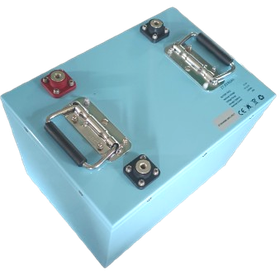
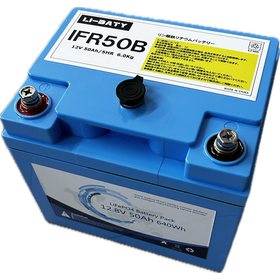
Alkaline batteries for AGVs are very expensive. Due to the high replacement costs, some companies are considering discontinuing AGVs. What we propose this time is the activation of alkaline batteries. NiCd and NiMH batteries cannot avoid capacity degradation due to memory effects and other influences. Depending on the usage environment, cell deterioration occurs in about four years. Activation treatment achieves capacity recovery, increased charge and discharge capabilities, and voltage stabilization. It also has cost-saving effects and is very economical. Please feel free to consult with us first.
Added to bookmarks
Bookmarks listBookmark has been removed
Bookmarks listYou can't add any more bookmarks
By registering as a member, you can increase the number of bookmarks you can save and organize them with labels.
Free membership registration
Lithium conversion with the charger as is. It is possible to replace existing lead-acid battery chargers with lithium ones. This significantly reduces the introduction costs. Achieving 24-hour operation with "topping up" charging. Short-duration topping up charging, which was strictly prohibited for lead-acid batteries, is now possible. This allows for recovery during brief breaks, minimizing the downtime of AGVs. Upgrade options for non-contact and rapid charging are also available. For sites aiming for further automation, we also offer customization for integration with non-contact power supply systems and rapid charging specifications. Maintenance labor reduced by 90%. No need for water replenishment or management of distilled water. The risk of floor corrosion due to battery liquid leaks is eliminated, maintaining a clean warehouse environment. Custom solutions available for small lots or from one unit. For AGVs with special shapes or older vehicles that do not fit standard products, we design and manufacture optimal sizes and capacities from one unit under our domestic inspection system.
Added to bookmarks
Bookmarks listBookmark has been removed
Bookmarks listYou can't add any more bookmarks
By registering as a member, you can increase the number of bookmarks you can save and organize them with labels.
Free membership registration
"I want to miniaturize the AGV, but the battery takes up too much space." "Compact AGVs have a small battery capacity and frequently run out of charge." Our high-density lithium-ion batteries solve these dilemmas in logistics settings. Despite their thin and compact design that fits into limited internal spaces, they maintain a high energy density. Furthermore, with rapid charging capabilities that allow for full recovery in a short time, we enable operations close to 24-hour functionality without increasing battery size. We respond to the design and operational needs of "wanting to be smaller and more mobile" with reliable quality through domestic in-house inspections.
Added to bookmarks
Bookmarks listBookmark has been removed
Bookmarks listYou can't add any more bookmarks
By registering as a member, you can increase the number of bookmarks you can save and organize them with labels.
Free membership registration
Overwhelming energy density (lightweight and compact) Achieving the same amount of electrical energy as lead batteries with overwhelming lightness. It is now possible to reduce the total weight of the vehicle by several hundred kilograms, minimizing damage to the floor and loss of driving energy. Improved loading efficiency (maximizing payload) With lighter batteries, it is possible to carry more cargo or higher-functionality optional equipment. This greatly contributes to improved work efficiency. Low center of gravity design and layout flexibility Not only lightweight, but also customizable in shape. This allows for optimal placement within the vehicle, supporting advanced vehicle balance design such as improved stability during turns. Easy weight reduction without charger replacement Our batteries can be designed to use existing lead battery chargers as is. This enables upgrades to lightweight and lithium technology while keeping capital investment to a minimum. Reliability through domestic self-inspection While pursuing weight reduction, we maintain robustness and safety suitable for industrial applications. We deliver only products that have passed strict inspection standards.
Added to bookmarks
Bookmarks listBookmark has been removed
Bookmarks listYou can't add any more bookmarks
By registering as a member, you can increase the number of bookmarks you can save and organize them with labels.
Free membership registration
Existing chargers can be reused as is. The cost of replacing with a lithium-specific charger and the electrical work for installation will be reduced to "zero." A smooth transition utilizing existing infrastructure is possible. No modifications needed on the vehicle side (plug-in replacement). By customizing the shape and voltage to match existing lead batteries, operations can start simply by swapping them out without changing the circuit design on the vehicle side. Extending lifespan reduces the "number of replacements." With a cycle life more than three times that of lead batteries, future battery replacement costs can be significantly minimized. Support for small lots and shortest delivery times. Replacement can be done from just one unit. Instead of changing all vehicles at once, it is possible to first trial with one unit and then gradually proceed with lithium conversion according to your budget. "Fail-proof" implementation support through domestic in-house inspection. Vehicle specifications are checked in advance, and shipments are made with optimal settings. Hidden costs due to post-implementation troubles are thoroughly eliminated.
Added to bookmarks
Bookmarks listBookmark has been removed
Bookmarks listYou can't add any more bookmarks
By registering as a member, you can increase the number of bookmarks you can save and organize them with labels.
Free membership registration
Overwhelming charging speed (supports fast charging) Compared to lead batteries, the ability to accept electricity (charging acceptance) is extremely high, allowing for full charging in a short time. You can secure the power needed for the next operation during brief moments like lunch breaks or shift changes. Damage-free "topping up" charging It allows for "frequent charging," which was a cause of reduced lifespan for lead batteries. There is no memory effect, enabling a shift to operations where you can charge during gaps without worrying about battery levels. High output maintained until the end of discharge While lead batteries experience power reduction as the charge decreases, lithium batteries maintain stable voltage until the very end. Strong operation and elevation are possible right up until just before charging. Effective use of existing charging infrastructure With a unique BMS (Battery Management System), charging efficiency is improved while utilizing existing lead battery chargers. You can introduce "fast charging" without significantly changing the equipment. Support for complete automation of charging operations Because charging time is short, it pairs excellently with automatic charging systems and contactless power supply. It is ideal for building a "non-stop site" that does not rely on human intervention.
Added to bookmarks
Bookmarks listBookmark has been removed
Bookmarks listYou can't add any more bookmarks
By registering as a member, you can increase the number of bookmarks you can save and organize them with labels.
Free membership registration
Zero contact wear and maintenance-free Since there are no physical contacts, issues such as contact failure due to wear or electrical disturbances caused by dirt do not occur. This significantly reduces the hassle and cost of parts replacement. High compatibility that allows for "a few centimeters of misalignment" The BMS flexibly controls the voltage and current fluctuations unique to non-contact power supply. Even if the stopping position is slightly misaligned, it is designed to reliably start rapid charging. Optimized for short-duration, high-frequency "topping up" charging Leveraging the characteristics of lithium-ion batteries, it automatically charges every time the vehicle stops. There is no need to increase the battery capacity, achieving both vehicle miniaturization and longevity. Support for retrofitting existing vehicles to wireless charging With custom solutions starting from a single unit, we also offer design and inspection services to upgrade existing wired charging AGVs to non-contact charging specifications.
Added to bookmarks
Bookmarks listBookmark has been removed
Bookmarks listYou can't add any more bookmarks
By registering as a member, you can increase the number of bookmarks you can save and organize them with labels.
Free membership registration