iPROS Manufacturing
  • Search for products by classification category

    • Electronic Components and Modules
      Electronic Components and Modules
      57344items
    • Machinery Parts
      Machinery Parts
      72252items
    • Manufacturing and processing machinery
      Manufacturing and processing machinery
      96886items
    • Scientific and Physics Equipment
      Scientific and Physics Equipment
      33476items
    • Materials
      Materials
      35344items
    • Measurement and Analysis
      Measurement and Analysis
      52913items
    • Image Processing
      Image Processing
      14833items
    • Control and Electrical Equipment
      Control and Electrical Equipment
      50879items
    • Tools, consumables, and supplies
      Tools, consumables, and supplies
      63331items
    • Design and production support
      Design and production support
      11959items
    • IT/Network
      IT/Network
      41679items
    • Office
      Office
      13524items
    • Business support services
      Business support services
      32352items
    • Seminars and Skill Development
      Seminars and Skill Development
      5745items
    • Pharmaceutical and food related
      Pharmaceutical and food related
      26191items
    • others
      61652items
  • Search for companies by industry

    • Manufacturing and processing contract
      7344
    • others
      5030
    • Industrial Machinery
      4426
    • Machine elements and parts
      3281
    • Other manufacturing
      2878
    • IT/Telecommunications
      2539
    • Trading company/Wholesale
      2462
    • Industrial Electrical Equipment
      2314
    • Building materials, supplies and fixtures
      1812
    • software
      1641
    • Electronic Components and Semiconductors
      1562
    • Resin/Plastic
      1485
    • Service Industry
      1435
    • Testing, Analysis and Measurement
      1131
    • Ferrous/Non-ferrous metals
      979
    • environment
      701
    • Chemical
      629
    • Automobiles and Transportation Equipment
      560
    • Printing Industry
      509
    • Information and Communications
      452
    • Consumer Electronics
      420
    • Energy
      326
    • Rubber products
      313
    • Food Machinery
      303
    • Optical Instruments
      280
    • robot
      272
    • fiber
      251
    • Paper and pulp
      232
    • Electricity, Gas and Water Industry
      170
    • Pharmaceuticals and Biotechnology
      166
    • Warehousing and transport related industries
      146
    • Glass and clay products
      141
    • Food and Beverage
      132
    • CAD/CAM
      120
    • retail
      109
    • Educational and Research Institutions
      107
    • Medical Devices
      101
    • Ceramics
      95
    • wood
      89
    • Transportation
      83
    • Medical and Welfare
      62
    • Petroleum and coal products
      61
    • Shipbuilding and heavy machinery
      52
    • Aviation & Aerospace
      48
    • Fisheries, Agriculture and Forestry
      41
    • Public interest/special/independent administrative agency
      29
    • equipment
      25
    • self-employed
      23
    • Government
      20
    • Materials
      20
    • Research and development equipment and devices
      18
    • Mining
      17
    • Finance, securities and insurance
      13
    • Individual
      10
    • Restaurants and accommodations
      9
    • cosmetics
      9
    • Police, Fire Department, Self-Defense Forces
      7
    • Laboratory Equipment and Consumables
      4
    • Contracted research
      3
    • Raw materials for reagents and chemicals
      2
  • Special Features
  • Ranking

    • Overall Products Ranking
    • Overall Company Ranking
Search for Products
  • Search for products by classification category

  • Electronic Components and Modules
  • Machinery Parts
  • Manufacturing and processing machinery
  • Scientific and Physics Equipment
  • Materials
  • Measurement and Analysis
  • Image Processing
  • Control and Electrical Equipment
  • Tools, consumables, and supplies
  • Design and production support
  • IT/Network
  • Office
  • Business support services
  • Seminars and Skill Development
  • Pharmaceutical and food related
  • others
Search for Companies
  • Search for companies by industry

  • Manufacturing and processing contract
  • others
  • Industrial Machinery
  • Machine elements and parts
  • Other manufacturing
  • IT/Telecommunications
  • Trading company/Wholesale
  • Industrial Electrical Equipment
  • Building materials, supplies and fixtures
  • software
  • Electronic Components and Semiconductors
  • Resin/Plastic
  • Service Industry
  • Testing, Analysis and Measurement
  • Ferrous/Non-ferrous metals
  • environment
  • Chemical
  • Automobiles and Transportation Equipment
  • Printing Industry
  • Information and Communications
  • Consumer Electronics
  • Energy
  • Rubber products
  • Food Machinery
  • Optical Instruments
  • robot
  • fiber
  • Paper and pulp
  • Electricity, Gas and Water Industry
  • Pharmaceuticals and Biotechnology
  • Warehousing and transport related industries
  • Glass and clay products
  • Food and Beverage
  • CAD/CAM
  • retail
  • Educational and Research Institutions
  • Medical Devices
  • Ceramics
  • wood
  • Transportation
  • Medical and Welfare
  • Petroleum and coal products
  • Shipbuilding and heavy machinery
  • Aviation & Aerospace
  • Fisheries, Agriculture and Forestry
  • Public interest/special/independent administrative agency
  • equipment
  • self-employed
  • Government
  • Materials
  • Research and development equipment and devices
  • Mining
  • Finance, securities and insurance
  • Individual
  • Restaurants and accommodations
  • cosmetics
  • Police, Fire Department, Self-Defense Forces
  • Laboratory Equipment and Consumables
  • Contracted research
  • Raw materials for reagents and chemicals
Special Features
Ranking
  • Overall Products Ranking
  • Overall Company Ranking
  • privacy policy
  • terms of service
  • About Us
  • Careers
  • Advertising
  1. Home
  2. software
  3. PTC ジャパン
  4. Product/Service List
software
  • Added to bookmarks

    Bookmarks list

    Bookmark has been removed

    Bookmarks list

    You can't add any more bookmarks

    By registering as a member, you can increase the number of bookmarks you can save and organize them with labels.

    Free membership registration

PTC ジャパン

number of employees130
addressTokyo/Shinjuku-ku/37th Floor, Sumitomo Realty & Development Shinjuku Oak Tower, 6-8-1 Nishi-Shinjuku, Tokyo
phone03-3346-8100
  • Special site
  • Official site
last updated:Sep 24, 2025
PTC ジャパンlogo
  • Contact this company

    Contact Us Online
  • Company information
  • Products/Services(37)
  • catalog(8)
  • news(46)

PTC ジャパン List of Products and Services

  • category

1~23 item / All 23 items

Displayed results

Filter by category

Service Lifecycle Management Service Lifecycle Management
PLM PLM
CAD CAD
Service

Service Lifecycle Management

Software solutions for the service sector

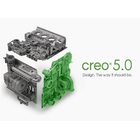
Creo (CAD)

3D (three-dimensional) CAD solution to accelerate DX.

Creo is a 3D CAD (three-dimensional CAD) software that has been the industry standard for product design and development software for over 30 years. We provide high-end features tailored to our customers' needs. Do you have any of the following concerns in your design work? - Struggling to keep up with the wave of digital transformation (DX) Although it is said that "DX in manufacturing" is important in the industry, I don't know how to take specific actions. - Time-consuming and labor-intensive analysis Is there a way to execute analysis tasks, such as stress analysis, thermal analysis, and fluid analysis, more smoothly, not just focusing on weight and center of gravity? - Frequent simple mistakes Many employees are inexperienced, leading to interference checks and increased man-hours due to revisions of drawings. - Doubts about operational efficiency While design is digitized in 3D CAD, we later create 2D drawings, which prevents data utilization in subsequent processes. Creo from PTC can solve these issues. It is a design application suite equipped with all functions from 3D modeling to analysis modules, suitable for 3D-2D integration and data management.

Added to bookmarks

Bookmarks list

Bookmark has been removed

Bookmarks list

You can't add any more bookmarks

By registering as a member, you can increase the number of bookmarks you can save and organize them with labels.

Free membership registration

Standardization of Design Realized with Creo: The Path to Geometric Tolerance Mastery

Essential for 3D CAD Designers: An Overview of Design Techniques to Eliminate Ambiguity and Reduce Costs

This content provides important information about the application of geometric tolerancing (GD&T) using Creo, as explained by PTC Japan Corporation, and the shift in design philosophy behind it. It introduces specific methods to dramatically improve design quality and productivity. In design, tolerances are an extremely important factor that determines product functionality and cost. Traditional tolerance notation has limitations and can often lead to misunderstandings and issues in international manufacturing processes. This document explains how to accurately and efficiently apply GD&T through the 3D CAD software Creo, facilitating communication with the manufacturing site. In particular, the use of Creo's powerful tool, the GD&T Advisor Extension, is key to achieving a high-quality design process. If you want to fundamentally rethink your design process and enhance international competitiveness, please download the full document to check the detailed explanation. *For more information, please download the PDF or feel free to contact us.*

Added to bookmarks

Bookmarks list

Bookmark has been removed

Bookmarks list

You can't add any more bookmarks

By registering as a member, you can increase the number of bookmarks you can save and organize them with labels.

Free membership registration

Overview of GD&T and MBD: A Guide to Solving Challenges in 3D CAD Design

Design DX starts here! An explanation of why the introduction of geometric tolerances is urgent.

This document is a comprehensive guide that explains the importance of geometric tolerances (GD&T), which have become essential in global manufacturing environments, starting from the changes in Japan's JIS standards, and the effects of implementing Creo's features and Model-Based Definition (MBD) to achieve it. It addresses the reality that the "ambiguities" inherent in traditional design methods lead to increased manufacturing costs and quality issues, arguing that transitioning to the international standard of GD&T is urgent. It specifically introduces how the GD&T Advisor Extension included in the 3D CAD software Creo automates and verifies the design process, thereby reducing the burden on designers. This document will serve as an important guideline for all 3D CAD designers aiming to elevate design quality to an international level and pursue the digital transformation (DX) of the entire manufacturing process. To check the overall picture of the roadmap for the international standardization of design and the promotion of DX, download the document now and take a look. *For more details, please download the PDF or feel free to contact us.*

Added to bookmarks

Bookmarks list

Bookmark has been removed

Bookmarks list

You can't add any more bookmarks

By registering as a member, you can increase the number of bookmarks you can save and organize them with labels.

Free membership registration

Major Revision of JIS Standards! The Concept of "Size" That 3D CAD Designers Should Know

Are 'dimensional tolerances' outdated? Adapt to international standards in design.

In 2016, JIS B 0420:2016 was established, changing the traditional term "dimension" in part to **"size"** and "dimensional tolerance" to **"size tolerance."** The background of this standard change is the growing adoption of the concept of GPS (Geometric Product Specification) in Western countries, raising concerns that Japan would fall behind international standards. The new standard strongly encourages a shift in design philosophy from a focus on traditional dimensional tolerances to geometric tolerances. 3D CAD designers must urgently understand the requirements of this new standard and reflect them in their designs. The revision of JIS B 0401:2016 was also carried out simultaneously, changing the old name "Dimensional Tolerances and Fits" to "ISO Code Method for Size Tolerances Related to Length." Please refer to the materials for specific methods of compliance with the new JIS standards and accurate definitions of terms. *For more details, please download the PDF or feel free to contact us.*

Added to bookmarks

Bookmarks list

Bookmark has been removed

Bookmarks list

You can't add any more bookmarks

By registering as a member, you can increase the number of bookmarks you can save and organize them with labels.

Free membership registration

What causes the difference in quality between domestic and overseas 3D CAD?

The dimensional tolerance conveys a "true tolerance" that has its limits.

There have been reports of cases where defects suddenly occurred in parts that should not have had issues in domestic manufacturing when the design drawings were brought to overseas manufacturing contractors. This is a significant problem arising from differences in the interpretation of design intent at the manufacturing site. Conventional dimensional tolerances cannot fully convey the true tolerances of the shape, such as bending or tilting of parts. Domestically, designers communicated their intent, and manufacturing personnel understood and improved upon that intent, but overseas, interpretations of the drawings were made arbitrarily, leading to defects as a result. By applying **Geometric Dimensioning and Tolerancing (GD&T)**, this "ambiguity" can be completely eliminated, allowing tolerances to be communicated clearly. This standardized language is the key to ensuring global manufacturing quality. Please refer to the materials for specific examples of the limitations of dimensional tolerances and why geometric tolerances are essential. *For more details, please download the PDF or feel free to contact us.*

Added to bookmarks

Bookmarks list

Bookmark has been removed

Bookmarks list

You can't add any more bookmarks

By registering as a member, you can increase the number of bookmarks you can save and organize them with labels.

Free membership registration

Essential for 3D CAD design! Achieving a common interpretation worldwide through geometric tolerances.

Zero ambiguity in drawings. A common language that conveys design intent 100%.

The major advantage of Geometric Dimensioning and Tolerancing (GD&T) is that it completely clarifies design intent, which is difficult to express with traditional dimensional tolerances, and eliminates any discrepancies in interpretation at the manufacturing and inspection sites. In GD&T, datum planes (reference shapes) are clearly established, and by specifying positional tolerances and orientation tolerances relative to them, the tolerance zones directly related to the functionality of the parts can be concretely defined. For example, an instruction that regulates the position of a hole based on datum A and B with a tolerance zone of $\phi 0.2$ standardizes the basis for manufacturing and measurement globally. This contributes significantly to achieving the goal of "producing cheaply, quickly, and accurately," while keeping manufacturing costs down and ensuring stable design quality regardless of where production takes place. The effect is maximized by combining it with the Model-Based Definition (MBD) approach, which directly adds GD&T to 3D CAD models. Please refer to the materials for detailed examples of correct geometric tolerance illustrations and their impact on global manufacturing quality. *For more details, please download the PDF or feel free to contact us.*

Added to bookmarks

Bookmarks list

Bookmark has been removed

Bookmarks list

You can't add any more bookmarks

By registering as a member, you can increase the number of bookmarks you can save and organize them with labels.

Free membership registration

New Common Sense for 3D CAD Designers! 3D Annotation Standards

Creo, CATIA, NX. The display rules that the main 3D CAD systems adhere to.

JIS B 0060 is an important standard that technically supports MBD (Model-Based Definition) and specifies the display requirements for 3D annotation models (3DA). This standard has been standardized based on an investigation of the three major CAD systems: Creo, CATIA, and NX, focusing only on what is fundamentally possible with current CAD systems. JIS B 0060 consists of multiple parts, with JIS B 0060-4 specifying the methods for indicating dimensions and tolerances, and JIS B 0060-5 defining the methods for indicating geometric tolerances. By adhering to this standard, design intent can be clearly communicated not only in 2D drawings but also on 3D models, preventing misunderstandings in downstream processes. Designers utilizing 3D CAD are required to understand this standard and possess the skills to create 3DAs compliant with international standards. The materials include examples of 2D and 3D indications when tool sizes or dimension lines are extended. For detailed excerpts of the standard, including specific differences in indication methods between 2D and 3D, please refer to the materials. *For more information, please download the PDF or feel free to contact us.*

Added to bookmarks

Bookmarks list

Bookmark has been removed

Bookmarks list

You can't add any more bookmarks

By registering as a member, you can increase the number of bookmarks you can save and organize them with labels.

Free membership registration

Break away from 2D drawings! Transform design with MBD/MBE for digital transformation.

Information consolidated in 3D! MBD strategy transforming the entire manufacturing process.

In the digital transformation (DX) of design, the role of 3D CAD models is changing significantly. We are transitioning from the traditional state of "3D model + 2D drawings" to Model Based Definition (MBD), where annotated 3D CAD models serve as the master. MBD is the concept of directly adding all product information, such as tolerances and notes, to the 3D model, making it the master model. Furthermore, the activities that utilize this MBD model across the entire company are referred to as Model Based Enterprise (MBE). The information consolidated in the MBD model is utilized in various downstream processes such as analysis, NC program creation, manufacturing process planning, quality inspection, mold design, assembly instructions, and technical illustrations, achieving seamless collaboration from design to manufacturing. This is the core strategy for enhancing competitiveness in today's manufacturing industry. Please refer to the diagram in the materials for a detailed overview of how MBD/MBE can be integrated into your company processes. *For more details, please download the PDF or feel free to contact us.*

Added to bookmarks

Bookmarks list

Bookmark has been removed

Bookmarks list

You can't add any more bookmarks

By registering as a member, you can increase the number of bookmarks you can save and organize them with labels.

Free membership registration

A Friend to 3D CAD Designers! The Complete Overview of Creo GD&T Advisor

AI guide specializing in the application and verification of geometric tolerances.

The Creo GD&T Advisor Extension is a groundbreaking tool offered as an add-on extension for Creo Parametric, providing expert guidance on the application and verification of geometric tolerances (GD&T). This extension aims to simplify and expedite the creation of correct geometric tolerances, even for designers who are not fully familiar with GD&T standards. The GD&T Advisor checks the rules of GD&T in real-time during the design process and notifies users of warnings or errors through the Advisor Tree if any issues arise. Its main features consist of three pillars: the creation, verification, and education regarding geometric tolerances, enhancing work efficiency while ensuring design quality. Please check the documentation for details on the GD&T Advisor's interface and specific functionalities, and experience its power. *For more information, please download the PDF or feel free to contact us.*

Added to bookmarks

Bookmarks list

Bookmark has been removed

Bookmarks list

You can't add any more bookmarks

By registering as a member, you can increase the number of bookmarks you can save and organize them with labels.

Free membership registration

The risk of improper application of geometric tolerances! The causes of increased costs associated with 3D CAD data.

Lack of knowledge in geometric tolerances leads to scrap, rework, and unnecessary expenses.

Geometric Dimensioning and Tolerancing (GD&T) is a powerful tool, but if applied incorrectly, it can lead to inefficiencies that outweigh its benefits. The difficulty designers face in maintaining knowledge of advanced GD&T principles and standards is a backdrop to this issue. Improper application of GD&T can create errors and misunderstandings in drawings and 3D models, ultimately increasing manufacturing costs. Additionally, repeated discussions over GD&T applications and increased review cycles and revisions can lead to decreased productivity and efficiency. Furthermore, mistakes in tolerances directly result in unnecessary expenses such as scrap, rework, changes, confusion, and downtime. The GD&T Advisor helps prevent these risks and enables the proper application of GD&T to increase tolerances and reduce part manufacturing costs. Let’s verify the risks of GD&T misapplication lurking in your design process with specific examples from the materials. *For more details, please download the PDF or feel free to contact us.*

Added to bookmarks

Bookmarks list

Bookmark has been removed

Bookmarks list

You can't add any more bookmarks

By registering as a member, you can increase the number of bookmarks you can save and organize them with labels.

Free membership registration

Automatic guide for creating GD&T in wizard format using 3DCAD.

Eliminate confusion. Show only applicable options.

The Creo GD&T Advisor Extension fundamentally transforms the process of creating geometric tolerances. Designers no longer need to memorize all the complex rules of GD&T standards. The tool features a wizard-style dashboard that guides users step-by-step on the correct application of GD&T based on the shape (feature) being designed. Notably, only the options applicable to the designer are highlighted, and controls prevent the selection of invalid options. This ensures accurate tolerance indications based on mathematical and functional evaluations, maintaining standardization and consistency in design quality. Please check the materials for a screen of the dashboard used to select and apply GD&T, along with its intuitive operability. *For more details, please download the PDF or feel free to contact us.*

Added to bookmarks

Bookmarks list

Bookmark has been removed

Bookmarks list

You can't add any more bookmarks

By registering as a member, you can increase the number of bookmarks you can save and organize them with labels.

Free membership registration

Real-time diagnosis of the design integrity of 3D CAD models.

Visualize the excess and deficiency of geometric tolerances with color! Aim for "Fully constrained."

One of the core features of the Creo GD&T Advisor Extension is the Advisor Tree and the Constraint State Legend. These are essential tools for designers to understand the integrity of the model in real-time during the process of applying GD&T. The Advisor Tree displays information, warnings, and error messages related to the applied GD&T in a hierarchical structure, pointing out design issues and violations of standards. Furthermore, the Constraint State Legend highlights the surfaces on the model with color coding to indicate whether they are "Fully constrained," "Partially constrained," or "Unconstrained" based on the tolerances. This allows for the visual identification of areas with insufficient or excessive tolerances, supporting complete and efficient tolerance design. Please check the details of the Advisor Tree, which prevents overlooking design intent, and the legend that indicates the state of tolerances with colors in the screen captures of the materials.

Added to bookmarks

Bookmarks list

Bookmark has been removed

Bookmarks list

You can't add any more bookmarks

By registering as a member, you can increase the number of bookmarks you can save and organize them with labels.

Free membership registration

Instantly solve geometric tolerance questions! The era when 3D CAD tools become educators.

No need to worry if you don't have knowledge of specifications! We support practical GD&T education.

The Creo GD&T Advisor Extension is not just a tool for checking tolerances; it is also a powerful educational platform with rich help content built in. Even designers who are unfamiliar with GD&T standards can acquire knowledge while progressing with their work. If questions or errors arise regarding the application of GD&T during design, help can be accessed with a simple right-click on the messages displayed in the Advisor Tree. This help feature provides detailed information on the principles of GD&T, interpretations of the standards, and specific solutions to errors. As a result, designers can refer to the standards and acquire GD&T knowledge in a practical context without interrupting their work. This feature eliminates the hassle of flipping through standard documents and allows for immediate access to correct information, significantly contributing to the improvement of GD&T skill levels across the entire design team. Examples of tutorials are also included. For more details on the helpful features that aid in knowledge acquisition, please refer to the documentation. *For more information, please download the PDF or feel free to contact us.*

Added to bookmarks

Bookmarks list

Bookmark has been removed

Bookmarks list

You can't add any more bookmarks

By registering as a member, you can increase the number of bookmarks you can save and organize them with labels.

Free membership registration

Thorough Comparison of GD&T Advisor Basic and Advanced

For utilizing existing assets and assembly tolerance design, Advanced is the only choice.

The Creo GD&T Advisor Extension includes a Basic version with fundamental features such as guided creation of GD&T and standard validation, as well as an Advanced version that offers more advanced functionalities. A major feature of the Advanced version is the ability to reuse and evaluate existing Annotations created in standard Creo. This allows for the smooth integration of past design assets into an MBD environment and provides guidance for modifications to meet specified standards. Additionally, it includes support for assemblies (available from Creo 8.0 onwards), enabling it to handle complex tasks such as tolerance design between parts and assembly tolerance design, not just individual components. For companies involved in large-scale MBD implementation or complex product design, the features of the Advanced version are essential. To determine the version that best suits your design assets and future MBD strategy, please refer to the feature comparison chart in the materials provided. *For more details, please download the PDF or feel free to contact us.*

Added to bookmarks

Bookmarks list

Bookmark has been removed

Bookmarks list

You can't add any more bookmarks

By registering as a member, you can increase the number of bookmarks you can save and organize them with labels.

Free membership registration

Simplify drawings with 3D CAD utilization! Automate annotation creation.

MBD techniques that dramatically reduce the number of annotations and design man-hours.

The transition to MBD (Model-Based Definition) aims to significantly reduce the labor involved in creating annotations. It will free us from the cumbersome tasks and unnecessary information addition that occurred with traditional 2D drawing creation. To achieve this goal, designers will reduce the number of annotations and promote more efficient geometric tolerancing. Furthermore, the automation of annotations will play a crucial role. Specifically, we will prepare templates for 3D models and utilize user-defined features (UDFs) that have pre-added annotations for standardized parts. This will eliminate repetitive tasks and allow for rational discussions between designers and manufacturing engineers regarding the necessary annotations, consolidating only the truly essential information into the 3D model. As a result, the overall productivity of the design department will improve. Please refer to the materials for specific methods of MBD that address the "too many annotations" problem and reduce design labor. *For more details, please download the PDF or feel free to contact us.*

Added to bookmarks

Bookmarks list

Bookmark has been removed

Bookmarks list

You can't add any more bookmarks

By registering as a member, you can increase the number of bookmarks you can save and organize them with labels.

Free membership registration

3DCAD information is automatically linked! Digitizing the manufacturing process non-contact.

Tolerance analysis and machine-readable GD&T directly linked to automatic parts inspection.

The essential value of MBD (Model-Based Definition) lies in the fact that the annotations added to the 3D model are utilized by downstream software not just as information for humans, but as **machine-readable** information. The geometric tolerance information (GD&T) contained in the 3D CAD model is directly understood and utilized by various "machines" (software). For example, tolerance analysis tools (e.g., CETOL) can automatically calculate and evaluate the accumulation of tolerances based on GD&T information. Additionally, this information is used in automatic part inspection systems such as CMMs (Coordinate Measuring Machines) for creating and executing inspection plans. This eliminates the need for duplicate data entry and manual interpretation throughout the manufacturing process, achieving thorough digitalization and stabilization of quality. Please refer to the diagrams in the materials for a concrete image of how machine-readable GD&T information can transform the manufacturing process. *For more details, please download the PDF or feel free to contact us.*

Added to bookmarks

Bookmarks list

Bookmark has been removed

Bookmarks list

You can't add any more bookmarks

By registering as a member, you can increase the number of bookmarks you can save and organize them with labels.

Free membership registration

Achieved with a 3D CAD viewer! Advanced digital inspection of MBD models.

Centralized digital management of inspection history, comparison, and approval.

To ensure the design quality of MBD models, a reliable inspection process for 3D annotations (3DA) is essential. Creo View MBD Analysis strongly supports this inspection process. The inspection function (Design Check) provided by this 3D viewer allows tagging of each annotation and geometry on the 3D model, managing inspectors, time, and history. This clarifies design changes and the approval process, ensuring traceability. Furthermore, using the View State Compare function, annotations between different versions of the 3D viewer can be compared, allowing for immediate understanding and management of changes in content such as numerical values. These features integrate with data management systems to establish a high-quality design review process centered around MBD models. Please refer to the materials for details on the new workflow for inspection utilizing 3D models and its integration with data management. *For more information, please download the PDF or feel free to contact us.*

Added to bookmarks

Bookmarks list

Bookmark has been removed

Bookmarks list

You can't add any more bookmarks

By registering as a member, you can increase the number of bookmarks you can save and organize them with labels.

Free membership registration

Achieved paperless! Digitalization of quality management through MBD.

90% reduction in non-compliant products! The astonishing results brought by MBD.

MBD directly adds critical factors that affect quality (CTQ: Control Characteristics) to 3D models instead of drawings, and efficiently communicates this information without omissions to quality management, manufacturing departments, suppliers, etc. From the definition of control characteristics, checks (verification) using tools like Creo GD&T Advisor, to the digital execution of communication and reuse in process instructions and work instructions, we promote a paperless manufacturing process. As a result of adopting this MBD-based approach, remarkable achievements have been reported from pilots and PTC customers. Specifically, it has been demonstrated that non-compliant products were reduced by 90%, first-time inspection times were cut by 60%, and document creation was accelerated by 40%. Let's review the astonishing numerical results obtained from the introduction of MBD and the flow of digital information transmission in the materials. *For more details, please download the PDF or feel free to contact us.*

Added to bookmarks

Bookmarks list

Bookmark has been removed

Bookmarks list

You can't add any more bookmarks

By registering as a member, you can increase the number of bookmarks you can save and organize them with labels.

Free membership registration

The history of MBD led by 3DCAD Creo! A decade of functional evolution.

From Creo 4 to Creo 9: The trajectory of semantic definitions and standards compliance.

Creo has been an industry expert promoting MBD (Model-Based Definition) for over 10 years since the era of Creo 1.0. With each version upgrade, the MBD functionality has been continuously enhanced. In Creo 4, complete semantic definitions and the GD&T Advisor Ext. were introduced, establishing the foundation for the MBD workflow. Subsequently, Creo 5 saw improvements in semantic queries and annotation UX, while Creo 6 continued to modernize annotations and added support in ModelCHECK. In Creo 8, support for assembly and mismatch annotation management was included through the GD&T Advisor Advanced. Furthermore, Creo 9 introduced updates for surface finishes and a "Repeat Mode" for continuous placement, continually improving compliance with standards and usability. Please check the evolution matrix in the documentation for specific evolution points of the MBD features available in the version of Creo you are using. *For more details, please download the PDF or feel free to contact us.*

Added to bookmarks

Bookmarks list

Bookmark has been removed

Bookmarks list

You can't add any more bookmarks

By registering as a member, you can increase the number of bookmarks you can save and organize them with labels.

Free membership registration

3DCAD Creo 11: ISO GPS Compliance and Smart Tables

Dramatic improvement in the compatibility and usability of GD&T Advisor with ISO GPS 22081.

Creo's MBD features are continuously evolving, and in the new versions Creo 10 and Creo 11, compliance with international standards and improved usability for designers have been achieved. In Creo 10, the functionality of related symbols has been enhanced by associating related symbols, such as surface finish symbols, with other MBD annotations and inheriting annotation planes from parent annotations. In Creo 11, the GD&T Advisor supports general tolerances according to ISO GPS 22081, further improving compliance with ISO standards. Additionally, the expansion of table functions allows for quick organization of information, such as security markings, in tabular format. These enhancements reduce the complexity of applying GD&T and decrease the number of clicks required for necessary updates, thereby improving designer productivity. For more details on the new MBD features in Creo and the key points of enhanced compliance with international standards, please refer to the materials. *For more information, please download the PDF or feel free to contact us.*

Added to bookmarks

Bookmarks list

Bookmark has been removed

Bookmarks list

You can't add any more bookmarks

By registering as a member, you can increase the number of bookmarks you can save and organize them with labels.

Free membership registration

3DCAD "Creo" Implementation Case Study | GE Appliances

Achieving PPAP report automation! The results brought by the centralization of design information.

GE Appliances is actively utilizing Creo MBD to promote digital transformation. For them, the key to streamlining processes was automating downstream processes. By implementing MBD, they were able to retain all design information within the native 3D CAD model, eliminating information duplication. In particular, automating the creation of PPAP (Production Part Approval Process) reports resulted in a reduction of errors, leading to time savings and cost reductions. Furthermore, by introducing QIF (Quality Information Framework) to check the quality of downstream results of MBD, they successfully reduced manual work and ultimately achieved a 50% reduction in error rates. They emphasize the importance of establishing consistent standards between human readability and machine readability. Please refer to the materials for details on GE Appliances' MBD strategy and the specific methods used to halve the error rate, which may be beneficial for your quality management.

Added to bookmarks

Bookmarks list

Bookmark has been removed

Bookmarks list

You can't add any more bookmarks

By registering as a member, you can increase the number of bookmarks you can save and organize them with labels.

Free membership registration

3DCAD "Creo" Implementation Case | 50% Reduction in Man-Hours with MBD

CNH Industrial: Achieving a 50% reduction in time by moving away from traditional drawing-based methods.

CNH Industrial has reported that by implementing Model-Based Definition (MBD), they have achieved a "50% reduction in time" compared to their previous drawing-based approach. They recognized that creating 2D drawings requires time and cost, and by embedding all information such as tolerances and notes into the 3D CAD model, manufacturers and end-users can gain a deeper understanding of the product's intent. This has improved the efficiency of information transmission and resulted in significant time savings. However, there are challenges in transitioning to MBD, as it has become clear that competing formats (such as Creo View, 3D PDF, QIF, etc.) can disrupt the digital thread, and delays in the transition can occur if support from executives is lacking. Nonetheless, by leveraging MBD, they have significantly streamlined the process from design to manufacturing. *Please refer to the materials for details on the challenges CNH Industrial faced in transitioning to MBD and the specific approaches that led to the 50% time reduction.*

Added to bookmarks

Bookmarks list

Bookmark has been removed

Bookmarks list

You can't add any more bookmarks

By registering as a member, you can increase the number of bookmarks you can save and organize them with labels.

Free membership registration

3DCAD "Creo" Implementation Case | MBD Balances Cost and Design Quality

Blue Origin/JHUAPH: Space development companies prove! Understanding design intent is the key to cost reduction.

Blue Origin and the Johns Hopkins University Applied Physics Laboratory (JHUAPL) have each implemented Model-Based Definition (MBD), achieving significant results in cost reduction and enhanced communication. Blue Origin recognizes that the greatest benefit of MBD lies in the ability to understand design through semantic references and model-based definitions, which has led to substantial cost savings. On the other hand, they cite the need for external training as the biggest challenge. JHUAPL also acknowledges that MBD provides an excellent method for conveying engineering information downstream, emphasizing that MBD encompasses not only annotations but also CAD geometry. Both companies are realizing improvements in design quality and efficiency through MBD while overcoming challenges related to appropriate standardization and interoperability. *Please refer to the materials for examples of how MBD successfully reduces costs and enhances communication in complex projects for both companies.*

Added to bookmarks

Bookmarks list

Bookmark has been removed

Bookmarks list

You can't add any more bookmarks

By registering as a member, you can increase the number of bookmarks you can save and organize them with labels.

Free membership registration
Prev 1 Next
  • 塗装・乾燥の課題を解決。回転シャッター・巻取りスノコの資料進呈

    塗装・乾燥の課題を解決。回転シャッター・巻取りスノコの資料進呈

  • 【イプロス初主催】AIを活用したリアル展示会!出展社募集中

    【イプロス初主催】AIを活用したリアル展示会!出展社募集中

  • 少量~量産 精密~通常溶接 金属の溶接・接合はお任せください! 太陽イービーテックは、電子ビーム溶接、TIG溶接、真空ろう付け、トーチろう付けなど様々な加工に対応します。
  • 金属・化学・窯業・食品・医薬品などのほぐし・解砕・ふるい分けがこれ一台 解砕機構付き佐藤式振動ふるい機 つばさ デモ実施中!
    • Contact this company

      Contact Us Online

    Products

    • Search for Products

    Company

    • Search for Companies

    Special Features

    • Special Features

    Ranking

    • Overall Products Ranking
    • Overall Company Ranking

    support

    • site map
    IPROS
    • privacy policy Regarding external transmission of information
    • terms of service
    • About Us
    • Careers
    • Advertising
    COPYRIGHT © 2001-2025 IPROS CORPORATION ALL RIGHTS RESERVED.
    Please note that the English text on this page is automatically translated and may contain inaccuracies.