More rigid, more durable, thinner, and lighter than conventional mechanism To robots, endoscopes, videoscopes
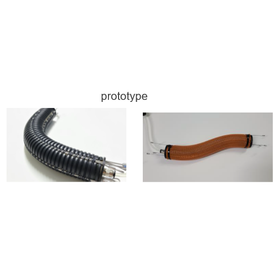
Current development efforts focus on a cord-like device, able to vary its rigidity to any given shape. These cord-like structures are specifically designed to operate effectively in biological, natural, and artificial environments where access can be challenging due to their narrow or obstacle-filled nature. They are frequently used in tools such as medical endoscopes and industrial videoscopes. Conventional cord-like bodies include structures in which wires are threaded through beads, jamming mechanisms, mechanical methods, or structures that control rigidity by pressurizing a tube. However, none of these methods could fulfill all the required performance characteristics such as holding force, restoring force, a continuous structure, lightweight and thin design, and capability for long-distance deployment. This invention addresses all these requirements by introducing a novel type of cord-like continuum body. Specifically, it employs an innovative combination of wire and rubber materials, thereby creating a structure capable of achieving a high level of holding strength through air pressure.
Inquire About This Product
basic information
For details, please contact us or refer to the PDF.
Price range
Delivery Time
Applications/Examples of results
For details, please contact us or refer to the PDF.
catalog(1)
Download All Catalogs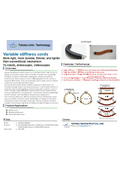
Company information

The revenue generated from technology transfer is reinvested as new research funding for universities and researchers, and is utilized to create further research outcomes. To ensure the smooth operation of this cycle, known as the "Intellectual Creation Cycle," we will vigorously promote technology transfer. The types of seeds we handle include patents, know-how, databases, and programs. We have established a collaborative framework by signing basic technology transfer agreements with the following universities (as of June 1, 2025): Tohoku University, Hirosaki University, Iwate University, Akita University, Fukushima University, Yamagata University, Tohoku Gakuin University, Iwate Medical University, Fukushima Medical University, Aizu University, Miyagi University, Hokkaido University, Muroran Institute of Technology, and Showa Medical University.