Recommended for brightness analysis of lighting effects for gaming machines and amusement machines, with a license purchase starting at 500,000 yen.
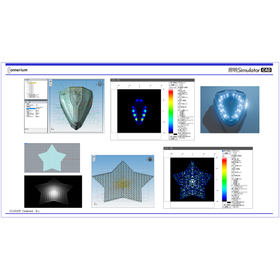
A one-time license starting at 498,000 yen. Recommended for first-time lighting and optical analysis! This is a reasonably priced simulation software made in Japan. It features a Japanese interface that is easy to use even for developers in non-optical fields. Leveraging the strengths of in-house development, it achieves low pricing while maintaining high computational accuracy and reliability based on optical theory, making it a cost-effective simulation software.
Inquire About This Product
basic information
- Screen designs and various documents are prepared in Japanese. - The settings menu is visually displayed with easy-to-understand icons, allowing for intuitive operation and analysis. - Model data can be imported in IGES, STEP, and STL file formats. - The light source supports reading near-field output (ray data) and allows measured luminous distribution data to be specified for the light source. - A library of representative glass material data from major glass manufacturers is provided by default, and private glass materials can also be registered. - Geometric optical ray tracing is faithfully reproduced, including multiple reflections and transmissions. - It covers a wide range of wavelengths, not only in the visible spectrum but also from ultraviolet to infrared. - By using optional modules, various operations and analyses can be performed through external command instructions, including automation via macro functions, post-processing, and optimization support tools.
Price information
"Lighting Simulator CAD" ¥498,000 (excluding tax) "Lighting Simulator CAD + API Module" (a set that saves you ¥30,000 compared to individual purchase) ¥666,000 (excluding tax) "Lighting Simulator CAD Rhinoceros Compatible Version" ¥666,000 (excluding tax)
Price range
P4
Delivery Time
P3
Applications/Examples of results
〇 Amusement and Home Appliances ■ Lighting design for gaming/amusement machines ■ Light guide plate for power indicator lamps ■ Brightness unevenness of display panels 〇 Machine Vision ■ Design of line and ring lighting, etc. ■ Improvement of unevenness in diffusion light sources ■ Design of collimating lenses 〇 General Lighting ■ Examination of reflector and lens shapes ■ IES data export for lighting planning ■ Acquisition of light distribution 〇 Automotive ■ Light guide plate for shift lever area ■ Brightness unevenness in accessory display area ■ Consideration of lenses for LED headlights 〇 Construction ■ Consideration of streetlight and roadlight placement ■ Creation of materials such as contour lines ■ Examination of the shape of daylighting devices
Detailed information
-
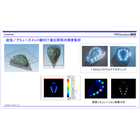
Check the visibility using brightness simulation with a 3D CAD design model. Place multiple evaluation surfaces to confirm the appearance from various angles.
-
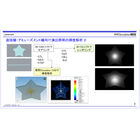
Rendering and brightness analysis are performed from model data created with 3D CG software. By separating the functions, it can be constructed at a low cost.
-
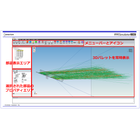
- The screen design makes extensive use of Japanese, and the settings are displayed with icons, allowing for intuitive operation. - Components such as placed light sources and optical materials are added to the "Component Display Area," and parameter editing is done in the property area below. - The 3D palette displays the entire model, and zooming in and out, rotating, and moving can be done effortlessly with mouse operations.
catalog(2)
Download All Catalogs

Company information

"Contributing to Society through Light Simulation" Our representative director, Ritsuo Suzuki, has been developing evaluation software for imaging optical systems such as eyeglass real image simulators and digital cameras, as well as image processing software for interferometers, based on ray tracing technology since the early 2000s when he joined our parent company, Best Media Inc. He has supported various companies through these developments. Building on the technology cultivated there, we developed and marketed "Lighting Simulator CAD" and have provided various optical services. In October 2021, to enhance branding in the optical industry and attract specialized talent, we split from Best Media Inc. and established Camerium Inc. "Camerium" is a coined term derived from "Microscopium" and "Telescopium," symbolizing our aspiration to shine in the optical industry, akin to the "Camera" constellation.

![[Catalog] Photonics Design and Analysis Tools](https://image.mono.ipros.com/public/product/image/452/2000703256/IPROS68725300188764111966.png?w=280&h=280)