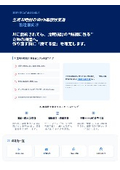
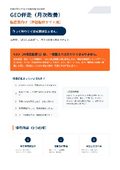
7. Decision-making wire design (Comparative examination measures) | For the manufacturing industry

"I understand the merits, but there is no decisive factor." We will eliminate that. We will design a pathway to build up the "reasons to be chosen" during the comparison and consideration phase.
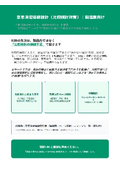
B2B lost opportunities occur not due to product strength, but because of a "lack of comparison pathways." Once customers enter the comparison stage, they begin to look for "reasons not to buy" rather than "reasons to buy." Nevertheless, many sites stop at product introductions and lack the necessary information for approvals and decision-making (such as handling objections, reassurance materials, selection criteria, and implementation conditions). As a result, potential candidates are eliminated with the thought, "I understand the benefits, but..." In this service, we design information architecture and pathways (what to show next and what to resolve) to win in comparisons, based on your products and the customer's decision-making process, creating a "structure of decisive factors" that leads to inquiries and business discussions. ■ Provided Content (3 points) Identification of bottlenecks in comparison (reasons for lost opportunities / anxiety factors / barriers to approval) Design of decision-making components (selection criteria, FAQs, case studies, materials, guarantees/support) Pathway design (designing the flow from product → comparison → reassurance → approval → consultation) Deliverable: Decision-making pathway design document (pathway diagram, page roles, content list, priorities) Scope/Assumptions: Focused on designing the main pathways (product page group + case studies + FAQs + material downloads + inquiries) (production is separate) *Please share the current URL and product. We will organize the "causes of lost opportunities in comparisons" and the missing decision-making components and provide suggestions.

Inquire About This Product
basic information
■Provided Content Design of Comparison Axes: Clarification of points for customers to compare (criteria other than price) Elimination of Concerns: - Quality (inspection system, certification, warranty, traceability) - Delivery Time (supply system, lead time considerations, emergency response) - Structure (scope of responsibility/support, process for finalizing estimates/specifications) - Track Record (industry × application × challenges × measures, flow to implementation) Decision-Making Component Design: FAQs, case studies, materials, comparison tables, implementation processes, checklists Flow Design: - Product Page → (application/selection criteria) → (case studies/FAQs) → (approval materials) → (consultation) - Design next links according to "points of confusion" (clarify the intent of navigation) ■Deliverables Decision-Making Flow Diagram (design of the flow for comparison and consideration) Page Role Map (product/comparison/trust/approval/consultation) List of Required Content (additional pages, additional elements, missing information) Main Page Outline (heading structure, information to include, CTA) Improvement Priority Roadmap (Quick Win/Mid-term/Production)
Price information
Light: 300,000 yen (Comparison and analysis of specific items + flow policy + Quick Win) Standard: 600,000 yen (Flow design document + main page outline + content list) Expanded: 900,000 yen and up (Design for multiple product groups / Design up to approval documents / Enhanced competitive comparison) *Can be changed to require a quotation.
Delivery Time
※Minimum 2 weeks / Standard 3 to 4 weeks
Applications/Examples of results
■Concerns Inquiries come in, but they do not lead to negotiations or orders. When it comes to competitor comparisons, we lose (weak points other than price). Concerns about "quality, delivery, system, and track record" cause stagnation. Stalls at the approval stage (insufficient materials and evidence for decision-makers). Product pages focus on specifications, failing to convey selection criteria. ■Approach Pre-sharing: URL/products/reasons for common losses (as much as known is fine). Hearing (60–90 minutes): Confirm the reality of comparison and consideration, barriers to approval, and handling objections. Design: Establish comparison axes, decision-making components, and pathways. Reporting session: Confirm priorities and implementation order (where to start for effectiveness). ■Uses Reduce loss rates in the comparison phase (preventing candidate drop-off). Improve inquiry-to-negotiation conversion rates (eliminating concerns). Organize necessary information/materials for approvals and decisions. Strengthen product page templates (selection criteria, FAQs, case study pathways). ■Examples of Achievements (Confidentiality Consideration Format) Industrial equipment × 200 employees × lost orders due to comparisons × reinforced concerns (system/delivery) with FAQs and materials to improve negotiations. Precision machining × 80 employees × stagnation at approval stage × structural design of materials for decision-makers + pathway renewal. Chemical materials × 500 employees × price competition × clarified comparison axes (quality/supply/inspection) and designed the "deciding factor."
catalog(20)
Download All Catalogs









Company information

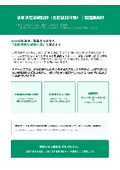
A site that is just cheap ultimately increases costs and risks." We propose web development that maximizes business results while thoroughly addressing essential requirements. Are you creating a website like this? - It seems that the websites of competitors look better, but you don't know why. - Every update incurs additional costs, and before you know it, expenses have ballooned beyond expectations. - While the appearance is nice, it ignores laws and industry-specific rules, leading to complaint risks... - You want to attract customers and inquiries, but the production company only talks about design. - As a result of choosing a production that is simply cheap, you are overwhelmed with trouble handling and can't focus on your core business. Point 1. Avoid troubles with a design that has no "gaps or omissions." 2. Minimize operational costs with a design that assumes in-house updates. 3. Planning power that pursues business results. "Is the initial cost a bit high?" But in the long run, it's safe and cost-effective. We have prepared a plan to truly deliver results "correctly.