Optimize production planning with RFID! Introducing case studies for problem-solving.
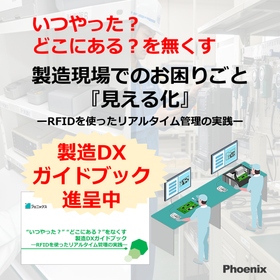
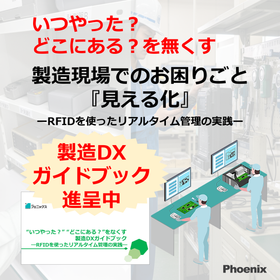
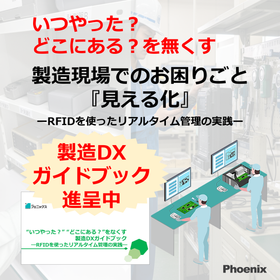
In the textile industry’s production planning, accurate inventory management and understanding of process progress are crucial. Particularly, as the complexity of small-lot production and delivery management increases, manual management errors and delays in information transmission can lead to decreased production efficiency and lower customer satisfaction. By utilizing RFID, real-time information collection and visualization can be achieved, promoting improved accuracy in production planning and increased operational efficiency. Our product is a manufacturing DX guidebook for practical real-time management using RFID. It includes explanations of the types and frequencies of RFID, as well as actual case studies of problem-solving. Please download it for your reading. 【Usage Scenarios】 - Process progress management - Inventory management - Outgoing and returning management - Utilization of metal-compatible UHF tags 【Benefits of Implementation】 - Increased efficiency in inventory management - Visualization of process progress - Promotion of paperless operations
Inquire About This Product
basic information
【Features】 - Overview of RFID - Challenges in manufacturing and solutions through RFID - Examples of use cases such as process progress management, inventory management, and check-out/check-in management - Utilization of metal-compatible UHF tags 【Our Strengths】 Since its founding in 1984, the Phoenix Group has been meeting all customer needs with our cultivated "printing technology," "paper transport technology," and "automatic identification technology."
Applications/Examples of results
For more details, please download the PDF or feel free to contact us.
catalog(1)
Download All Catalogs
Company information

In recent times, the labeling of information necessary for identifying and managing people and goods has become essential in various situations. Since its founding in 1984, the Phoenix Group has been responding to all customer needs with the "printing technology," "paper transport technology," and "automatic identification technology" that we have cultivated.