

Uniformly dispersing cosmetic ingredients with impact force and shear force.
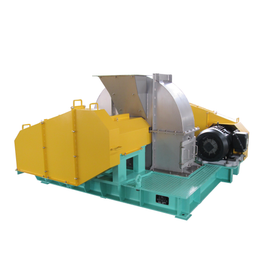
In the cosmetics industry, a uniform dispersion of raw materials that affects product quality is required. In particular, insufficient dispersion of pigments and additives can lead to uneven color and a deterioration in usability. Our disintegrator, 'Disintegrator', crushes raw materials using impact and shear forces from rod rings, achieving uniform dispersion. 【Usage Scenarios】 - Dispersion of pigments, dyes, and additives - Manufacturing of creams, emulsions, foundations, etc. - Crushing of raw material clumps 【Benefits of Implementation】 - Improved product quality through uniform dispersion - Increased efficiency in the manufacturing process - Stable supply of products
Inquire About This Product
basic information
【Features】 - Efficient crushing achieved by a series of rods that rotate alternately in opposite directions - Easy cleaning due to the cage structure - Ideal for crushing solidified lump materials 【Our Strengths】 - Powder technology since our founding in 1913 - Product development tailored to customer needs - Proposing optimal solutions using test machines
Price information
-
Delivery Time
Applications/Examples of results
- Processing of limestone, coal, coke, gypsum, etc. - Processing of seafood bones and grains - Crushing of sludge cakes, etc. - Crushing of salt, sugar, etc.
Line up(8)
| Model number | overview |
|---|---|
| 30 | |
| 50 | |
| 60 | |
| 75 | |
| 90 | |
| 100 | |
| 120 | |
| 150 |
catalog(1)
Download All Catalogs
Company information

Since our founding in 1913, our company has focused on developing and manufacturing machinery for the powder industry, centered around crushing, grinding, classification, drying, and calcination, as well as general industrial machinery for sectors such as chemicals, glass, cement, steel, and mining, along with machinery related to environmental protection and recycling. The applications and demand for our products span a wide range of industries, contributing to the development of various sectors including chemicals, glass, carbon, cement, silica sand, steel, lime, building materials, new materials, and food (such as tea leaves, rice, kelp, young barley leaves, buckwheat, soybeans, corn, and bonito flakes).

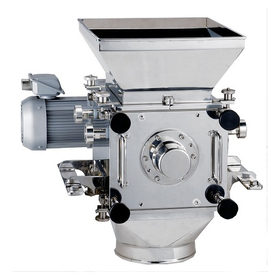

![Powerful Compact Crusher "Force Mill" [Tea Leaves, Tablets, Grains]](https://image.mono.ipros.com/public/product/image/83f/226060010/IPROS6786981127584100059.jpg?w=280&h=280)
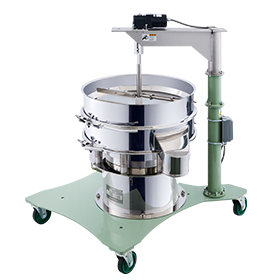
![Manual Crusher "Hand Crusher" [Rocks, Coke, Coal, Shells]](https://image.mono.ipros.com/public/product/image/212/226060024/IPROS46718921364193386814.jpeg?w=280&h=280)

