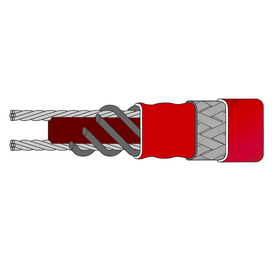
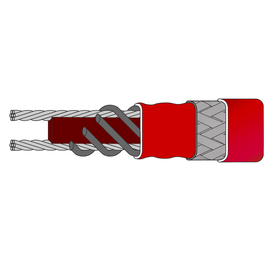
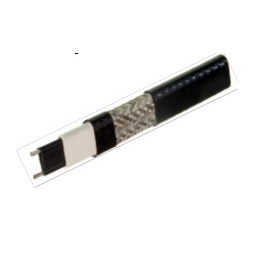
For freeze protection of water treatment facilities. Achieves process insulation up to 150°C.
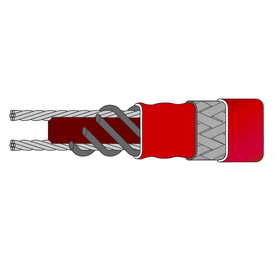
In the water treatment industry, there is a risk of fluids in pipes and tanks freezing, which can lead to equipment shutdowns and damage. This risk is particularly heightened in cold regions and during winter. The XTVR series self-regulating heating cables are designed to address these issues. [Application Scenarios] - Prevention of pipe freezing in water treatment facilities - Prevention of fluid freezing in tanks - Prevention of freezing in outdoor equipment [Benefits of Implementation] - Stable operation of equipment - Reduction in maintenance costs - Contribution to energy savings
Inquire About This Product
basic information
**Features** - Low risk of overheating due to self-regulating function - Capable of maintaining a process temperature of up to 150°C - Excellent weather resistance with fluoropolymer coating - Usable in Class I and Class II hazardous locations **Our Strengths** We are an engineering company specializing in electric heaters. We started by handling Raychem self-regulating heaters for preventing water pipe freezing. With accumulated technology, we can handle everything from design to construction for freeze prevention in water treatment facilities.
Price range
Delivery Time
Applications/Examples of results
【Applications】 - Various industrial piping - Tank freeze prevention - Process insulation (steam, heavy oil, chemicals, etc.)
catalog(1)
Download All Catalogs
Company information

Our company is an engineering firm specializing in electric heaters. We started by handling Raychem self-regulating heaters for preventing water pipe freezing. Since then, we have accumulated technology and have undertaken numerous projects from design to construction for fields requiring strict temperature control, such as petrochemicals, food factories, and the power generation industry, including process insulation for piping and tanks. In addition to self-regulating electric heaters with a maximum holding temperature of 150°C, we also handle higher temperature power-limited heaters, MI heaters, and sheath heaters. Currently, the mainstream for process insulation in manufacturing sites is steam or hot water, which consumes large amounts of fossil fuels. However, due to environmental issues and unstable energy costs, there is an increasing number of manufacturing professionals focusing on electric heating.