
Microbial testing (both culture and non-culture methods) useful for investigating the causes of product abnormalities.

Microbial testing using culture methods and non-culture methods to assist in investigating the causes of product troubles and considering countermeasures.
In the manufacturing sites of food, pharmaceuticals, and cosmetics, product abnormalities such as swelling, discoloration, and off-odors may provide useful information for identifying causes by examining the microorganisms present in abnormal products or areas with visible defects. While it is not guaranteed that the cause of the abnormalities can be identified 100%, narrowing down the possibilities based on the results obtained can reduce unnecessary considerations and trial and error, thereby shortening the time to problem resolution. Our company offers various microbiological tests that are helpful in identifying the causes of product abnormalities. First, we conduct a "microbial confirmation test" to check for the presence of microorganisms (bacteria, molds, yeasts) through microscopic observation. Subsequently, we analyze using a combination of the following two approaches based on the purpose: - Cultivation method: Isolating and culturing microorganisms, followed by DNA sequencing analysis or identification using MALDI. - Non-cultivation method: Comprehensive analysis of microbial communities through amplicon sequencing analysis without cultivation.

Inquire About This Product
basic information
- Test subjects: Abnormal products (food, pharmaceuticals, cosmetics, etc.), areas with visual abnormalities - Test content: - Microbial confirmation test (microscopic observation) - Microbial isolation (acquisition of pure cultures) - Microbial identification (DNA sequencing analysis, MALDI) - Amplicon sequencing analysis (non-culture, comprehensive analysis) - Analysis level: - Culture method: Genus to species level - Non-culture method: Mainly genus level - Features: - Detection possible for both viable and non-viable bacteria (non-culture method) - Acquisition and preservation of pure culture strains possible (culture method) - Sample conditions: Abnormal products can be sent as is
Price range
Delivery Time
Applications/Examples of results
- Expansion, odor, and discoloration of food, cosmetics, and pharmaceuticals - Biofilm-related issues in piping and equipment - Comprehensive understanding of microorganisms that cannot be detected through culturing
Line up(4)
| Model number | overview |
|---|---|
| Microbial confirmation test | In this test, we will extract some abnormal items showing signs of expansion or discoloration and observe them under a microscope to determine whether microorganisms are present, and if so, whether they are bacteria, mold, or yeast. |
| Microbial isolation | By conducting microbial isolation, it is possible to obtain pure isolates of microorganisms from samples containing live microorganisms, resulting in single colonies on agar media. |
| Microbial identification test | When microorganisms are obtained as pure cultures through microbial isolation, they can be identified at the genus or species level. We primarily propose methods such as DNA sequencing analysis and MALDI microbial identification tests. |
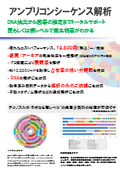
| AmpliCon sequence analysis | You can comprehensively understand the types of microorganisms (at the genus level) present in abnormal products or areas with appearance abnormalities, regardless of whether they are viable or dead, based on the type of culture medium, anaerobic/aerobic conditions, and culture temperature, as well as their relative proportions. |
catalog(3)
Download All Catalogs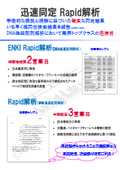

Company information

We offer contract analysis services related to microorganisms. We support our customers' testing, analysis, and research with a wide range of services, including microbial identification, microbial community structure analysis, and intestinal environment analysis. We meet diverse needs in academic research, product research and development, and hygiene management.