List of Manufacturing and processing machinery products
- classification:Manufacturing and processing machinery
406~450 item / All 97311 items
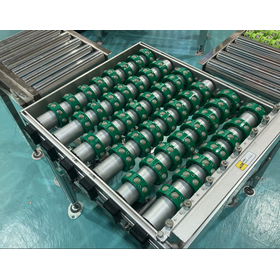
Reduce the workload from handling heavy objects! Here are five case studies that solved customer challenges! We are also accepting free consultations and tests tailored to your work!
- Other conveying machines
Presentation of explanatory materials on JIS and ISO standards. We propose suitable safety barriers from a rich product series! Free rental of demo kits.
- Other safety and hygiene products
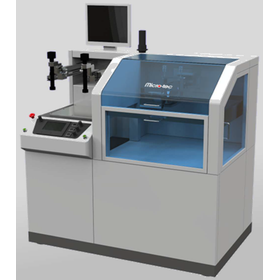
Ideal for educational settings! Compactly designed full-cover small CNC lathe.
- lathe
For static electricity measures. A tabletop top sealer that accommodates a variety of packaging.
- Sealing machine
A compactly designed small CNC lathe that supports experiments.
- lathe
Comprehensive support for machining, heat treatment, and procurement through deep hole processing and outsourcing collaboration.
- Processing Contract
Compact design supports the prototyping of automotive parts.
- lathe
Supports various containers with interchangeable types. Reduces leakage risks and enhances safety.
- Sealing machine
A tabletop top sealer that maintains freshness and accommodates various packaging.
- Sealing machine
Diverse packaging with mold exchange, simultaneous sealing of 2 or 4 pieces is also possible.
- Sealing machine
Diverse packaging with mold exchange, simultaneous sealing of 2/4 pieces, and gas replacement packaging as well.
- Sealing machine
Perfect for experimental use! Achieve professional-grade CNC machining in a space-saving design.
- Other machine tools
- Machining Center
- Milling machine
Compact 5-axis machining center with excellent cost performance.
- Other machine tools
- Machining Center
- Milling machine
Achieving high-precision mold processing in a compact space.
- Other machine tools
- Machining Center
- Milling machine
A compact yet fully functional tabletop injection molding machine.
- Injection Molding Machine
- Plastic Mould
- Engineering Plastics
Achieving genuine injection molding in a compact size. Expanding the possibilities of toy manufacturing.
- Injection Molding Machine
- Plastic Mould
- Engineering Plastics
Achieving genuine injection molding in a compact size. For prototype and small-lot production of automotive parts.
- Injection Molding Machine
- Plastic Mould
- Engineering Plastics
A compact yet fully-fledged injection molding machine for educational institutions that allows for an authentic injection molding experience.
- Injection Molding Machine
- Plastic Mould
- Engineering Plastics
The shape of the blade tip (i.e., the blade type) of a chip saw creates a significant difference in cutting performance and finish.
- cutter
- Other cutting tools
- Plastic processing machines (cutting and rolling)
Performance that surpasses manual work in the same environment as manual work: grinding + stirring + mixing + kneading = synergistic effect through simultaneous operations.
- Other processing machines
- Crusher
- Emulsifier/Disperser
Mixing, grinding, blending, kneading. Large machines (compatible with 20ℓ to 100ℓ). Bowl inclination (easy material extraction).
- Crusher
- Mixer/agitator
- Food Processing Equipment
Ideal for tabletop experiments. It employs a mechanism that forcibly rotates the pestle with a motor, providing higher grinding performance. Suitable for the dispersion, mixing, crushing, and disinteg...
- Other processing machines
- Food Processing Equipment
- Mixer/agitator
Introduction to the paper "Mechanochemical Dehydration of Hydrate Crystals Using AGA"
**Introduction to the Paper** Title: Mechanochemical Reactions of Hydrated Crystals Author: Professor Yasuo Arai Summary: The paper titled "Mechanochemical Reactions of Hydrated Crystals" was published in 1971 and provides valuable research findings related to gypsum and lime. This paper was written by Professor Yasuo Arai. The focus of this paper is on the characteristics and mechanisms of mechanochemical reactions in hydrated crystals. Professor Arai conducted a detailed study of the processes by which hydrated crystals, such as gypsum and lime, change under physical stimuli. As a result, he revealed that changes in crystal structure and recrystallization of materials occur during the mechanochemical reactions of hydrated crystals. The equipment used to apply this "physical stimulus" is our company's AGA. The significance of this paper contributes to understanding how mechanochemical reactions of hydrated crystals affect the applications of gypsum and lime. Furthermore, this research suggests potential applications in fields such as materials science and architectural engineering. References: Arai, Yasuo. "Gypsum and Lime," 1971. "Mechanochemical Reactions of Hydrated Crystals."
Ceramic bowl (mortar) and ceramic pestle (mortar) equipped manufacturing machine, suitable for chemical products and electronic materials! The bowl can be tilted.
- Food Processing Equipment
- Mixer/agitator
- Fine grinding machine
Ishikawa-type stirring and grinding machine that can stir and crush materials containing molten material while heating.
- Other processing machines
- Fine grinding machine
- Concentration Equipment
■ Crushing (grinding) is possible while heating in a vacuum. ・Heating temperature can go up to 120℃. ・Can also be used as a rotary evaporator.
- Other processing machines
- Mixer/agitator
- Fine grinding machine
Durable marking on metal tools. High-performance fiber laser marker.
- Laser marker
- Resin processing machine
Ideal for jewelry engraving! A fiber laser marker that achieves high-precision marking.
- Laser marker
- Resin processing machine
Stable operation with airless electric power. Ensures automation of the circuit board marking process and improves traceability without disrupting line takt.
- Laser marker
For tracking aerospace components. A fiber laser marker that achieves high-precision marking.
- Laser marker
- Resin processing machine
Optimal for pre-dispersion! Can mix and grind materials from just a few grams. Reproduces hand grinding【Compact Automatic Mortar】. Fits in a glove box at the smallest size!
- Other machine tools
- Mixer/agitator
- Fine grinding machine
Dependence of Zeolite Particle Distribution on Grinding Time
**Summary** To understand the performance of the Ishikawa-type mixing and grinding machine produced at the Ishikawa factory, zeolite was used as the standard material to clarify the relationship between grinding time and particle size distribution through experiments. First, experiments were conducted using the D18S (desktop machine) to examine the relationship between the particle size distribution of zeolite and grinding time. The grinding times were varied at 15 minutes, 30 minutes, 1 hour, 2 hours, and 4 hours, with 2g samples taken at each interval. These samples were then analyzed for particle size distribution using a laser diffraction particle size measurement device. **Conclusion** In the particle size distribution, the peak value (mode) was 0.4μm for grinding times up to 1 hour. After 2 hours of grinding, it was 0.1μm. The standard deviation, which represents the variation in particle size, decreased with longer grinding times. However, beyond 2 hours, it saturated and remained almost constant at 3μm. From this, it can be concluded that within the experimental range, the relationship between the particle size distribution of zeolite and grinding time using the D18S shows that longer grinding times result in smaller particle size (mode) and less variation (standard deviation), but after 2 hours, it becomes constant.
Small type top seal machine
- Food Packaging Machinery
- Other packaging machines
- Sealing machine
Automation of porcelain mortar (mortar) and porcelain pestle (pestle). Ideal for a wide range of applications in food, pharmaceuticals, chemicals, and electronic materials, including stirring, grindin...
- Fine grinding machine
- Mixer/agitator
- Other processing machines
Dependence of Zeolite Particle Distribution on Grinding Time
**Summary** To understand the performance of the Ishikawa-type mixing and grinding machine produced at the Ishikawa factory, zeolite was used as the standard material to clarify the relationship between grinding time and particle size distribution through experiments. First, experiments were conducted using the D18S (desktop machine) to examine the relationship between the particle size distribution of zeolite and grinding time. The grinding times were varied at 15 minutes, 30 minutes, 1 hour, 2 hours, and 4 hours, with 2g samples taken at each interval. These samples were then analyzed for particle size distribution using a laser diffraction particle size measurement device. **Conclusion** In the particle size distribution, the peak value (mode) was 0.4μm for grinding times up to 1 hour. After 2 hours of grinding, it was 0.1μm. The standard deviation, which represents the variation in particle size, decreased with longer grinding times. However, beyond 2 hours, it saturated and remained almost constant at 3μm. From this, it can be concluded that within the experimental range, the relationship between the particle size distribution of zeolite and grinding time using the D18S shows that longer grinding times result in smaller particle size (mode) and less variation (standard deviation), but after 2 hours, it becomes constant.
Automation of mortar and pestle. Proven results in stirring, grinding, dispersing, kneading, and mixing for all-solid batteries, fine ceramics, carbon nanotubes, and conductive pastes.
- Other processing machines
Dependence of Zeolite Particle Distribution on Grinding Time
**Summary** To understand the performance of the Ishikawa-type mixing and grinding machine produced at the Ishikawa factory, zeolite was used as the standard material to clarify the relationship between grinding time and particle size distribution through experiments. First, experiments were conducted using the D18S (desktop machine) to examine the relationship between the particle size distribution of zeolite and grinding time. The grinding times were varied at 15 minutes, 30 minutes, 1 hour, 2 hours, and 4 hours, with 2g samples taken at each interval. These samples were then analyzed for particle size distribution using a laser diffraction particle size measurement device. **Conclusion** In the particle size distribution, the peak value (mode) was 0.4μm for grinding times up to 1 hour. After 2 hours of grinding, it was 0.1μm. The standard deviation, which represents the variation in particle size, decreased with longer grinding times. However, beyond 2 hours, it saturated and remained almost constant at 3μm. From this, it can be concluded that within the experimental range, the relationship between the particle size distribution of zeolite and grinding time using the D18S shows that longer grinding times result in smaller particle size (mode) and less variation (standard deviation), but after 2 hours, it becomes constant.
List of precision parts that can answer the question 'Can our parts be automated?'
- Other assembly machines
- Machinery and equipment installation/dismantling/relocation
- Board to Cable Connector
Utilizing the horizontal machining centers we currently possess! We are always meeting our customers' needs.
- Processing Contract
It excels in high sensitivity detection, quantification, and portability, making it suitable for quality inspection and research and development settings. It contributes to the detection of minute for...
- Semiconductor inspection/test equipment
- Other Sanitation Inspections
- Other appearance and image inspection equipment
We will exhibit a particle visualization system at the "25th International Nanotechnology Exhibition and Conference, nano tech 2026" (January 28 (Wed) - January 30 (Fri), 2026 / Tokyo Big Sight, West Hall Conference Building, West Hall 1, 1st Floor, 1W-Z34).
We will solve the issues related to the deterioration of defect rates caused by fine particles and the cleaning process in manufacturing sites. The fine particle visualization system developed by Shin Nippon Air Technologies, under the ViEST brand, combines an ultra-high-sensitivity camera and light source to visualize fine particles in clean rooms and equipment. It can capture their behavior in real-time while also quantifying particle information, making it a world-class visualization system. Currently, we are expanding the sale of systems and tools, as well as contract technical services utilizing them, both domestically and internationally. We have particularly rich experience in the semiconductor industry and clean rooms. Below are some examples of applications, but by using our technology, we can strongly promote solutions to various issues such as the deterioration of defect rates due to fine foreign substances, visualization of clean airflow, and concerns regarding site cleanliness. - Visualization investigation of fine particles and airflow in the manufacturing line and environmental improvement - Promotion of cleanliness in manufacturing equipment and environments - Cleanliness evaluation of various equipment performance - Improvement of yield and quality degradation caused by contamination issues - Support for research and development requiring visualization of fine particles and airflow - Evaluation of particle generation from products.
Are you troubled by the contamination or adhesion of fine foreign substances? Our experienced particle and airflow visualization system contributes to improving defect rates. Please feel free to consu...
- Other environmental analysis equipment
- Food Testing/Analysis/Measuring Equipment
- Flow Meter
We will exhibit a particle visualization system at the "25th International Nanotechnology Exhibition and Conference, nano tech 2026" (January 28 (Wed) - January 30 (Fri), 2026 / Tokyo Big Sight, West Hall Conference Building, West Hall 1, 1st Floor, 1W-Z34).
We will solve the issues related to the deterioration of defect rates caused by fine particles and the cleaning process in manufacturing sites. The fine particle visualization system developed by Shin Nippon Air Technologies, under the ViEST brand, combines an ultra-high-sensitivity camera and light source to visualize fine particles in clean rooms and equipment. It can capture their behavior in real-time while also quantifying particle information, making it a world-class visualization system. Currently, we are expanding the sale of systems and tools, as well as contract technical services utilizing them, both domestically and internationally. We have particularly rich experience in the semiconductor industry and clean rooms. Below are some examples of applications, but by using our technology, we can strongly promote solutions to various issues such as the deterioration of defect rates due to fine foreign substances, visualization of clean airflow, and concerns regarding site cleanliness. - Visualization investigation of fine particles and airflow in the manufacturing line and environmental improvement - Promotion of cleanliness in manufacturing equipment and environments - Cleanliness evaluation of various equipment performance - Improvement of yield and quality degradation caused by contamination issues - Support for research and development requiring visualization of fine particles and airflow - Evaluation of particle generation from products.
Visualize surface foreign substances, dirt, and scratches! It is well-received as a daily management tool for yield management, quality control, cleaning management, and hygiene management. *Demo unit...
- Visual Inspection Equipment
- Semiconductor inspection/test equipment
- Defect Inspection Equipment
We will exhibit a particle visualization system at the "25th International Nanotechnology Exhibition and Conference, nano tech 2026" (January 28 (Wed) - January 30 (Fri), 2026 / Tokyo Big Sight, West Hall Conference Building, West Hall 1, 1st Floor, 1W-Z34).
We will solve the issues related to the deterioration of defect rates caused by fine particles and the cleaning process in manufacturing sites. The fine particle visualization system developed by Shin Nippon Air Technologies, under the ViEST brand, combines an ultra-high-sensitivity camera and light source to visualize fine particles in clean rooms and equipment. It can capture their behavior in real-time while also quantifying particle information, making it a world-class visualization system. Currently, we are expanding the sale of systems and tools, as well as contract technical services utilizing them, both domestically and internationally. We have particularly rich experience in the semiconductor industry and clean rooms. Below are some examples of applications, but by using our technology, we can strongly promote solutions to various issues such as the deterioration of defect rates due to fine foreign substances, visualization of clean airflow, and concerns regarding site cleanliness. - Visualization investigation of fine particles and airflow in the manufacturing line and environmental improvement - Promotion of cleanliness in manufacturing equipment and environments - Cleanliness evaluation of various equipment performance - Improvement of yield and quality degradation caused by contamination issues - Support for research and development requiring visualization of fine particles and airflow - Evaluation of particle generation from products.
We offer a diverse lineup of products, including various cardboard products and packaging materials, to meet our customers' needs!
- Contract manufacturing
- Processing Contract
- Other packaging materials
By using our services, you can reduce costs as there are no expenses for wooden molds!
- Contract manufacturing
- Processing Contract
- Other packaging materials
The use of second-hand equipment promotes the effective utilization of resources and contributes to the development of sustainable manufacturing!
- Other services
- Other processing machines
Significant cost cuts will not only contribute to further growth of your business but also lead to more room for employee benefits and enjoying life.
- Other services
- Other machine tools
- Other processing machines
Design and manufacture of tools such as connector press-in jigs and fixed-length cutting jigs.
- Assembly Machine
- Assembly Jig
We will design high-productivity products while listening to your requests.
- Assembly Machine
- connector
Ishikawa-style Soba No. 2 is used by many long-established famous shops and achieves the ideal kneading process where small soba flour balls gradually become larger soba balls.
- Food Processing Equipment
- Stone Processing Machinery
- Other food machinery
How to make delicious handmade soba noodles
Using our "Soba Machine No. 2," we will introduce how to make delicious handmade soba. ■ How to make delicious handmade soba 1. Mix soba flour and the binder (for 100% soba, use only soba flour). 2. Put the soba flour and binder into Soba Machine No. 2. 3. Start the Soba Machine No. 2. 4. Slowly add the specified amount of water while sprinkling it for about 1 minute (use the amount typically used in traditional hand-making). 5. Knead for about 3 minutes in that state. 6. Stop the machine when the soba has not completely formed into one mass, but has come together in about 5 pieces. 7. Remove the soba dough from the machine. 8. Use a bowl to gather it into one piece. 9. Transfer it from the bowl to a board and sprinkle with flour. 10. Using the palm of your hand (near the wrist), change the angle to stretch it out from the center to the outside to make it round. 11. Sprinkle with flour and roll it out with a stick. 12. Once stretched into a square, fold it. 13. Cut using a small cutting board and a soba knife. 14. Boil in a large pot, and the soba is complete.