
List of pump products
- classification:pump
676~690 item / All 5569 items


Reduce the workload from handling heavy objects! Here are five case studies that solved customer challenges! We are also accepting free consultations and tests tailored to your work!

- Other conveying machines


Strong cold wind from room temperature to -13°C! Depending on the usage environment, you can choose between the combo type or the separate type!
- Cooling system

April 10, 2024 (Wednesday) to April 12, 2024 (Friday) Notice of Participation in Nagoya Manufacturing World 2024
Sanwa Shiki Ventilator Co., Ltd. will be exhibiting at the 2024 Monozukuri World (Nagoya) held at Port Messe Nagoya. We will also be showcasing our large cooling fans and cool/warm ambient products. Date: April 10, 2024 - April 12, 2024 Opening: 10:00 AM Location: Nagoya Port Messe (Exhibition Hall 1) *Our booth: 19-1 We would be grateful if you could visit us if you have the time.
![[FOOMA JAPAN Exhibition] Food Visco...](https://image.mono.ipros.com/public/product/image/888/2000369065/IPROS604190987826327902.png?w=280&h=280)

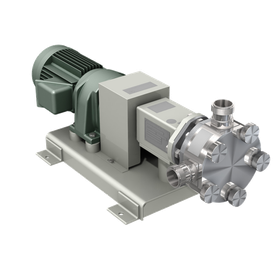
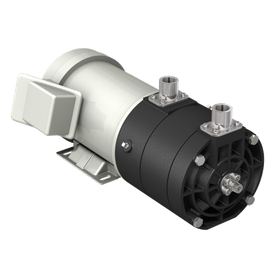
Introduction of food-grade viscosity liquid transfer pumps suitable for the transfer of a wide range of liquids and vacuum pumps suitable for vacuum applications in food factories.
- Vacuum pump
- Other pumps


Ideal for grease lubrication in steel mills, automobile factories, bearing production plants, etc. Air-operated grease pump that can be directly set up with commercially available grease drums.
- Other pumps

Samoa Air-operated Oil Pump for Drum Cans "PM Series" - Ideal for transferring lubricating oil from drum cans in automotive repair shops and production factories.


- Other pumps
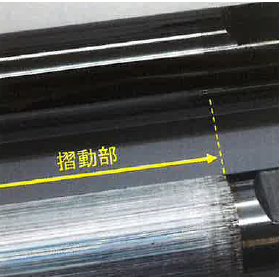

Contributing to contamination prevention! Coating technology that enhances the durability of sliding parts.
- Other pumps


Case study of the introduction of Cavro® Centris syringe pump to Picarro's atmospheric water vapor isotope analyzer.
- Syringe Pump

Customer Interview: Towards Reducing the Burden of Preprocessing Steps in Flow Cytometry
At Tecan, we are engaged in a business that delivers OEM products to partner companies in fields such as clinical testing (cancer diagnosis, infectious disease diagnosis, etc.), scientific analysis, and robotic surgery. Tecan Synergence begins by understanding our customers' precise needs and leads them to a smooth development project. Recently, Sysmex Corporation and Tecan Synergence developed a unique automation solution to accelerate the sample preprocessing process using flow cytometry. This solution is expected to enhance laboratory efficiency and flexibility while reducing the burden on researchers and laboratory technicians. We spoke with Mr. Shogo Takaya from Sysmex Corporation about the challenges in current clinical diagnostics and the collaboration with Tecan. For more details, please download the article from the link below: https://www.tecanjp-portal.com/voice/641/