
List of Optical Components products
- classification:Optical Components
2161~2205 item / All 4794 items


Achieves high collection efficiency through electrostatic methods. Offers a wide range of products from large to small sizes. Also compatible with water-soluble oil mist.

- air conditioning


◆Pocket-sized housing allows for the insertion of up to 8-channel light source modules◆Module lineup from 1270nm to 1610nm in 20nm steps
- Other optical parts
- Other physicochemical equipment
- Other measurement, recording and measuring instruments

◆0.1 to 4 Gbps, SFP Bit Error Rate (BER) Tester ◆Pocket-sized ◆USB-PC connection
- Other optical parts
- Other physicochemical equipment
- Other measurement, recording and measuring instruments

◆The fastest response for BER testing of 10G/25G SFP◆Reading registers of optical transceivers◆Built-in optical power meter◆Pocket-sized
- Other optical parts
- Other physicochemical equipment
- Other measurement, recording and measuring instruments

◆Pocket-sized yet highly stable ◆Pulse mode (270Hz/2KHz) ◆Easy to use on-site with AA battery operation
- Other optical parts
- Other physicochemical equipment
- Other measurement, recording and measuring instruments

◆Up to 36 channels, freely combinable light source/power meter modules ◆Modules can be freely attached and detached even during product operation ◆Supports remote operation
- Other optical parts
- Other physicochemical equipment
- Other measurement, recording and measuring instruments


Over 500 successful projects and a rich lineup of film deposition processing. With 100 years of experience since our founding, we contribute to our customers' technological innovations through optical...
- Sensors
- LED lighting
- Other optical parts

Co-creation proposal! Added 'Education, Research, STEAM × Optical Thin Films' as a technology trend keyword.
In recent years, "STEAM education" has rapidly spread in educational settings, increasing the importance of experimental environments and measurement technologies for experiential learning in science and technology. Among these, spectroscopic techniques that analyze substances and environments using light have gained attention. Not only in cutting-edge research fields such as spectroscopic measurement, laser experiments, and biosensing, but also in universities, technical colleges, and high schools, there has been an increase in experiments utilizing optical technologies. The foundation of these technologies is optical thin films (optical filters) that control the wavelength of light. Optical thin films significantly improve the accuracy of spectroscopic measurements and optical sensing by allowing only specific wavelengths to pass through or by blocking unwanted light. Furthermore, they hold potential as educational materials that enable intuitive understanding of the physics of light through phenomena such as interference and structural colors. 1. Compatibility of STEAM education and optical technology 2. Optical thin films used in education and research fields 3. Custom optical thin films required for research applications 4. Potential of optical thin films as educational materials 5. Co-creation proposal: New initiatives with educational and research institutions Optical thin films are materials that connect "learning" and "technology." For more details, please refer to our company website.

It is a historic chemical products trading company founded in the 7th year of the Taisho era, and at the same time, it is a technology company that performs cutting-edge processing such as optical thi...
- Sensors
- Laser Components
- Surveillance Cameras

Golden Week Information
We sincerely apologize for the inconvenience, but we would like to inform you of our business hours and shipping schedule for this year's Golden Week as follows. We understand that this may cause some difficulties for our business partners, and we appreciate your understanding and cooperation. ■Closed Days: April 29, 2026 (Wednesday) and May 2, 2026 (Saturday) to May 6, 2026 (Wednesday) ■Shipping Start Date: May 7, 2026 (Thursday) <<Request>> Due to the current situation in the Middle East coinciding with the Golden Week, significant congestion is expected, which may disrupt transportation. Our company, Adachi Shin Sangyo Co., Ltd., is committed to taking the utmost care to minimize any inconvenience. We kindly ask for your understanding and consideration, and to handle your orders with ample lead time.

◆MPO polarity testing (type-A/B/C) insertion loss (IL) and return loss (RL) can be performed with a single unit ◆19-inch rack mount type
- Other optical parts
- Other physicochemical equipment
- Other measurement, recording and measuring instruments

◆Dial type allows continuity check of MPO one core at a time ◆Equipped with lighting and flashing modes ◆Custom options available for 12 cores, as well as 24 cores and 36 cores
- Other optical parts
- Other physicochemical equipment

◆Equipped with up to 8 channels and compact◆Compact housing◆No warm-up required◆Plug-in and unplug freely during measurement
- Other optical parts
- Other measurement, recording and measuring instruments
- Other physicochemical equipment

◆0.1Gbps to 100Gbps◆The simplest and fastest BER testing for AOC/optical transceivers.
- Other optical parts
- Other physicochemical equipment
- Other measurement, recording and measuring instruments

◆Quick simultaneous Type A/B/C polarity diagnosis and loss testing◆Simple operability using a touch panel◆Compact and lightweight
- Other optical parts
- Other measurement, recording and measuring instruments
- Other physicochemical equipment

It is a high light-transmitting ITO coating that combines an ITO film (transparent conductive film) with a dielectric multilayer anti-reflective film. It prevents condensation while allowing high tran...
- Other optical parts
- Sensors
- Surveillance Cameras
Added ITO/Near Infrared AR Coat to the Aronics sheet.
A technology that simultaneously imparts conductivity and near-infrared optical properties to rigid resin optical components. In recent years, with the proliferation of automotive LiDAR and various infrared sensors, the demand for optical components that achieve both high transmittance and low reflectance in the 905nm band has rapidly increased. Especially in sensing using ToF methods or pulsed lasers, even slight reflection losses or scattering directly affect detection accuracy, making wavelength-specific optical design essential. On the other hand, the cover materials that protect these sensors from external environments require specific characteristics of resin materials, such as mechanical strength, impact resistance, dimensional stability against temperature changes, processability, and suitability for mass production, making the coexistence of optical and mechanical properties a significant design challenge. At Adachi New Industries, we have established a composite thin-film process that combines the acrylic resin material "Alonix Sheet" from Toa Gosei Co., Ltd. with the following. Please check our company website for more details.

◆ Individually measure the optical power of each lane of the optical transceiver ◆ Compatible with 400G LR4, SR8, DR8, FR8, LR8/ER8
- Other optical parts
- Other measurement, recording and measuring instruments
- Other physicochemical equipment

It is an optical thin-film filter that reduces the reflectance at specific wavelengths and improves transmittance. By increasing the amount of light, it contributes to energy saving and power reductio...
- Other optical parts
- lens
- Sensors
Added ITO/Near Infrared AR Coat to the Aronics sheet.
A technology that simultaneously imparts conductivity and near-infrared optical properties to rigid resin optical components. In recent years, with the proliferation of automotive LiDAR and various infrared sensors, the demand for optical components that achieve both high transmittance and low reflectance in the 905nm band has rapidly increased. Especially in sensing using ToF methods or pulsed lasers, even slight reflection losses or scattering directly affect detection accuracy, making wavelength-specific optical design essential. On the other hand, the cover materials that protect these sensors from external environments require specific characteristics of resin materials, such as mechanical strength, impact resistance, dimensional stability against temperature changes, processability, and suitability for mass production, making the coexistence of optical and mechanical properties a significant design challenge. At Adachi New Industries, we have established a composite thin-film process that combines the acrylic resin material "Alonix Sheet" from Toa Gosei Co., Ltd. with the following. Please check our company website for more details.

◆14-pin butterfly package ◆Wideband, high output ◆Built-in power monitor function included
- Other optical parts
- Other physicochemical equipment

◆Narrow linewidth <2MHz ◆Excellent center wavelength accuracy ◆Mode-hop free
- Other optical parts
- Other semiconductors
- Other physicochemical equipment

It is an optical filter that cuts ultraviolet and infrared light while having a high transmittance in the visible light range.
- Other optical parts
- Surveillance Cameras
- Sensors
Co-creation proposal! Added 'Education, Research, STEAM × Optical Thin Films' as a technology trend keyword.
In recent years, "STEAM education" has rapidly spread in educational settings, increasing the importance of experimental environments and measurement technologies for experiential learning in science and technology. Among these, spectroscopic techniques that analyze substances and environments using light have gained attention. Not only in cutting-edge research fields such as spectroscopic measurement, laser experiments, and biosensing, but also in universities, technical colleges, and high schools, there has been an increase in experiments utilizing optical technologies. The foundation of these technologies is optical thin films (optical filters) that control the wavelength of light. Optical thin films significantly improve the accuracy of spectroscopic measurements and optical sensing by allowing only specific wavelengths to pass through or by blocking unwanted light. Furthermore, they hold potential as educational materials that enable intuitive understanding of the physics of light through phenomena such as interference and structural colors. 1. Compatibility of STEAM education and optical technology 2. Optical thin films used in education and research fields 3. Custom optical thin films required for research applications 4. Potential of optical thin films as educational materials 5. Co-creation proposal: New initiatives with educational and research institutions Optical thin films are materials that connect "learning" and "technology." For more details, please refer to our company website.

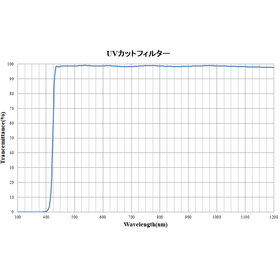
It is a filter that efficiently cuts (reflects) short-wavelength UV (ultraviolet) light while allowing visible light to pass through.
- Sensors
- Other optical parts
- Lighting for image processing
I have added 'Understanding Cutoff and Cut-On in 5 Minutes!' to the technical trend keywords.
Optical filters are important devices used to extract only the necessary wavelengths from light or to block unnecessary wavelengths. They are utilized in a wide range of fields, from cameras and displays that we commonly see, to spectroscopic analysis devices used in medical and bio fields, as well as in industrial applications such as laser processing and optical communication. Light encompasses a broad wavelength range, including ultraviolet, visible, and infrared light; if the desired light cannot be precisely controlled, it can lead to issues such as false detection, increased noise, and decreased image quality. This is where the concepts of "cut-on" and "cut-off" come into play. These concepts indicate the boundary where light begins to transmit and the boundary where transmission ends, forming the foundation of optical filter design. 1. Definition and Basic Principles of Cut-On and Cut-Off The most important parameters for correctly designing and evaluating optical filters are the "cut-on wavelength" and "cut-off wavelength." These are not just names; they are reference values that numerically define the effective performance of the filter, specifically which wavelength ranges are transmitted and which ranges are blocked. 2. Technical Points of Design and Control For more details, please visit our company website.

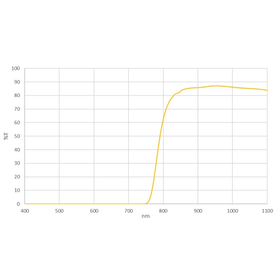
It is a dielectric multilayer film filter that transmits visible light and reflects near-infrared light.
- Other optical parts
- Color camera
- Sensors
I have added 'Understanding Cutoff and Cut-On in 5 Minutes!' to the technical trend keywords.
Optical filters are important devices used to extract only the necessary wavelengths from light or to block unnecessary wavelengths. They are utilized in a wide range of fields, from cameras and displays that we commonly see, to spectroscopic analysis devices used in medical and bio fields, as well as in industrial applications such as laser processing and optical communication. Light encompasses a broad wavelength range, including ultraviolet, visible, and infrared light; if the desired light cannot be precisely controlled, it can lead to issues such as false detection, increased noise, and decreased image quality. This is where the concepts of "cut-on" and "cut-off" come into play. These concepts indicate the boundary where light begins to transmit and the boundary where transmission ends, forming the foundation of optical filter design. 1. Definition and Basic Principles of Cut-On and Cut-Off The most important parameters for correctly designing and evaluating optical filters are the "cut-on wavelength" and "cut-off wavelength." These are not just names; they are reference values that numerically define the effective performance of the filter, specifically which wavelength ranges are transmitted and which ranges are blocked. 2. Technical Points of Design and Control For more details, please visit our company website.

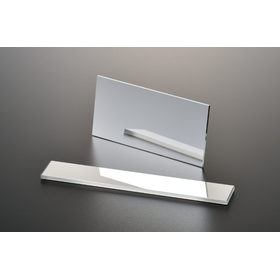
We offer mirrors that combine reflective performance and cost-effectiveness. The main feature is that they have low dependence on the angle of incidence.
- mirror
- Plastic processing machines (cutting and rolling)
- Sensors
Added 'A Comprehensive Comparison of Metal Mirrors in 5 Minutes!' to the technology trend keywords.
Among optical components, metal mirrors possess characteristics such as "broadband and stable reflection performance," "minimal variation in properties with respect to incident angle," and "excellent durability," making them a crucial factor that influences the reliability of devices. They can cover not only visible light but also infrared (IR) and even ultraviolet (UV) regions, leading to their widespread adoption from fundamental research to industrial applications. In this article, we will thoroughly compare the types of representative metal mirrors and their features, clearly organizing selection points based on applications and purposes. We aim to provide helpful information for those wondering, "Which metal is best suited for my device?" 1. The mechanism of metal mirrors and representative coating materials 2. Evaluation criteria for major metal mirrors 3. Aluminum mirrors (Al) 4. Silver mirrors (Ag) 5. Gold mirrors (Au) 6. Aluminum enhanced mirrors (Al Enhanced Mirror) 7. Recommended metal mirrors by application (selection guide based on technical background) 8. The added value that Adachi New Industry can provide (technology + proposal capability)

◆Adjustable output between 10% and 100%◆With protection features for overcurrent/voltage/temperature
- Other optical parts
- Other physicochemical equipment

◆ Wavelength stability: 0.02nm/℃, 0.05nm/A ◆ Spectral width: <0.5nm ◆ 0.22NA fiber
- Other semiconductors
- Laser Components
- Other optical parts

Han's TCS is a company that sells semiconductor laser modules and systems with fiber couplings.
- Other semiconductors
- Other optical parts
- Other physicochemical equipment

◆1.25 to 11.3 Gbps ◆Compact 4mm x 4mm QFN28 package ◆Constant current (200mW chip power)
- Other optical parts
- Other physicochemical equipment

◆11.3Gbps TIA 10G APD◆Automatic Gain Controller included Ultra High Sensitivity TIA◆Compact die size
- diode
- Other optical parts
- Other measurement, recording and measuring instruments

◆High-sensitivity TIA with automatic gain controller ◆Sensitivity -32dBm / Dynamic range ≧35dB
- diode
- Other measurement, recording and measuring instruments
- Other optical parts

◆Ultra-high sensitivity TIA with automatic gain controller◆ Sensitivity -31dBm / Dynamic range ≧31dB
- Other optical parts
- Other measurement, recording and measuring instruments
- diode

◆2.5Gbps TIA with RSSI for 2.5G APD/PIN PD◆ High-sensitivity TIA with automatic gain controller
- Other optical parts
- diode
- Other measurement, recording and measuring instruments


Cuts ultraviolet (UV) and near ultraviolet (IR)! Visible light (visible rays) passes through!
- Other optical parts

◆2.5Gbps GPON TIA 2.5G GPON compatible◆ with internal PD bias filter function◆ can replace major products from various companies
- Other measurement, recording and measuring instruments
- Communications
- Other optical parts


For hole processing, including ultra-fine pores on a nano scale and holes requiring high precision, high quality, high density, and high positioning accuracy, please leave it to Toray Precision.
- Other optical parts
- Other semiconductors
- Processing Contract


Developing a wide range of advanced optical devices! We provide them to customers both domestically and internationally.
- Laser Components


A comprehensive catalog of industrial high-performance lenses provided by a long-established German manufacturer with over 100 years of experience is available for free! *Demo lenses are available.
- lens
- lens

◆12.5Gbps◆50Ω back termination, 3.0kΩ transimpedance and CML output
- Other optical parts
- Other physicochemical equipment

◆Coherent pulse vertical mode single RGB laser with a length of over 3 meters ◆The laser is used by a company that manufactures holograms.
- Other optical parts
- Other physicochemical equipment
- others

◆190x100x62mm/600g Handheld type ◆ Equipped with three operating modes: Absolute, Relative, Power
- Other optical parts
- Other physicochemical equipment
- Other measurement, recording and measuring instruments

◆Includes a 3-year warranty for peace of mind◆For optical communication: measuring instruments, detectors, testing equipment◆FTTH and data center construction maintenance tools◆Power meters, loss test...
- Other optical parts
- Other physicochemical equipment
- Other measurement, recording and measuring instruments


Set 16 types of irradiation profiles as desired! You can choose from a variety of laser spot shapes to match your work!
- Laser Components
- Other optical parts

◆Pocket size ◆Compatible with Android/iOS ◆Data can be saved on the device
- Other optical parts
- Other physicochemical equipment
- Other measurement, recording and measuring instruments

◆Significantly reduced inspection time through fully automated inspection◆Equipped with manufacturing and field inspection modes◆Linked with iOS/Android smartphone apps
- Other optical parts
- Other physicochemical equipment
- Other measurement, recording and measuring instruments

◆Ookla Speedtest ◆Check Wi-Fi area ◆Send diagnostic report via email to subscribers or internal database
- Other optical parts
- Other physicochemical equipment
- Other measurement, recording and measuring instruments

◆DWDM 50GHz, 100GHz channel spacing measurement ◆Measurement time: <0.5 seconds ◆Threshold for pass/fail judgment can be set
- Other optical parts
- Other physicochemical equipment
- Other measurement, recording and measuring instruments

◆EXFO's long-selling PON power meter supports 10G-EPON◆ Easy operation for simultaneous upstream/downstream measurement, compatible with iOS/Android.
- Other optical parts
- Other physicochemical equipment
- Other measurement, recording and measuring instruments


Even small components are packed with a wealth of diverse know-how and infinite possibilities embedded in their microscopic technology.
- Other optical parts