We have compiled a list of manufacturers, distributors, product information, reference prices, and rankings for Calorimeter.
ipros is IPROS GMS IPROS One of the largest technical database sites in Japan that collects information on.

Calorimeter Product List and Ranking from 10 Manufacturers, Suppliers and Companies | IPROS GMS

Last Updated: Aggregation Period:Feb 18, 2026~Mar 17, 2026
This ranking is based on the number of page views on our site.

Calorimeter Manufacturer, Suppliers and Company Rankings

Last Updated: Aggregation Period:Feb 18, 2026~Mar 17, 2026
This ranking is based on the number of page views on our site.

  1. TA Instruments Japan (TAInstruments) Tokyo//Testing, Analysis and Measurement
  2. null/null
  3. null/null
  4. 4 DKSHマーケットエクスパンションサービスジャパン テクノロジー事業部門 Tokyo//Trading company/Wholesale
  5. 5 メトラー・トレド Tokyo//Testing, Analysis and Measurement

Calorimeter Product ranking

Last Updated: Aggregation Period:Feb 18, 2026~Mar 17, 2026
This ranking is based on the number of page views on our site.

  1. ARC Insulated Calorimeter for Lithium-Ion Batteries (LIB)
  2. YouTube Video: Selection of DSC Sample Pans and Sample Preparation TA Instruments Japan (TAInstruments)
  3. Reaction calorimeter "HFCal equipped RC1mx" メトラー・トレド
  4. 4 Bomb calorimeter
  5. 5 Differential Scanning Calorimeter "Julia DSC"

Calorimeter Product List

31~53 item / All 53 items

Displayed results

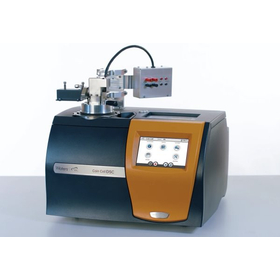
Heat flux type single furnace DSC 4000

Introducing a compact, simple, and robust design! Here is a high-sensitivity heat flux DSC with excellent versatility.

The "Heat Flux Type Single Furnace DSC 4000" is a compact and highly versatile high-sensitivity heat flux DSC capable of a wide range of applications from research to routine analysis. With its small, simple, and robust design, it meets various needs, from quality management such as QA/QC to improving work efficiency and providing reliable analysis essential for routine analysis. It is equipped with a mass flow controller that ensures stable gas supply. 【Features】 ■ Compact design that saves space ■ Excellent operability and reliability ■ Stable baseline ■ Built-in mass flow controller for stable gas supply *For more details, please refer to the PDF document or feel free to contact us.

  • Other measurement, recording and measuring instruments
  • others
  • Calorimeter

Added to bookmarks

Bookmarks list

Bookmark has been removed

Bookmarks list

You can't add any more bookmarks

By registering as a member, you can increase the number of bookmarks you can save and organize them with labels.

Free membership registration

DSC9

DSC 9 supports high-temperature measurements up to 750°C and reproduces reliable DSC measurements through direct temperature control.

Wide measurement temperature range: -180℃ to 750℃ Direct temperature control sensor User-friendly touch screen Compact design Robust and long-lasting furnace High cooling capacity (Max 100℃/min) Quality standards compliant with ASTM specifications Automatic dual-line gas switching (built-in MFC)

  • plastic
  • Calorimeter

Added to bookmarks

Bookmarks list

Bookmark has been removed

Bookmarks list

You can't add any more bookmarks

By registering as a member, you can increase the number of bookmarks you can save and organize them with labels.

Free membership registration

Data Download Available: DSC Analysis of Curing Characteristics of Epoxy Resin

It is possible to estimate the curing time of epoxy resin from the DSC measurement results. We will simulate using the Kamal model.

In semiconductor packaging, it is important to understand the curing time of epoxy resin. The Kamal model is widely used as the reaction rate equation for the curing of epoxy resin. The coefficients of the Kamal model can be determined from the non-isothermal curing behavior measured by DSC (Differential Scanning Calorimetry). In this case, we will introduce "Analysis of Curing Characteristics of Epoxy Resin by Thermal Analysis using DSC." Please take a moment to read the PDF materials. In addition to DSC, our company also specializes in various thermal analyses such as TG/DTA and TMA. ● DSC: It can be used for analyzing sample melting, glass transition, thermal history, crystallization, curing, Curie point, and measuring specific heat. ● TG/DTA: It can be used for analyzing moisture content, ash content, decomposition, oxidation, and evaluating thermal resistance. ● TMA: It can be used for measuring sample expansion rate, glass transition, and softening point. Please see the following for various examples of thermal analysis: https://www.seiko-sfc.co.jp/case/index.html *Other materials are also available. If you request through the inquiry button, we will send them to you.

  • Contract Analysis
  • Contract measurement
  • Other polymer materials
  • Calorimeter

Added to bookmarks

Bookmarks list

Bookmark has been removed

Bookmarks list

You can't add any more bookmarks

By registering as a member, you can increase the number of bookmarks you can save and organize them with labels.

Free membership registration

[DL Available/Thermal Analysis] DSC Measurement of Chocolate 3 (Differences in Melting Behavior)

Scientific analysis using DSC measurements reveals that the melting behavior is different between the center and the outer edge of the chocolate bar.

Differential Scanning Calorimetry (DSC) can be used to analyze the melting, glass transition, thermal history, crystallization, curing, Curie point, and to measure specific heat of samples. By measuring the melting behavior, it is possible to assess differences in thermal history within the same sample. We are conducting analyses of chocolate, a familiar item to everyone. This case is the third installment, "DSC Measurement of Chocolate 2 (Comparison Between Products)." You can confirm the differences in melting between the center and the outer edge of the chocolate bar, so please take a moment to read the PDF materials. In addition to DSC, our company also specializes in various thermal analyses such as TG/DTA and TMA. ● TG/DTA: Can be used for analyzing moisture content, ash content, decomposition, oxidation, and evaluating heat resistance. ● TMA: Can be used for measuring expansion rate, glass transition, and softening point. We also have experience with other food products, so please feel free to consult us. ● Case Studies https://www.seiko-sfc.co.jp/case/index.html *Other materials are also available. If you request them through the inquiry button, we will send them to you.

  • Contract Analysis
  • Food Testing/Analysis/Measuring Equipment
  • Organic Natural Materials
  • Calorimeter

Added to bookmarks

Bookmarks list

Bookmark has been removed

Bookmarks list

You can't add any more bookmarks

By registering as a member, you can increase the number of bookmarks you can save and organize them with labels.

Free membership registration

[DL Available/Thermal Analysis] DSC Measurement of Chocolate 4 (Verification of Optimal Production Conditions)

The analysis reveals "what is important" in the chocolate tempering process (the work of aligning to the V-type crystal among the six types of cocoa butter crystals).

Differential Scanning Calorimetry (DSC) can be used to analyze the melting, glass transition, thermal history, crystallization, curing, Curie point, and to measure specific heat of samples. By measuring melting behavior, it is possible to assess differences in thermal history within the same sample. Using DSC to measure melting behavior allows for an understanding of the relationship between thermal history and crystal form, which can be applied to the examination of manufacturing conditions and quality control. In this case, we introduce an analysis of chocolate, a familiar item for everyone, using DSC. This is the fourth installment, "DSC Measurement of Chocolate 4 (Verification of Optimal Production Conditions)." It reveals important aspects of the chocolate tempering process (the work of aligning cocoa butter to the V-type crystal among the six types of crystal forms). We encourage you to read the PDF document. In addition to DSC, our company also specializes in various thermal analyses such as TG/DTA and TMA. We have experience with other food products as well, so please feel free to consult us regarding thermal analysis. *Other materials are also available. If you request them through the inquiry button, we will send them to you.

  • Contract Analysis
  • Contract measurement
  • Contract Analysis
  • Calorimeter

Added to bookmarks

Bookmarks list

Bookmark has been removed

Bookmarks list

You can't add any more bookmarks

By registering as a member, you can increase the number of bookmarks you can save and organize them with labels.

Free membership registration

Data DL available: DSC measurement of silicone rubber (low temperature measurement)

Generally, it is possible to observe transition phenomena such as melting, glass transition, crystallization, and thermosetting of materials even in difficult low-temperature regions.

Depending on the material, glass transition, cryocrystallization, and melting points may exist in the low-temperature range. Our company has the technology to measure these characteristics using DSC (Differential Scanning Calorimetry). We hope you can utilize this technology to understand material properties. In this case, we introduce an example of this technology: "DSC Measurement of Silicone Rubber (Low-Temperature Measurement)." Please refer to the PDF document for details. In addition to DSC, our company also specializes in various thermal analyses such as TG-DTA and TMA. https://www.seiko-sfc.co.jp/service/thermal.html ●DSC (Differential Scanning Calorimetry): Can be used for analysis of sample melting, glass transition, thermal history, crystallization, curing, Curie point, etc., as well as measuring specific heat. ●TG-DTA (Thermogravimetric and Differential Thermal Analysis): Can be used for analysis of sample moisture content, ash content, decomposition, oxidation, and thermal resistance evaluation. ●TMA (Thermomechanical Analysis): Can be used for measuring sample expansion rate, glass transition, softening point, etc. Please take a look at many other examples below: https://www.seiko-sfc.co.jp/case/index.html

  • Rubber
  • Contract Analysis
  • Analysis Services
  • Calorimeter

Added to bookmarks

Bookmarks list

Bookmark has been removed

Bookmarks list

You can't add any more bookmarks

By registering as a member, you can increase the number of bookmarks you can save and organize them with labels.

Free membership registration

[Data DL available・DSC] Understanding the gelatinization of starch in rice, noodles, etc.

In DSC, you can understand the gelatinization and aging of starch, which are important factors in food processing. Please fully experience this technology that can also be applied to other foods.

In starch processed foods, it is very important to understand the gelatinization (α phase) and the retrogradation (β phase) phenomena. Our company has the technology to grasp these phenomena using DSC (Differential Scanning Calorimetry). In this case, we introduce an example of this technology: "Understanding the gelatinization of starch in rice and noodles." Additionally, this technology can also measure the degree of retrogradation. For more details, please refer to the PDF materials. In addition to DSC, our company also specializes in various thermal analyses such as TG-DTA and TMA. https://www.seiko-sfc.co.jp/service/thermal.html ●DSC (Differential Scanning Calorimetry): It can be used for analyzing sample melting, glass transition, thermal history, crystallization, curing, Curie point, etc., as well as measuring specific heat. ●TG-DTA (Thermogravimetric and Differential Thermal Analysis): It can be used for analyzing moisture content, ash content, decomposition, oxidation, and evaluating heat resistance. ●TMA (Thermomechanical Analysis): It can be used for measuring sample expansion rate, glass transition, softening point, etc. There are other examples available, so please take a look. https://www.seiko-sfc.co.jp/case/index.html

  • Food Testing/Analysis/Measuring Equipment
  • Contract Analysis
  • Analysis Services
  • Calorimeter

Added to bookmarks

Bookmarks list

Bookmark has been removed

Bookmarks list

You can't add any more bookmarks

By registering as a member, you can increase the number of bookmarks you can save and organize them with labels.

Free membership registration

Data DL available: DMA Long-term deformation prediction (deformation of rubber)

The results of DMA measurements can predict the long-term deformation (creep measurement) of materials. This can be utilized in evaluations that typically take a long time.

At our company, by applying the WLF rule (the time-temperature superposition principle) to the results of DMA measurements, we can estimate properties such as elasticity in frequency regions that have not actually been measured (creating master curves). Would you like to utilize this technology to understand material properties? In this case, we introduce an example of this technology: "Prediction of long-term deformation of rubber (creep test)". Please refer to the PDF document for details. In addition to DSC, our company also specializes in various thermal analyses such as TG-DTA and TMA. https://www.seiko-sfc.co.jp/service/thermal.html ●DSC (Differential Scanning Calorimetry): Used for analyzing melting, glass transition, thermal history, crystallization, curing, Curie point, etc., and for measuring specific heat. ●TG-DTA (Thermogravimetric and Differential Thermal Analysis): Used for analyzing moisture content, ash content, decomposition, oxidation, and evaluating heat resistance. ●TMA (Thermomechanical Analysis): Used for measuring expansion rate, glass transition, softening point, etc. Please see below for other examples as well. https://www.seiko-sfc.co.jp/case/index.html

  • Rubber
  • Contract Analysis
  • Contract Analysis
  • Calorimeter

Added to bookmarks

Bookmarks list

Bookmark has been removed

Bookmarks list

You can't add any more bookmarks

By registering as a member, you can increase the number of bookmarks you can save and organize them with labels.

Free membership registration

Explosion-proof calorimeter "OHC-800"

A chassis structure that can be installed anywhere! Adopting RIKEN's unique RIKEN Optosonic calculation method.

The "OHC-800" is an explosion-proof calorimeter that is resistant to the effects of non-combustible gases and capable of high-precision measurements. Using an opto-sonic calculation method that combines optical sensors and sound velocity sensors, it enables highly accurate and reliable measurements. With a hydrogen explosion-proof structure (ExdIIB+H2 T4) and a dust and drip-proof structure (equivalent to IP66/IP67), its robust design allows for power supply options of AC 100V to AC 240V / DC 24V, making it suitable for various installation locations. 【Features】 ■ Opto-sonic calculation method combining optical sensors and sound velocity sensors ■ Easy switching between calorific value (MJ/m3), specific gravity, and Wobbe index ■ Improved maintenance and serviceability ■ Housing structure that does not limit installation locations *For more details, please refer to the PDF document or feel free to contact us.

  • others
  • Calorimeter

Added to bookmarks

Bookmarks list

Bookmark has been removed

Bookmarks list

You can't add any more bookmarks

By registering as a member, you can increase the number of bookmarks you can save and organize them with labels.

Free membership registration

[Information] H.E.L Products China Battery Testing Regulations

Introducing how the BTC series complies with the thermal insulation testing methods specified in GB/T36276-2018!

H.E.L has extensive experience in the manufacture of battery testing calorimeters (BTC). There are two types of calorimeters produced, both of which are used to clarify characteristics from the design and development stages of cells and batteries. To ensure that quality and safety standards meet the requirements in China, battery testing must comply with the regulations outlined in GB/T36276-2018. This document describes how the H.E.L BTC-130 and BTC-500 correspond to the testing procedures specified in the regulations. Both BTC-130 and BTC-500 fully comply with these regulations. [Contents] ■ Compliance of H.E.L products with China's battery testing regulations GB/T36276-2018 ■ Test name: 5.2.1.5 Adiabatic Temperature Rise ■ Standard Heat-Wait-Search (HWS) test ■ Summary *For more details, please refer to the PDF document or feel free to contact us.

  • Calorimeter
  • others
  • Calorimeter

Added to bookmarks

Bookmarks list

Bookmark has been removed

Bookmarks list

You can't add any more bookmarks

By registering as a member, you can increase the number of bookmarks you can save and organize them with labels.

Free membership registration

[Technical Data] Heat Generation Characteristics of the Crystallization Process of Substances LIB-06

Technical documentation on the exothermic characteristics of the crystallization process of substances filled in laminate film.

This document includes measurement examples using LIBCAL_A5 (calorimeter) to measure the heat generation and absorption of A5 size lithium-ion batteries. We measured the heat generation reaction of ECO heat packs, which contain heat-generating substances like laminated lithium-ion batteries, packed in polymer film. Instead of deforming a piece of iron to start crystallization, we introduced seed crystals to initiate the crystallization after setting it in the heat flow detection module. [Contents (excerpt)] ■Fig-01: Heat generation curve of ECO heat pack ■Fig-02: Raw data heat flow curve and temperature curve at 3 minutes and 40 seconds after crystallization began ■Fig-03: Heat flow curve and temperature curve with time constant correction for 14 minutes after crystallization began ■Fig-04: Heat flow curve and temperature curve for 4.5 hours after crystallization began, etc. *For more details, please refer to the PDF document or feel free to contact us.

  • Lithium-ion battery
  • Other measurement, recording and measuring instruments
  • Temperature and humidity measuring instruments
  • Calorimeter

Added to bookmarks

Bookmarks list

Bookmark has been removed

Bookmarks list

You can't add any more bookmarks

By registering as a member, you can increase the number of bookmarks you can save and organize them with labels.

Free membership registration

iPhone 5s Complete Heat Measurement [Technical Documentation / Measurement Case Studies]

Applied measurement! Measuring the heat generated by the iPhone and the temperature of the iPhone's surface! Measuring the charge and discharge process of the built-in lithium-ion battery.

Have you ever experienced your iPhone getting hot while watching videos on it? Using a new product, a vehicle-mounted laminated cell calorimeter, we measured the heat generated by the iPhone and the temperature of its surface. Measuring the total heat of a functioning iPhone means measuring not only the heat generated by the iPhone's lithium-ion battery but also the heat generated by the iPhone, which is a super compact PC. Simultaneous measurement of heat generation, heat generation rate, and temperature from a smartphone (iPhone) has not been possible until now. 【Features】 ■ Total heat measurement of a functioning iPhone ■ Measurement of heat generated from the super compact PC that is the iPhone ■ Simultaneous measurement of heat generation, heat generation rate, and temperature from a smartphone (iPhone) ■ Use of vehicle-mounted laminated cell calorimeter (3L-DSC) *For more details, please refer to the PDF document or feel free to contact us.

  • Other measurement, recording and measuring instruments
  • Lithium-ion battery
  • Calorimeter

Added to bookmarks

Bookmarks list

Bookmark has been removed

Bookmarks list

You can't add any more bookmarks

By registering as a member, you can increase the number of bookmarks you can save and organize them with labels.

Free membership registration

Determination of SADT using a small-scale reaction calorimeter (glass vial) in mL size.

A method for determining the thermal hazards of reactive chemicals using DSC measurement! Glass vials are the sample containers.

This document is a technical note explaining the determination of SADT (Self-Accelerating Decomposition Temperature) using a small-scale reaction calorimeter with a mL size (glass vial). We attempted SADT simulation using azobisisobutyronitrile (AIBN) to determine the thermal hazards of reactive chemicals through DSC measurements. In this note, we used a mL size small-scale reaction calorimeter, with a heating rate of 0.025 to 0.20 K/min, which is approximately 1/20 of the typical DSC measurement range of 0.5 to 8 K/min. We encourage you to read it. [Published Data (Excerpt)] - DSC data for 1 mg of AIBN (azobisisobutyronitrile) at 5 K/min - Heating rate of 0.025 K/min - Heating rate of 0.050 K/min - Heating rate of 0.20 K/min - Predictions of what kind of DSC measurement data can be obtained *For more details, please download the PDF or feel free to contact us.

  • Business Intelligence and Data Analysis
  • Calorimeter

Added to bookmarks

Bookmarks list

Bookmark has been removed

Bookmarks list

You can't add any more bookmarks

By registering as a member, you can increase the number of bookmarks you can save and organize them with labels.

Free membership registration

Determination of the SADT of diperoxy dodecanedioate using a small-scale reaction calorimeter.

Calculate SADT from measurement data under isothermal conditions! Does LPO exothermically decompose at temperatures below the melting point?

This document is a technical note explaining the determination of the Self-Accelerating Decomposition Temperature (SADT) of diperoxy dodecanedioate using a small-scale reaction calorimeter. The SADT was calculated from measurement data under isothermal conditions at 51°C for 12 days, with a heating rate ranging from 0.015 K/min to 0.20 K/min. Will LPO indeed decompose exothermically at temperatures below its melting point? Please download and view it from the published catalog. [Contents] ■ Determination of the SADT of diperoxy dodecanedioate using a small-scale reaction calorimeter ■ Determination of SADT using a small-scale reaction calorimeter with ultra-low heating rate control *For more details, please download the PDF or feel free to contact us.

  • Business Intelligence and Data Analysis
  • Calorimeter

Added to bookmarks

Bookmarks list

Bookmark has been removed

Bookmarks list

You can't add any more bookmarks

By registering as a member, you can increase the number of bookmarks you can save and organize them with labels.

Free membership registration

YouTube Video: Selection of DSC Sample Pans and Sample Preparation

To successfully measure DSC, it is important to choose the appropriate pan and lid according to the sample and purpose!

We are explaining on YouTube about the selection of sample pans and sample preparation for effectively measuring with the TA Instruments Differential Scanning Calorimeter (DSC). < Differential Scanning Calorimeter DSC > It measures temperature transitions in materials along with associated thermal temperatures and heat flow. Common applications include research, quality control, and the investigation, selection, comparison, and performance evaluation of materials for manufacturing purposes. The characteristics measured by TA Instruments' DSC technology include glass transition, cold crystallization, phase changes, melting, crystallization, product stability, curing/curing reaction rates, and oxidation stability. The Tzero DSC technology recently developed by TA Instruments is an innovative and highly accurate method for measuring heat flow. It significantly improves baseline flatness, transition resolution, and sensitivity. With Tzero technology, direct measurement of heat capacity becomes possible, and Modulated DSC measurements are faster and more accurate.

  • Analytical Equipment and Devices
  • Calorimeter

Added to bookmarks

Bookmarks list

Bookmark has been removed

Bookmarks list

You can't add any more bookmarks

By registering as a member, you can increase the number of bookmarks you can save and organize them with labels.

Free membership registration