We have compiled a list of manufacturers, distributors, product information, reference prices, and rankings for Composites.
ipros is IPROS GMS IPROS One of the largest technical database sites in Japan that collects information on.

Composites(cfrp) - List of Manufacturers, Suppliers, Companies and Products | IPROS GMS

Last Updated: Aggregation Period:Feb 11, 2026~Mar 10, 2026
This ranking is based on the number of page views on our site.

Composites Product List

1~25 item / All 25 items

Displayed results

Comparison of properties of CFRP and various materials

Free download of technical materials! A clear explanation of the characteristics and properties of CFRP and comparisons with various materials!

CFRP (Carbon Fiber Reinforced Plastic) is said to be a lightweight, strong, and corrosion-resistant advanced functional material. Due to its excellent mechanical properties and outstanding characteristics derived from carbon, it is widely used. This document not only explains the excellent features and properties of CFRP but also includes comparative materials with various materials such as GFRP, AFRP, and aluminum alloys. We hope this will be helpful in your material selection! [Featured Materials (Partial List)] ■ FRP Advanced Composite Materials ■ High-Performance Metals ■ Performance Engineering Plastics ■ Inorganic Materials *For more details, please download the catalog or contact us.

  • Composite Materials
  • Composites

Added to bookmarks

Bookmarks list

Bookmark has been removed

Bookmarks list

You can't add any more bookmarks

By registering as a member, you can increase the number of bookmarks you can save and organize them with labels.

Free membership registration

What are the benefits of using "phenol CFRP"?

With 'Phenol CFRP' that has heat resistance above 300℃, it is possible to reduce the weight of parts used in high-temperature environments, decrease deflection, and improve vibration damping!

Phenol CFRP is a composite material made of carbon fibers (long fibers) and phenolic resin. Phenolic resin has high heat resistance (over 300°C) and can be used in high-temperature environments that conventional CFRP (epoxy resin) cannot handle. **Benefits of Using Phenol CFRP** - Higher heat resistance compared to epoxy resin (over 300°C), allowing for use in high-temperature environments. - High specific modulus (modulus of elasticity divided by weight), enabling lightweight parts, thin-walled designs, and reduced deflection. - Excellent vibration damping properties, allowing for high-speed operation. **Common Needs** - Want to reduce the weight of ceramic parts. - Considering cost reduction for polyimide-based material parts. - Want to make products thinner while minimizing deflection. - Due to increased weight of the workpiece, want to adopt materials with a higher Young's modulus. **Expected Applications of Phenol CFRP** Parts for FPD manufacturing equipment, semiconductor manufacturing equipment, medical device parts, etc. **What Mitsubishi Chemical Can Do** In addition to manufacturing and selling carbon fibers and prepregs, we can also mold, process, assemble, coat, and inspect these materials for delivery. *For more details, please refer to the PDF materials or feel free to contact us.*

  • image_14.png
  • image_16.png
  • fiber
  • Composite Materials
  • Engineering Plastics
  • Composites

Added to bookmarks

Bookmarks list

Bookmark has been removed

Bookmarks list

You can't add any more bookmarks

By registering as a member, you can increase the number of bookmarks you can save and organize them with labels.

Free membership registration

Carbon roll composite material "CFRP roll"

Easy to detach during exchange! Improved braking precision during start and stop with carbon roll.

The "CFRP Roll" is a carbon roll that has low torque during rotation and improved braking precision during starting and stopping. The density of CFRP is approximately 1.56, making it lightweight (density (g/cm3): aluminum = 2.7, iron = 7.8), and it is easy to remove during replacement. Additionally, it can reduce deflection more than iron and aluminum rollers. 【Features】 ■ The density of CFRP is approximately 1.56, making it lightweight ■ Low torque during rotation, with improved braking precision during starting and stopping ■ Capable of reducing deflection compared to iron and aluminum rollers *For more details, please refer to the PDF document or feel free to contact us.

  • roller
  • Composites

Added to bookmarks

Bookmarks list

Bookmark has been removed

Bookmarks list

You can't add any more bookmarks

By registering as a member, you can increase the number of bookmarks you can save and organize them with labels.

Free membership registration

Composite material "CFRP"

It is a lightweight and strong material that excels in specific strength and specific elastic modulus compared to metal materials. It also possesses aesthetic beauty.

"CFRP" stands for Carbon Fiber Reinforced Plastics, which is a composite material made of carbon fibers as the reinforcement and thermosetting resin as the matrix. The main characteristics of CFRP include: ■ Lightweight and strong ■ Excellent X-ray transparency ■ Superior vibration damping ■ Low thermal expansion rate ■ Excellent design properties By designing a laminated structure tailored to various applications, it is possible to create products that make the most of CFRP's characteristics. *For more details, please refer to the PDF document or feel free to contact us.

  • Composite Materials
  • Composites

Added to bookmarks

Bookmarks list

Bookmark has been removed

Bookmarks list

You can't add any more bookmarks

By registering as a member, you can increase the number of bookmarks you can save and organize them with labels.

Free membership registration

Carbon Fiber Reinforced Polymer (CFRP)

Can resin replace metal? We will introduce its characteristics, adoption benefits, and current issues.

We would like to introduce our "Carbon Fiber Reinforced Plastic (CFRP)." Among FRP, those that incorporate carbon fibers as reinforcement are called CFRP, and their characteristics are particularly lightweight, hard, and strong. Furthermore, they possess excellent performance in various aspects such as wear resistance, heat resistance, conductivity, acid resistance, and corrosion resistance. 【Features】 ■ Lightweight: Density is about 1/5 that of iron ■ High strength: Hardness equivalent to that of iron ■ High rigidity: Twice that of iron *For more details, please refer to the PDF document or feel free to contact us.

  • fiber
  • Processing Contract
  • Composites

Added to bookmarks

Bookmarks list

Bookmark has been removed

Bookmarks list

You can't add any more bookmarks

By registering as a member, you can increase the number of bookmarks you can save and organize them with labels.

Free membership registration

Overview of CFRP Processing Customization Menu

You can choose the prepreg, surface weaving method, and finish according to your preferences! Customization allows for meticulous carbon (CFRP) processing.

At Carbon Lab.jp, you can customize your preferred specifications when requesting carbon (CFRP) processing. ■ Types of Prepreg - Standard... Surface layer 3k fabric, inner layer UD material - All UD... Both surface and inner layers are UD material - All Fabric... Both surface and inner layers are 3k fabric Carbon is formed by layering sheets of carbon fiber called "prepreg," impregnating them with resin, and curing them with heat. ■ Surface Weave Structure - Twill (Standard)... A weaving method that skips one bundle of carbon fibers - Plain Weave... A weaving method that alternates bundles of carbon fibers ■ Surface Finish Matte Finish (Standard)... A finish with a sophisticated impression Glossy Finish... A luxurious finish (however, scratches and marks are more noticeable) For more details, please refer to the PDF document or feel free to contact us through the official website. Official website: https://cfrp-japan.com/ Additionally, we offer free carbon sample parts for those who want to know about processing quality and strength. You can apply for the free samples through the link below.

Added to bookmarks

Bookmarks list

Bookmark has been removed

Bookmarks list

You can't add any more bookmarks

By registering as a member, you can increase the number of bookmarks you can save and organize them with labels.

Free membership registration

Recycled Carbon Fiber <From Recycled Scheme Development to Processed Product Development>

Would you like to recycle the scrap and waste from the CFRP production process?

Our company provides technology for separating and recovering carbon fibers from scrap and waste generated during the manufacturing of CFRP products, and for recycling them into carbon fiber composites. The recycled carbon fiber composites can be utilized as filling materials for CFRP, reinforcing fillers, as well as insulation materials for construction, and functional materials that leverage X-ray permeability and electromagnetic wave shielding properties. We contribute to reducing the amount of CFRP industrial waste and developing products that utilize recycled carbon fibers, thereby strengthening your brand power. 【Features】 ■ Possession of carbon fiber recovery technology using solvent methods (chemical recycling) ■ Capable of separation and recovery while maintaining long fiber state ■ Can provide molded products such as non-woven fabrics, CFRTP boards, and pipes, allowing for designs tailored to applications in industrial materials, construction materials, sports goods, etc. ■ Support from product commercialization to marketing and channel development *For more details, please refer to the PDF materials or feel free to contact us.

  • fiber
  • Composites

Added to bookmarks

Bookmarks list

Bookmark has been removed

Bookmarks list

You can't add any more bookmarks

By registering as a member, you can increase the number of bookmarks you can save and organize them with labels.

Free membership registration

Examples of CFRP Utilization

We will introduce examples of the use of CFRP!

"Carbon fiber" is a material said to have a strength ten times that of steel and a weight one-fourth of it. We utilize two types of carbon fiber with different raw materials: "PAN-based carbon fiber," which has high strength, and "pitch-based carbon fiber," which features high elasticity, for various applications. It is mostly used not as carbon fiber alone but as a composite material combined with resin. There are various case studies of its introduction in applications such as FPD transport devices, semiconductor manufacturing equipment, train pantographs, industrial machinery, and picking robots. *For more details, please refer to the PDF materials or feel free to contact us.

  • Composite Materials
  • Other polymer materials
  • fiber
  • Composites

Added to bookmarks

Bookmarks list

Bookmark has been removed

Bookmarks list

You can't add any more bookmarks

By registering as a member, you can increase the number of bookmarks you can save and organize them with labels.

Free membership registration

Production of test specimens for carbon fiber composite materials, evaluation tests (CFRP, CFRTP)

We undertake everything from the production of standard test specimens (JIS, ASTM, and other standard test specimens), custom test specimens, and component test bodies to evaluation testing.

Numerous achievements in specimen production for national research institutes and public universities. In addition to standard test specimens, we also accommodate custom shapes. We have particularly extensive experience with test specimens for structural testing. The matrices include epoxy, phenolic, BMI, polyimide, PA, PC, PPS, PEEK, PEI, and others.

  • Composite Materials
  • Composites

Added to bookmarks

Bookmarks list

Bookmark has been removed

Bookmarks list

You can't add any more bookmarks

By registering as a member, you can increase the number of bookmarks you can save and organize them with labels.

Free membership registration

Introduction of parts using carbon fiber FMC.

It is possible to accommodate complex-shaped parts, such as automotive suspension arms, which were difficult to manufacture with conventional CFRP.

Achieving lightweight design while maintaining the same fracture strength as conventional aluminum parts! Carbon Fiber FMC (FORGED MOLDING COMPOUND) is a sheet-like intermediate material that impregnates cut high-strength carbon fibers with thermosetting resin. 【Features of FMC Molded Products】 - Press molding is possible, significantly reducing molding time compared to conventional autoclave molding, enabling mass production and cost reduction. - FMC has randomly arranged short carbon fibers, providing high fluidity during molding, allowing for the production of complex shapes that were difficult to manufacture with traditional CFRP. - FMC has a lower specific gravity and higher strength compared to metals, allowing for the lightweighting of metal parts. 【What Mitsubishi Chemical Can Do】 - Mitsubishi Chemical provides total support from the production and supply of carbon fiber FMC (CF-SMC) materials to structural analysis, planning, design, and development.

Added to bookmarks

Bookmarks list

Bookmark has been removed

Bookmarks list

You can't add any more bookmarks

By registering as a member, you can increase the number of bookmarks you can save and organize them with labels.

Free membership registration

[Free Gift!] "FRP Q&A Collection"

We are offering a free collection of Q&A on FRP! It includes typical questions and answers.

Fiber-reinforced composites, unlike other structural materials (often homogeneous materials), exhibit their characteristics in the direction of the fiber orientation. Consequently, the design philosophy naturally changes, and the concept of homogeneous materials often cannot be applied. The "FRP Q&A Collection" includes representative questions and answers that have arisen in the context of processing and manufacturing contracts using fiber-reinforced composites. [Contents] ■1. About Terms ■2. About Costs/Production Period ■3. About Manufacturing ■4. About Material Properties ■5. About the Environment *For details, please request the materials or view the PDF data from the download.

  • fiber
  • Processing Contract
  • Contract manufacturing
  • Composites

Added to bookmarks

Bookmarks list

Bookmark has been removed

Bookmarks list

You can't add any more bookmarks

By registering as a member, you can increase the number of bookmarks you can save and organize them with labels.

Free membership registration

Technical documentation on the material properties of films and laminates, as well as precision press processing know-how.

High thermal conductivity materials (metal base substrates), mica sheets, engineering plastics and super engineering plastics, carbon fiber composites (CFRP, CFRTP)

Our company can handle everything from thin films to thick laminated boards. Additionally, since we manufacture our own molds, we can flexibly respond to customer requests in terms of delivery time and cost. We are committed to continuously challenging ourselves with materials we have never processed before, so if you are having difficulties with non-metallic material processing, please feel free to consult us. This document introduces examples of materials we handle. It includes high thermal conductivity materials (metal base substrates) consisting of aluminum on the surface and a resin insulation layer in the core, as well as mica sheets formed from natural minerals. We outline the characteristics, advantages, and disadvantages of each material, along with our solutions, so please use this information when considering implementation. [Contents] ■ High thermal conductivity materials (metal base substrates) ■ Mica sheets ■ Engineering plastics and super engineering plastics ■ Carbon fiber composites (CFRP, CFRTP) *For more details, please refer to the PDF document or feel free to contact us.

  • Composite Materials
  • Composites

Added to bookmarks

Bookmarks list

Bookmark has been removed

Bookmarks list

You can't add any more bookmarks

By registering as a member, you can increase the number of bookmarks you can save and organize them with labels.

Free membership registration

Business Introduction: What is "Carbon Composite"?

Carbon fiber is a living material that supports future industries and is friendly to both people and the environment.

Carbon composite (CFRP) is a composite material made of carbon fibers and resin (such as epoxy or phenolic), which is much stronger and lighter compared to metal materials (such as steel or aluminum). Additionally, by combining various materials such as fiber direction, the number of fiber laminates, high-strength fibers, aramid fibers, and honeycomb cores (aluminum or Nomex), it achieves even higher rigidity. Its characteristics include excellent properties such as X-ray transparency, dimensional stability, vibration damping, chemical resistance, and electromagnetic shielding. Due to these properties, the range of applications is expected to expand further in the future. ● For more details, please download the catalog or contact us.

  • fiber
  • Composites

Added to bookmarks

Bookmarks list

Bookmark has been removed

Bookmarks list

You can't add any more bookmarks

By registering as a member, you can increase the number of bookmarks you can save and organize them with labels.

Free membership registration

Hybrid Fluorine: High Corrosion-Resistant Composite Material of Fluororesin/FRP

By combining unsaturated polyester resin and FRP, it exhibits high-grade characteristics!

"Hybrid Front" is a composite material product designed to fully utilize the excellent corrosion and heat resistance of fluororesin by integrating fluororesin sheets with reinforced plastic (FRP). There are two types: HBF-GFRP, which uses glass fibers as the bonding material with FRP, and HBF-CFRP, which uses carbon fibers. They are distinguished according to their applications, typically based on usage temperature and chemical solutions. [Features] - The fluororesin layer, which is inert to most acids, alkalis, and organic chemicals, exhibits remarkable corrosion resistance, while the outer FRP withstands environmental conditions. - It has outstanding heat resistance compared to other plastics, with a maximum usage temperature of up to 180°C. - There is no leaching of metal ions or other substances from the liquid contact surface, maintaining the purity of the chemical solutions. - The fluororesin has a low coefficient of friction, making it easy to detach adhered substances, among other benefits. *For more details, please download the PDF or feel free to contact us.*

  • Composite Materials
  • Composites

Added to bookmarks

Bookmarks list

Bookmark has been removed

Bookmarks list

You can't add any more bookmarks

By registering as a member, you can increase the number of bookmarks you can save and organize them with labels.

Free membership registration

ReMax Composite

Injection molded resin composite materials using recycled carbon fibers with consideration for the environment and cost.

Carbon fiber is a lightweight and strong material with great potential. However, CFRP made from carbon fiber can only be disposed of in landfills after use. This is such a waste! With the desire for carbon fiber to be more environmentally friendly and to be used more widely in society, we have developed this material. The composite material for injection molding using recycled carbon fiber and thermoplastic resin is ReMax Composite! *We can provide free samples of various resin pellets, so please contact us.*

  • Composite Materials
  • Engineering Plastics
  • plastic
  • Composites

Added to bookmarks

Bookmarks list

Bookmark has been removed

Bookmarks list

You can't add any more bookmarks

By registering as a member, you can increase the number of bookmarks you can save and organize them with labels.

Free membership registration

What are the benefits of using "Phenol CF-SMC"?

With 'Phenol CF-SMC', which has heat resistance above 300℃, it is possible to reduce the weight of parts used in high-temperature environments! Complex shapes can also be molded!

Phenol CF-SMC is a composite material made of carbon fibers (short fibers) and phenolic resin. Phenolic resin has high heat resistance (over 300°C) and can be used in high-temperature environments that conventional CFRP (epoxy resin) cannot handle. It also meets the fire resistance evaluation standards for railway applications. **Benefits of using Phenol CF-SMC:** - Higher heat resistance compared to epoxy resin (over 300°C), allowing for use in high-temperature environments. - Lightweight due to low specific gravity, enabling weight reduction of aluminum and SUS. - Allows for lightweight design of parts requiring fire resistance. - Capable of molding complex product shapes through pressing. **Common needs:** - Desire to reduce the weight of aluminum or SUS parts used in high-temperature environments. - Need to lighten parts that require fire resistance. **Expected applications of Phenol CF-SMC:** Components for aircraft, automobiles, railway vehicles, machine tools, thermal protection materials, etc. **What Mitsubishi Chemical can offer:** In addition to the manufacturing and sales of carbon fibers and prepregs, we can also handle molding, processing, assembly, coating, and inspection of these materials for delivery. *For more details, please refer to the PDF document or feel free to contact us.*

  • image_14.png
  • image_16.png
  • Composite Materials
  • Engineering Plastics
  • Composites

Added to bookmarks

Bookmarks list

Bookmark has been removed

Bookmarks list

You can't add any more bookmarks

By registering as a member, you can increase the number of bookmarks you can save and organize them with labels.

Free membership registration

High heat-resistant carbon fiber composite materials! Comparison of physical properties of C/C and C/SiC.

Materials such as "C/C" and "C/SiC" can be used to reduce weight, decrease deflection, and improve vibration damping in components used in high-temperature environments above 800℃!

C/C composites are composite materials made of carbon fibers and carbon, while C/SiC composites are made of carbon fibers and SiC. Many carbon fibers are used as composite materials (CFRP) with resin as the matrix, but the heat resistance of resin has its limits. By using high-temperature treated materials (carbon and SiC) as the matrix, it has become possible to use them in high-temperature environments (800°C). 【Advantages】 ■ High heat resistance (800°C), enabling use in high-temperature environments ■ High specific modulus (modulus of elasticity ÷ weight), allowing for lightweight components, thin-walled designs, and reduced deflection ■ High thermal conductivity, enabling lightweight heat dissipation components 【Common Needs】 ■ Want to reduce the weight of parts made from heat-resistant materials (ceramics, isotropic graphite) ■ Want to minimize deflection due to limited space ■ Want to use materials with high Young's modulus 【Main Applications】 Parts for FPD manufacturing equipment, semiconductor manufacturing equipment, brake components, etc. 【What Mitsubishi Chemical Can Do】 In addition to manufacturing and selling carbon fibers and prepregs, we can also perform shaping, processing, assembly, coating, and inspection of these materials, and deliver them. *For more details, please refer to the PDF document or feel free to contact us.

Added to bookmarks

Bookmarks list

Bookmark has been removed

Bookmarks list

You can't add any more bookmarks

By registering as a member, you can increase the number of bookmarks you can save and organize them with labels.

Free membership registration

The future of carbon fiber and carbon fiber composites.

A definitive edition containing research, technology, and recommendations on carbon fibers and carbon fiber composites for the expansion of their use.

This book is a compilation of valuable information provided by leading experts in various fields regarding key points, fundamental concepts, various evaluation and analysis methods, cutting-edge manufacturing technologies, research and development trends, and future prospects in the research and development of carbon fibers and their composite materials.

  • Company:S&T出版
  • Price:10,000 yen-100,000 yen
  • Technical and Reference Books
  • Composites

Added to bookmarks

Bookmarks list

Bookmark has been removed

Bookmarks list

You can't add any more bookmarks

By registering as a member, you can increase the number of bookmarks you can save and organize them with labels.

Free membership registration

【Seismic reinforcement achievements available】 Carbon fiber material 'Kabokoma Strand Rod'

A cutting-edge material that protects structures flexibly with high tensile strength and overwhelming lightness.

This is a carbon fiber (CFRP) material that can be used as reinforcement and suspension materials for structures such as buildings. With the excellent material properties of carbon fiber, it can enhance strength while minimizing the burden on structures. ■Features <Incredibly lightweight> The specific gravity is about 1/5 that of steel. The weight of the material is only 14 kg for 160 m (in the case of φ9.3 mm). <High tensile strength> The tensile strength is about 8 times that of steel bars of the same diameter. Although it looks slim, it is capable of pulling a large bus with just one strand. Cabocoma strand rods are being adopted as a new material for seismic reinforcement applications and design purposes in World Heritage sites, national treasures, designated cultural properties, and factory buildings. During construction, we have received many positive comments regarding its lightness and ease of handling on site. If you would like to see the actual product, we also offer free sample requests, so please feel free to contact us.

  • fiber
  • Composites

Added to bookmarks

Bookmarks list

Bookmark has been removed

Bookmarks list

You can't add any more bookmarks

By registering as a member, you can increase the number of bookmarks you can save and organize them with labels.

Free membership registration

[Research Material] The Global Market for Carbon Fiber Reinforced Composites (CFRP)

Global Market for Carbon Fiber Reinforced Composites (CFRP): Carbon Fiber Reinforced PAN Matrix Composites, Carbon Fiber Reinforced Pitch Matrix Composites ...

This research report (Global Carbon Fiber Reinforced Composite (CFRP) Market) investigates and analyzes the current state and outlook for the global market of carbon fiber reinforced composites (CFRP) over the next five years. It includes information on the overview of the global carbon fiber reinforced composite (CFRP) market, trends of major companies (sales, selling prices, market share), market size by segment, market size by major regions, and distribution channel analysis, among others. The segments by type in the carbon fiber reinforced composite (CFRP) market include carbon fiber reinforced PAN matrix composites, carbon fiber reinforced pitch matrix composites, carbon fiber reinforced resin matrix composites, and others. The segments by application cover industrial, aerospace, electronics, medical, and others. The regional segments are divided into North America, the United States, Europe, Asia-Pacific, Japan, China, India, South Korea, Southeast Asia, South America, the Middle East, and Africa, to calculate the market size of carbon fiber reinforced composites (CFRP). It also includes the market share of major companies in carbon fiber reinforced composites (CFRP), product and business overviews, and sales performance.

  • Other services
  • Composites

Added to bookmarks

Bookmarks list

Bookmark has been removed

Bookmarks list

You can't add any more bookmarks

By registering as a member, you can increase the number of bookmarks you can save and organize them with labels.

Free membership registration

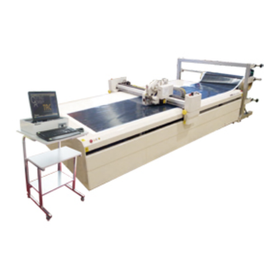
Composite materials, high-speed automatic cutting machine for CFRP molding 'TAC-C Series'

Composite materials, suitable for CFRP molding! Can cut even fine parts without compromising precision.

The "TAC-C Series" utilizes TAC's unique superior hardware and comprehensive CAM software to maximize the use of various CAD data, achieving high-speed, high-precision, and efficient automatic cutting. It is compatible with a wide variety of sheet materials, including composite materials, automotive, sports, leisure, CFRP molding (carbon fiber, thermosetting, thermoplastic, glass fiber, aramid fiber, cross, CFRP/CFRTP, GFRP, prepreg, dry carbon, carbon cross, golf shafts, fishing rods, bicycles, etc.). Additionally, the table surface uses a mat, allowing for cutting of small parts without compromising accuracy. For detailed specifications, cutting tests, and inquiries, please feel free to contact us. 【Features】 ■ Compatible with a wide variety of sheet materials ■ Can cut small parts without compromising accuracy ■ Data modifications based on cutting experience are possible ■ Excellent maintainability, allowing anyone to easily handle issues ■ Quick response possible in case of emergencies through remote support *For more details, please refer to the PDF materials or feel free to contact us.

  • Plastic processing machines (cutting and rolling)
  • Textile Processing Machinery
  • Composites

Added to bookmarks

Bookmarks list

Bookmark has been removed

Bookmarks list

You can't add any more bookmarks

By registering as a member, you can increase the number of bookmarks you can save and organize them with labels.

Free membership registration

Carbon Fiber Reinforced Polymer (CFRP)

Composite of lightweight polymers and high-strength carbon fibers!

Carbon Fiber Reinforced Polymer (CFRP) is a composite material made by combining lightweight polymers with lightweight, high-strength carbon fibers. The strength is enhanced through stress transfer between fibers mediated by the interface and matrix, allowing more fibers to effectively carry the load, contributing to strength development that exceeds the breaking strength of individual fibers (filaments). [Related Contract Services] ■ Evaluation and Modification of Matrix Resins - Epoxy Resins (impregnation, curing, properties of cured resins, processing considerations) - Thermoplastic Resins (flowability, impregnation, resin properties, resin modification) ■ Prototype and Improvement Studies of Prepregs and Composites - Impregnation and Lamination Conditions (vacuum press) - Interlaminar Adhesion, Toughness Improvement ■ Evaluation Testing of Composites - Mechanical Properties (tensile, compression, bending, shear, impact) - Composition (CF content, matrix resin analysis, residual fiber length) - Durability (thermal aging, heat cycles, fatigue properties) - Adhesion with Other Materials (adhesive bonding, insert molding) *For more details, please download the PDF or feel free to contact us.

  • Composite Materials
  • Composites

Added to bookmarks

Bookmarks list

Bookmark has been removed

Bookmarks list

You can't add any more bookmarks

By registering as a member, you can increase the number of bookmarks you can save and organize them with labels.

Free membership registration

Development of interior and exterior materials for aircraft, market trends, durability, safety, and regulatory compliance.

Lightweight plastic and carbon fiber reinforced plastics (CFRP) are desired for aircraft.

CFRPs and Plastics for Interior and Exterior Materials of Airplanes ★Without needing to mention the domestically produced first jet passenger aircraft "MRJ," we will provide a clear explanation from manufacturer representatives about the plastic materials and carbon fiber reinforced composites (CFRP) required for aircraft, which are desired for weight reduction. This will include the current application status in the market, responses to safety and regulations, required technical challenges, and industry circumstances! ☆Next-generation aircraft interiors that are lightweight and compliant with standards ★VaRTM (Vacuum assisted Resin Transfer Molding) ☆What are the reasons these materials are chosen to comply with FST (flame retardant, smoke, toxicity) regulations?! 【Venue】 Tokyo Chuo Ward Industrial Hall 4F, Meeting Room 4【Tokyo, Chuo Ward】 Date and Time July 31, 2013 (Wednesday) 13:20-16:30

  • Company:AndTech
  • Price:10,000 yen-100,000 yen
  • Technical Seminar
  • Composites

Added to bookmarks

Bookmarks list

Bookmark has been removed

Bookmarks list

You can't add any more bookmarks

By registering as a member, you can increase the number of bookmarks you can save and organize them with labels.

Free membership registration

Technical booklet "Basic Knowledge of FRP 4" *Free download available

Gathering technical data on the characteristics of fiber-reinforced composites from a practical perspective! For those considering adoption in structural bodies and components.

At Sanko Seisakusho, which consistently handles everything from design, molding, processing, to assembly of composite materials including CFRP (FRP) and general-purpose plastics, we are currently offering a free technical booklet titled "Basic Knowledge of FRP 4," which condenses our molding know-how! The booklet includes explanations on the comparison of FRP characteristics, as well as data on representative reinforcing fibers and chemical resistance properties used in FRP. It is easy to understand for beginners and can also be used as training material! 【Contents】 ■ Comparison of various material properties ■ Representative reinforcing fibers used in FRP ■ Representative matrices used in FRP ■ Chemical resistance properties ■ Outgassing *For more details, please refer to the catalog. Feel free to contact us with any inquiries.

  • Processing Contract
  • others
  • Composites

Added to bookmarks

Bookmarks list

Bookmark has been removed

Bookmarks list

You can't add any more bookmarks

By registering as a member, you can increase the number of bookmarks you can save and organize them with labels.

Free membership registration