We have compiled a list of manufacturers, distributors, product information, reference prices, and rankings for Homogenizer.
ipros is IPROS GMS IPROS One of the largest technical database sites in Japan that collects information on.

Homogenizer Product List and Ranking from 31 Manufacturers, Suppliers and Companies | IPROS GMS

Last Updated: Aggregation Period:Jul 01, 2026~Jul 28, 2026
This ranking is based on the number of page views on our site.

Homogenizer Manufacturer, Suppliers and Company Rankings

Last Updated: Aggregation Period:Jul 01, 2026~Jul 28, 2026
This ranking is based on the number of page views on our site.

  1. 常光 ナノマテリオ・エンジニアリング事業部 Kanagawa//Industrial Machinery
  2. 三丸機械工業 Shizuoka//Industrial Machinery
  3. エスエムテー 本社 Tokyo//Testing, Analysis and Measurement
  4. 4 セントラル科学貿易 Tokyo//others
  5. 5 マイクロテック・ニチオン Chiba//Testing, Analysis and Measurement

Homogenizer Product ranking

Last Updated: Aggregation Period:Jul 01, 2026~Jul 28, 2026
This ranking is based on the number of page views on our site.

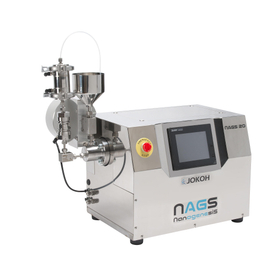
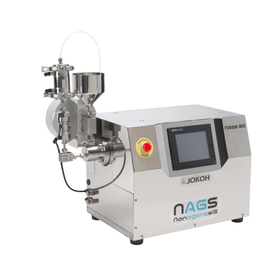
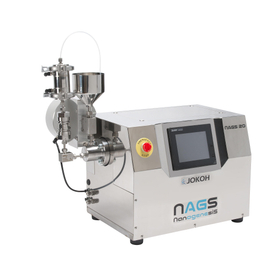
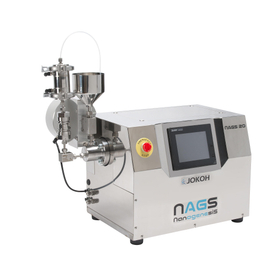
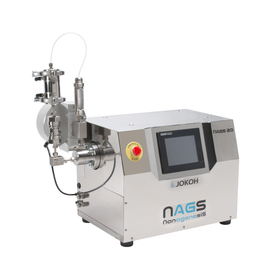
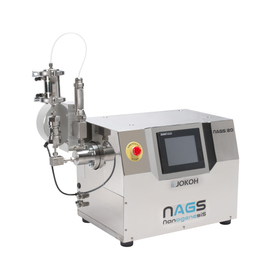
  1. Introduction to the wet-type nano dispersion device "NAGS Series" and contract testing services. 常光 ナノマテリオ・エンジニアリング事業部
  2. Sanmaru Machinery Industry Co., Ltd. Company Profile 三丸機械工業
  3. Super High-Speed Universal Homogenizer "Hiscotron" マイクロテック・ニチオン
  4. 4 Process Homogenizer 'PH91' エスエムテー 本社
  5. 4 Paddle-type homogenizer "Masticator Series" セントラル科学貿易

Homogenizer Product List

121~150 item / All 152 items

Displayed results

Homogenizers can also be used in cooking! Explaining the mechanism and benefits of use.

Explaining the relationship between homogenizers and cooking! Introducing an example of a dish that utilizes the principle.

A homogenizer is a device used to uniformize the particles contained in a substance, enhancing its quality by stirring or applying pressure to the material. Additionally, homogenizers are used in cooking, and this technology is also applied in household cooking utensils. In this blog, we will introduce the benefits of using a homogenizer in cooking and cooking utensils that utilize the principles of homogenization. By reading the article, you will understand how deeply homogenizers are involved in our lives. If you are interested, please take a look. [Contents (partial)] - The principles of homogenizers and their relationship with cooking - What dishes can utilize a homogenizer? - Benefits of using a homogenizer in cooking *For more details about the blog, you can view it through the related links. Please feel free to contact us for more information.

  • Homogenizer
  • Homogenizer

Added to bookmarks

Bookmarks list

Bookmark has been removed

Bookmarks list

You can't add any more bookmarks

By registering as a member, you can increase the number of bookmarks you can save and organize them with labels.

Free membership registration

Explanation of ultra-high-speed homogenizers! Detailed introduction of features and usage!

Crush, disperse, and homogenize in one! We will introduce the features and usage examples of the ultra-fast homogenizer.

A homogenizer is a general term for a machine that can make substances uniform, disperse them, and emulsify them. It is mainly used in laboratories, and some may be considering its introduction or replacement. In this blog, we will introduce the performance and usage examples of high-speed homogenizers. By reading the article, you will gain a good understanding of the features of high-speed homogenizers. If you are interested, please read this article for reference. [Contents] ■ Features of high-speed homogenizers ■ High-speed homogenizers are versatile ■ Recommended for dispersing and homogenizing many substances in a short time ■ Frequently asked questions about high-speed homogenizers ■ Conclusion *For detailed content of the blog, you can view it through the related links. For more information, please feel free to contact us.

  • Homogenizer
  • Homogenizer

Added to bookmarks

Bookmarks list

Bookmark has been removed

Bookmarks list

You can't add any more bookmarks

By registering as a member, you can increase the number of bookmarks you can save and organize them with labels.

Free membership registration

Is it used in familiar things? The principle of ultrasonic homogenizers.

Supports various sizes from small to large capacity! Introducing the principles and applications of ultrasonic homogenizers.

An ultrasonic homogenizer is a machine composed of an oscillator, converter, and horn, which is essential for creating products that are deeply integrated into our daily lives. The foods we commonly consume, as well as the cosmetics and inks we use, may have been produced using this homogenizer. In this blog, we will introduce the principles and applications of ultrasonic homogenizers. If you are interested, please take a moment to read on. [Contents] ■ What is an ultrasonic homogenizer? ■ What are the applications of ultrasonic homogenizers? ■ Ultrasonic homogenizers come in various sizes ■ Conclusion *You can view the detailed content of the blog through the related links. For more information, please feel free to contact us.

  • Homogenizer
  • Homogenizer

Added to bookmarks

Bookmarks list

Bookmark has been removed

Bookmarks list

You can't add any more bookmarks

By registering as a member, you can increase the number of bookmarks you can save and organize them with labels.

Free membership registration

A must-see for those considering the introduction of a high-pressure homogenizer! What are the types and methods?

We will provide a detailed explanation of the basic knowledge, usage, and necessary information for the introduction of a pressure homogenizer.

There are various types of homogenizers, such as stirring type and ultrasonic type, but the "high-pressure homogenizer" is one that homogenizes raw materials under high pressure. Many people may be considering its introduction to produce stable products. However, without a solid understanding of the basic knowledge and key points for implementation, it can lead to failure. In this blog, we will provide a detailed explanation of the basic knowledge, usage, and necessary information for the introduction of the "high-pressure homogenizer." By reading the article, you can gain the information needed to introduce a product that fits your purpose. If you are considering its introduction, please use this as a reference. [Contents (Excerpt)] ■ Basic knowledge of high-pressure homogenizers ■ How to use high-pressure homogenizers ■ Introduction of high-pressure homogenizers ■ For inquiries about high-pressure homogenizers, contact Sanmaru Machinery Industry *You can view the detailed content of the blog through the related links. For more information, please feel free to contact us.

  • Homogenizer
  • Homogenizer

Added to bookmarks

Bookmarks list

Bookmark has been removed

Bookmarks list

You can't add any more bookmarks

By registering as a member, you can increase the number of bookmarks you can save and organize them with labels.

Free membership registration

What exactly is homogenization? How is homogenization performed?

We will introduce the methods and benefits of homogenization, as well as points to consider when choosing a homogenizer.

Foods with a pleasant texture and cosmetics that spread smoothly on the skin are popular. To achieve this texture and smoothness, "homogenization" is essential. In this blog, we will introduce the methods and benefits of "homogenization," discuss whether cell disruption occurs when homogenizing substances and if it affects the ingredients, and more. If you are interested or if you are a representative of a company considering implementation, please take a moment to read. [Contents] ■ What is homogenization? ■ What methods are used for homogenization? ■ What if you want to introduce a homogenizer? ■ Conclusion *For detailed content of the blog, please refer to the related links. For more information, feel free to contact us.

  • Homogenizer
  • Homogenizer

Added to bookmarks

Bookmarks list

Bookmark has been removed

Bookmarks list

You can't add any more bookmarks

By registering as a member, you can increase the number of bookmarks you can save and organize them with labels.

Free membership registration

Emulsification and Dispersion: <Ultrasonic Homogenizer>

Uniforming particles! Ultrasonic vibrations utilize the power of cavitation to perform emulsification, dispersion, and more.

"Emulsification" refers to the temporary mixing of two immiscible liquids (such as water and oil) when subjected to vibration, with common examples being dressings. The state of being emulsified is called an emulsion. Familiar examples include milk (with oil droplets floating in water) and butter (with water droplets floating in oil). "Dispersion," on the other hand, means breaking down larger particles in a liquid into smaller, uniform sizes. The particles introduced into the liquid tend to clump together, forming larger particles. A major function of ultrasound is to break apart these clumped particles and ensure they are of uniform size. [Overview] - Immediately after particles are added to a liquid, they tend to clump together. - When subjected to an ultrasonic homogenizer, the clumped particles are broken apart and become finer. - The dispersed and uniform particles are utilized in various products. *For more details, please refer to the PDF document or feel free to contact us.*

  • Homogenizer
  • Homogenizer

Added to bookmarks

Bookmarks list

Bookmark has been removed

Bookmarks list

You can't add any more bookmarks

By registering as a member, you can increase the number of bookmarks you can save and organize them with labels.

Free membership registration

Wet-type nano disperser NAGS20 for ink

Optimize ink color development! An essential item for the materials research laboratory.

In the ink industry, vibrant color development and stable quality are required. In particular, the uniformity of pigment dispersion greatly affects the ink's hue and durability. Insufficient dispersion can lead to color inconsistencies and sedimentation, potentially compromising product quality. The wet nano-disperser NAGS20 enables uniform dispersion of ink materials and enhances color development. 【Application Scenarios】 - Pigment dispersion in ink manufacturing - Development of inks for inkjet printers - Research and development of paints, inks, pigments, etc. 【Effects of Implementation】 - Vibrant color development through uniform dispersion - Improved stability of ink - Enhanced product quality

  • Fine grinding machine
  • Emulsifier/Disperser
  • Homogenizer
  • Homogenizer

Added to bookmarks

Bookmarks list

Bookmark has been removed

Bookmarks list

You can't add any more bookmarks

By registering as a member, you can increase the number of bookmarks you can save and organize them with labels.

Free membership registration

Wet Nano Disperser NAGS20 for Coatings

Contributes to improving the durability of coatings! An essential for materials research.

In the paint industry, proper dispersion of pigments and additives is required to enhance the durability of products. Particularly for paints used outdoors, uniform dispersion of pigments is crucial to prevent degradation from UV rays and rain. Improper dispersion can lead to issues such as peeling and discoloration of the paint film. Our wet nano-disperser NAGS20 is capable of handling high aspect ratio materials and samples with high concentration and viscosity, contributing to the improvement of paint performance. [Application Scenarios] - Development of high-durability paints - Optimization of pigment dispersion - Improvement of paint film uniformity [Effects of Implementation] - Enhanced durability of paints - Stabilization of product quality - Increased customer satisfaction

  • Fine grinding machine
  • Emulsifier/Disperser
  • Homogenizer
  • Homogenizer

Added to bookmarks

Bookmarks list

Bookmark has been removed

Bookmarks list

You can't add any more bookmarks

By registering as a member, you can increase the number of bookmarks you can save and organize them with labels.

Free membership registration

Ultra High Pressure Homogenizer NAGS20 for Electronic Materials

Contributing to the enhancement of the functionality of electronic materials! Streamlining materials research.

In the electronic materials industry, controlling the microstructure of materials is essential to achieve high performance and functionality. Particularly for materials that influence the performance of electronic devices, uniform dispersion and mixing at the nano level are crucial. Uneven dispersion can lead to a decline in device performance and reliability. Our wet nano-disperser, the "Ultra High-Pressure Homogenizer NAGS20," enables nano-dispersion of electronic materials and contributes to the enhancement of material functionality. 【Application Scenarios】 - Dispersion of conductive pastes and inks - Mixing of battery materials (positive and negative electrodes) - Dispersion of all-solid-state battery materials 【Benefits of Implementation】 - Performance improvement through uniform dispersion of materials - Increased efficiency in the development of high-functionality materials - Ease of scale-up

  • Fine grinding machine
  • Homogenizer
  • Emulsifier/Disperser
  • Homogenizer

Added to bookmarks

Bookmarks list

Bookmark has been removed

Bookmarks list

You can't add any more bookmarks

By registering as a member, you can increase the number of bookmarks you can save and organize them with labels.

Free membership registration

Ultra High-Pressure Homogenizer NAGS20 for Metal Processing

Innovating surface modification of metal materials! Expanding the possibilities of materials research.

In the metal processing industry, surface modification is essential for improving the durability, corrosion resistance, and functionality of products. Particularly in fields that require advanced surface treatment technologies, the uniform dispersion and refinement of materials are key to achieving high-quality surface modification. Improper material processing can lead to decreased product performance and the occurrence of defects. Our wet nano-disperser, the "Ultra High-Pressure Homogenizer NAGS20," enables the nano-dispersion of metal materials and contributes to the efficiency and quality improvement of the surface modification process. 【Application Scenarios】 - Pre-treatment for coating metal materials - Dispersion of metal nanoparticles - Uniform dispersion of surface treatment agents 【Effects of Implementation】 - Increased efficiency of the surface modification process - Improved product quality - Effective utilization of materials

  • Fine grinding machine
  • Emulsifier/Disperser
  • Homogenizer
  • Homogenizer

Added to bookmarks

Bookmarks list

Bookmark has been removed

Bookmarks list

You can't add any more bookmarks

By registering as a member, you can increase the number of bookmarks you can save and organize them with labels.

Free membership registration

Suitable for CNT dispersion for LIB! Ultra-high pressure homogenizer NAGS series.

Without breaking, uniformly. Optimizing the conductive network of CNTs. We propose a suitable dispersion device for CNT dispersion. Please try it out starting with contract testing!

As the performance of lithium-ion batteries (LIB) continues to improve, the adoption of carbon nanotubes (CNT) as a conductive additive is expanding. While CNT can form an excellent conductive network with a small amount, its performance greatly depends on the "dispersion state." Our NAGS series assists in shaping the optimal conductive network of CNT for LIBs through three forces: shear, cavitation, and collision (between materials) by employing a unique H-type nozzle! 《Do you have any of the following challenges?》 - Want to improve the conductivity of CNT slurry - Want to disperse it as much as possible without cutting - Want to conduct research and development that can directly lead to future mass processing The NAGS series (switching pressurized tank method) will solve these issues. ◆ Achieves a suitable dispersion state with minimal damage through a uniquely designed H-type nozzle ◆ Capable of processing high-viscosity CNT paste (dispersion liquid) with increased concentration ◆ Eliminates the hassle of sample replacement for each pass or tank switching ◆ Unified H-type nozzle design from small to large machines, making scale-up easy Please try it out first with our contract testing.

  • Emulsifier/Disperser
  • Homogenizer
  • Fine grinding machine
  • Homogenizer

Added to bookmarks

Bookmarks list

Bookmark has been removed

Bookmarks list

You can't add any more bookmarks

By registering as a member, you can increase the number of bookmarks you can save and organize them with labels.

Free membership registration

Ideal for CNT processing for EMI shielding! Ultra-high pressure homogenizer NAGS.

What is needed to prevent electromagnetic waves is uniform dispersion. We propose a dispersion device suitable for CNT dispersion for EMI shielding. Please try our contract testing!

In EMI shielding applications, the dispersion quality of CNTs is extremely important to maximize their excellent conductivity and electromagnetic wave absorption properties. Uniform dispersion of CNTs also contributes to thinning and lightweighting, directly improving their applicability to flexible materials and complex-shaped components. Our NAGS series utilizes a unique H-type nozzle to assist in achieving uniform dispersion of CNTs, which is optimal for EMI shielding, through three forces: shear, cavitation, and collision (between materials)! 《Do you have any of the following challenges?》 - Want to improve the conductivity of CNT slurry - Want to loosen it as much as possible without cutting - High viscosity of slurry makes it difficult to achieve high concentration - Want to conduct research and development that can directly lead to future mass processing The NAGS series (switching pressurized tank method) will solve these issues. ◆ Achieves a favorable dispersion state with minimal damage through a uniquely designed H-type nozzle ◆ Capable of processing high-viscosity CNT paste (dispersion liquid) with increased concentration ◆ No need for sample replacement for each pass or tank switching ◆ Unified H-type nozzle design from small to large machines, making scale-up easy Please try it out first with our contract testing.

  • Emulsifier/Disperser
  • Fine grinding machine
  • Homogenizer
  • Homogenizer

Added to bookmarks

Bookmarks list

Bookmark has been removed

Bookmarks list

You can't add any more bookmarks

By registering as a member, you can increase the number of bookmarks you can save and organize them with labels.

Free membership registration

Homogenizer

From non-pulsating line machines to lab machines, we have a lineup! We meet various needs!

The "homogenizer" is also utilized in the research and development of pharmaceuticals. This product has good emulsification and dispersion properties in low-pressure areas, and it minimizes energy loss as heat, which helps keep the temperature rise of the processed product low. Additionally, it has low contamination of the product and good cleanability, which contributes to the efficiency of switching between different processed products. 【Usage Examples】 ■ Dispersion of titanium oxide, reduction of materials, improvement of solubility ■ Emulsification of soft capsules, improvement of preservability ■ Improvement of product performance and functionality through yeast destruction ■ Enhanced permeability through fine particle size reduction ■ Fine particle size reduction and improved absorption for liquid diets and swallowing foods ■ Emulsification and nano-sizing of creams and high-viscosity substances *For more details, please refer to the PDF document or feel free to contact us.

  • Homogenizer
  • Homogenizer

Added to bookmarks

Bookmarks list

Bookmark has been removed

Bookmarks list

You can't add any more bookmarks

By registering as a member, you can increase the number of bookmarks you can save and organize them with labels.

Free membership registration

Introduction to Food Manufacturing Line Case Study 1

Crushing and homogenizing particles within a substance. A technology for stabilizing the distribution of dairy products.

The "homogenizer" that our company handles is used in the production line for food manufacturing, including the production of milk. Depending on the storage period and environment, fat can separate and stick to the milk container, resulting in unstable quality. Therefore, we introduced the "homogenizer." It prevents the separation of milk, smoothens the subsequent processes of sterilization management and bottling, and successfully stabilizes the distribution of dairy products. 【Benefits of Introduction】 ■ The fat globules and proteins become finer, improving absorption in the body. ■ The size of the previously varied fat globules becomes uniform, enhancing the mouthfeel. ■ Quality is stabilized without changing the properties, allowing for long-term storage. *For more details, please refer to the PDF materials or feel free to contact us.

  • Homogenizer
  • Homogenizer

Added to bookmarks

Bookmarks list

Bookmark has been removed

Bookmarks list

You can't add any more bookmarks

By registering as a member, you can increase the number of bookmarks you can save and organize them with labels.

Free membership registration

Introduction to Food Manufacturing Line Case Study 2

The emulsifying power of the homogenizer supports delicious calorie reduction!

The "homogenizer" we handle is used in food manufacturing lines, including in the technology for "low-calorie" mayonnaise products. By reducing the amount of oil used and primarily using plant-based oils, there was a challenge as oils derived from canola and soybeans, among others, are particularly difficult to emulsify. The "homogenizer" stabilizes the emulsification of plant-based oils and uniformly reduces their particle size. This increases the surface area of the oil, allowing for delicious products to be achieved with less oil. Furthermore, by increasing viscosity, the volume increases, which enables a reduction in raw materials, leading to lower calorie content and reduced manufacturing costs. 【Effects of Introducing the Homogenizer】 ■ Stabilizes the emulsification of difficult-to-emulsify plant-based oils ■ Increases the surface area of the oil by uniformly reducing particle size ■ Allows for a reduction in raw materials by increasing volume through viscosity enhancement ■ Contributes to lower calorie content and reduced manufacturing costs *For more details, please refer to the PDF document or feel free to contact us.

  • Homogenizer
  • Homogenizer

Added to bookmarks

Bookmarks list

Bookmark has been removed

Bookmarks list

You can't add any more bookmarks

By registering as a member, you can increase the number of bookmarks you can save and organize them with labels.

Free membership registration

Explaining protein extraction! Introducing methods and benefits using a homogenizer.

It is possible to efficiently extract large amounts of protein! Introducing the method for using a homogenizer.

If you are studying biotechnology or working in the fields of pharmacy or food, you often perform protein extraction. There are various methods for protein extraction, and if you do not use a method that aligns with your objectives, even if you successfully extract the protein, it may become unusable. In this blog, we will introduce methods for protein extraction. By reading the articles, you will also learn about the equipment necessary for protein extraction. If you are interested, please take a look. [Contents] ■ What is protein extraction? ■ Main methods of protein extraction ■ Powerful protein extraction methods ■ How to introduce a homogenizer ■ Frequently asked questions about protein extraction ■ Summary *You can view the detailed content of the blog through the related links. For more information, please feel free to contact us.

  • Homogenizer
  • Homogenizer

Added to bookmarks

Bookmarks list

Bookmark has been removed

Bookmarks list

You can't add any more bookmarks

By registering as a member, you can increase the number of bookmarks you can save and organize them with labels.

Free membership registration

Explaining how to homogenize an organization! Also introducing suitable homogenizers.

You can understand the precautions when introducing a homogenizer! Introducing types and methods of implementation.

Homogenization is the process of making a substance uniform. By homogenizing a substance that consists of particles of different sizes, it is possible to improve its quality. A machine that performs homogenization is called a homogenizer, and there are various types available depending on the application, so there may be businesses considering the introduction of a new homogenizer in their workplace. In this blog, we will introduce how to homogenize, the types of homogenizers, and how to implement them. If you are interested in homogenization or are considering the introduction of a homogenizer, please take a look. [Contents] ■ Basic knowledge of homogenization ■ Machines used for homogenization ■ How to implement a homogenizer ■ Frequently asked questions about homogenization ■ Summary *For detailed content of the blog, please refer to the related links. For more information, feel free to contact us.

  • Homogenizer
  • Homogenizer

Added to bookmarks

Bookmarks list

Bookmark has been removed

Bookmarks list

You can't add any more bookmarks

By registering as a member, you can increase the number of bookmarks you can save and organize them with labels.

Free membership registration

Explanation of methods and devices for particle dispersion! What are the benefits of particle dispersion?

Explaining how to introduce a high-pressure homogenizer for particle dispersion! Frequently asked questions are also included.

Microparticle dispersion refers to the state in which very fine solid or liquid particles are evenly distributed within a liquid. There are many products, such as food, pharmaceuticals, cosmetics, paints, and pigments, that utilize microparticle dispersion to improve or stabilize quality. In this blog, we will explain the principles and benefits of microparticle dispersion, as well as the devices used for it. By reading the articles, you will also gain a good understanding of how to introduce devices for microparticle dispersion. If you want to learn more about microparticle dispersion, please take a look. [Content Overview] ■ Methods and benefits of microparticle dispersion ■ How to introduce a high-pressure homogenizer ■ Frequently asked questions about microparticle dispersion ■ Conclusion *For detailed content of the blog, you can view it through the related links. For more information, please feel free to contact us.

  • Homogenizer
  • Homogenizer

Added to bookmarks

Bookmarks list

Bookmark has been removed

Bookmarks list

You can't add any more bookmarks

By registering as a member, you can increase the number of bookmarks you can save and organize them with labels.

Free membership registration

What is the principle of an ultrasonic homogenizer? I will explain it along with the introduction method!

Appropriate advice is possible! Explanation of the principles, mechanisms, and introduction methods of ultrasonic homogenizers.

When considering the introduction of a homogenizer, some people may feel overwhelmed by the variety available. It is important to introduce a product that matches the type and quantity of the substances to be homogenized. To do this, it is necessary to have a certain understanding of the types and principles of homogenizers. In this blog, we will explain the principles and introduction methods of ultrasonic homogenizers. By reading the article, you will understand the principles and features of ultrasonic homogenizers. If you are considering the introduction of a homogenizer, please take a look. [Content Overview (Partial)] ■ Principles of Ultrasonic Homogenizers ■ Features of Ultrasonic Homogenizers ■ How to Use Ultrasonic Homogenizers ■ Prices of Ultrasonic Homogenizers *For more detailed content, please refer to the related links. For further inquiries, feel free to contact us.

  • Homogenizer
  • Homogenizer

Added to bookmarks

Bookmarks list

Bookmark has been removed

Bookmarks list

You can't add any more bookmarks

By registering as a member, you can increase the number of bookmarks you can save and organize them with labels.

Free membership registration

What is homogenization processing? I will explain it along with the mechanism of a homogenizer!

Explanation of homogenization processing and homogenizers! Introduction methods for homogenizers will also be introduced.

Have you ever seen "non-homogenized milk" in supermarkets? This refers to "milk that has not undergone homogenization." Now, does that mean homogenization is unnecessary? That's not the case. By performing homogenization, higher quality products can be produced. In this blog, we will introduce the methods of homogenization and the mechanisms of homogenizers. By reading the article, you will understand the necessity of homogenization well. If you're interested, please take a look. [Contents] ■ Basic knowledge of homogenization ■ What equipment is used for homogenization? ■ How to introduce a homogenizer ■ Frequently asked questions about homogenization ■ Conclusion *You can view the detailed content of the blog through the related links. For more information, please feel free to contact us.

  • Homogenizer
  • Homogenizer

Added to bookmarks

Bookmarks list

Bookmark has been removed

Bookmarks list

You can't add any more bookmarks

By registering as a member, you can increase the number of bookmarks you can save and organize them with labels.

Free membership registration

I want to know how to disperse nanoparticles! What kind of equipment is needed?

You can clearly understand how to use and introduce a homogenizer! An explanation of the dispersion of nanoparticles.

Nanoparticles are extremely small particles measuring one billionth of a meter. In recent years, nanoparticles have been actively used in products such as metal paints and cosmetics, leading to the emergence of products labeled as nanocosmetics. Additionally, because nanoparticles are extremely small, a specialized homogenizer is required to disperse them. In this blog, we will explain methods for dispersing nanoparticles. By reading the article, you will gain a good understanding of how to use and introduce a homogenizer. If you are someone who uses a homogenizer at work, please take a moment to read this. [Contents] ■ What are nanoparticles? ■ Applications of nanoparticles ■ About the dispersion of nanoparticles ■ Introduction of dispersion devices ■ Precautions ■ Frequently asked questions about nanoparticle dispersion ■ Conclusion *For more detailed content of the blog, please refer to the related links. If you have any questions, feel free to contact us.

  • Homogenizer
  • Homogenizer

Added to bookmarks

Bookmarks list

Bookmark has been removed

Bookmarks list

You can't add any more bookmarks

By registering as a member, you can increase the number of bookmarks you can save and organize them with labels.

Free membership registration

What foods use a homogenizer? Explanation of types and usage methods!

We will introduce how homogenizers can be used in food processing along with their mechanisms!

A homogenizer is a machine that uses pressure or ultrasound to homogenize substances. It is used in the production of a wide range of products, including food, pharmaceuticals, and pigments, and helps improve quality. In this blog, we will introduce the types of foods that use homogenizers and how they are used. By reading the article, you will gain a good understanding of the principles of homogenizers and how to implement them. If you are a representative of a company considering the introduction or replacement of a homogenizer, please read this article for reference. [Content Highlights] - What types of foods are homogenizers used for? - What are the principles of homogenizers? - Also utilized in food inspection - For the introduction of homogenizers, contact Sanmaru Machinery Industry *You can view the detailed content of the blog through the related links. For more information, please feel free to contact us.

  • Homogenizer
  • Homogenizer

Added to bookmarks

Bookmarks list

Bookmark has been removed

Bookmarks list

You can't add any more bookmarks

By registering as a member, you can increase the number of bookmarks you can save and organize them with labels.

Free membership registration

Understand in 10 minutes! 6 items to know about the types of homogenizers and how to choose one.

There are multiple methods available, and the lineup is diverse! An explanation of the types of homogenizers and how to choose them.

A representative piece of equipment used in food factories and cosmetic factories is the homogenizer, which may also be referred to as a homogeneizer, but both terms refer to the same machine. There are multiple types, including high-pressure and ultrasonic models, and the lineup is diverse. However, despite being used in the manufacturing processes of various products, detailed information is generally not well known. Therefore, in this blog, we introduce accurate knowledge about homogenizers for factory managers and researchers. We also include points to consider when implementing them, so please use it as a reference. [Content Included] ■ What is a homogenizer? ■ What types of homogenizers are there? ■ Types of homogenizers by application ■ What can be done with a homogenizer? *For detailed content of the blog, you can view it through the related links. For more information, please feel free to contact us.

  • Homogenizer
  • Homogenizer

Added to bookmarks

Bookmarks list

Bookmark has been removed

Bookmarks list

You can't add any more bookmarks

By registering as a member, you can increase the number of bookmarks you can save and organize them with labels.

Free membership registration

The difference between a homomixer and a homogenizer! What are the principles of each?

I will explain the features and principles of a homomixer, as well as the differences between a homogenizer and a homomixer.

A "homomixer" is an essential machine for creating laboratories and products. It may seem like a complicated machine, but having a proper understanding of its features and principles can provide useful knowledge. In this blog, we will explain not only the features and principles but also when it is specifically used and the differences between a homomixer and a homogenizer. If you are curious about the "homomixer," please take a moment to read on. [Contents] ■ What is a homomixer? ■ The principle of a homomixer ■ Differences between a homomixer and a homogenizer ■ Summary *You can view the detailed content of the blog through the related links. For more information, feel free to contact us.

  • Homogenizer
  • Homogenizer

Added to bookmarks

Bookmarks list

Bookmark has been removed

Bookmarks list

You can't add any more bookmarks

By registering as a member, you can increase the number of bookmarks you can save and organize them with labels.

Free membership registration

Structure, Principles, and Applications of Homogenizers: Knowledge You Should Know

A machine essential for homogenizing raw materials! An explanation of the structure, principles, applications, and precautions of a homogenizer.

Ultrasonic dispersers that utilize ultrasound are also part of homogenizers, and since there are various types, it is essential to use a homogenizer that aligns with our objectives. In this blog, we will provide a detailed explanation of the structure, principles, and applications of homogenizers. This content is extremely useful for business owners who are struggling with the introduction of homogenizers. We encourage you to read it. [Contents] ■ Structure and principles of homogenizers ■ What are the applications of homogenizers? ■ Points to note ■ Summary *You can view the detailed content of the blog through the related links. For more information, please feel free to contact us.

  • Homogenizer
  • Homogenizer

Added to bookmarks

Bookmarks list

Bookmark has been removed

Bookmarks list

You can't add any more bookmarks

By registering as a member, you can increase the number of bookmarks you can save and organize them with labels.

Free membership registration