
How to use data diodes to prevent the escalation of ransomware damage
Digital transformation also emphasizes the importance of system protection. Let's effectively use data diodes (OWCD) as a communication restriction to protect ourselves from information-gathering malware reconnaissance.
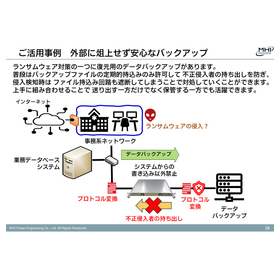
The true horror of ransomware lies not in stealing data, but in its power to halt daily life. It infiltrates deep within systems, targeting file servers and database servers to launch attacks. As the name "infostealer" suggests, information-gathering malware is at work. Before launching a ransomware attack, it steals authentication credentials and thoroughly investigates the target. Unlike when files are encrypted and it's immediately obvious that an attack has occurred, information-gathering malware collects data without the victim realizing it. It steals system information, which later aids attackers when they infiltrate the system or expand their infection after gaining access. Upon investigation, it may be found that the intrusion occurred days prior, leading to data leaks. The information is sent to the attacker following the path of intrusion. By blocking the information produced by this information-gathering malware, much of the damage can be prevented. This can be achieved by equipping the system with an OWCD. The data diode "OWCD" accomplishes a physical one-way communication restriction. Moreover, since it is a physical method, it can be used safely even without on-site personnel. For inquiries, please refer to the related links below.
- Company:MHIパワーエンジニアリング 高砂事業部
- Price:1 million yen-5 million yen
