We have compiled a list of manufacturers, distributors, product information, reference prices, and rankings for resin.
ipros is IPROS GMS IPROS One of the largest technical database sites in Japan that collects information on.

resin Product List and Ranking from 453 Manufacturers, Suppliers and Companies | IPROS GMS

Last Updated: Aggregation Period:Jun 03, 2026~Jun 30, 2026
This ranking is based on the number of page views on our site.

resin Manufacturer, Suppliers and Company Rankings

Last Updated: Aggregation Period:Jun 03, 2026~Jun 30, 2026
This ranking is based on the number of page views on our site.

  1. 寺田 Tokyo//Electronic Components and Semiconductors
  2. ヤスハラケミカル Tokyo//Chemical
  3. MITSUBISHI GAS CHEMICAL NEXT COMPANY, INC. Tokyo//Resin/Plastic
  4. 4 アイエムティー Wakayama//Testing, Analysis and Measurement
  5. 5 MUROMACHI CHEMICALS INC. Chemicals Division Fukuoka//Chemical

resin Product ranking

Last Updated: Aggregation Period:Jun 03, 2026~Jun 30, 2026
This ranking is based on the number of page views on our site.

  1. Epoxy Resin Zero Mar Series for Sample Grinding [Made in Japan] アイエムティー
  2. Taiwan Elite Material Co. Ltd. (EMC) モリマーエスエスピー 本社
  3. Joint Surface Treatment Agent "Hitlock B" イチネンケミカルズ
  4. 4 Long-lasting, high-performance fluororesin (PTFE) packing <<Omni-Seal>> タフトレーディング
  5. 5 Liquid Bismaleimide Resin LMI-5000 OSAKA ORGANIC CHEMICAL IND., LTD.

resin Product List

1111~1140 item / All 1411 items

Displayed results

Achieving liquid drop-off properties that surpass fluoropolymer PFA: "Nano Process NCFPC"

An ultra-thin fluoropolymer coating with excellent water and oil repellency that surpasses PFA fluoropolymer! We are currently offering a document summarizing the renewed series.

The "Nano Process NCFPC Series" features an ultra-thin film surface treatment that excels in liquid repellency for water and oil compared to fluoropolymer PFA coatings, improving liquid drainage and flow. It causes almost no dimensional changes and maintains optical properties, making it possible to process "precision parts" and in fields that require high dimensional and surface accuracy, where fluoropolymer coatings have previously been difficult. <Application Examples> - Improvement of liquid drainage for water and oil - Improvement of liquid flow for water and oil - Prevention of oil diffusion in bearing components - Prevention of oil transfer in lubrication parts - Dirt resistance for components and equipment, etc. On Ipros, we also have a video comparing liquid flow of aluminum plates, NCFPC, and fluoropolymer. Please take this opportunity to see the differences in liquid repellency. If you are interested in more details or are facing challenges with surface treatment in precision fields, please download the materials or contact us directly.

  • Other semiconductors
  • resin

Added to bookmarks

Bookmarks list

Bookmark has been removed

Bookmarks list

You can't add any more bookmarks

By registering as a member, you can increase the number of bookmarks you can save and organize them with labels.

Free membership registration

Fluororesin "Explanation of Electrical Properties"

Fluororesin is a plastic material that is difficult to conduct electricity and has excellent heat resistance and cold resistance.

■ What are the electrical properties of plastic materials? The electrical properties of plastics, including fluororesins, include "insulating properties," "dielectric properties," and "electrical resistance." Plastic materials generally exhibit the characteristic of not conducting electricity and retaining it. ■ What are the electrical properties of fluororesin (PTFE)? The electrical properties of plastics fundamentally derive from the polymer structure that composes them. Fluororesin (PTFE) is classified as a "non-polar polymer" due to the dense and symmetrical arrangement of atoms within its molecules, resulting in extremely low charge polarization, and exhibits the following electrical properties. ■ Insulating properties of fluororesin The volume resistivity and surface resistivity of fluororesin (PTFE) are very low, making it a material that is difficult to conduct electricity. The dielectric strength of fluororesin (PTFE, 3.2mm thick) is 19KV/mm. Among heat-resistant plastics known as super engineering plastics, it is equivalent to PEEK's 19KV/mm and superior to PPS's 15KV/mm. *For more details, please visit the official website via the link below or feel free to contact us.

  • Processing Contract
  • resin

Added to bookmarks

Bookmarks list

Bookmark has been removed

Bookmarks list

You can't add any more bookmarks

By registering as a member, you can increase the number of bookmarks you can save and organize them with labels.

Free membership registration

PTFE Lubricity

What are the reasons for the excellent sliding properties of fluoropolymer? We will introduce the characteristics of fluoropolymer PTFE, focusing on its lubricity and low friction. *Downloadable materials available.

■Low Friction and Sliding Properties of Fluoropolymer (PTFE) Fluoropolymers have a low coefficient of friction and are used for solid lubrication. PTFE is structured such that fluorine atoms surround carbon atoms without gaps. The free energy of the fluorine atoms on the molecular surface is low, and the molecules have the characteristic of extremely low polarity in their target structure. The low coefficient of friction of PTFE is believed to be influenced by this type of molecular structure. ■Reasons for the Low Coefficient of Friction of Fluoropolymer PTFE - The strong atomic bonds within PTFE molecules reduce the intermolecular forces with the contacting material. - Friction (sliding) causes PTFE molecules to adhere slightly to the counterpart material, resulting in sliding between PTFE molecules. - The surface of PTFE molecules has a smooth structure with minimal irregularities. - The orientation of PTFE molecules makes it easier to alleviate frictional resistance. For these reasons, fluoropolymer PTFE is considered to have excellent lubricating properties. For more details, please download the materials or contact us.

  • Other Auto Parts
  • resin

Added to bookmarks

Bookmarks list

Bookmark has been removed

Bookmarks list

You can't add any more bookmarks

By registering as a member, you can increase the number of bookmarks you can save and organize them with labels.

Free membership registration

Fluororesin: "Why is it not affected by chemicals?"

Fluororesin is well-known as a plastic that is not affected by acids or alkalis. I will explain the principle of why it does not dissolve in solvents such as acids and alkalis.

■Chemical Resistance of Fluororesin Fluororesin has high chemical resistance and does not dissolve, swell, or react with most acids, alkalis, and organic solvents. ■Reasons for High Chemical Resistance A major reason for the excellent chemical resistance of fluororesin is its stable molecular structure. Fluororesin is a high molecular polymer with a linear molecular structure formed by the bonding of carbon atoms and fluorine atoms. The bond energy between carbon and fluorine atoms (C-F) is very strong among chemical bonds, and furthermore, the C-C bond sections between carbon atoms are tightly covered by fluorine atoms in a helical manner. Therefore, it remains inert when in contact with chemicals or solvents, and does not degrade or dissolve as a resin, which means it has excellent chemical resistance. ■Applications of Fluororesin's Chemical Resistance - Various gaskets - Packing materials - Piping and hoses - Storage tanks - Reaction vessels - Heat exchangers *For more details, please download the materials or refer to the link below.*

  • Surface treatment contract service
  • resin

Added to bookmarks

Bookmarks list

Bookmark has been removed

Bookmarks list

You can't add any more bookmarks

By registering as a member, you can increase the number of bookmarks you can save and organize them with labels.

Free membership registration

What are the differences between fluororesin, PTFE, and ETFE?

[Presentation of Materials] We will introduce the differences in characteristics between fluororesin "PTFE" and "ETFE" resins and coatings.

This explains the differences in characteristics between the fluoropolymer "PTFE" and "ETFE." ■Resin Name PTFE (Polytetrafluoroethylene) ■Characteristics It is the first resin discovered and developed among fluoropolymers. It has a continuous use temperature of 260°C, excellent heat resistance, low friction properties, and non-stick characteristics. Although it has a high melting viscosity, making injection molding difficult, it is used as a coating for frying pans and hot plates. ■Resin Name ETFE (Ethylene Tetrafluoroethylene Copolymer) ■Characteristics Unlike perfluorinated fluoropolymers, ETFE contains hydrogen atoms (H) in its molecular structure. Therefore, its chemical resistance and heat resistance are lower compared to PTFE and FEP, with a continuous use temperature of 150°C compared to PTFE's 260°C. On the other hand, ETFE has high mechanical strength and can be processed at low melting points, making it suitable for applications requiring corrosion lining and wear resistance. *For more details, please click on "PDF Download" or feel free to contact us.*

  • 0217VD.png
  • 2021-06-02 edit.png
  • Surface treatment contract service
  • resin

Added to bookmarks

Bookmarks list

Bookmark has been removed

Bookmarks list

You can't add any more bookmarks

By registering as a member, you can increase the number of bookmarks you can save and organize them with labels.

Free membership registration

What is the difference between fluororubber, Teflon, and fluororesin?

I will introduce the differences between fluororubber and Teflon fluororesin.

Fluoroelastomers have C-F bonds in their copolymer structure, providing excellent chemical resistance, oil resistance, and durability among rubbers. A representative example is FKM. On the other hand, fluoropolymers are plastics that contain fluorine atoms in their structure, such as PTFE, FEP, and PFA. ■Differences in Characteristics 【Fluoroelastomers】 (FKM) They exhibit excellent resistance to petroleum-based oils and fuels. They are durable against ultraviolet rays and atmospheric pollutants, making them suitable for outdoor use. Generally, they can be used at temperatures up to about 230°C. 【Fluoropolymers】 (PTFE) They demonstrate resistance to many substances, including acids, alkalis, solvents, fuels, and organic materials with a high oxygen index. Due to their very smooth and highly non-stick nature, other materials are less likely to adhere to them. This is widely known as the characteristic of PTFE (polytetrafluoroethylene), which is famous under the trademark name Teflon. Fluoropolymers have excellent resistance to high temperatures and can typically be used at temperatures up to 260°C. *By applying fluoropolymer processing to fluoroelastomers, the surface can gain the properties of fluoropolymers. For more details, please contact us.

  • 0217VD.png
  • 2021-06-02 edit.png
  • Surface treatment contract service
  • resin

Added to bookmarks

Bookmarks list

Bookmark has been removed

Bookmarks list

You can't add any more bookmarks

By registering as a member, you can increase the number of bookmarks you can save and organize them with labels.

Free membership registration

DCPD hydrocarbon resin

Free samples available! For the replacement of C5 petroleum resin!

It is cheaper than C5 petroleum resin, allowing for cost reduction. - Good compatibility with rubber. - Can be used as a modifier for paints and lacquers. - Improves color development, gloss, and drying properties of inks.

  • Organic Natural Materials
  • resin

Added to bookmarks

Bookmarks list

Bookmark has been removed

Bookmarks list

You can't add any more bookmarks

By registering as a member, you can increase the number of bookmarks you can save and organize them with labels.

Free membership registration

Polyester resin

This is an introduction to the polyester resin handled by Sankyo Chemical Co.

If you have any questions regarding the explanation below, please feel free to contact us.

  • others
  • resin

Added to bookmarks

Bookmarks list

Bookmark has been removed

Bookmarks list

You can't add any more bookmarks

By registering as a member, you can increase the number of bookmarks you can save and organize them with labels.

Free membership registration

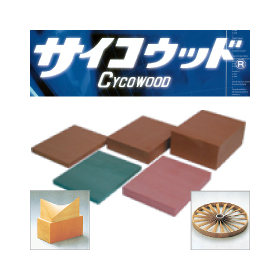
Psycho Wood for Signage and Signs

A resin that balances the strength of ABS and the workability of artificial wood, ideal for signs and displays.

In the sign and display industry, materials that balance durability and design are in demand. When considering outdoor use, weather resistance and impact resistance are also important. Traditional wood can present challenges in terms of processing difficulty, cost, and weight. Psycho Wood combines the strength of ABS resin with the workability of artificial wood, addressing these issues. 【Usage Scenarios】 - Outdoor signs - Indoor signs - Three-dimensional letters - Displays 【Benefits of Implementation】 - Easier machining improves design flexibility - Accommodates thin shapes and edgy designs - Sawdust does not become powdery, improving the work environment - High dimensional stability maintains long-term quality

  • plastic
  • Engineering Plastics
  • Composite Materials
  • resin

Added to bookmarks

Bookmarks list

Bookmark has been removed

Bookmarks list

You can't add any more bookmarks

By registering as a member, you can increase the number of bookmarks you can save and organize them with labels.

Free membership registration

High-performance resin DuPont™ Bepel® SCP-5050

For sliding parts in high load environments and at high temperatures!

Based on high-grade polyimide resin SCP-5000, it has lubrication properties and excellent sliding characteristics due to graphite filling.

Added to bookmarks

Bookmarks list

Bookmark has been removed

Bookmarks list

You can't add any more bookmarks

By registering as a member, you can increase the number of bookmarks you can save and organize them with labels.

Free membership registration

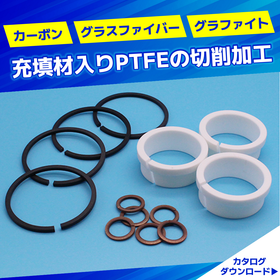
Case Study for Problem Solving | Want to Increase Strength with Filled PTFE

Machining of PTFE with filler material | Production of fluororesin parts with enhanced wear resistance and creep resistance

We flexibly respond to the machining of filled PTFE. PTFE has excellent properties such as "heat resistance, chemical resistance, electrical insulation, non-stickiness, and low friction," but depending on the application, it may exhibit weaknesses such as "susceptibility to deformation, fragility, and wear." Therefore, by adding fillers such as carbon fibers or graphite to PTFE, we enhance its properties while improving: ★ Wear resistance ★ Creep resistance ★ Sliding characteristics ★ Mechanical strength This is the filled PTFE material. 【Do you have any of these concerns?】 - PTFE products are prone to deformation and breakage - Rapid wear leads to a short lifespan of parts - Creep occurs under load - Wear or seizure occurs at sliding parts - You want to utilize PTFE's properties but also need strength 【Benefits of Fillers】 - Improved wear resistance allows for longer-lasting parts - Enhanced creep resistance ensures reliability even in load-bearing applications - Improved sliding characteristics enable stable operation - The inherent chemical resistance, heat resistance, and low friction of PTFE remain intact If you let us know your application, we can provide the best proposal.

  • plastic
  • Engineering Plastics
  • resin

Added to bookmarks

Bookmarks list

Bookmark has been removed

Bookmarks list

You can't add any more bookmarks

By registering as a member, you can increase the number of bookmarks you can save and organize them with labels.

Free membership registration

High-quality, high-performance ion exchange resin for the food industry.

For diluting soft drinks and more! We offer optimal suggestions tailored to your needs with a diverse range of products.

The high-quality, high-performance ion exchange resin IRION series offers a diverse range of resins, from soft water and pure water applications to chelating resins and special resins. With extensive experience, a wide variety of products, and comprehensive application technology and product development, we respond accurately and swiftly to our customers' needs. 【Product Lineup】 ○ Cation Resins ○ Anion Resins ○ Special Resins *For more details, please contact us or download the catalog.

  • Other polymer materials
  • resin

Added to bookmarks

Bookmarks list

Bookmark has been removed

Bookmarks list

You can't add any more bookmarks

By registering as a member, you can increase the number of bookmarks you can save and organize them with labels.

Free membership registration

Fundamentals of polyurethane raw materials, molecular design, curing behavior, and curing degree measurement methods.

Fundamentals of polyurethane raw materials, molecular design, curing behavior, and curing degree measurement methods.

Part 2: Curing Behavior of Polyurethane Resins and Curing Degree Measurement Methods 1. Chemistry of Polyurethane 2. Curing Reactions of Polyurethane 3. Curing Behavior of Polyurethane and Measurement of Curing Degree 4. Summary [Q&A and Business Card Exchange] Part 3: Molecular Design and Applications of Transparent Polyurethane 1. Molecular Design of Transparent Polyurethane 2. Raw Materials and Formulations that are Difficult to Achieve Microphase Separation Structures 3. Selection of Raw Materials and Formulation Examples for Rigid Polyurethane for Molding 4. Formulation Techniques for Non-Yellowing Transparent Polyurethane 5. Practical Examples of Transparent Polyurethane [Q&A and Business Card Exchange]

  • plastic
  • Technical Seminar
  • resin

Added to bookmarks

Bookmarks list

Bookmark has been removed

Bookmarks list

You can't add any more bookmarks

By registering as a member, you can increase the number of bookmarks you can save and organize them with labels.

Free membership registration

Basics and synthesis of epoxy resin hardeners, and improvement of heat resistance, moisture resistance, and impact resistance.

A one-day seminar to master heat resistance, moisture resistance, impact resistance, and curing speed to meet the required characteristics of sealing materials, adhesives, electronic substrates, and composite materials.

【Lecturers】 1. Shigeki Inatomi, Technical Advisor (Former Asahi Kasei Fellow), Asahi Kasei Corporation 2. Yoshio Tanioka, Team Leader, Structural Materials Section, Electrical Structural Materials Department, Nagase ChemteX Corporation 3. Masahiko Yamanaka, Group Leader, Senior Researcher, Research and Development Division, Shin Nippon Rika Co., Ltd. 4. Masaki Yoshii, Chief Researcher, Semiconductor Materials Division, Hitachi Chemical Company, Ltd. 【Venue】Industrial Promotion Hall, Room 2【Kawasaki Station, Kanagawa】 【Date and Time】November 25, 2010 (Thursday) 10:00 AM - 4:30 PM 【Capacity】30 people *Registration will close once full. Please apply early.

  • Company:AndTech
  • Price:10,000 yen-100,000 yen
  • Technical Seminar
  • resin

Added to bookmarks

Bookmarks list

Bookmark has been removed

Bookmarks list

You can't add any more bookmarks

By registering as a member, you can increase the number of bookmarks you can save and organize them with labels.

Free membership registration

Synthesis technology of phenolic resins and their derivatives and their application development.

★A must-see for those who want to easily learn the basics and structural control of phenolic resins!! ★Detailed explanation of the applications of phenolic resins and phenolic derivatives!

【Speaker】Mr. Shigeki Inatomi, Technical Advisor at Asahi Organic Chemicals Industry Co., Ltd. (Former Asahi Organic Chemicals Fellow) 【Venue】Kawasaki City Industrial Promotion Hall, Conference Room 2 【Kanagawa, Kawasaki Station】7 minutes on foot from JR and Keikyu Kawasaki Station 【Date and Time】January 20, 2011 (Thursday) 13:00-16:30 【Capacity】30 people *Registration will close once full. Please apply early. 【Admission Fee】47,250 yen per person (including tax and text costs)

  • Company:AndTech
  • Price:10,000 yen-100,000 yen
  • Technical Seminar
  • resin

Added to bookmarks

Bookmarks list

Bookmark has been removed

Bookmarks list

You can't add any more bookmarks

By registering as a member, you can increase the number of bookmarks you can save and organize them with labels.

Free membership registration

Fundamentals and Applications of Micronization of Polyimide Resin with Heat Resistance and Weather Resistance

Is there a technology that can micronize high heat-resistant polyimide? I will teach you a method to mass-produce uniform polyimide microparticles with consistent particle size.

Speaker Dr. Takayuki Ishizaka, Researcher, Compact Chemical Systems Research Center, National Institute of Advanced Industrial Science and Technology (AIST) Target Audience: Engineers, researchers, and beginners interested in polymer microparticles and polyimide technology Venue: Tekno Kawasaki, 4th Floor Exhibition Hall [Kanagawa, Kawasaki City] 5-minute walk from Tokyu Mizonokuchi Station East Exit or JR Musashi-Mizonokuchi Station Date and Time: October 26, 2011 (Wednesday) 13:30-16:30 Capacity: 30 people *Registration will close once full. Please apply early. Participation Fee: [Early Bird Discount Price] 46,200 yen (tax included, including text costs) for up to 2 participants from one company *Limited to Tech-Zone members who apply by October 12. Membership registration is free. *After October 12, the [Regular Price] will be 49,350 yen (tax included, including text costs) for up to 2 participants from one company. ◆If 3 participants from the same organization apply, the fee will be 69,300 yen.

  • Company:AndTech
  • Price:10,000 yen-100,000 yen
  • Technical Seminar
  • resin

Added to bookmarks

Bookmarks list

Bookmark has been removed

Bookmarks list

You can't add any more bookmarks

By registering as a member, you can increase the number of bookmarks you can save and organize them with labels.

Free membership registration

Development of next-generation glass alternative materials and their optical properties, impact resistance, application examples, EU standards.

Now, let's explain the necessary optical properties and impact resistance, as well as future goals, based on examples of developments!

★Automotive windows, residential windows, transparent resins for tablets and smartphones, etc. Glass alternative materials are expected to see significant demand growth in the future! ☆A representative from a company dealing with typical glass alternative resins (PC, PMMA, COP) will explain the current required optical properties, impact resistance, and future targets based on market development examples! ★Transparency, refractive index, solar heat gain coefficient, ultraviolet absorption/shielding rate, impact resistance, etc.! 【Venue】 Tokyo Chuo Ward Industrial Hall 4F, Meeting Room 2 【Tokyo, Chuo Ward】 Date and Time July 23, 2013 (Tuesday) 11:00-16:00

  • Company:AndTech
  • Price:10,000 yen-100,000 yen
  • Technical Seminar
  • resin

Added to bookmarks

Bookmarks list

Bookmark has been removed

Bookmarks list

You can't add any more bookmarks

By registering as a member, you can increase the number of bookmarks you can save and organize them with labels.

Free membership registration

Development and Evaluation/Test Methods of High-Pressure Hydrogen Tanks for Fuel Cell Vehicles

What non-metal materials are required for the development of lightweight hydrogen containers at high pressures of 70 MPa!?

High-Pressure Hydrogen Tanks for Fuel Cell Vehicles: R&D, Safety Inspection, Regulatory Trends, etc. ★Will regulatory relaxation be implemented as a national policy!? What non-metallic materials are required for the development of lightweight hydrogen containers at 70 MPa!? 【Venue】 Kawasaki City International Exchange Center, 2nd Floor, Conference Room 5【Kanagawa, Kawasaki】 Date and Time August 23, 2013 (Friday) 11:00-16:00

  • Company:AndTech
  • Price:10,000 yen-100,000 yen
  • Technical Seminar
  • resin

Added to bookmarks

Bookmarks list

Bookmark has been removed

Bookmarks list

You can't add any more bookmarks

By registering as a member, you can increase the number of bookmarks you can save and organize them with labels.

Free membership registration

Type 4 of fluororesin: ETFE (ethylene tetrafluoroethylene copolymer)

At Daito Kasei, we specialize in various surface treatment processes, focusing primarily on fluororesin coatings and fluororesin linings.

Fluororesin coating (Teflon coating) excels in corrosion resistance, lubricity, release properties, and purity, and is widely used in everything from household goods to industrial products. Our surface treatment engineers at Daito Kasei provide appropriate surface treatment advice based on customer requests.

  • Printing Machinery
  • Filtration Equipment
  • CVD Equipment
  • resin

Added to bookmarks

Bookmarks list

Bookmark has been removed

Bookmarks list

You can't add any more bookmarks

By registering as a member, you can increase the number of bookmarks you can save and organize them with labels.

Free membership registration

[Book] Development of Biodegradable Biomass Plastics (2050 BOD)

【Technical Specialist Books】★ Case studies on measures against marine plastic waste and the transition to renewable resources!

Book Title: Biodegradation, Development and Application of Biomass Plastics -------------------------- ★ Achieving 'Strength, Heat Resistance', 'Workability', and 'Cost' that can compete with conventional materials! Balancing the conflicting 'Weather Resistance / Degradability'! -------------------------- ● Publication Date: March 31, 2020 ● Authors: 60 people ● Format: A4 size, 560 pages Hardcover Edition: Price: 88,000 yen (tax included) ISBN: 978-4-86104-782-4   ↓↓ The hardcover edition is out of print ↓↓ On-Demand Edition Available       Price: 44,000 yen (tax included) ISBN: 978-4-86104-889-0       After receiving your order, we will perform simple printing and binding. --------------------------

  • IPROS3391385136135994447_220x220.png
  • others
  • Technical and Reference Books
  • Technical and Reference Books
  • resin

Added to bookmarks

Bookmarks list

Bookmark has been removed

Bookmarks list

You can't add any more bookmarks

By registering as a member, you can increase the number of bookmarks you can save and organize them with labels.

Free membership registration

Results of stability confirmation tests on the electrical property modification of composite olefin resins.

Results of stability confirmation tests for the electrical property modification of composite olefin resins.

Olefin resins, which are non-polar plastics made only from carbon and hydrogen, are represented by polyethylene (PE) and polypropylene (PP). Both are produced in large quantities as materials through addition polymerization and are used in various molded products that benefit our daily lives. PE is adjusted for density and undergoes stretching treatment in post-processing to change its crystallinity for different applications; generally, it is soft and commonly known for low-temperature injection molded products and packaging films. In contrast, PP, with a melting point of 165°C and a density of 0.9, has high crystallinity and excellent chemical resistance. It is not only tough enough to withstand prolonged use at temperatures above 100°C under pressure but also produces a wide variety of durable products, ranging from injection molded items like large containers to extruded functional films and bags for various industries, as well as hollow molded products like bottles. For more details, please contact us or refer to our catalog.

  • Static electricity eliminator
  • resin

Added to bookmarks

Bookmarks list

Bookmark has been removed

Bookmarks list

You can't add any more bookmarks

By registering as a member, you can increase the number of bookmarks you can save and organize them with labels.

Free membership registration