We have compiled a list of manufacturers, distributors, product information, reference prices, and rankings for 3D printer.
ipros is IPROS GMS IPROS One of the largest technical database sites in Japan that collects information on.

3D printer Product List and Ranking from 290 Manufacturers, Suppliers and Companies

Last Updated: Aggregation Period:Dec 10, 2025~Jan 06, 2026
This ranking is based on the number of page views on our site.

3D printer Manufacturer, Suppliers and Company Rankings

Last Updated: Aggregation Period:Dec 10, 2025~Jan 06, 2026
This ranking is based on the number of page views on our site.

  1. システムクリエイト Osaka//Industrial Machinery
  2. null/null
  3. ナラサキ産業 メカトロソリューション部 機能材料課 Tokyo//Manufacturing and processing contract
  4. 4 グーテンベルク Tokyo//Industrial Machinery
  5. 5 ハイジェント Tokyo//Electronic Components and Semiconductors

3D printer Product ranking

Last Updated: Aggregation Period:Dec 10, 2025~Jan 06, 2026
This ranking is based on the number of page views on our site.

  1. 3D printer technology has finally become compatible with ceramics! ナラサキ産業 メカトロソリューション部 機能材料課
  2. Mitarepo: Challenging the limits of thin-walled reproduction with a powder sintering 3D printer! システムクリエイト
  3. 3D Printer for Manufacturing Sites 'GX-1000 Series'
  4. 4 Comprehensive Catalog of Continuous Plating Processing ハイジェント
  5. 5 High-Precision 3D Printer AGILISTA Series

3D printer Product List

856~870 item / All 904 items

Displayed results

Measures and tips to prevent overhangs in 3D printing.

A term that refers to the part of a structure that is floating in the air! Explanation of countermeasures for overhangs!

Even when trying to create objects with a 3D printer, there may be various reasons for failure. One of the failures is "overhang." Even if you have the support turned on in the slicing software, there are times when things just don't go well, and the object collapses. In this column, we will explain measures against overhangs in 3D printing and tips for creating objects that do not have overhangs. By reading this article, you will be able to complete objects that seem likely to have overhangs without failure. [Contents] ■ What is an overhang? ■ Measures against overhangs ■ Tips for creating without overhangs ■ Other defects besides overhangs ■ Understanding the characteristics of overhangs *For detailed content of the column, please refer to the related links. For more information, feel free to contact us.

Added to bookmarks

Bookmarks list

Bookmark has been removed

Bookmarks list

You can't add any more bookmarks

By registering as a member, you can increase the number of bookmarks you can save and organize them with labels.

Free membership registration

What are the reasons for the limited adoption of metal 3D printers?

Would you like to develop new products with designs (DfAM) that are possible only with metal 3D printers (additive manufacturing)?

The awareness of metal 3D printers is steadily increasing year by year, but it cannot be said that many companies in Japan are actually able to utilize metal 3D printers. As a general observation, while Japanese companies tend to consider the use of metal 3D printers as an extension of existing manufacturing methods, in Europe, the United States, and China, there is a mindset of designing and creating things that cannot be achieved with traditional methods through metal 3D printing (additive manufacturing). When comparing to traditional methods, the disadvantages of metal 3D printers are generally cited as follows: ■ Dimensional accuracy comparable to machining is not achievable (precision casting level) ■ Surface roughness is around Ra10 to 25 ■ (Depending on the size of the product) not suitable for mass production ■ Cost **Compared to our company that owns powder bed fusion (PBF) metal 3D printers. Instead of focusing on these disadvantages, it is important to concentrate on the advantages that can be enjoyed specifically because of metal 3D printers and to consider product development through new design (DfAM). We hope to assist you in this regard, so please feel free to consult with us first.

Added to bookmarks

Bookmarks list

Bookmark has been removed

Bookmarks list

You can't add any more bookmarks

By registering as a member, you can increase the number of bookmarks you can save and organize them with labels.

Free membership registration

3D printer compatible with carbon fiber

Precision design, compatible with carbon fiber, fiberglass, and Kevlar! ONYX and fiberglass can also be used!

"The Mark Two" is an excellent 3D printer capable of producing highly durable and versatile parts. It can turn CAD designs into beautiful finished products in just a few hours. Start 3D printing by selecting reinforced materials and plastics tailored to your application. This reduces time and effort, minimizes repetitive tasks in design, and allows you to start using the parts immediately after the printing is completed. 【Features】 ■ Precise design ■ 3D printer compatible with carbon fiber ■ Touch panel interface ■ Includes Eiger/software *For more details, please download the PDF or feel free to contact us.

  • 3D Printer

Added to bookmarks

Bookmarks list

Bookmark has been removed

Bookmarks list

You can't add any more bookmarks

By registering as a member, you can increase the number of bookmarks you can save and organize them with labels.

Free membership registration

Digital Metal: Its Process and Components of Manufacturing Costs

Metal 3D printing creates products by layering materials from CAD data. This document introduces the elements of each process and the cost factors for part manufacturing.

Metal 3D printing, unlike traditional methods that use molds or cutting tools to carve out material from a solid block, directly shapes products by adding layers of material from CAD data. Additionally, Digital Metal's binder jetting (BJT) method differs from other methods such as laser techniques, as it does not melt the material during the entire process. Instead, it imparts the necessary characteristics of the final product during the sintering process, which occurs below the melting point of the material after shaping. This document introduces each step of the process and the factors affecting the cost of component manufacturing. The greatest benefits can be obtained by not viewing metal 3D printing as an extension of traditional methods, but by discovering products that can only be realized through metal 3D printing.

Added to bookmarks

Bookmarks list

Bookmark has been removed

Bookmarks list

You can't add any more bookmarks

By registering as a member, you can increase the number of bookmarks you can save and organize them with labels.

Free membership registration

Industrial resin 3D printer EOS P 770

Large component manufacturing and large-scale production capable large dual laser system.

A high-production system compatible with large parts equipped with dual lasers. This model has the largest build area in resin powder additive manufacturing systems.

Added to bookmarks

Bookmarks list

Bookmark has been removed

Bookmarks list

You can't add any more bookmarks

By registering as a member, you can increase the number of bookmarks you can save and organize them with labels.

Free membership registration

Industrial metal 3D printer AMCM M 4K

Large parts with a height of 1,000mm can now be manufactured.

AMCM is the company responsible for customizing EOS 3D printers. We customize EOS devices according to our customers' requests. We have expanded the build area in the height direction to 1,000mm, enabling the production of long, large parts. Depending on the materials and productivity, it is possible to select the laser output and the number of lasers installed, allowing for large-scale pure copper manufacturing as well.

Added to bookmarks

Bookmarks list

Bookmark has been removed

Bookmarks list

You can't add any more bookmarks

By registering as a member, you can increase the number of bookmarks you can save and organize them with labels.

Free membership registration

Selection of Machine Tools and 3D Printers

Control costs by selecting machines tailored to the purpose. Consideration of the processes required for implementation.

One of the four concepts to understand for the practical application of 3D printing is "Machine Tools." Just because the design goal is high-level does not necessarily mean that introducing a high-end 3D printer is the correct solution. By scrutinizing the "intermediate processes" required for stabilizing and enhancing the precision of 3D printing, it is possible to achieve goals on a low budget, shorten delivery times, and utilize spot applications in certain phases. 【Intermediate Processes that Affect Quality】 ■ Adjustments for large-scale and high precision ■ Design considering post-processing ■ Split molding and partial utilization *For more details, please refer to the PDF document or feel free to contact us.

Added to bookmarks

Bookmarks list

Bookmark has been removed

Bookmarks list

You can't add any more bookmarks

By registering as a member, you can increase the number of bookmarks you can save and organize them with labels.

Free membership registration

Electroconductive plating

Impart or enhance the property of conducting or transmitting electricity! Gold plating has good conductivity.

We would like to introduce "plating that provides electrical conductivity," which we handle. The main reason for plating electronic components is to impart or enhance the property of conducting electricity. Among metals, silver has the best electrical conductivity, followed by copper and gold. Among these, gold plating is primarily used for contact components (such as connectors) because it not only has good conductivity but also does not form an oxide film, resulting in stable low contact resistance. 【Functional Plating】 ■ Electrical properties: electrical conductivity, wiring formability, electromagnetic wave shielding ■ Mechanical properties: wear resistance, lubricity ■ Physical properties: solder wettability, bonding ability *For more details, please download the PDF or feel free to contact us.

  • 3.PNG
  • 4.PNG
  • 5.PNG
  • Plating Equipment

Added to bookmarks

Bookmarks list

Bookmark has been removed

Bookmarks list

You can't add any more bookmarks

By registering as a member, you can increase the number of bookmarks you can save and organize them with labels.

Free membership registration

ZRapid iSLM600QN/SN Large Industrial Metal 3D Printer

Industrial Large-Scale 3D Printer "ZRapid iSLM600SN Series" - High Precision and High Output Metal 3D Printing Solution -

**Features** - Supports large-scale, high-precision molding (600×600×500mm) using PBF method - Equipped with six high-reliability 500W lasers from IPG - Compatible with a variety of materials such as SUS316L, AlSiMg10, and IN718 - Stable operation through real-time monitoring and automatic diagnostics - High-efficiency operation with powder circulation and reuse - Touch panel with excellent safety and operability, equipped with explosion-proof and dust collection functions - Minimal design taken to the extreme The simple functional design, which combines automation and manual operation, achieves significant cost reduction and high maintainability compared to fully automatic types. Furthermore, in terms of design, we avoid excessive molding and special materials, focusing on user-oriented manufacturing to deliver high-functionality at the lowest possible price. - Advanced precision and durability in molding technology Standard equipped with a 500W fiber laser from the highly regarded German company IPG. Additionally, by adopting the "SLM method," which melts and builds up metal powder instead of the conventional MIM method, the product achieves high density and mechanical strength, with no shrinkage, resulting in excellent dimensional accuracy.

  • Printer
  • Printing Machinery
  • 3D Printer

Added to bookmarks

Bookmarks list

Bookmark has been removed

Bookmarks list

You can't add any more bookmarks

By registering as a member, you can increase the number of bookmarks you can save and organize them with labels.

Free membership registration

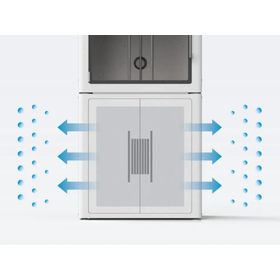
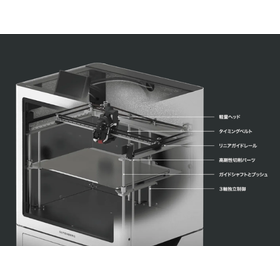
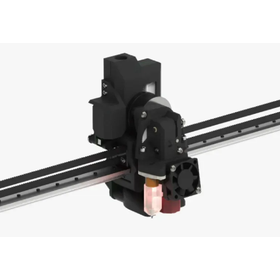
Large industrial 3D printer compatible with engineering plastics 'G-ZERO L1'

Equipped with a dehumidification unit to protect the filament from moisture that causes quality deterioration!

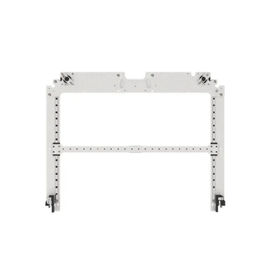
The "G-ZERO L1" is a large industrial 3D printer that transforms the workplace with high speed, high precision, and high strength. By dramatically enhancing the rigidity and precision of each part, it achieves industry-leading high-speed and high-precision modeling, even with large models. The build area has been expanded to twice that of the standard model. This not only allows for large-scale modeling but also increases the number of parts that can be produced at once, broadening its applications in production environments. 【Features】 ■ Industry-leading speed and precision that remain unchanged even for large models ■ Expanded build area leads to broader application scenarios ■ Stable output of PA and PPS-based POTICON FILAMENT ■ Equipped with a dehumidification unit to prevent material degradation ■ Designed and manufactured in Japan *For more details, please refer to the related links or feel free to contact us.

Added to bookmarks

Bookmarks list

Bookmark has been removed

Bookmarks list

You can't add any more bookmarks

By registering as a member, you can increase the number of bookmarks you can save and organize them with labels.

Free membership registration

The secret of "interlayer strength" achieved with a small 3D printer.

Can PEEK and PPS be shaped to this extent!? The secret of "high interlayer strength" achieved with a compact 3D printer.

In this video, we will introduce the technology for 3D printing high-temperature engineering plastics such as PEEK and PPS with exceptional precision, along with examples of their print quality. Generally, materials reinforced with CF (carbon fiber) or GF (glass fiber) are high-strength and high-rigidity but have lower sliding properties, raising concerns about friction and wear. However, the "POTICON filament" we are discussing achieves high sliding properties, providing significant advantages in applications involving friction loads, such as gears, sliding components, and tool mechanisms. Additionally, the video will provide a detailed explanation of how the design incorporates the contact surface with the build plate. Understanding the characteristic of the printed surface transferring the texture of the build plate, we will discuss which side should be the bottom surface and the design philosophy to balance appearance and functionality. You will also see the reasons why complex shapes like tool heads can be printed with fine details, along with tips for enhancing surface quality.

Added to bookmarks

Bookmarks list

Bookmark has been removed

Bookmarks list

You can't add any more bookmarks

By registering as a member, you can increase the number of bookmarks you can save and organize them with labels.

Free membership registration

[Research Material] Global Market for 3D Printing Equipment

Global Market for 3D Printing Equipment: Metals, Polymers, Ceramics, Others, Aerospace & Defense, Automotive Industry, Medical & Dental, Others

This research report (Global 3D Printing Equipment Market) investigates and analyzes the current state and outlook for the global market of 3D printing equipment over the next five years. It includes information on the overview of the global 3D printing equipment market, trends of major companies (sales, selling prices, market share), market size by segment, market size by major regions, and distribution channel analysis. The segments by type in the 3D printing equipment market include metal, polymer, ceramic, and others, while the segments by application cover aerospace & defense, automotive industry, medical & dental, and others. The regional segments are categorized into North America, the United States, Europe, Asia-Pacific, Japan, China, India, South Korea, Southeast Asia, South America, the Middle East, and Africa to calculate the market size of 3D printing equipment. It also includes the market share of major companies in the 3D printing equipment sector, product and business overviews, and sales performance.

Added to bookmarks

Bookmarks list

Bookmark has been removed

Bookmarks list

You can't add any more bookmarks

By registering as a member, you can increase the number of bookmarks you can save and organize them with labels.

Free membership registration

Kinki High Energy Processing Technology Research Institute, General Incorporated Foundation

I support you! Your craftsmanship!

We provide technical support with a rich menu of services, including "research and development projects" related to advanced processing technologies such as metal 3D printing, laser processing, and surface improvement; "manufacturing consultation projects" focused on problem-solving and information research and provision regarding technology and product development; "technology development and prototype support projects" primarily for the development, improvement, and prototyping of new technologies and products; and "human resource development projects" related to technology development. We also conduct research and prototyping related to laser processing technology, material testing using tensile and compression testing machines, corrosion resistance testing using salt spray testing machines, and equipment utilization for material analysis and commissioned testing.

Added to bookmarks

Bookmarks list

Bookmark has been removed

Bookmarks list

You can't add any more bookmarks

By registering as a member, you can increase the number of bookmarks you can save and organize them with labels.

Free membership registration