Digital Refractometer RX-5000α-Plus
The Brix scale displays up to three decimal places.
Brix accuracy ±0.01, refractive index accuracy ±0.00002
- Company:アタゴ
- Price:Other
Last Updated: Aggregation Period:Sep 02, 2026~Sep 29, 2026
This ranking is based on the number of page views on our site.
Last Updated: Aggregation Period:Sep 02, 2026~Sep 29, 2026
This ranking is based on the number of page views on our site.
Last Updated: Aggregation Period:Sep 02, 2026~Sep 29, 2026
This ranking is based on the number of page views on our site.
61~90 item / All 105 items
The Brix scale displays up to three decimal places.
Brix accuracy ±0.01, refractive index accuracy ±0.00002

Built-in temperature control function (thermo module)
Layout incorporating ergonomics

Flat stage model of RX-5000α
The sample has a shape that is easy to extract, making it ideal for beverage measurement.

Built-in temperature control function (thermo module)
Expanded refractive index range and measurement temperature range of RX-5000α.

Equipped with a thermoelectric module (constant temperature function)
Measure the concentration of a very dilute aqueous solution of 5% or less with world-class high precision (±0.005%).

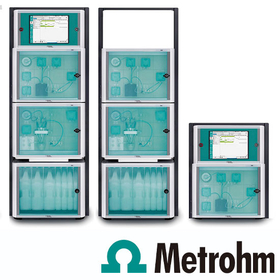
Automatic titration device compatible with both Karl Fischer method and potentiometric titration method.
The Excellence T Series T9 automatic titration device from Metrohm can improve its efficiency by adding a burette, dispensing pump, and automatic sampling module auto-sampler.
![[Video Introduction] How to Install a Lamp-Type Conductivity Meter](https://image.mono.ipros.com/public/product/image/71f/2000358696/IPROS8750296105923612851.jpg?w=280&h=280)
A clear explanation of how to install a lamp-type conductivity meter in a video!
In this video, we provide a clear explanation of how to install the lamp-type water quality meter for the "cartridge pure water purifier." The water quality meter is an instrument used to determine the purity of pure water and the deterioration of ion exchange resin. Please monitor it continuously and use it correctly to ensure stable pure water quality. 【Explanation Content】 ■STEP.1 Confirming Contents ■STEP.2 Installing the Lamp-Type Water Quality Meter ■STEP.3 Connecting the Power Adapter *For more details, please refer to the PDF document or feel free to contact us.

It is a compact automatic titration device equipped with high precision and reliability.
In addition to potentiometric titration, it supports measurements of pH, mV, ORP, and ISE (Ion Selective Electrode). It is recommended not only for those conducting manual titrations but also for those considering a replacement. It is useful for managing salt content in food, acidity in drinking water, salt and acid content in seasonings, concentration management of plating solutions, and other neutralization titrations! - Higher precision and accuracy compared to manual titration - Adding a second burette further enhances analysis efficiency. - Data management is convenient. The main unit can store 100 data points and can easily import data via USB.
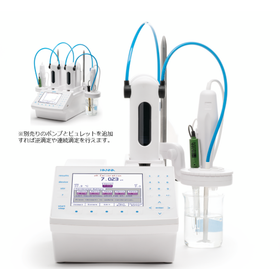
In addition to potentiometric titration, it also supports measurements of pH, mV, ORP, and ISE (Ion Selective Electrode)!
The "HI 932" is an automatic potentiometric titrator that allows for 2-channel measurement and can connect to an auto-sampler. Thanks to Hanna's unique burette system (clip lock), the exchange of titrant and reagent can be done in just a few seconds. In addition to the standard 25mL burette, 5mL, 10mL, and 50mL burettes can also be attached. The 5.7-inch backlit color display with good visibility makes the titration curve even easier to read. 【Features】 ■ Higher precision and accuracy compared to manual titration ■ Capable of reverse titration and continuous titration ■ Adding a second burette and pump further enhances analysis efficiency ■ Convenient data management, with the ability to store 100 data points in the main unit and easily import via USB *For more details, please refer to the related links or feel free to contact us.

This is an electrode for sensors used in a pinhole inspection device that inspects pinholes and seal defects in films and coating membranes.
The "electrode for pinhole inspection devices" is a sensor electrode used in pinhole inspection devices that check for pinholes and seal defects in films and coating films. It is used for inspecting retort packs, plastic infusion bottles, beverage cans, and more. It utilizes fine wires, allowing for the detection of even the smallest holes. Made from high-strength amorphous metal fibers, it boasts exceptional durability. Customization is available to match the fiber diameter, density, shape, and other characteristics of the target object. ● For more details, please contact us.

1台で2種類の滴定を同時測定できる高機能な滴定装置!イオン電極による測定と滴定の組み合わせも可能
試薬ビンの上に電動ビュレットを直接セットして、ピストンを上部から下部へ押し下げて分注するトップダウンドージングを実現した新方式電動ビュレットドジーノ搭載型の電位差滴定装置です。 《特色》 ● 従来の滴定装置に比べて半分のスペースで設置が可能 ● 905タイトランド(電極インプット×2のタイプ)では1台で2種類の電位差滴定(例:DETモードとMETモードの同時滴定)だけでなく、電位差滴定とイオン選択性電極の同時測定も可能 メトロームの装置は全て《3年保証》 アクセサリは製造終了後《10年間供給保証》 しているため、安心してお使いいただけます。


pH stat and enzyme titration specialized potentiometric automatic titration device
This is the Tightland 902, a potentiometric titration device specifically for enzyme titration and pH stat. It is also possible to simultaneously measure two types of titrations, such as pH stat titration, enzyme titration, and SET titration (endpoint setting titration) with an optional feature.


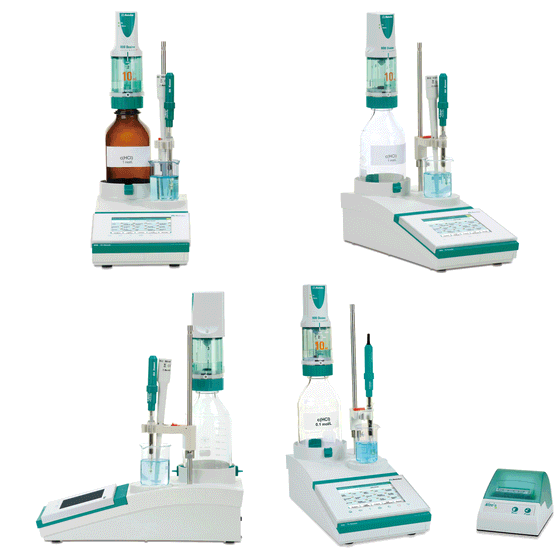
Automatic titration device: A compact titration device with everything integrated! Start titration immediately with the push of a button!
The Metronome patented electric burette, Dojino, with a propeller stirrer and a touch screen operation and display, is all integrated. There are series for salt "916 Salt," oil "916 Oil," and food components "916 Food," and accessories tailored to applications are included from the start, allowing for immediate analysis after purchase. - All Metronome automatic titration devices come with a "3-year warranty." - Accessories have a "10-year supply guarantee" after production ends. - Fully compliant with FDA 21CFR Part 11. Please consult us for IQ/OQ and validation. - Data integrity measures (DI measures) are also in place, ensuring you can use it with confidence.


Easy measurement of surfactants using a dedicated electrode with an automatic titration device!
Surfactants (anionic, cationic, nonionic) can be easily measured using a dedicated electrode with an automatic titration device. Complicated and time-consuming pretreatment is not necessary. The concentration of various surfactants can be accurately measured in a short time using the same process as conventional titration methods. By changing the electrode, general potentiometric titrations (such as neutralization titrations or precipitation titrations) can also be performed, of course. It is also convenient for measuring cleaning solutions and wastewater in manufacturing sites.


Easy one-handed operation during manual titration and precise dispensing. Complies with global standards for IQ/OQ and burette capacity testing, among other validations.
● This is a high-precision electric burette that is convenient for manual titration using indicator reagents and for dispensing reagents visually. ● It allows for easy automatic solution preparation of reagents in mol/L, g/L, and % units. ● It is a high-performance model equipped with pipetting, dilution, and standard reagent preparation functions. ● You can receive reliable support such as validation and maintenance contract services.


![Quantitative Analysis of Surfactants Using Automatic Titration Device [Basic Principles Edition Technical Document]](https://image.mono.ipros.com/public/product/image/8c3/2000207863/IPROS41789250276430871536.jpeg?w=280&h=280)
The quantification of surfactants can be easily performed using a potentiometric automatic titration device.
Various surfactants such as anions, cations, and non-ions (non-ionic) can be easily and quickly measured by titration. There are significant advantages to using the surfactant measurement electrode with Metrohm's potentiometric automatic titration system, such as the ability to measure anionic surfactants without using chloroform.


A beginner's booklet that gently explains ions, pH, and dissociation constants 《Free download available now》
This is a guide for beginners who are handling analytical instruments such as titration devices, pH meters, and ion chromatographs for the first time. It can also be used as a training text, so supervisors who provide guidance are welcome to use it as well.
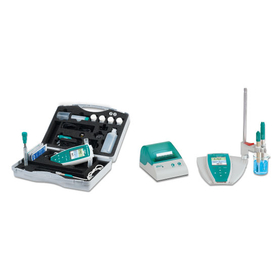
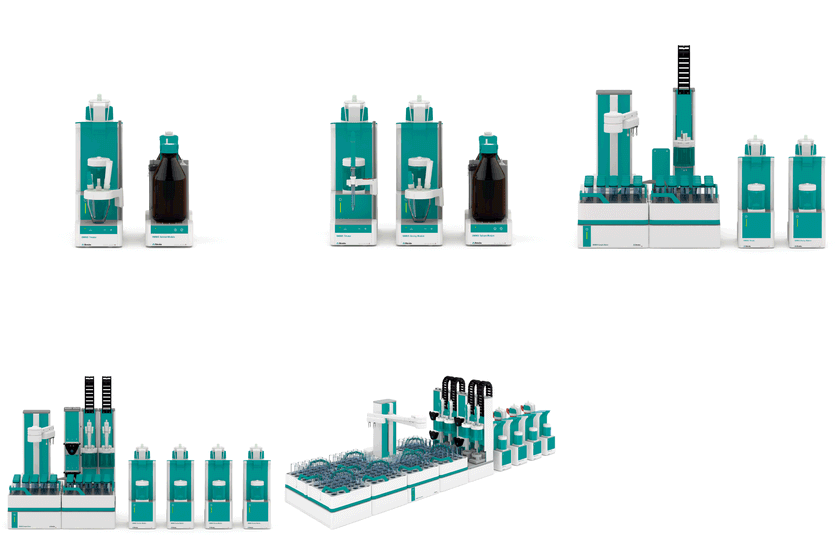
The automatic titration device OMNIS has a burette resolution of 1 in 100,000, can continuously measure 175 samples, analyze up to 5 different types of samples simultaneously, and is also capable of different titrations and moisture measurements.
With OMNIS, you have a system that offers speed and processing capability that were impossible with conventional titration devices, while being very easy to operate. It is an innovative automatic potentiometric titrator like no other. Not only can it perform potentiometric titration, but OMNIS can also automatically conduct measurements using indicators like "photometric titration" and temperature titrations where conventional potentiometric electrodes cannot be used, such as in the titration of hydrofluoric acid. - All Metrohm automatic titration devices come with a "3-year warranty." - Accessories are guaranteed to be supplied for "10 years after production ends," so you can use them with peace of mind.


Recommended for users of automatic titration devices struggling with non-aqueous titration! A beginner's booklet summarizing tips and applications for titration using organic solvents.
Table of Contents 1. When to perform non-aqueous titration? 2. Solvents used in non-aqueous titration 3. Applications 3-1. Measurement of the factor of perchloric acid c(HClO4) = 0.1 mol/L in glacial acetic acid 3-2. Measurement of the factor of c(KOH) = 0.1 mol/L in alcoholic solvents 3-3. Titration of nitric acid (mixed acid of HNO3/H2SO4) 3-4. Measurement of acid value of petrochemical products using KOH alcoholic solution 3-5. Measurement of hydrochloric acid ephedrine concentration according to European Pharmacopoeia 3-6. Measurement of hydrochloric acid ephedrine concentration according to USP24/25


Automating quality control of the chloride ion concentration in the acidic copper plating bath used for Cu deposition on semiconductor wafers using a potentiometric automatic titration system.
Acid copper plating baths are mainly used for Cu film formation on semiconductor wafers. When a small amount of chloride is present, the film formation rate increases, and anode polarization is suppressed. However, if the concentration becomes too high, the quality of Cu film formation deteriorates, which is undesirable. Therefore, monitoring the concentration of chloride ions is extremely important for efficiently achieving high-quality Cu film formation. Plating bath, electroplating bath.


Automation of measuring water hardness, metal salts in electroplating solutions, and metal concentrations in minerals using a potentiometric automatic titration device.
This explains the chelate titration of metal ions and potentiometric titration. A copper ion-selective electrode is used to detect the endpoint of the titration. Since the electrode does not respond directly to the chelating agent, a corresponding copper complex is added to the solution. By using this electrode, it is possible to quantify water hardness and analyze the metal concentration in electroplating solutions, metal salts, minerals, and ores.


![Quality Control Analysis in Battery Manufacturing [Technical Document]](https://image.mono.ipros.com/public/product/image/d21/2001053040/IPROS56715995242134281404.jpeg?w=280&h=280)
Technical document explaining battery quality control analysis using automatic titration devices, Karl Fischer moisture meters, and ion chromatography.
Lithium-ion batteries (LIBs) are currently the most common rechargeable option available. The manufacturing of LIBs must adhere to strict quality standards. Moisture content, residual alkali levels, or ionic impurities can adversely affect the safety and capacity performance of LIBs. On the other hand, the composition of cathode materials or battery electrolytes can influence the manufacturing cost and performance quality of the product. This white paper provides a detailed explanation of how to monitor various battery quality parameters using titration and ion chromatography.

The constant current intermittent titration method (GITT) can measure thermodynamic parameters and dynamic parameters such as diffusion coefficients using electrochemical measurement devices.
Lithium-ion (Li-ion) batteries are one of the most researched energy storage devices due to their relatively high energy levels and excellent power performance. During charging, lithium ions are moved from the positive electrode to the negative electrode through the electrolyte. During discharging, lithium ions move in the opposite direction, from the negative electrode to the positive electrode. At the electrode surface, the diffusion of Li-ions into the bulk occurs. Here, the performance of Li-ion batteries largely depends on the diffusion coefficient of the active materials present in the electrodes. Therefore, knowing the chemical diffusion coefficient of the electrode materials is very important. Additionally, understanding the thermodynamic properties of the electrode materials provides a more detailed insight into their electrochemical behavior.
![Quantitative Analysis of Palladium Plating Bath Using Ion Surfactant Electrodes [Technical Document]](https://image.mono.ipros.com/public/product/image/2001548183/IPROS8554920279841239305.png?w=280&h=280)
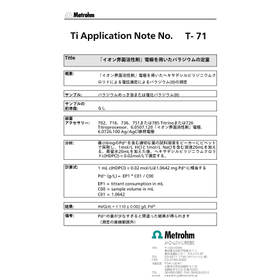
Palladium plating baths or the measurement of palladium(II) chloride can be easily performed using a potentiometric automatic titration device.
We are measuring palladium(II) using potentiometric titration with hexadecylpyridinium chloride and an "ion surfactant" electrode.
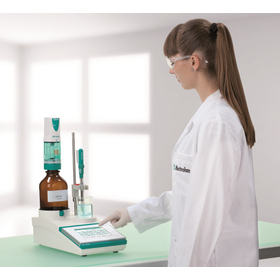
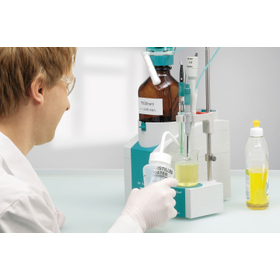
![Measurement of Iron and Nickel Binary Mixture Using Automatic Titration Device [Technical Document]](https://image.mono.ipros.com/public/product/image/2009052/IPROS15897970268218444743.png?w=280&h=280)
Measurement of a solution containing iron (Fe3+) and nickel (Ni2+) or dissolved alloys using an automatic titration device.
This application uses Cu ISE to measure iron and nickel in a two-component mixture through potentiometric titration with EDTA at various pH values.
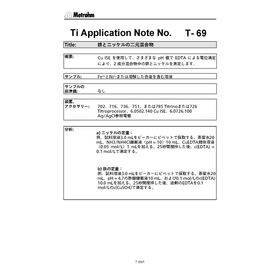
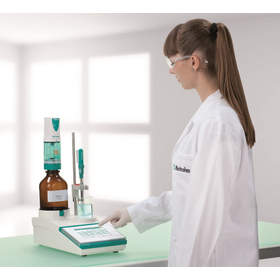
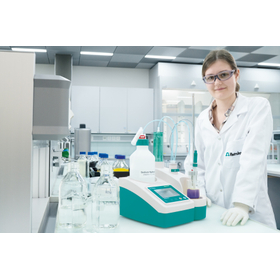
![Measurement of Anodizing Bath Using Automatic Titration Device [Technical Document]](https://image.mono.ipros.com/public/product/image/2009052/IPROS14789015836537693891.png?w=280&h=280)
Introduction of testing sulfuric acid and chromic acid anodizing baths using an automatic titration device.
This technical document explains the potentiometric titration method for inspecting sulfuric acid and chromic acid anodizing baths. In addition to the main components, aluminum, sulfuric acid, and chromic acid, it also measures chlorides, oxalic acid, and sulfates.
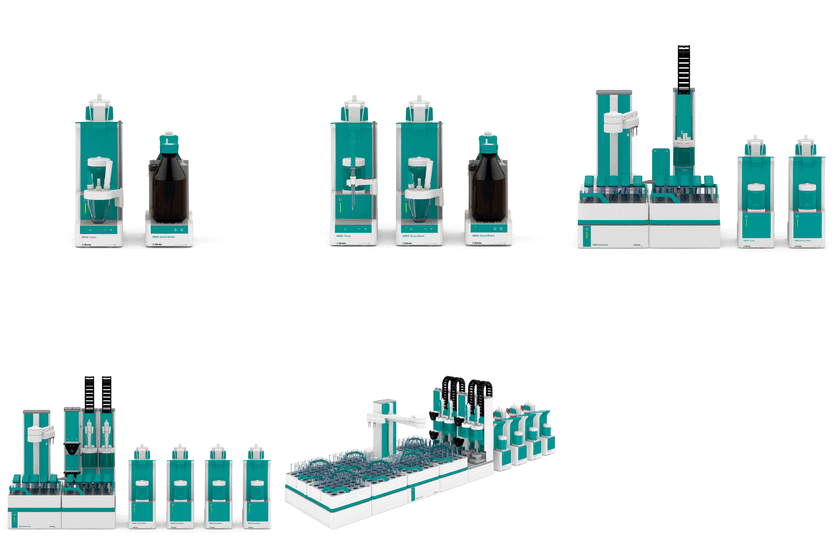
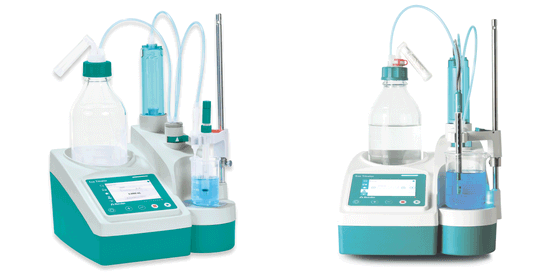
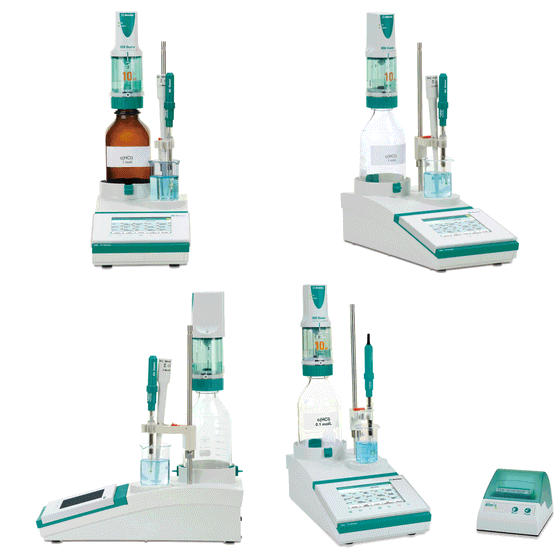
![Photometric Titration of Copper in Aqueous Solution Using an Automatic Titration Device [Technical Document]](https://image.mono.ipros.com/public/product/image/2009052/IPROS5235784859864199095.jpg?w=280&h=280)
Quantification of copper in an aqueous solution by photometric titration.
This technical document measures copper using a photometric titration with EDTA at a wavelength of 520 nm with an automatic titration device.
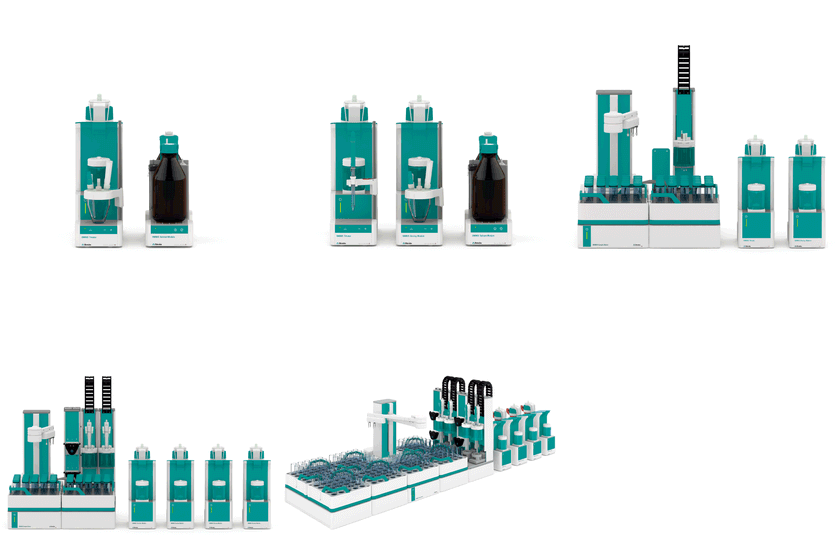
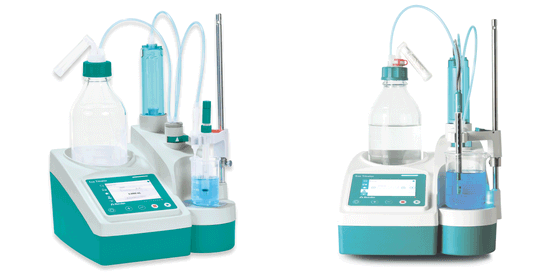
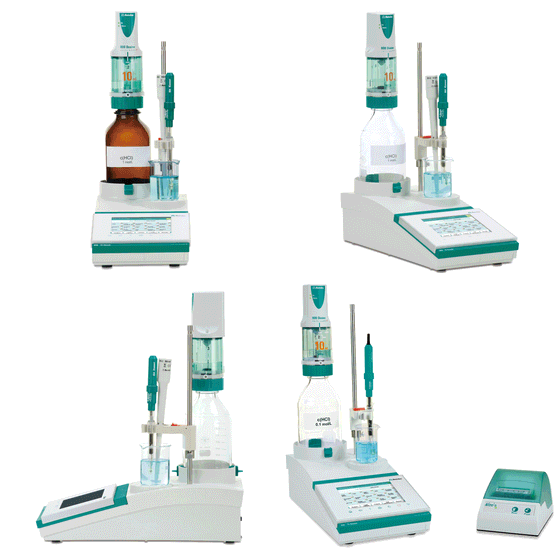
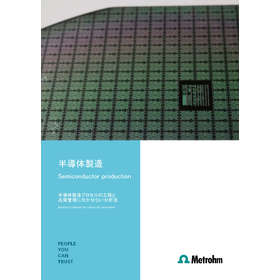
Analytical methods essential for the processes and quality control in semiconductor manufacturing.
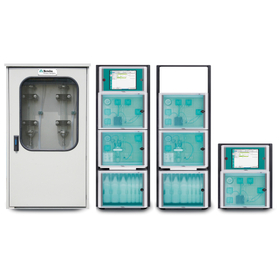
A list of comprehensive measurement examples using process analyzers.