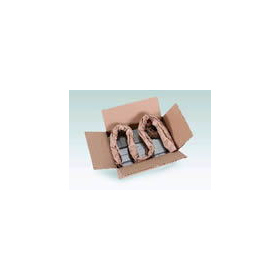
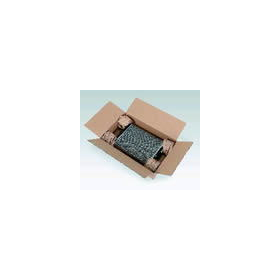
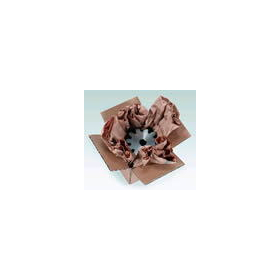
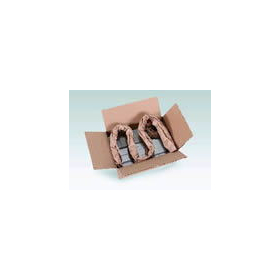
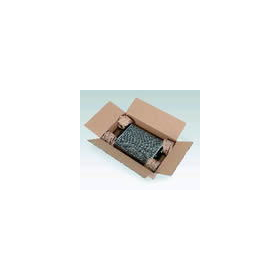
Using materials that are cheaper compared to conventional bioplastics and can reduce CO2 emissions during combustion by approximately 25% compared to plastic (PP).
Four Strengths
- Functionality equivalent to petroleum-based plastics
- A first step towards reducing plastic usage
- CO2 emission reduction effect
- Low cost
[Functionality equivalent to petroleum-based plastics]
It has moldability, convenience, strength, and quality comparable to petroleum-derived plastics, offering similar functionality.
[A first step towards reducing plastic usage]
With a biomass content of 25%, it reduces the use of finite petroleum-derived plastics by 25%, serving as a first step towards environmental measures and reducing plastic usage.
[CO2 emission reduction effect]
In Japan, waste disposal is primarily through incineration, including plastics. Incineration results in CO2 emissions, which are a significant environmental issue. This cushioning material reduces CO2 emissions during combustion by approximately 25% compared to plastic (PP), as verified by CERI (Chemical Evaluation and Research Institute). The reduction effect is recognized, rather than just theoretical carbon neutrality.
[Low cost]
In terms of cost, it is about 1.5 times that of plastic (PP), making it cheaper than bioplastics.