We have compiled a list of manufacturers, distributors, product information, reference prices, and rankings for Electrostatic Painting.
ipros is IPROS GMS ・ IPROS One of the largest technical database sites in Japan that collects information on.

Electrostatic Painting Product List and Ranking from 10 Manufacturers, Suppliers and Companies | IPROS GMS

Last Updated: Aggregation Period:Aug 26, 2026~Sep 22, 2026
This ranking is based on the number of page views on our site.

Electrostatic Painting Manufacturer, Suppliers and Company Rankings

Last Updated: Aggregation Period:Aug 26, 2026~Sep 22, 2026
This ranking is based on the number of page views on our site.

  1. 永和工芸 Osaka//Ferrous/Non-ferrous metals
  2. 双三光学塗装 Tokyo//Manufacturing and processing contract
  3. 日本耐酸壜工業 本社・本社工場 Gifu//Glass and clay products
  4. 4 旭製作所 Saitama//Manufacturing and processing contract
  5. 5 コートせいでん Toyama//Manufacturing and processing contract

Electrostatic Painting Product ranking

Last Updated: Aggregation Period:Aug 26, 2026~Sep 22, 2026
This ranking is based on the number of page views on our site.

  1. What causes bubbles in the coating? Drying management to prevent defects. 永和工芸
  2. 塗装が白く粉を吹く原因とは?チョーキング対策 永和工芸
  3. 白い塗装が黄ばむ原因とは?焼き過ぎと炉管理 永和工芸
  4. 4 How to prevent pinhole defects? Improvement methods to reduce occurrence. 永和工芸
  5. 4 塗装の膨れを防ぐには?ブリスター対策の基本 永和工芸

Electrostatic Painting Product List

31~60 item / All 65 items

Displayed results

Warning of "thermal expansion difference" in dissimilar metal pinholes.

Dissimilar metals cause pinhole formation due to differences in expansion. The adoption of low-temperature curing paint is a countermeasure.

In products that combine different metals, pinholes may occur due to differences in thermal expansion. During curing, the amount of expansion varies by material, leading to stress within the coating. Particularly in combinations with a large difference in expansion coefficients, such as aluminum and iron, there can be cases of fine coating failure. Effective countermeasures include using low-temperature curing paints and designing highly flexible coatings. It is also important to consider these factors from the structural design stage. Detailed examples of improvements are also provided in publicly available materials.

  • others
  • Electrostatic Painting

Added to bookmarks

Bookmarks list

Bookmark has been removed

Bookmarks list

You can't add any more bookmarks

By registering as a member, you can increase the number of bookmarks you can save and organize them with labels.

Free membership registration

Three conditions for preventing poor curing that causes stickiness in paint.

Stickiness is not a minor discomfort; it is a serious quality defect caused by insufficient curing or excessive film thickness.

■Cause of Occurrence: Poor curing that leaves stickiness on the surface is a defect that is difficult to judge visually. If a few pieces are mixed in one lot, it can lead to rubbing during assembly, sticking of packaging materials, scratches during transportation, and re-inspection. The three conditions to check are curing temperature, curing time, and film thickness. Even if the set temperature is reached, if the parts do not rise to the required temperature, they will not cure. ■Truth: At the time of shipment, they may appear slightly soft, but they can quickly deteriorate in the subsequent processes. If the film thickness is too thick, heat will not penetrate to the inside, and if the drying oven is unstable, curing will vary. This cannot be prevented by intuition alone. ■Improvement Measures: Confirm curing conditions based on part temperature, record film thickness with measured values, and check the temperature differences at the entrance, center, and exit of the drying oven. By including these three points as management items, the risk of recurrence will decrease. Please utilize materials that allow you to confirm curing conditions, film thickness, and drying management.

  • others
  • Electrostatic Painting

Added to bookmarks

Bookmarks list

Bookmark has been removed

Bookmarks list

You can't add any more bookmarks

By registering as a member, you can increase the number of bookmarks you can save and organize them with labels.

Free membership registration

Key points for temperature and film thickness management to prevent color unevenness in stainless steel.

Color unevenness that appears different despite being the same paint. It is caused by variations in temperature distribution and film thickness.

Even though the same paint is used, the colors appear different. Color unevenness is not always caused by the paint itself. ────────────── ■ Causes Color unevenness occurs due to variations in baking temperature and uneven film thickness, which lead to differences in color development. Stainless steel is a material that tends to show color unevenness because the reflection of light changes depending on the direction of the hairline finish. ■ The Truth When there are temperature differences inside the baking oven, even within the same lot, the curing state can vary by area, resulting in changes in color development. Variations in film thickness also affect how the color appears. ■ Improvement Measures Regularly measure and manage the temperature distribution inside the baking oven. Standardize spray conditions to maintain uniform film thickness. Please utilize materials that explain the methods for managing temperature and film thickness.

  • others
  • Electrostatic Painting

Added to bookmarks

Bookmarks list

Bookmark has been removed

Bookmarks list

You can't add any more bookmarks

By registering as a member, you can increase the number of bookmarks you can save and organize them with labels.

Free membership registration

What are the causes of color mismatch? Three basics of color difference management in painting.

The color does not match the previous lot and adjacent parts. The cause is the film thickness and baking temperature. I will explain a method to manage this with numerical values instead of visual inspection.

Even though they have the same color number, they look different when placed next to the previous lot. It is not the paint, but the film thickness and curing conditions that affect the color. If the film thickness changes by 10 microns, the color difference becomes noticeable to the naked eye. ────────────── ■Cause of Occurrence Colors with low hiding power will show a change in brightness when the film thickness is thin, as the substrate becomes visible. The higher the curing temperature, the more the resin yellowes, and the difference is more pronounced in white shades. ■Truth Color matching done only by visual inspection creates variability among evaluators. When the type of lighting changes, the same painted panel can appear to have a different color. ■Improvement Measures Measure with a color difference meter and set the acceptance criteria numerically. Keep the film thickness within specified ranges and fix the curing temperature and time for each color. Please utilize the materials that summarize color management and film thickness standards.

  • others
  • Electrostatic Painting

Added to bookmarks

Bookmarks list

Bookmark has been removed

Bookmarks list

You can't add any more bookmarks

By registering as a member, you can increase the number of bookmarks you can save and organize them with labels.

Free membership registration

What causes paint film to crack? Three conditions to prevent cracking.

The paint film cracks due to bending and temperature changes. Thickening and over-baking take away flexibility. It can be prevented by optimizing film thickness and baking conditions.

Bending during assembly and temperature changes in winter cause fine cracks in the paint film. This is not an issue of the paint's flexibility, but rather a problem with the application method and curing process. When the film thickness exceeds 60 microns, the crack occurrence rate skyrockets. ────────────── ■ Causes of Occurrence Thick paint films cannot keep up with the expansion and contraction of the material, leading to cracking due to internal stress. If the curing is excessive, the resin's cross-linking progresses too far, making it hard and brittle. ■ The Truth The thick coating intended to prevent defects is causing further defects. There are many cases where increasing the film thickness for rust prevention results in a high incidence of cracks. ■ Improvement Measures Design the film thickness to be 30-50 microns according to the material and application. Keep the curing temperature and time within the paint specifications, and manage the temperature difference in the oven to within 10 degrees. Please utilize the materials that summarize the management standards for film thickness design and curing conditions.

  • others
  • Electrostatic Painting

Added to bookmarks

Bookmarks list

Bookmark has been removed

Bookmarks list

You can't add any more bookmarks

By registering as a member, you can increase the number of bookmarks you can save and organize them with labels.

Free membership registration

What causes the coating to be scratched by nails? Insufficient hardness and burn-in.

The paint film is scratched by nails after delivery. The cause lies not in the performance of the paint, but in the curing temperature and time.

It was reported that there were nail marks at the delivery destination. It may not be due to the hardness of the paint, but rather a possibility of insufficient curing. ────────────── ■ Cause of Occurrence Insufficient hardness indicates that the cross-linking reaction of the resin has not been completed. Curing time is counted from when the part itself reaches the specified temperature, not from when the set temperature is reached. ■ Truth Even if the furnace is set to 180 degrees for 20 minutes, thick parts take 10 minutes to reach the required temperature. The actual curing time is only 10 minutes, resulting in insufficient hardening. ■ Improvement Measures Attach a thermocouple to the product and manage the holding time after the required temperature is reached. Separate batches for products with significant thickness differences. Please utilize the documentation for temperature management and curing time settings.

  • others
  • Electrostatic Painting

Added to bookmarks

Bookmarks list

Bookmark has been removed

Bookmarks list

You can't add any more bookmarks

By registering as a member, you can increase the number of bookmarks you can save and organize them with labels.

Free membership registration

What causes the smell of paint to linger? Management of residual solvents.

Although it feels dry to the touch, the solvent smell doesn't go away. I will explain the management points to detect internal moisture that hasn't dried.

The surface is dry, but the smell of thinner remains. The inside of the paint film is still not dry. ────────────── ■ Cause of Occurrence Residual solvent occurs when only the surface dries first, forming a film while the solvent inside is trapped. The thicker the film and the higher the initial drying temperature, the more likely this occurs. ■ Truth A paint film that retains odor lacks hardness and adhesion. Rapidly increasing the temperature without allowing for a set time leads to surface hardening occurring first. ■ Improvement Measures After painting, ensure a set time of 5 to 10 minutes at room temperature. Drying should be done by gradually increasing the temperature from a low temperature, and keep the thickness of a single layer below 30 microns. Please utilize the management materials for set time and temperature increase conditions.

  • others
  • Electrostatic Painting

Added to bookmarks

Bookmarks list

Bookmark has been removed

Bookmarks list

You can't add any more bookmarks

By registering as a member, you can increase the number of bookmarks you can save and organize them with labels.

Free membership registration

What is the cause of the thin area around the hole? Static electricity and film thickness distribution.

The film thickness gauge is acceptable, but the coating is thin only around the hanging hole. I will explain the relationship between the escape path of static electricity and posture.

The film thickness inspection passes, but the area around the hanging hole is discolored. Changing the measurement location results in different numbers. ────────────── ■Cause of Occurrence In electrostatic painting, the charge concentrates at the hanging points where electricity flows most easily. The surrounding electric field becomes disturbed, making it difficult for the paint to adhere. ■Truth The area around the hanging hole may have only about half the film thickness of the flat surface. Since the film thickness gauge measures the center of the flat surface, this deficiency passes the inspection. Rust begins in the thin areas and leads to complaints a few months later. ■Improvement Measures Move the hanging position away from the visible surface and, if possible, shift it towards the waste hole side. Change the posture to apply the paint in two separate applications or partially add more paint. Please utilize the materials on hanging methods and film thickness distribution.

  • others
  • Electrostatic Painting

Added to bookmarks

Bookmarks list

Bookmark has been removed

Bookmarks list

You can't add any more bookmarks

By registering as a member, you can increase the number of bookmarks you can save and organize them with labels.

Free membership registration

What causes the visible seams of overlapping paint? Management of paint transitions.

A line appears in the center of the large object. The occurrence of boundaries is suppressed by the overlap width of the gun and the time for applying the paint.

In the center of the large surface, a faint line can be seen. Even though the color is the same, why does a boundary appear? ────────────── ■Cause of Occurrence Surfaces that cannot be painted in one go are painted in multiple layers. If you overlap after the previously painted side starts to dry, there will be a difference in film thickness and gloss. ■Truth The allowable time for overlapping paint is short, ranging from several seconds to a few minutes, and varies by season. When the overlap width of the spray gun falls below half, the film thickness at the boundary becomes thinner. The line is only visible from an angle, so it can be overlooked during a frontal inspection. ■Improvement Measures Ensure that the overlap width of the spray gun is 50 percent and maintain a constant operating speed. Decide the overlapping position in advance and paint continuously in the same direction. Please utilize the materials on the painting procedure for large items.

  • others
  • Electrostatic Painting

Added to bookmarks

Bookmarks list

Bookmark has been removed

Bookmarks list

You can't add any more bookmarks

By registering as a member, you can increase the number of bookmarks you can save and organize them with labels.

Free membership registration

What is the cause of increased defects when production is increased? Compression of drying time.

As the numbers increase, the defect rate skyrockets. We will identify which processes are prone to cuts using data.

The months when production numbers increase are the only times the defect rate skyrockets. It's not that skills have declined; rather, time is being cut. ────────────── ■Cause of Occurrence The first thing to be reduced in increased production is the waiting time for drying and setup. Since waiting time is not visible in the work process, its reduction goes unnoticed. ■The Truth If you cut 5 minutes from the drying after degreasing, moisture remains, leading to adhesion failures. If you compress the retention time in the curing furnace, it results in insufficient hardening, causing stickiness and softening. Defects appear in processes several days later, so the relationship with increased production is not apparent. ■Improvement Measures Clearly state drying and setup as work time in the process chart. Set a daily input limit based on the furnace's capacity, and if exceeded, outsource the excess. Please utilize the process management materials during increased production.

  • others
  • Electrostatic Painting

Added to bookmarks

Bookmarks list

Bookmark has been removed

Bookmarks list

You can't add any more bookmarks

By registering as a member, you can increase the number of bookmarks you can save and organize them with labels.

Free membership registration

What are the causes of defects when newcomers paint? Three key points of education.

Even though it's the same procedure manual, only the newcomers are producing defects. I will articulate the three key points that are not written in the manual.

Even though the same procedure manual is provided, only the newcomers are producing defects. What is lacking is not experience, but the ability to articulate. ────────────── ■Cause of Occurrence The procedure manual contains numerical values, but the rationale for the judgments is not included. Without knowing why those values are set, one cannot respond when conditions change. ■Truth The most common defects among newcomers are related to gun distance, operating speed, and overlap width. A difference of just 5 centimeters in gun distance can change the film thickness by 20%. Experienced individuals unconsciously make adjustments, so those teaching may not even realize this. ■Improvement Measures Clearly specify the gun distance, operating speed, and overlap width with numerical values, and have them confirmed with actual items. Keep defective products as teaching materials and show the causes and conditions together. Please utilize the management item checklist for newcomer training.

  • others
  • Electrostatic Painting

Added to bookmarks

Bookmarks list

Bookmark has been removed

Bookmarks list

You can't add any more bookmarks

By registering as a member, you can increase the number of bookmarks you can save and organize them with labels.

Free membership registration

What are the reasons for defects occurring during the first order with a new outsourcing partner? Aligning conditions.

The first lot produced after changing the outsourcing partner has defects. We will specifically organize the conditions that should be met during the transfer.

For the first time after changing the outsourcing partner, the color and luster are different. It's not a matter of skill; it's simply that the conditions have not been carried over. ────────────── ■ Cause of Occurrence Even with the same color number, the appearance changes if the paint manufacturer and film thickness differ. Differences in the material lot from the previous process or degreasing conditions also directly affect the appearance. ■ The Truth Most of the time, only the drawings and color numbers are passed on during the transfer. The film thickness, curing conditions, and color samples used by the previous factory are not carried over. Differences cannot be judged at the initial stage and are discovered only after entering mass production. ■ Improvement Measures We will provide four points: the actual color sample, film thickness range, curing conditions, and inspection standards. The initial run will be done in small quantities, and we will determine pass or fail through actual sample comparison before moving on to mass production. Please utilize the checklist for outsourcing transfers.

  • others
  • Electrostatic Painting

Added to bookmarks

Bookmarks list

Bookmark has been removed

Bookmarks list

You can't add any more bookmarks

By registering as a member, you can increase the number of bookmarks you can save and organize them with labels.

Free membership registration

What causes delays in delivery for specified colors? The situation regarding paint procurement.

I will specifically explain the reasons why specifying a particular color number extends the delivery time and how to determine colors that shorten the delivery time.

As soon as I specified the color number, I was told the delivery time would be two weeks. The delivery time varies significantly depending on the availability of stock. ────────────── ■Cause of Occurrence Paint is primarily produced to order for each color, and there is only a very small amount of stock available at all times. Specified colors take time from order to arrival. ■Truth Since the supply disruption in spring 2026, the arrival dates are unpredictable for certain brands. For small quantities of specified colors, minimum lot constraints lead to surplus stock. Additionally, the increase in color change setups makes it disadvantageous in terms of production capacity. ■Improvement Measures For areas that do not affect appearance, we will align with stock colors or standard colors. Before deciding on a color, we will confirm the procurement status of candidate colors with the painting company. Eiwa Kogei is responding with alternative proposals using stock colors and pre-confirming delivery times.

  • others
  • Electrostatic Painting

Added to bookmarks

Bookmarks list

Bookmark has been removed

Bookmarks list

You can't add any more bookmarks

By registering as a member, you can increase the number of bookmarks you can save and organize them with labels.

Free membership registration

What causes paint to drip and leave streaks? Management of viscosity and paint thickness.

The sagging is determined not by the performance of the paint, but by viscosity, spray distance, and the thickness of a single coat. This explains the key points for management to prevent recurrence in mass production.

Are there any drips left on the painted parts? Even if you sand and fix it, that area will have a different gloss and film thickness. ────────────── ■Cause of Occurrence Drips occur when too much paint is applied at once. This can also happen if the viscosity is too low, the spraying distance is too close, or the gun movement is too slow. ■Truth Around holes and on downward edges are places where paint tends to accumulate. When placed in the oven and the temperature rises, the paint softens and flows further. This is why drips can appear after curing, even if there were none immediately after painting. ■Improvement Measures Measure the viscosity with a viscosity cup each time and record the seconds. Keep the thickness of each coat thin and allow for a setting time before placing it in the oven. Eiwa Kogei supports everything from trial painting to mass production with three systems of equipment. Please download the materials summarizing the confirmation points of the process and make use of them.

  • others
  • Electrostatic Painting

Added to bookmarks

Bookmarks list

Bookmark has been removed

Bookmarks list

You can't add any more bookmarks

By registering as a member, you can increase the number of bookmarks you can save and organize them with labels.

Free membership registration

What causes paint to appear white and cloudy on rainy days? Humidity measures for autumn.

During the long rainy season in autumn, if you paint under the same conditions as on sunny days, the paint film will appear white and cloudy. The cause is humidity and the heat of solvent evaporation. This explains the transition points of the seasons.

Only the items painted on rainy days lack luster and appear whitish. Defects increase during the long rainy season in autumn. ────────────── ■Cause of Occurrence When the thinner in the paint evaporates, it draws heat from the painted surface, causing the temperature to drop. When humidity is high, moisture in the air condenses on the cooled painted surface and is absorbed into the paint film. This results in a white cloudy appearance known as "clouding." ■Truth The cause is that the same thinner and conditions are used as on sunny days. If parts enter the painting area while still cold, it becomes even more likely to occur. ■Improvement Measures It is generally advisable to refrain from painting when humidity is above 85 percent. Switch to a slower-evaporating thinner to prevent rapid cooling of the painted surface. Keep the temperature of the parts at least 3 degrees higher than the dew point, and record humidity and temperature daily. Eiwa Kogei offers baking paint, powder coating, and air-drying paint services. Please download the materials summarizing the key points for process verification and make use of them.

  • others
  • Electrostatic Painting

Added to bookmarks

Bookmarks list

Bookmark has been removed

Bookmarks list

You can't add any more bookmarks

By registering as a member, you can increase the number of bookmarks you can save and organize them with labels.

Free membership registration

What causes the paint film to blister a few days later? Management of wash water.

There was no problem at the time of shipment, but a few days later, the paint film swells like blisters. The cause is the salt remaining in the washing water from the pretreatment.

The shipping inspection passed, but a few days later, the paint film started to swell. If found in the customer's warehouse, it will become an issue for the entire lot. ────────────── ■Cause of Occurrence If the pre-treatment rinsing is insufficient, the salt from the chemicals remains on the surface of the material. When painted over, moisture that passes through the paint film is attracted to the salt. ■Truth Water gathers around the salt, pushing the paint film up from the inside. This results in blister-like swelling. Since it is not noticeable immediately after painting, it cannot be detected during the shipping inspection. ■Improvement Measures Since the final rinsing water is prone to contamination, we will measure and manage its conductivity daily. We will set numerical standards for water replacement and keep records. After rinsing, we will immediately drain and dry to ensure no moisture remains on the surface of the material. Eiwa Kogei handles everything from zinc phosphate chemical coating to baked painting. Please download and utilize the materials summarizing the confirmation points of the process.

  • others
  • Electrostatic Painting

Added to bookmarks

Bookmarks list

Bookmark has been removed

Bookmarks list

You can't add any more bookmarks

By registering as a member, you can increase the number of bookmarks you can save and organize them with labels.

Free membership registration

Electrostatic coating service

Apply high voltage to the sprayed paint to charge it, and it strongly adheres to the grounded object being painted!

Our company performs electrostatic painting. Electrostatic painting is a method that charges the sprayed paint with high voltage and strongly adheres it to the grounded object being painted. While our company specializes in small lot production, we are also equipped and organized for mass production. Please feel free to contact us regarding mass production work. 【Process】 ■1. Acceptance inspection and cleaning ■2. Surface preparation ■3. Primer painting and curing, intermediate painting and curing ■4. Topcoat painting and curing ■5. Inspection and shipping *For more details, please refer to the external link page or feel free to contact us.

  • Other contract services
  • Surface treatment contract service
  • Contract manufacturing
  • Electrostatic Painting

Added to bookmarks

Bookmarks list

Bookmark has been removed

Bookmarks list

You can't add any more bookmarks

By registering as a member, you can increase the number of bookmarks you can save and organize them with labels.

Free membership registration

Electrostatic coating service

Colors that match the design you envision!

Our company conducts electrostatic painting. The paint particles are charged negatively and are applied to the surface of positively charged objects through electrostatic force. We produce high-quality products that combine design, functionality, materials, strength, and color. 【Our Strengths】 ■ By setting up booths in addition to the line, we can accommodate small lot sizes. ■ We can respond to short delivery times. ■ We have obtained ISO certification and have established an environmental policy, continuously working on quality improvement. *For more details, please feel free to contact us.

  • Surface treatment contract service
  • Electrostatic Painting

Added to bookmarks

Bookmarks list

Bookmark has been removed

Bookmarks list

You can't add any more bookmarks

By registering as a member, you can increase the number of bookmarks you can save and organize them with labels.

Free membership registration

Powder coating and electrostatic painting

Excellent corrosion resistance, heat resistance, and weather resistance! We handle a variety of powder coatings!

At MC Systems Co., Ltd., we propose powder coating and electrostatic coating based on the usage environment and desired applications. With excellent color development and a smooth texture, we provide a thick and durable coating. Coating can be applied without regard to shape. If you are having trouble with powder coating or electrostatic coating, we are here to help. 【Features】 ■ Excellent color development and smooth texture: Suitable for parts with aesthetic requirements ■ Thick and durable coating: Used for parts that are handled during the work process to hide burrs ■ Excellent corrosion resistance, heat resistance, and weather resistance: Suitable for parts used under harsh conditions ■ Coating possible regardless of shape: Can be applied to partial coatings and complex shapes ■ We handle various types of powder coatings *For more details, please refer to the PDF document or feel free to contact us.

  • Other consumables
  • Electrostatic Painting

Added to bookmarks

Bookmarks list

Bookmark has been removed

Bookmarks list

You can't add any more bookmarks

By registering as a member, you can increase the number of bookmarks you can save and organize them with labels.

Free membership registration

Powder Coating Service

It can be used for various purposes such as for beautification and protection!

Our company conducts powder electrostatic painting, which efficiently charges powder coatings with static electricity, allowing the paint to adhere to and coat the workpiece. After that, the coating is heated and melted to form a paint film. Since there is no "dripping" that occurs with liquid coatings, a film thickness of approximately 30 to 200 μm can be easily achieved in a single application. Additionally, depending on the paint, thin film coatings of 20 to 30 μm are also possible. 【Features】 ■ Environmentally friendly ■ Resource-saving ■ Easy thick film coating ■ High paint film performance ■ Easy workability *For more details, please download the PDF or feel free to contact us.

  • Painting Machine
  • Processing Contract
  • Electrostatic Painting

Added to bookmarks

Bookmarks list

Bookmark has been removed

Bookmarks list

You can't add any more bookmarks

By registering as a member, you can increase the number of bookmarks you can save and organize them with labels.

Free membership registration

Electrostatic painting

It is possible to achieve a uniform painted surface by wrapping around the sides, inner surfaces, and back of the painted object!

Electrostatic painting is a method that efficiently adheres paint to the object being painted by using the object as the anode (positive electrode) and the electrostatic painting machine as the cathode (negative electrode), thereby forming an electrostatic field between the two electrodes. It utilizes the charging power of the mist-sprayed paint particles (negative) to attach the paint to the object. The negatively charged paint moves along the electric field lines, allowing it to wrap around not only the front side of the sprayed object but also the sides, inner surfaces, and back, resulting in a uniform coating. This method is widely used in the industrial sector. 【Painting Details】 ■ Product Size: W500×D500×H1500 (up to 15kg) ■ Paint: Acrylic-based / Polyester-based ■ Hybrid resin (according to specified painting specifications and standards) ■ Film Thickness: Approximately 10μ to 50μ ■ Compatible Materials: Cold-rolled steel sheets, hot-rolled steel sheets, electroplated steel sheets, stainless steel, aluminum, etc. ■ Main Components: Automotive parts, agricultural machinery, electrical equipment, industrial machinery, devices, building materials, steel furniture, etc. ■ Factory: Iwatsuki Factory (Saitama) * For more details, please refer to the PDF document or feel free to contact us.

  • Processing Contract
  • Electrostatic Painting

Added to bookmarks

Bookmarks list

Bookmark has been removed

Bookmarks list

You can't add any more bookmarks

By registering as a member, you can increase the number of bookmarks you can save and organize them with labels.

Free membership registration

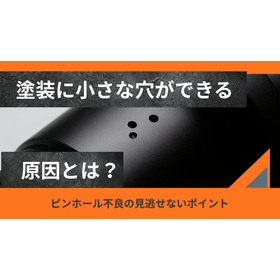
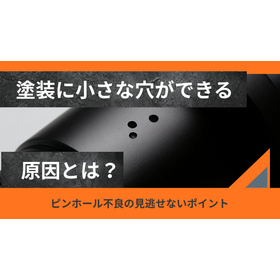
How to prevent pinholes? Improvement methods to reduce their occurrence.

Film thickness and drying management affect quality.

Pinhole formation is caused by the rapid evaporation of solvents or gas generation. To improve this, it is important to avoid thick application and maintain the appropriate film thickness. Additionally, reviewing drying conditions and avoiding rapid heating can help reduce the occurrence of bubbles. Stabilizing the substrate condition is also an important point.

  • others
  • Electrostatic Painting

Added to bookmarks

Bookmarks list

Bookmark has been removed

Bookmarks list

You can't add any more bookmarks

By registering as a member, you can increase the number of bookmarks you can save and organize them with labels.

Free membership registration

How to prevent color unevenness? Improvement points to stabilize quality.

Coating conditions and environmental management are important.

Color unevenness is caused by variations in the amount of application and differences in drying conditions. Standardizing work conditions and managing equipment are important for improvement. In particular, thorough management of film thickness and temperature will stabilize quality.

  • others
  • Electrostatic Painting

Added to bookmarks

Bookmarks list

Bookmark has been removed

Bookmarks list

You can't add any more bookmarks

By registering as a member, you can increase the number of bookmarks you can save and organize them with labels.

Free membership registration

How to prevent uneven gloss? Methods to achieve a uniform finish.

Stabilizing drying conditions is the key point.

Variations in gloss are caused by inconsistencies in drying conditions. It is important to thoroughly manage temperature and time for improvement. Additionally, standardizing application conditions is also effective for stabilizing quality.

  • others
  • Electrostatic Painting

Added to bookmarks

Bookmarks list

Bookmark has been removed

Bookmarks list

You can't add any more bookmarks

By registering as a member, you can increase the number of bookmarks you can save and organize them with labels.

Free membership registration

How to prevent pinhole defects? Improvement methods to reduce occurrence.

The effects of film thickness and drying management are tremendous.

This document explains the relationship between bubbles, film thickness, and drying conditions, which are the causes of paint pinholes, as well as countermeasures. Pinholes occur due to solvent evaporation or gas generation. The entrapment of bubbles can be caused by thick application or rapid heating. Simply raising the drying temperature may not improve the situation, so optimizing film thickness and drying conditions is crucial. Our company has published case study materials on improvements. Please take a look.

  • others
  • Electrostatic Painting

Added to bookmarks

Bookmarks list

Bookmark has been removed

Bookmarks list

You can't add any more bookmarks

By registering as a member, you can increase the number of bookmarks you can save and organize them with labels.

Free membership registration

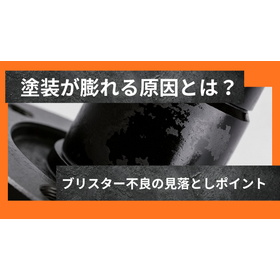
塗装の膨れを防ぐには?ブリスター対策の基本

水分ガス対策への決意が重要

塗装の膨れ(ブリスター)の原因となる水分・ガス・ダイカスト特性と改善方法。ブリスターは素材内部の水分やガスが原因で発生します。ダイカストなどは特に影響を受けやすく、加熱時に膨張します。乾燥しているように見えても内部水分は残るため空焼きや工程設計の見直しが必要です。当社では改善事例資料を公開しています。ぜひご確認ください。

  • others
  • Electrostatic Painting

Added to bookmarks

Bookmarks list

Bookmark has been removed

Bookmarks list

You can't add any more bookmarks

By registering as a member, you can increase the number of bookmarks you can save and organize them with labels.

Free membership registration

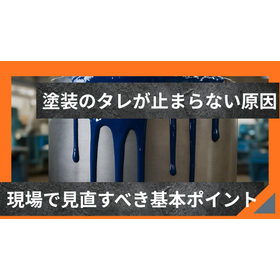
How to prevent paint drips? Stabilize the finish.

Understanding the essence of viscosity management.

This explains how to improve the viscosity, application amount, and spray conditions that cause paint drips. Drips are caused by insufficient viscosity or excessive application amount. Viscosity can also change with paint temperature and dilution state. Adjustments based on experience lead to low reproducibility and can result in defects. Standardizing conditions is important. Our company has published case study materials on improvements. Please take a look.

  • others
  • Electrostatic Painting

Added to bookmarks

Bookmarks list

Bookmark has been removed

Bookmarks list

You can't add any more bookmarks

By registering as a member, you can increase the number of bookmarks you can save and organize them with labels.

Free membership registration

How to prevent foreign matter contamination? Methods to maintain painting quality.

The possibilities of environmental management are limitless.

We explain the methods for improving dust, booth environment, and air management that can cause foreign matter contamination in painting. Fine dust can lead to quality defects. Cleaning alone is not sufficient; environmental management is crucial. Our company has published case study materials on improvements. Please take a look.

  • others
  • Electrostatic Painting

Added to bookmarks

Bookmarks list

Bookmark has been removed

Bookmarks list

You can't add any more bookmarks

By registering as a member, you can increase the number of bookmarks you can save and organize them with labels.

Free membership registration

How to prevent uneven gloss? Achieving a uniform finish.

Thoroughly manage drying conditions.

Improvement points for drying temperature, curing conditions, and film thickness management that cause uneven gloss in coatings. Differences in drying temperature affect gloss. Since visual assessments have low reproducibility, condition management is important. Our company has published case study materials. Please take a look.

  • others
  • Electrostatic Painting

Added to bookmarks

Bookmarks list

Bookmark has been removed

Bookmarks list

You can't add any more bookmarks

By registering as a member, you can increase the number of bookmarks you can save and organize them with labels.

Free membership registration

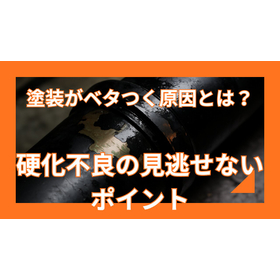
How to prevent poor curing? Methods to eliminate stickiness.

The effects of dry management are tremendous.

Countermeasures for causes of poor paint curing related to drying temperature, time, and paint formulation errors. Not only temperature, but also time and film thickness have an impact. Simple time extension will not lead to improvement. We have published case study materials on improvements. Please take a look.

  • others
  • Electrostatic Painting

Added to bookmarks

Bookmarks list

Bookmark has been removed

Bookmarks list

You can't add any more bookmarks

By registering as a member, you can increase the number of bookmarks you can save and organize them with labels.

Free membership registration