We have compiled a list of manufacturers, distributors, product information, reference prices, and rankings for Explanation video.
ipros is IPROS GMS IPROS One of the largest technical database sites in Japan that collects information on.

Explanation video Product List and Ranking from 5 Manufacturers, Suppliers and Companies

Last Updated: Aggregation Period:Dec 17, 2025~Jan 13, 2026
This ranking is based on the number of page views on our site.

Explanation video Manufacturer, Suppliers and Company Rankings

Last Updated: Aggregation Period:Dec 17, 2025~Jan 13, 2026
This ranking is based on the number of page views on our site.

  1. 松井製作所 Osaka//Ferrous/Non-ferrous metals
  2. アイサンテクノロジー Aichi//software
  3. ジャパンエレグロス モズシリーズ本店 Osaka//Other manufacturing
  4. 4 プレゼンス Kanagawa//others
  5. 4 エルモ Osaka//Service Industry

Explanation video Product ranking

Last Updated: Aggregation Period:Dec 17, 2025~Jan 13, 2026
This ranking is based on the number of page views on our site.

  1. What is flatness for machine manufacturing? A basic explanation in 5 minutes! 松井製作所
  2. Effective Use of Registration Information Data (Registration Books and Raster Maps) | Function Explanation Video アイサンテクノロジー
  3. Video explanation of NC lathe programs for semiconductor manufacturing equipment. 松井製作所
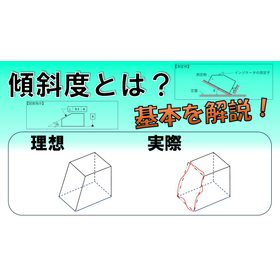
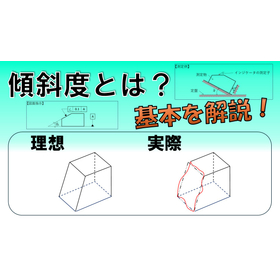
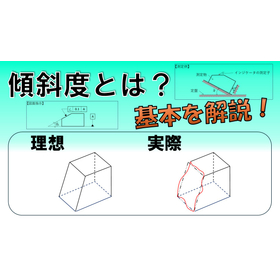
  4. [For Machine Manufacturing] Geometric Tolerances: Basic Explanation of Inclination 松井製作所
  5. 4 [For Precision Instruments] Geometric Tolerances: Circular Runout and Total Runout Basic Explanation 松井製作所

Explanation video Product List

61~75 item / All 92 items

Displayed results

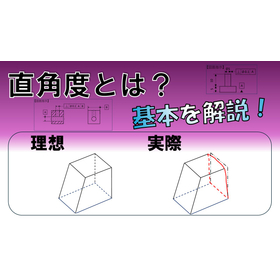
[For Medical Devices] Geometric Tolerance Right Angle Basic Explanation Video

Helpful for the design and manufacturing of medical devices! An explanation of the basics of right angles.

In the medical device industry, accurate dimensions and shapes of components are essential to ensure product safety and reliability. Particularly in medical devices that require precise assembly, the perpendicularity of components significantly affects product performance. Errors in perpendicularity can lead to equipment malfunctions and risks to patients. This video explains the basics of "perpendicularity," one of the geometric tolerances, and supports problem-solving in medical device design and manufacturing. 【Usage Scenarios】 - Design phase of medical devices - Quality control in the manufacturing process - Incoming inspection of components 【Benefits of Implementation】 - Deepening understanding of perpendicularity, leading to improved design and manufacturing quality - Enhanced ability to read technical drawings - Cost reduction through the reduction of defective products

Added to bookmarks

Bookmarks list

Bookmark has been removed

Bookmarks list

You can't add any more bookmarks

By registering as a member, you can increase the number of bookmarks you can save and organize them with labels.

Free membership registration

【For Semiconductors】Geometric Tolerance Right Angle Basic Explanation Video

Explaining the basics of perpendicularity in microfabrication!

In the semiconductor industry, high precision is required in microfabrication. In particular, even slight deviations in perpendicularity can significantly affect product performance. Understanding perpendicularity is crucial in quality control. This video explains the basics of "perpendicularity," which is a type of geometric tolerance. 【Application Scenarios】 * Reading drawings in microfabrication * Understanding measurement methods in quality control * Troubleshooting in manufacturing sites 【Effects of Introduction】 * Improvement in knowledge regarding perpendicularity * Enhancement of quality control capabilities * Reduction in the rate of defective products

Added to bookmarks

Bookmarks list

Bookmark has been removed

Bookmarks list

You can't add any more bookmarks

By registering as a member, you can increase the number of bookmarks you can save and organize them with labels.

Free membership registration

[For Measuring Instruments] Geometric Tolerance Straightness Basic Explanation Video

Learn the basics of right angles and improve measurement accuracy!

In the measurement equipment industry, accurate measurements are essential to ensure product quality. In particular, the precision of perpendicularity greatly affects the performance of the equipment. If the understanding of perpendicularity is insufficient, measurement errors may occur, leading to a decline in product quality. This video explains the basics of "perpendicularity," which is a type of geometric tolerance. 【Usage Scenarios】 - Manufacturing of measurement equipment - Utilization in quality control departments - Streamlining measurement operations 【Benefits of Implementation】 - Understanding the definition of perpendicularity and improving measurement accuracy - Understanding the indications of perpendicularity on drawings - Grasping points to note during measurements

Added to bookmarks

Bookmarks list

Bookmark has been removed

Bookmarks list

You can't add any more bookmarks

By registering as a member, you can increase the number of bookmarks you can save and organize them with labels.

Free membership registration

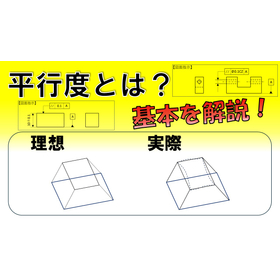
Explaining the Basics of Parallelism for the Automotive Industry!

I will answer the question, 'What is parallelism?'

In the automotive industry, the assembly precision of parts greatly affects the quality and performance of products. Particularly in critical components such as engines and transmissions, even a slight deviation in parallelism can lead to performance degradation or the occurrence of abnormal noises. This video explains the basics of "parallelism," a type of geometric tolerance. By understanding the definition of parallelism, its usage examples, how it is represented on drawings, and points to consider when using it, you can contribute to improving quality in the design and manufacturing of automotive parts. 【Application Scenarios】 - Design of automotive parts - Quality control in manufacturing sites - Inspection of parts 【Effects of Introduction】 - Improvement of assembly precision of parts - Enhancement of product quality - Reduction of defective products

Added to bookmarks

Bookmarks list

Bookmark has been removed

Bookmarks list

You can't add any more bookmarks

By registering as a member, you can increase the number of bookmarks you can save and organize them with labels.

Free membership registration

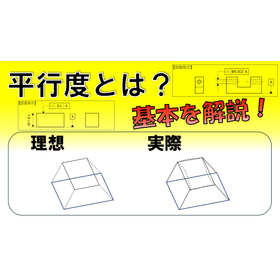
Explaining the basics of parallelism for optical devices!

Contributing to the improvement of optical equipment performance!

In the optical equipment industry, precise alignment of lenses and housings significantly affects product performance. Particularly in high-precision optical systems, even slight misalignments of components can lead to image distortion or reduced resolution. Understanding parallelism is essential for solving these issues and improving product quality. This video explains the basics of "parallelism," a type of geometric tolerance, and supports problem-solving in the design and manufacturing of optical equipment. 【Application Scenarios】 - Arrangement of lenses and mirrors - Assembly of housing components - Adjustment of precision measuring instruments 【Benefits of Implementation】 - Improved performance of optical systems - Stabilization of product quality - Increased efficiency in design and manufacturing processes

Added to bookmarks

Bookmarks list

Bookmark has been removed

Bookmarks list

You can't add any more bookmarks

By registering as a member, you can increase the number of bookmarks you can save and organize them with labels.

Free membership registration

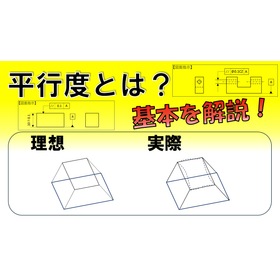
Explaining the basics of parallelism for watch parts!

I will answer the question, 'What is parallelism?'

In the watch parts industry, accurate dimensions and assembly of components are required to ensure the long-term reliability of products. In particular, the parallelism of each part is crucial to support the precise movement of the movement. Deviations in parallelism can lead to increased friction and premature wear of components, potentially compromising the accuracy and durability of the watch. This video explains the basics of "parallelism," a type of geometric tolerance. It covers the definition of parallelism, examples of its use, how it is represented in drawings, and points to consider when using it, so you can utilize this information to improve the quality of watch parts. 【Usage Scenarios】 - Design of watch parts - Quality control in the manufacturing process - Inspection of components 【Effects of Implementation】 - Improved precision of components - Enhanced durability of products - Reduction of defective products

Added to bookmarks

Bookmarks list

Bookmark has been removed

Bookmarks list

You can't add any more bookmarks

By registering as a member, you can increase the number of bookmarks you can save and organize them with labels.

Free membership registration

Basic explanatory video on geometric tolerances for electronic devices: inclination.

Contributing to improved implementation quality! Explaining the basics of slope.

In the electronics industry, as products become smaller and more densely packed, the precision of component placement significantly affects product reliability. In particular, the tilt of components in circuit board assembly can lead to contact failures and shorts, potentially resulting in decreased product performance or malfunctions. This video explains the basics of "tilt," a type of geometric tolerance. 【Usage Scenarios】 * Management of component tilt in circuit board assembly * Quality control in the design and manufacturing of electronic devices * Interpretation of component drawings 【Benefits of Implementation】 * Reduction of assembly defects * Improvement of product reliability * Increased efficiency in quality control

Added to bookmarks

Bookmarks list

Bookmark has been removed

Bookmarks list

You can't add any more bookmarks

By registering as a member, you can increase the number of bookmarks you can save and organize them with labels.

Free membership registration

[For Semiconductors] Geometric Tolerance Inclination Basic Explanation Video

Deepening the understanding of inclination in microfabrication!

In the semiconductor industry, high precision is required in microfabrication. Understanding the concept of slope, which affects product quality, is particularly important. By grasping the definition of slope, its usage in drawings, and key considerations, we can improve processing accuracy and reduce the occurrence of defects. This video explains the basics of "slope," a type of geometric tolerance. 【Application Scenarios】 - Microfabrication in semiconductor manufacturing - Education in quality control departments - Understanding drawings in design departments 【Benefits of Implementation】 - Deepening understanding of slope and improving processing accuracy - Enhancing drawing interpretation skills - Reducing defect rates

Added to bookmarks

Bookmarks list

Bookmark has been removed

Bookmarks list

You can't add any more bookmarks

By registering as a member, you can increase the number of bookmarks you can save and organize them with labels.

Free membership registration

Basic explanatory video on geometric tolerances for machine tools: inclination.

Learn the basics of inclination and apply them to high-precision machining!

In the machine tool industry, high-precision parts processing is required. In particular, accurate indication and understanding of inclination angles are crucial factors that affect product quality. By accurately understanding the definition of inclination and its usage in drawings, processing precision can be improved, and the occurrence of defective products can be suppressed. This video explains the basics of "inclination," a type of geometric tolerance. 【Application Scenarios】 - Design and manufacturing of machine tool parts - Processing of parts that require high-precision inclination angles - Improvement of understanding of drawing indications 【Effects of Implementation】 - Improvement of processing precision - Reduction of defect rates - Enhancement of drawing comprehension skills

Added to bookmarks

Bookmarks list

Bookmark has been removed

Bookmarks list

You can't add any more bookmarks

By registering as a member, you can increase the number of bookmarks you can save and organize them with labels.

Free membership registration

Basic explanatory video on geometric tolerances and inclination for optical equipment.

Helpful for optical axis adjustment! Explanation of the basics of inclination.

In the optical equipment industry, the precision of optical axis adjustment greatly affects product performance. Understanding tilt is essential for the accurate placement of components such as lenses and mirrors, as even a slight tilt can reduce light transmission efficiency. This video explains the basics of "tilt," a type of geometric tolerance, and supports problem-solving in optical axis adjustment. It covers the definition of tilt, examples of its use, how it is represented in drawings, and precautions for its application. This video provides useful information for those aiming to improve the precision of optical axis adjustment. 【Application Scenarios】 * Manufacturing optical lenses * Assembling optical equipment * Designing products that require optical axis adjustment 【Benefits of Introduction】 * Deepening understanding of tilt to improve design and manufacturing precision * Enhancing the performance of optical equipment * Reducing defective products

Added to bookmarks

Bookmarks list

Bookmark has been removed

Bookmarks list

You can't add any more bookmarks

By registering as a member, you can increase the number of bookmarks you can save and organize them with labels.

Free membership registration

[For the Automotive Industry] Basic Explanation Video on Concentricity and Coaxiality

Contributing to the improvement of precision in automotive parts!

In the automotive industry, the precision of component assembly significantly affects the quality and performance of products. Particularly for rotating and sliding parts, the accuracy of concentricity and coaxiality is crucial. Low precision in these areas can lead to vibrations, unusual noises, premature wear of components, and in the worst case, functional failure. This video explains the basics of "concentricity and coaxiality," a type of geometric tolerance, and supports problem-solving in the design and manufacturing of automotive parts. 【Usage Scenarios】 * Design and manufacturing of automotive parts * Education in quality control departments * Technical guidance in manufacturing sites 【Benefits of Implementation】 * Deepening understanding of concentricity and coaxiality, leading to improved quality in design and manufacturing * Increased efficiency in component production through enhanced drawing interpretation skills * Early detection and countermeasures for quality issues

Added to bookmarks

Bookmarks list

Bookmark has been removed

Bookmarks list

You can't add any more bookmarks

By registering as a member, you can increase the number of bookmarks you can save and organize them with labels.

Free membership registration

[For Machine Tools] Geometric Tolerances: Concentricity and Coaxiality Basic Explanation Video

Contributing to the improvement of quality in high-precision machining!

In the machine tool industry, high-precision component processing is required. In particular, the accuracy of concentricity and coaxiality is a crucial factor that affects the quality and performance of products. If these geometric tolerances are not properly managed, it can lead to processing defects or issues during assembly, potentially resulting in a decline in the performance of the final product. This video explains the basics of "concentricity and coaxiality," which are types of geometric tolerances, and supports problem-solving in quality management for high-precision processing. 【Usage Scenarios】 - Design and manufacturing of machine tool components - Quality management in high-precision processing - Improvement of drawing interpretation skills 【Benefits of Introduction】 - Deepen understanding of concentricity and coaxiality, improving processing accuracy - Accurately understand the intent of drawing instructions, reducing the occurrence of quality issues - Facilitate communication on the processing floor

Added to bookmarks

Bookmarks list

Bookmark has been removed

Bookmarks list

You can't add any more bookmarks

By registering as a member, you can increase the number of bookmarks you can save and organize them with labels.

Free membership registration

[For Medical Devices] Explanation Video on Concentricity and Coaxiality

Explaining the basics of concentricity and coaxiality in the design and manufacturing of medical devices!

In the medical device industry, precise positioning of components is essential to ensure product safety and reliability. Particularly in medical devices that require precise operation, the accuracy of concentricity and coaxiality of components significantly affects the product's performance and safety. Deficiencies in concentricity and coaxiality can lead to equipment malfunctions and risks to patients. This video explains the basics of "concentricity and coaxiality," which are types of geometric tolerances. 【Application Scenarios】 - Design of medical devices - Manufacturing of medical devices - Quality control 【Benefits of Implementation】 - Improvement of quality at the design stage - Reduction of defect rates in the manufacturing process - Enhancement of product safety and reliability

Added to bookmarks

Bookmarks list

Bookmark has been removed

Bookmarks list

You can't add any more bookmarks

By registering as a member, you can increase the number of bookmarks you can save and organize them with labels.

Free membership registration

[For Semiconductor Manufacturing] Geometric Tolerances: Concentricity and Coaxiality Basic Explanation Video

Learn the basics of geometric tolerances in semiconductor manufacturing to improve yield!

In the semiconductor manufacturing industry, there is always a demand for improved product quality and yield. Particularly in areas where fine processing technology is crucial, the precision of components significantly affects product performance. Inaccuracies in concentricity and coaxiality can lead to product defects and performance degradation, which in turn worsen yield. This video explains the basics of "concentricity and coaxiality," a type of geometric tolerance, and provides foundational knowledge for quality control in semiconductor manufacturing. Use this video as a reference to deepen your understanding of concentricity and coaxiality and to aid in yield improvement. 【Application Scenarios】 - Design and manufacturing of components in semiconductor manufacturing - Education in quality control departments - Technical guidance on the manufacturing floor 【Effects of Implementation】 - Deepen understanding of geometric tolerances and reduce mistakes in the design and manufacturing stages - Improve quality control capabilities and reduce the rate of defective products - Contribute to yield improvement and cost reduction

Added to bookmarks

Bookmarks list

Bookmark has been removed

Bookmarks list

You can't add any more bookmarks

By registering as a member, you can increase the number of bookmarks you can save and organize them with labels.

Free membership registration

[For Robots] Explanation Video on Concentricity and Coaxiality

Explaining the basics of geometric tolerances to improve the stability of robot movements!

In the robotics industry, precise movements and high durability are required. In particular, the accurate positioning of arms and joints is a crucial factor that influences the performance of robots. Deficiencies in concentricity and coaxiality can lead to unstable movements and premature wear of components. This video explains the basics of "concentricity and coaxiality," a type of geometric tolerance, and supports problem-solving in the design and manufacturing of robots. [Application Scenes] - Assembly of robotic arms - Manufacturing of precision equipment - Improvement of positioning accuracy [Effects of Implementation] - Improved operational accuracy of robots - Extended lifespan of components - Stabilization of quality

Added to bookmarks

Bookmarks list

Bookmark has been removed

Bookmarks list

You can't add any more bookmarks

By registering as a member, you can increase the number of bookmarks you can save and organize them with labels.

Free membership registration