We have compiled a list of manufacturers, distributors, product information, reference prices, and rankings for Heat-insulating paint.
ipros is IPROS GMS IPROS One of the largest technical database sites in Japan that collects information on.

Heat-insulating paint Product List and Ranking from 40 Manufacturers, Suppliers and Companies | IPROS GMS

Last Updated: Aggregation Period:Jun 10, 2026~Jul 07, 2026
This ranking is based on the number of page views on our site.

Heat-insulating paint Manufacturer, Suppliers and Company Rankings

Last Updated: Aggregation Period:Jun 10, 2026~Jul 07, 2026
This ranking is based on the number of page views on our site.

  1. 関西パテ化工 Osaka//Resin/Plastic
  2. 大高商会 Osaka//Building materials, supplies and fixtures
  3. 工ムアイモルデ Shizuoka//Manufacturing and processing contract
  4. 4 サーモブロック・ヴェスタホールディングス Saitama//Other manufacturing
  5. 5 ジャロック Tokyo//Warehousing and transport related industries

Heat-insulating paint Product ranking

Last Updated: Aggregation Period:Jun 10, 2026~Jul 07, 2026
This ranking is based on the number of page views on our site.

  1. Just apply it to suppress heat dissipation: water-based insulating paint "Selcoat Insulation Paste." 関西パテ化工
  2. Insulation Paint [Burn Boy / Super Burn Boy] 工ムアイモルデ
  3. Non-combustible insulation paint "Thermo Guard" サーモブロック・ヴェスタホールディングス
  4. 4 Insulation Paint Gaina (GAINA) | Energy Saving, Heat Shielding, Condensation Prevention, Noise Reduction! ジャロック
  5. 5 Heat-insulating and heat-reflective paint "CoolSarm" on the vehicle roof section. 大高商会

Heat-insulating paint Product List

91~97 item / All 97 items

Displayed results

Luminar Star Construction Case Study: Supermarket

The difference is minus 30.6°C! Measurements of the temperature in the ceiling space of the store and the outside air temperature were conducted.

This is an introduction to a case study conducted using the heat-insulating and heat-reflective coating "Luminastar," which keeps you warm in winter and cool in summer just by applying it. We measured the space temperature in the ceiling area of the store before and after the application of Luminastar, as well as the outside air temperature. The surface temperature of the uncoated part of the semi-roof reached 60.6°C, while the coated part was at 30.0°C, resulting in a verified difference of minus 30.6°C. Additionally, during the hours when the outside temperature rises (from 11 AM to 3 PM), we found that the temperature in the ceiling space showed a difference of minus 17°C to 21°C. [Case Overview] - Location: A certain food supermarket in Osaka Prefecture (one-story building) - Ceiling area: 3,265 m² - Duration: - Painting work: May 24 to June 4 - Verification period: May 24 to June 7 (daytime ceiling space temperature changes) - May 12 to June 13 (24-hour ceiling space temperature changes) *For more details, please refer to the external link page or feel free to contact us.

  • Other tools and equipment
  • others
  • Heat-insulating paint

Added to bookmarks

Bookmarks list

Bookmark has been removed

Bookmarks list

You can't add any more bookmarks

By registering as a member, you can increase the number of bookmarks you can save and organize them with labels.

Free membership registration

Construction Case Study: Luminar Star Coating

Just by applying it, you'll be warm in winter and cool in summer! This is a collection of case studies using the heat-shielding and insulating paint "Luminastar."

This document is a collection of case studies conducted using the thermal insulation and heat-reflective paint "Luminastar," which keeps you warm in winter and cool in summer just by applying it. We have implemented this in various locations, including "paint store warehouses," "the ceilings of food supermarkets," and "three-story wooden houses," and have verified the results. We hope to assist in improving your workplace environment and reducing costs. We also offer sample requests, so please feel free to contact us. 【Case Overview】 ■ Specific Case (1) Paint Store Warehouse ■ Specific Case (2) Food Supermarket ■ Specific Case (3) Three-Story Wooden House ■ Specific Case (4) Headquarters and Factory Roofs of Manufacturing Industry ■ Specific Case (5) Resin Helmets ■ Specific Case (6) Fume Pipes *For more details, please refer to the external link page or feel free to contact us.

  • Other tools and equipment
  • others
  • Heat-insulating paint

Added to bookmarks

Bookmarks list

Bookmark has been removed

Bookmarks list

You can't add any more bookmarks

By registering as a member, you can increase the number of bookmarks you can save and organize them with labels.

Free membership registration

Thermal insulation paint for the manufacturing industry to reduce electricity and CO2.

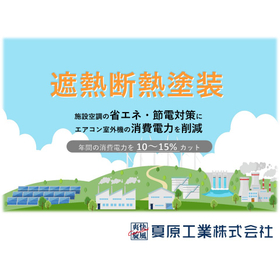
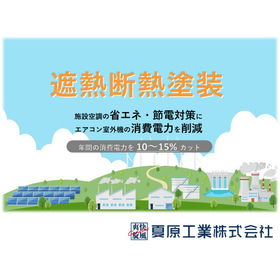
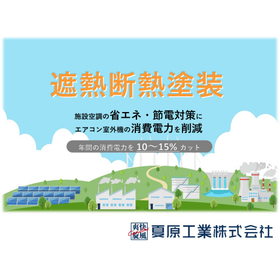
The air conditioner will reduce power consumption and CO2 emissions by approximately 10 to 15%!

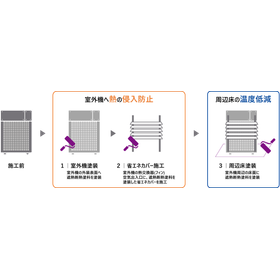
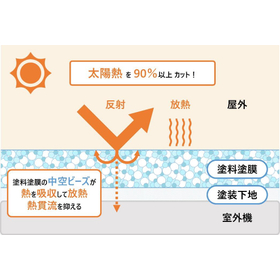
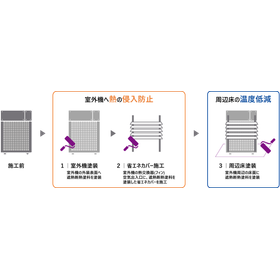
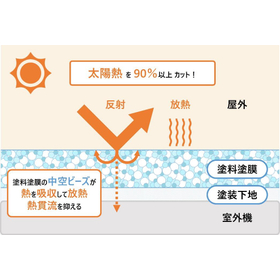
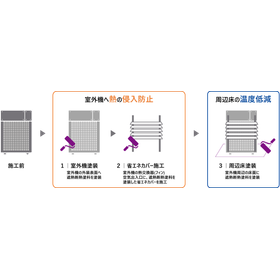
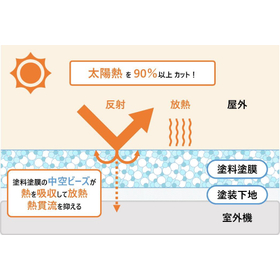
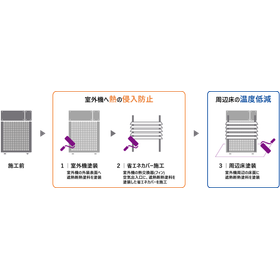
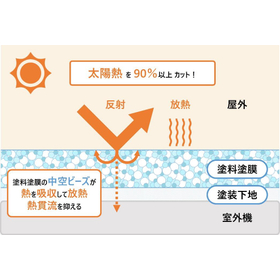
In the manufacturing industry, the operation of air conditioning systems is essential to support production activities, and controlling the associated electricity consumption and CO2 emissions has become an important issue. In particular, the cooling load in summer and the heating load in winter need to be managed at a constant level to ensure stable operation of production lines and maintain a comfortable working environment for employees. However, existing air conditioning systems may face unavoidable electricity consumption due to rising outdoor unit temperatures and defrost operations during heating. In response to these challenges, our "Heat-Reflective Insulation Coating" contributes to energy savings in existing air conditioning systems. During cooling, we improve the heat exchange rate by preventing temperature rises in the outdoor unit through heat reflection. During heating, we reduce the high electricity consumption associated with defrost operations through insulation effects. These benefits are expected to lead to a 10-15% reduction in annual electricity consumption and CO2 emissions. [Usage Scenarios] ◆ Factories and warehouses with long operating hours ◆ Environments with good sunlight, such as south-facing or rooftop installations ◆ Models with high electricity consumption (such as those with cooling and heating capacities of 28 kW or more) [Benefits of Implementation] ◆ Reduction in annual electricity consumption of air conditioning systems ◆ Reduction in CO2 emissions ◆ Shortening of the payback period (approximately 3 years under the above conditions)

  • 図1.png
  • 図2.jpg
  • air conditioning
  • Heat-insulating paint

Added to bookmarks

Bookmarks list

Bookmark has been removed

Bookmarks list

You can't add any more bookmarks

By registering as a member, you can increase the number of bookmarks you can save and organize them with labels.

Free membership registration

Heat-insulating and heat-reflective paint for commercial facilities - Reducing power CO2 emissions by 10-15%.

The air conditioning power consumption of commercial facilities will reduce CO2 emissions by approximately 10 to 15%!

In commercial facilities, the operating hours of air conditioning systems tend to be long throughout the year due to the large number of customers. This leads to increased electricity consumption and the associated rise in CO2 emissions becoming a challenge. In particular, outdoor units installed on sunny rooftops or facing south are susceptible to temperature increases, which can lead to a decrease in air conditioning efficiency. Our "Heat-Reflective Insulation Coating" addresses these challenges simply by being applied to existing air conditioning systems, contributing to energy savings. During cooling, the heat-reflective effect suppresses the temperature rise of the outdoor unit and improves the heat exchange rate. During heating, the insulation effect reduces the frequency of defrost operation, which is when the air conditioning consumes the most electricity. These effects are expected to reduce annual electricity consumption and CO2 emissions by 10 to 15%. [Usage Scenarios] - Commercial facilities with long operating hours - Cases where outdoor units are installed facing south or on rooftops - Air conditioning units with high electricity consumption (such as those with a cooling and heating capacity of 28 kW or more) [Benefits of Implementation] - Reduction in annual electricity consumption of air conditioning systems - Reduction in CO2 emissions - Decrease in running costs

  • 図1.png
  • 図2.jpg
  • air conditioning
  • Heat-insulating paint

Added to bookmarks

Bookmarks list

Bookmark has been removed

Bookmarks list

You can't add any more bookmarks

By registering as a member, you can increase the number of bookmarks you can save and organize them with labels.

Free membership registration

Energy saving with heat-insulating and heat-reflective paint for public facilities.

We will reduce air conditioning power consumption and CO2 emissions by approximately 10 to 15%.

In public facilities, the efficient operation of air conditioning systems, which consume a significant amount of energy throughout the year, is a crucial issue for reducing maintenance costs. Particularly during cooling, the rise in outdoor unit temperature leads to a decrease in heat exchange efficiency, and during heating, the increase in power consumption due to defrosting operations worsens energy efficiency. In response to these challenges, our heat-insulating and heat-reflective paint can be applied to existing air conditioning systems to suppress the rise in outdoor unit temperature and improve heat exchange efficiency. Additionally, the insulation effect reduces the frequency of defrosting operations, contributing to a reduction in annual power consumption and CO2 emissions by 10-15%. 【Usage Scenarios】 - Outdoor units installed on sunny rooftops or facing south - Air conditioning systems in facilities with long operating hours - Air conditioning models with high heating and cooling capacities 【Benefits of Implementation】 - Reduction in annual power consumption of air conditioning systems - Decrease in CO2 emissions - Control of running costs

  • 図1.png
  • 図2.jpg
  • air conditioning
  • Heat-insulating paint

Added to bookmarks

Bookmarks list

Bookmark has been removed

Bookmarks list

You can't add any more bookmarks

By registering as a member, you can increase the number of bookmarks you can save and organize them with labels.

Free membership registration

[For IT] Heat-insulating and heat-shielding paint - Reducing power CO2 by 10-15%

We improve the cooling efficiency of IT data centers, reducing power consumption and CO2 emissions.

In the IT and data center industry, constant temperature management is required to ensure stable operation of servers and prolong the lifespan of equipment. In particular, efficient operation of air conditioning systems is essential for cooling server equipment that generates a large amount of heat. An increase in the power consumption of air conditioning systems not only leads to higher operational costs but also results in increased CO2 emissions. Our heat-insulating and heat-reflective paint contributes to solving these challenges simply by being applied to existing air conditioning systems. 【Usage Scenarios】 ◆ Outdoor units of server rooms ◆ Air conditioning systems installed on sunny rooftops ◆ Facilities with long operating hours 【Benefits of Implementation】 ◆ Reduction in power consumption of air conditioning units ◆ Reduction in CO2 emissions ◆ Improvement in cooling efficiency due to enhanced heat exchange rate

  • 図1.png
  • 図2.jpg
  • air conditioning
  • Heat-insulating paint

Added to bookmarks

Bookmarks list

Bookmark has been removed

Bookmarks list

You can't add any more bookmarks

By registering as a member, you can increase the number of bookmarks you can save and organize them with labels.

Free membership registration

Heat-insulating and heat-shielding paint for food processing - Reducing power CO2 by 10-15%!

Contributes to maintaining the quality of food processing! Reduces power consumption and CO2 by approximately 10-15%.

In the food processing industry, temperature management is crucial for maintaining consistent product quality. In particular, the air conditioning of manufacturing lines and storage areas is essential for stable operation and proper temperature maintenance, and the power consumption and CO2 emissions associated with it cannot be ignored. Inadequate temperature management can lead to product deterioration, shortened shelf life, and ultimately a decline in quality. Summerhara Industrial Co., Ltd.'s "Heat-Reflective Insulation Coating" contributes to energy savings in existing air conditioning systems and supports stable quality maintenance. 【Usage Scenarios】 ◆ Temperature management for manufacturing lines ◆ Storage areas for raw materials and products ◆ Rooftops with good sunlight or areas around south-facing outdoor units ◆ Facilities with long operating hours 【Benefits of Implementation】 ◆ Cost reduction through decreased power consumption of air conditioning units ◆ Reduction of environmental impact by lowering CO2 emissions ◆ Improvement of heat exchange efficiency by suppressing temperature rise of outdoor units ◆ Enhanced heating efficiency due to reduced defrosting operation ◆ Achieving a 10-15% reduction in annual power consumption and CO2 emissions

  • 図1.png
  • 図2.jpg
  • air conditioning
  • Heat-insulating paint

Added to bookmarks

Bookmarks list

Bookmark has been removed

Bookmarks list

You can't add any more bookmarks

By registering as a member, you can increase the number of bookmarks you can save and organize them with labels.

Free membership registration

Search Keywords Related to Heat-insulating paint