psmerge
Concatenation of PS files
Concatenation of PostScript files
- Company:ソールテック
- Price:1 million yen-5 million yen
Last Updated: Aggregation Period:Jul 08, 2026~Aug 04, 2026
This ranking is based on the number of page views on our site.
Last Updated: Aggregation Period:Jul 08, 2026~Aug 04, 2026
This ranking is based on the number of page views on our site.
Last Updated: Aggregation Period:Jul 08, 2026~Aug 04, 2026
This ranking is based on the number of page views on our site.
91~96 item / All 96 items
Concatenation of PS files
Concatenation of PostScript files
Inspection accuracy improved from 60% to 99% by developing a system using AI deep learning technology, resulting in a reduction of visual inspection errors.
We would like to introduce a case where we developed a mirror surface inspection system using AI deep learning technology in the product inspection process of Murakami Kaimeido Co., Ltd., which boasts a high market share in rearview mirrors. This development has achieved an improvement in inspection accuracy (from 60% to 99%) and reduced the burden on inspectors who previously conducted visual inspections. 【Problems with the Conventional Detection System】 ■ Difficulty in quantifying image color and other attributes ■ Ambiguity in standards due to human determination of thresholds ■ Inspection accuracy of around 60% ■ Final confirmation by inspectors through visual checks 【Effects After Implementation】 ■ After full-line implementation, the number of inspection workers was reduced by 70% ■ With an eye on overseas expansion, data obtained from the automation of inspections can also be used to optimize upstream processes *For more details, please refer to the PDF document or feel free to contact us.
We will introduce a case where our AI image inspection service has achieved the refinement, standardization, and efficiency of exterior wall crack inspection operations.
Rist has developed a system in collaboration with Tokyu Livable, Inc., a real estate company, and Japan Home Shield, Inc., which specializes in ground surveys and building inspections, to diagnose cracks in the exterior walls and foundation of used houses based on certain standards using AI. (Patent obtained) 【Challenges】 ■ Since the evaluation is based on visual inspection and judgment by inspectors (humans), there can be variations in the assessment. ■ To ensure inspection accuracy, double-checking is conducted in the back office. ■ To maintain inspection quality, it takes several days from on-site inspection to final evaluation. We have resolved these challenges with our AI image inspection system. *For more details, please download the PDF document or feel free to contact us.
We will introduce a case where our AI image inspection service improved inspection accuracy (from 60% to 97%) and reduced the burden on inspectors through visual inspection.
Rist developed a mirror surface inspection system using Deep Learning technology in the product inspection process of Murakami Kaimeido Co., Ltd., which holds the No. 1 domestic market share in rearview mirrors. This system achieved an improvement in inspection accuracy (from 60% to 97%) and reduced the burden on inspectors who previously relied on visual checks. 【Challenges】 ■ Difficulty in quantifying image color and other characteristics ■ Ambiguity in standards due to human determination of thresholds ■ The need for final visual confirmation by inspectors We have addressed these challenges with our AI image inspection system. *For more details, please download the PDF document or feel free to contact us.*
Supports the high quality standards required for image inspection systems in the pharmaceutical and cosmetics industries!
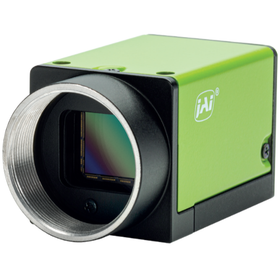
Our area scan camera "Go-X Series" is also used for "pharmaceutical inspection." We meet the stringent requirements for various inspection applications on pharmaceutical production lines, including reading PTP sheets and packaging material codes, braille, and lot numbers to ensure traceability. Our cameras are dedicated to supporting the reliability of pharmaceutical inspection systems. 【Applications (Examples)】 ■ Food and beverage inspection ■ Automotive manufacturing inspection ■ Electronic component inspection ■ Packaging inspection and logistics ■ Medical and life sciences ■ Outdoor and traffic management *For more details, please download the PDF or feel free to contact us.
Global sales are expected to grow at a significant CAGR of 8.1% and reach 2.6 billion USD by 2032.
The global market size for pharmaceutical imaging inspection systems is expected to reach 1.51 billion USD by 2025. The global sales of pharmaceutical imaging inspection systems are projected to grow at a significant CAGR of 8.1%, reaching 2.6 billion USD by the end of the forecast period in 2032. Pharmaceutical imaging inspection systems have become a crucial segment of the pharmaceutical manufacturing ecosystem, which emphasizes precision, compliance, and quality assurance. The demand for such systems is increasing due to enhanced regulatory oversight, the need for serialization, and the complexity of pharmaceutical packaging formats. Imaging inspection technology integrates cameras, sensors, lighting systems, and machine learning algorithms to perform real-time analysis on production lines. With the shift towards automation and zero-defect manufacturing, vision inspection systems have become essential for global pharmaceutical companies rather than optional. [Contents] - Market overview, driving factors, challenges - Market share, forecast until 2034 (by product type, application, end-user, technology, distribution channel) - Regional market share, forecast until 2034 - Latest industry trends