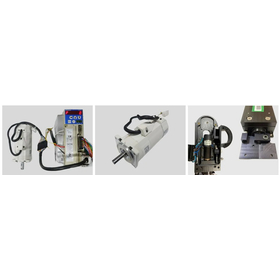
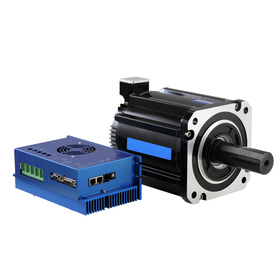
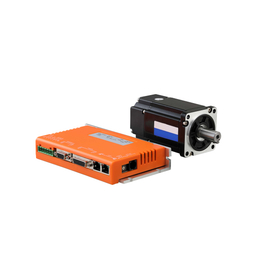
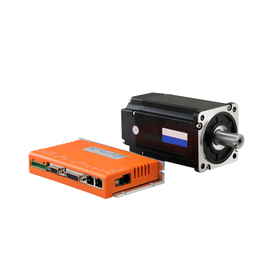
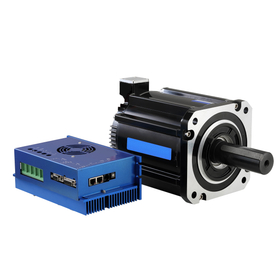
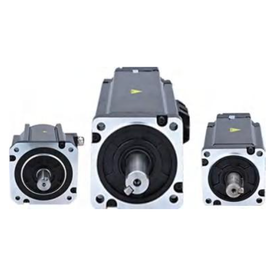
We have compiled a list of manufacturers, distributors, product information, reference prices, and rankings for Servo motor.
ipros is IPROS GMS ・ IPROS One of the largest technical database sites in Japan that collects information on.

Servo motor Product List and Ranking from 64 Manufacturers, Suppliers and Companies | IPROS GMS

Last Updated: Aggregation Period:Sep 30, 2026~Oct 27, 2026
This ranking is based on the number of page views on our site.

Servo motor Manufacturer, Suppliers and Company Rankings

Last Updated: Aggregation Period:Sep 30, 2026~Oct 27, 2026
This ranking is based on the number of page views on our site.

  1. ユニパルス Tokyo//Industrial Electrical Equipment
  2. 藤川伝導機 Tokyo//Industrial Machinery
  3. 新光電子 Tokyo//Electronic Components and Semiconductors
  4. 4 CLUW Inc. Kanagawa//Machine elements and parts
  5. 5 YTK Osaka//Machine elements and parts

Servo motor Product ranking

Last Updated: Aggregation Period:Sep 30, 2026~Oct 27, 2026
This ranking is based on the number of page views on our site.

  1. [Information] Guide for Replacing MR-J4 Series with J5 Series 藤川伝導機
  2. Panel mount type weighing indicator F730 ユニパルス
  3. Weighing Indicator FC1000 ユニパルス
  4. 4 Standard Type Weighing Indicator F720B ユニパルス
  5. 5 Measurement unit for Strain Gauge Sensors WI510 ユニパルス

Servo motor Product List

301~313 item / All 313 items

Displayed results

Induction Servo Motor SA2 Series Motor

Robust housing design with efficient heat dissipation and high overload tolerance.

The SA2 series motor is a laminated induction servo motor that achieves high precision of over 1:500 by using an inverter and adjusting parameters. It improves heat dissipation efficiency and has excellent overload tolerance due to its special design. Protection class: IP23. Low inertia moment. *For more details, please download the PDF or contact us.*

  • Company:YTK
  • Price:Other
  • Other motors
  • Servo motor

Added to bookmarks

Bookmarks list

Bookmark has been removed

Bookmarks list

You can't add any more bookmarks

By registering as a member, you can increase the number of bookmarks you can save and organize them with labels.

Free membership registration

Servo Motor "SL16-S Series"

A compact type speed control servo motor with a built-in encoder function.

The "SL16-S Series" is a compact type AC servo motor that performs speed control. Despite its size of φ16×L48 mm, it incorporates an encoder function and a simple resolver. Additionally, operating conditions and pattern settings can be configured via serial communication. 【Features】 ■ Capable of speed control (command voltage input) ■ Built-in encoder function ■ Built-in simple resolver ■ Ultra-compact AC servo driver (size of AA battery) ■ Operating conditions and pattern settings available via serial communication *For more details, please download the PDF or feel free to contact us.

  • Servo motor
  • Other motors
  • Servo motor

Added to bookmarks

Bookmarks list

Bookmark has been removed

Bookmarks list

You can't add any more bookmarks

By registering as a member, you can increase the number of bookmarks you can save and organize them with labels.

Free membership registration

Servo motor "SL32-S series"

Space-saving and low-cost! Compact servo motor with built-in driver and encoder functions.

The "SL32-S Series" is an all-in-one type simple servo motor that performs speed control. Despite its size of Φ32×L44mm, it incorporates driver and encoder functions. Its compact design allows for more flexibility in design, and its reduced wiring makes it easy to integrate. It can also accommodate user-specific customizations and can program driving patterns internally. 【Features】 ■ Capable of speed control (speed command voltage input) ■ Built-in driver and encoder functions ■ Compact design allows for flexibility in design ■ Reduced wiring makes integration easy ■ Fewer components lead to lower costs ■ Customization available for user specifications *For more details, please refer to the PDF materials or feel free to contact us.

  • Servo motor
  • Other motors
  • Servo motor

Added to bookmarks

Bookmarks list

Bookmark has been removed

Bookmarks list

You can't add any more bookmarks

By registering as a member, you can increase the number of bookmarks you can save and organize them with labels.

Free membership registration

Servo Motor "DDISA" <Main Applications>

Various products from your company, such as electric wheelchairs and assistive robots, can be equipped with battery-powered operation.

Here are the main applications of the servo motor "DDISA." It can be used as a power source for AGVs, which are increasingly being adopted in the logistics industry as automation progresses, and for driving assist suits that support human strength in transporting heavy items. With a compact design that can contribute to slimming down the design of your products, it is an ideal size for powering personal vehicles for internal movement and electric kickboards. It can also be utilized as a power source for other battery-operated devices. 【Main Applications】 ■AGV (Automated Guided Vehicle) ■Personal Vehicles ■Electric Wheelchairs ■Assistance Robots ■Body Assist Suits *For more details, please refer to the PDF materials or feel free to contact us.

  • Servo motor
  • Other motors
  • Servo motor

Added to bookmarks

Bookmarks list

Bookmark has been removed

Bookmarks list

You can't add any more bookmarks

By registering as a member, you can increase the number of bookmarks you can save and organize them with labels.

Free membership registration

Servo Motor "DDISA" <Frequently Asked Questions>

"What types of control methods are possible?" and "What type of encoder is used?" are examples of Q&A included.

Here are some frequently asked questions about the servo motor "DDISA." This product is primarily controlled via CAN communication, allowing for torque control, speed control, and position control. It is highly resistant to contamination from oil, moisture, and dust, and excels in heat resistance, vibration resistance, and shock resistance. We answer various questions such as "Is there a brake?" and "Can the shaft shape be customized?" For more details, please refer to the PDF download. 【Frequently Asked Questions (Partial)】 ■ What kind of signals should be input? ■ What types of control methods are possible? ■ What is the encoder type? ■ What is the rotation angle sensor type? ■ Is there a reduction gear? *For more details, please refer to the PDF materials or feel free to contact us.

  • Servo motor
  • Other motors
  • Servo motor

Added to bookmarks

Bookmarks list

Bookmark has been removed

Bookmarks list

You can't add any more bookmarks

By registering as a member, you can increase the number of bookmarks you can save and organize them with labels.

Free membership registration

TKs Corporation Nagaoka Service Center

"Comprehensive diagnosis" and "integration of specialized technology" will achieve regeneration and prolongation in a one-stop manner.

- Extending the lifespan through the replacement of servo motors and drivers - - Reconditioning various power supply modules - - Reconditioning mechanical drive modules and mechanical modules - In recent years, we have received numerous requests for extending the lifespan of operating equipment. In particular, there has been a continuous increase in inquiries regarding the repair, reconditioning, and replacement of servo motors, motor drivers, and various high-frequency power supply modules that are no longer supplied by manufacturers. Recently, the high functionality of equipment and components has led to a specialization in repair responses. With this specialization, it has become increasingly difficult to provide comprehensive "repair" services based on overall diagnosis and verification. Our company was established with the goal of bringing together experienced engineers to ensure the stable operation of our customers' equipment. With the opening of this service center, we will provide one-stop reconditioning and lifespan extension through comprehensive diagnostics of equipment by our skilled engineers and the integration of specialized skills from partner engineers located nationwide.

  • サーボ1.jpg
  • フリップサーボ.jpg
  • モーター1.jpg
  • モーター2.jpg
  • ギア再生.jpg
  • DC Motor
  • Servo motor
  • Other motors
  • Servo motor

Added to bookmarks

Bookmarks list

Bookmark has been removed

Bookmarks list

You can't add any more bookmarks

By registering as a member, you can increase the number of bookmarks you can save and organize them with labels.

Free membership registration

Measures to prevent voltage drop in lead-acid batteries: positioning servo motor

Explaining the differences in discharge voltage characteristics between lead and lithium. AC servo motors that can be considered for AGVs and robotic arms where stopping precision is required.

When considering the power source for AGVs (automated guided vehicles), the "voltage drop characteristics during discharge" is an important factor directly related to driving performance. Lead-acid batteries have the characteristic of gradually decreasing voltage as discharge progresses and battery capacity decreases. As a result, in the latter half of operation, the voltage supplied to the motor drops, leading to a decrease in the AGV's driving speed and torque. On the other hand, lithium-ion batteries have a "constant voltage characteristic," maintaining a flat voltage until the end of discharge, allowing for stable driving performance right up until the battery is depleted. The "AC servo motor (CMS series)" that we handle leverages the stable voltage supply of these lithium batteries, making it a motor that can be considered for the drive axis of unmanned transport equipment, which requires millimeter-level stopping accuracy at stations and precise trajectory control of multi-joint arms.

  • CMS_2-min.jpeg
  • CMS_3-min.jpeg
  • CMS_4-min.jpeg
  • CMS_5-min.jpeg
  • CMS_6-min.jpeg
  • Servo motor
  • Servo
  • Other transport machines and equipment
  • Servo motor

Added to bookmarks

Bookmarks list

Bookmark has been removed

Bookmarks list

You can't add any more bookmarks

By registering as a member, you can increase the number of bookmarks you can save and organize them with labels.

Free membership registration

Servo motor for processing machine of weldless method for square steel pipe columns.

Explanation of the non-welded joint method and labor-saving technology at construction sites. Servo motors that can be considered for the drive shafts of joint and steel pipe factory processing equipment.

In steel frame construction, the connection of square steel pipe columns has traditionally relied on "on-site welding" performed by skilled workers. However, a severe shortage of welders, delays in construction schedules due to weather, and the risks of discrepancies during high-altitude work have become significant challenges in the construction industry. As a solution, the "on-site non-welding joint method," represented by column couplers, is gaining popularity. By eliminating arc welding work on-site and replacing it with mechanical connections using bolts, consistent construction quality can be ensured regardless of weather conditions and without the need for specialized skills. Safety is also improved since no open flames are used, and significant reductions in construction time are expected. However, to facilitate smooth non-welding connections on-site, it is essential to perform highly precise dimensional processing (cutting, drilling, etc.) on joint components and steel materials during the factory production stage. The "AC Servo Motor (CMS Series)" that we handle is a motor that can be considered as a driving axis for precision processing machines and automation lines for construction steel materials, fundamentally supporting such non-welding methods.

  • CMS_2-min.jpeg
  • CMS_3-min.jpeg
  • CMS_4-min.jpeg
  • CMS_5-min.jpeg
  • CMS_6-min.jpeg
  • Servo motor
  • Servo
  • Other transport machines and equipment
  • Servo motor

Added to bookmarks

Bookmarks list

Bookmark has been removed

Bookmarks list

You can't add any more bookmarks

By registering as a member, you can increase the number of bookmarks you can save and organize them with labels.
Free membership registration

[Board Traceability] Servo Motor for SMT Transport and Positioning

Explanation of laser printing on substrates and SMT line integration technology. Servo motors supporting traceability with precise stop accuracy.
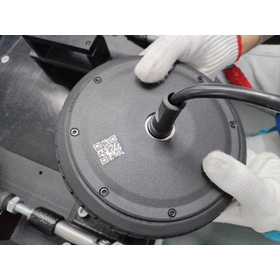
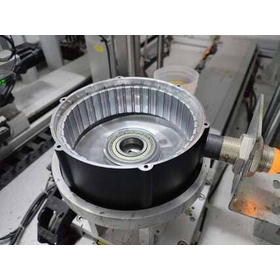
In the quality assurance of electronic devices, the importance of "traceability" in tracking the manufacturing history and components used for printed circuit boards (PCBs) is increasing. When assigning serial numbers or two-dimensional codes (QR or DataMatrix) to the boards, it was common to use labels in the past; however, there was a risk of peeling or smudging due to the high temperatures (around 250°C) in the reflow oven. Therefore, it has now become mainstream to incorporate a laser marker at the front of the SMT (Surface Mount Technology) line (before the solder printer and mounter), which directly burns the solder resist of the board using a laser (peeling and coloring). The key to successfully achieving this laser printing is "the accurate stopping and positioning of the board." To print extremely small two-dimensional codes and read them accurately with a camera in the subsequent process, the board must stop on the conveyor without any millimeter-level shifts or vibrations. The "AC Servo Motor (CMS Series)" that we handle is a motor that can be considered as the driving axis for precise board transport and positioning mechanisms such as laser markers in these SMT lines.

  • CMS_2-min.jpeg
  • CMS_3-min.jpeg
  • CMS_4-min.jpeg
  • CMS_5-min.jpeg
  • CMS_6-min.jpeg
  • Servo motor
  • Servo
  • Other transport machines and equipment
  • Servo motor

Added to bookmarks

Bookmarks list

Bookmark has been removed

Bookmarks list

You can't add any more bookmarks

By registering as a member, you can increase the number of bookmarks you can save and organize them with labels.

Free membership registration

[Foam Reduction and Automatic Collection] Hub Servo Motor for Collection AGV

Explanation of reducing waste polystyrene through solvent reduction and automatic collection. Consideration of in-wheel motors for collection AGVs and autonomous robots that patrol the site.

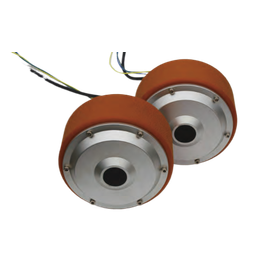
In logistics warehouses and manufacturing plants, the large volume of "waste expanded polystyrene" generated as packaging material puts pressure on storage space and significantly increases waste plastic processing costs. A system that dissolves and reduces 1 kg of waste expanded polystyrene into a gel-like state using 1 liter of a dedicated solvent (HM solvent) and re-resources it at a plant is a groundbreaking solution that balances waste volume reduction and improved recycling rates. To further enhance the efficiency of this volume reduction process, the introduction of "automated collection robots (collection AGVs)" that autonomously patrol within factories and distribution centers to transport bulky expanded polystyrene to processing equipment is underway. The "HSM series (hub servo motor)" we handle is an in-wheel motor that incorporates a direct drive motor inside the wheel. Since it does not require transmission mechanisms such as gears, it can be considered as a drive unit for low-floor, compact collection robots and smart AGVs.

  • Company:CLUW Inc.
  • Price:100,000 yen-500,000 yen
  • RP2.png
  • RP3.jpg
  • RP5.jpg
  • RP6.jpg
  • RP8.jpg
  • RP9.jpg
  • RP12.jpg
  • RP13.1.jpg
  • RP15.jpg
  • wheel
  • Trolley
  • Drive system parts
  • Servo motor

Added to bookmarks

Bookmarks list

Bookmark has been removed

Bookmarks list

You can't add any more bookmarks

By registering as a member, you can increase the number of bookmarks you can save and organize them with labels.

Free membership registration

Self-propelled scara robot battery-powered servo motor

"There's no choice but for humans to do it." An explanation of the structure of manual work automation and autonomous robots. Optimal low-voltage servo motors for AGV + SCARA robots.

"People often resign themselves to the fact that complex assembly, picking, and inspection tasks can only be done through manual labor and movement..." The 'self-driving robot (mobile manipulator)' equipped with arms such as a SCARA robot on an AGV (automated guided vehicle) is gaining attention as the "ultimate labor-saving and efficiency-enhancing solution" that automates these simple and manual tasks, thereby alleviating the serious labor shortage. This system, which moves freely within the factory and allows the robotic arm to perform tasks at the desired location, requires "DC battery (low voltage) operation" as the unit is cable-free. At the same time, advanced servo control is essential for the precise operation of the arm and the millimeter-level positioning of the unit. Our "low voltage, high output coreless servo motors (CMS series)" are large-capacity motors with servo specifications that enable high-precision control thanks to the built-in encoders. They can be considered as an option for achieving uncompromising precision control and powerful operation in the drive axes and arm joints of self-driving SCARA robots powered by battery.

  • CMS_2-min.jpeg
  • CMS_3-min.jpeg
  • CMS_4-min.jpeg
  • CMS_5-min.jpeg
  • CMS_6-min.jpeg
  • Servo motor
  • Servo
  • Other transport machines and equipment
  • Servo motor

Added to bookmarks

Bookmarks list

Bookmark has been removed

Bookmarks list

You can't add any more bookmarks

By registering as a member, you can increase the number of bookmarks you can save and organize them with labels.

Free membership registration

[Battery-operated] DC low voltage, high output servo motor

Achieves control equivalent to AC servos in a battery environment. DC 24V/48V servo motors are optimal for drive design of AGVs and mobile robots.

The development of AGVs (Automated Guided Vehicles) and autonomous robots, which are rapidly increasing due to the automation of factories and warehouses. These devices are based on "battery-powered (DC power)" without outlets, but require "high-precision positioning and high torque, like AC servo motors," for movement and arm control. However, operating a typical AC servo motor with a battery requires a large inverter (boost circuit), which poses significant challenges such as increased weight of the unit, space constraints, and worsened battery consumption. Our "CMS Series (Low Voltage, High Output Coreless Servo Motors)" addresses this issue. It can be driven directly with low voltage battery power of DC 24V/48V, achieving precise feedback control equivalent to AC servos through high-resolution encoders. Since a boost circuit is unnecessary, this revolutionary drive unit simultaneously enables weight reduction and space-saving of the robot body, as well as extending continuous operating time.

  • CMS_2-min.jpeg
  • CMS_3-min.jpeg
  • CMS_4-min.jpeg
  • CMS_5-min.jpeg
  • CMS_6-min.jpeg
  • Machining Center
  • SCARA Robot
  • Articulated Robot
  • Servo motor

Added to bookmarks

Bookmarks list

Bookmark has been removed

Bookmarks list

You can't add any more bookmarks

By registering as a member, you can increase the number of bookmarks you can save and organize them with labels.

Free membership registration

Battery-operated compatible DC low voltage high output servo motor

Achieves AC servo-equivalent control in a battery environment. Ideal DC 24V/48V servo motors for driving design of AGVs and mobile robots.

The development of AGVs (Automated Guided Vehicles) and autonomous robots, which are rapidly increasing due to the automation of factories and warehouses. These devices are based on "battery operation (DC power)" without outlets, but require "high-precision positioning and high torque, like AC servo motors," for driving and arm control. However, powering a typical AC servo motor with a battery requires a large inverter (boost circuit), which leads to significant challenges such as increased weight of the unit, space constraints, and worsened battery consumption. Our "CMS series (low-voltage, high-output coreless servo motors)" addresses this issue. It can be driven directly with low-voltage battery power of DC 24V/48V, achieving precise feedback control equivalent to AC servos through high-resolution encoders. Since a boost circuit is unnecessary, this revolutionary drive unit simultaneously enables weight reduction and space-saving of the robot body, as well as extending continuous operating time.

  • CMS_2-min.jpeg
  • CMS_3-min.jpeg
  • CMS_4-min.jpeg
  • CMS_5-min.jpeg
  • CMS_6-min.jpeg
  • Food Conveyor Equipment
  • Medicine Delivery Equipment
  • Medicine transport equipment
  • Servo motor

Added to bookmarks

Bookmarks list

Bookmark has been removed

Bookmarks list

You can't add any more bookmarks

By registering as a member, you can increase the number of bookmarks you can save and organize them with labels.

Free membership registration