We have compiled a list of manufacturers, distributors, product information, reference prices, and rankings for Training videos for the manufacturing industry.
ipros is IPROS GMS ・ IPROS One of the largest technical database sites in Japan that collects information on.

Training videos for the manufacturing industry - List of Manufacturers, Suppliers, Companies and Products | IPROS GMS

Training videos for the manufacturing industry Product List

61~74 item / All 74 items

Displayed results

Foreign Education for the IT Industry: Why Doesn't It Get Through?

Free educational materials to help foreign employees overcome the language barrier of IT terminology and deepen their understanding.

In the IT industry, understanding specialized terminology greatly affects operational efficiency. Particularly in today's world, where multilingual support is required, accurate information transmission to foreign employees is essential for project success. The language barrier can easily lead to misunderstandings and increase the burden on educators, which is also a challenge. This document explains the key points for effective foreign employee training, taking into account the unique challenges of the IT industry, provided by our company, which offers a "10-minute multilingual training animation production service." 【Usage Scenarios】 - Promoting understanding of IT terminology - Multilingualization of technical documents - Facilitating communication within teams 【Benefits of Implementation】 - Reduction of rework due to misunderstandings - Decrease in training costs - Smooth progress of projects

  • Other contract services
  • Training videos for the manufacturing industry

Added to bookmarks

Bookmarks list

Bookmark has been removed

Bookmarks list

You can't add any more bookmarks

By registering as a member, you can increase the number of bookmarks you can save and organize them with labels.

Free membership registration

Animation procedure explanation available in 11 languages for the manufacturing industry.

Supports 11 languages! Clear step-by-step instructions in videos. 87.5% reduction in educational workload!

In the explanation of manufacturing procedures, a precise understanding of the tasks is essential. Especially in a multinational work environment, language barriers can lead to misunderstandings, resulting in risks of accidents and quality issues. LinkBrain 10 supports up to 11 languages and promotes an understanding equivalent to that of Japanese staff by combining animations with explanations in their native languages. 【Usage Scenarios】 - Explanation of work procedures on the manufacturing floor - Safety training for foreign staff - Education related to quality control 【Effects of Implementation】 - Elimination of misunderstandings due to language barriers - Reduction in training time - Improvement in safety

  • Distance learning/E-learning
  • Training videos for the manufacturing industry

Added to bookmarks

Bookmarks list

Bookmark has been removed

Bookmarks list

You can't add any more bookmarks

By registering as a member, you can increase the number of bookmarks you can save and organize them with labels.

Free membership registration

DX for step-by-step explanations in anime supported in 11 languages for the manufacturing industry!

Support for 11 languages! Reduce educational workload with videos and enhance safety.

In the explanation of manufacturing procedures, a precise understanding of the tasks is essential. In increasingly multinational environments, language barriers heighten the risks of accidents and quality defects. LinkBrain 10 supports up to 11 languages and promotes deep understanding through explanations and animations in the native language. This enables an immediate understanding level equivalent to that of Japanese staff, facilitating safe operations. 【Usage Scenarios】 - Explanation of work procedures in manufacturing sites - Safety training for foreign staff - Education related to quality control 【Benefits of Implementation】 - Elimination of misunderstandings due to language barriers - Reduction of operational mistakes - Shortening of training time

  • Distance learning/E-learning
  • Training videos for the manufacturing industry

Added to bookmarks

Bookmarks list

Bookmark has been removed

Bookmarks list

You can't add any more bookmarks

By registering as a member, you can increase the number of bookmarks you can save and organize them with labels.

Free membership registration

The true nature of the labor shortage in security is the 800 hours a year taken away by training?

The digitalization of education has reduced the training time for security personnel by up to 63%.

In the security industry, as the introduction of AI surveillance systems progresses, there is a demand for high-quality training in system operation and response during emergencies. In situations requiring new security personnel or multilingual support, issues such as the personalization of training and time costs often arise. The time that experienced security personnel spend on training can also potentially interfere with their primary duties. Our educational videos address these challenges and achieve standardization and efficiency in training. 【Usage Scenarios】 - Operation explanations during the introduction of AI surveillance systems - Training for new employees in multilingual environments - Emergency response training 【Benefits of Implementation】 - Reduction in training time - Standardization of training quality - Early integration of foreign staff through multilingual support

  • Distance learning/E-learning
  • Distance learning/E-learning
  • Training videos for the manufacturing industry

Added to bookmarks

Bookmarks list

Bookmark has been removed

Bookmarks list

You can't add any more bookmarks

By registering as a member, you can increase the number of bookmarks you can save and organize them with labels.

Free membership registration

The true nature of the labor shortage in the manufacturing industry: Is it the 800 hours a year taken away by education?

Reduce training time for on-site leaders! Visualize training costs.

In the manufacturing industry, the introduction of collaborative robots is essential for improving productivity. However, educating new employees and multinational staff is crucial for acquiring new technologies. If skilled on-site leaders spend too much time on training, it may neglect their primary duties and potentially squeeze profits. By digitizing education, there is a possibility to reduce time constraints. 【Usage Scenarios】 - Training for operating collaborative robots - Safety training - Technical guidance for multinational staff 【Effects of Implementation】 - Reduction in training time - Increased operational efficiency for on-site leaders - Visualization of training costs

  • Distance learning/E-learning
  • Distance learning/E-learning
  • Training videos for the manufacturing industry

Added to bookmarks

Bookmarks list

Bookmark has been removed

Bookmarks list

You can't add any more bookmarks

By registering as a member, you can increase the number of bookmarks you can save and organize them with labels.

Free membership registration

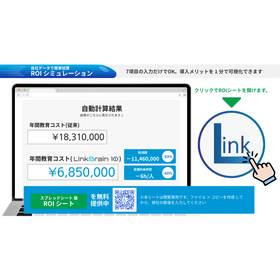
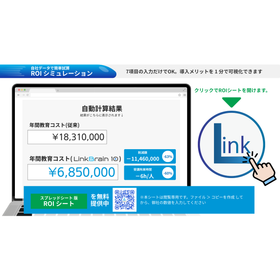
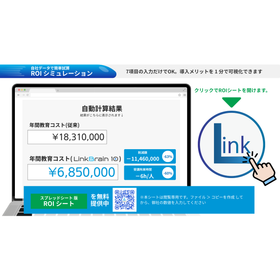
The true nature of the labor shortage for autonomous driving: Is it the 800 hours a year taken away by education?

The first step in reducing educational costs that supports the evolution of autonomous driving technology.

As autonomous driving technology evolves, it is essential to cultivate talent with advanced knowledge and skills. In particular, specialized knowledge to support safe operations and the ability to adapt to the latest technologies are required. However, traditional educational methods can increase the burden on field leaders and may lead to a decline in the quality of education. Our education cost and ROI simulation sheet visualizes the challenges in your training and demonstrates the potential for efficiency through digitalization. 【Usage Scenarios】 - Training for new employees on autonomous driving technology - Education for foreign engineers through multilingual support - Continuous skill enhancement in response to technological innovation 【Effects of Implementation】 - Reduction in training time - Visualization of training costs - Improvement in the quality of education

  • Distance learning/E-learning
  • Distance learning/E-learning
  • Training videos for the manufacturing industry

Added to bookmarks

Bookmarks list

Bookmark has been removed

Bookmarks list

You can't add any more bookmarks

By registering as a member, you can increase the number of bookmarks you can save and organize them with labels.

Free membership registration

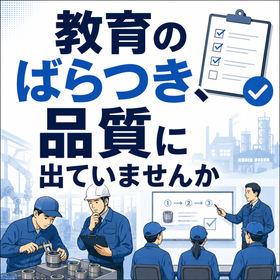
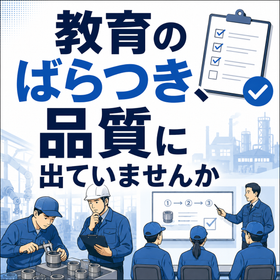
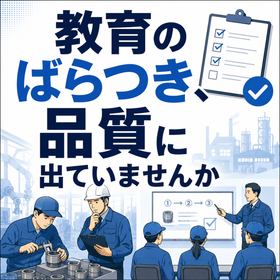
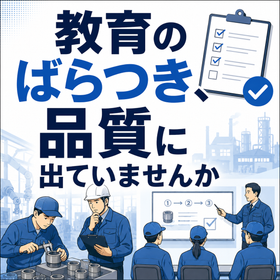
Is there a variation in the quality of education for IT and software?

Even with the same procedure manual, if the teaching method differs, the on-site judgment will gradually change.

In the IT and software industry, standardizing development processes and operational procedures is essential for project success and quality maintenance. Particularly when introducing new technologies or when there is variability in team members' skill levels, differences in explanations and understanding among leaders can impact the quality and efficiency of work. Such small discrepancies can lead to bugs and development delays. To organize the variability in education and standardize on-site training, utilizing visual and easy-to-understand teaching materials is effective. Our company provides educational videos to support skill standardization in the IT and software industry. 【Usage Scenarios】 - Team training during the introduction of new technologies - Standardization of development and operational procedures - On-the-job training for new engineers - Education in remote work environments 【Benefits of Implementation】 - Quality improvement through uniformity in educational content - Reduction and efficiency in learning time - Standardization of previously individualized training - Utilization in global teams through multilingual support How should we organize the variability in education and standardize on-site training? Please check the materials for more details.

  • Distance learning/E-learning
  • Distance learning/E-learning
  • Training videos for the manufacturing industry

Added to bookmarks

Bookmarks list

Bookmark has been removed

Bookmarks list

You can't add any more bookmarks

By registering as a member, you can increase the number of bookmarks you can save and organize them with labels.

Free membership registration

Is there a variation in the quality of education for medical and healthcare purposes?

Even with the same procedure manual, if the teaching method differs, the on-site judgment will gradually change as well.

In the medical and healthcare industry, accurate knowledge and the sharing of procedures are essential to ensure patient safety and provide high-quality care. Particularly in education regarding complex medical procedures and the latest treatments, differences in how instructors explain concepts and the varying levels of understanding can impact decision-making in the field. The situation where "even though we are teaching in the same way, the level of understanding varies from person to person" can influence responses to patients and decisions related to medical safety, even if the discrepancies are small. How should we organize the variations in education and standardize on-site training? Please refer to the materials for more details. 【Usage Scenarios】 - Sharing procedures for medical treatments - Dissemination of safety management rules - Explanation of new drugs and treatment methods - Education for foreign staff 【Effects of Implementation】 - Standardization of understanding among healthcare professionals - Reduction of the risk of medical errors - Decrease in educational costs - Early empowerment of foreign staff through multilingual support

  • Distance learning/E-learning
  • Distance learning/E-learning
  • Training videos for the manufacturing industry

Added to bookmarks

Bookmarks list

Bookmark has been removed

Bookmarks list

You can't add any more bookmarks

By registering as a member, you can increase the number of bookmarks you can save and organize them with labels.

Free membership registration

Is there a variation in education quality for the financial industry?

Even with the same procedure manual, if the teaching method differs, the on-site judgments will gradually change.

In the financial industry, compliance adherence and accuracy in customer interactions are required. In particular, when it comes to changes in regulations or the thorough dissemination of internal rules, differences in understanding among responsible personnel can lead to the transmission of incorrect information or judgment errors. Education centered on on-the-job training (OJT) can create discrepancies due to variations in how instructors explain and emphasize points. These small differences in understanding can increase the risk of compliance violations or lead to situations that undermine customer trust. Organizing the variations in education and standardizing on-site training is essential for maintaining risk management and service quality. 【Usage Scenarios】 - Standardization of compliance training - Rapid education for new employees and those transferring - Information dissemination during legal amendments or changes in internal regulations - Education in situations requiring multilingual support 【Effects of Implementation】 - Improved understanding through uniformity of educational content - Unification of judgment criteria among responsible personnel - Reduction of compliance risks - Alleviation of the burden on educators How should we organize the variations in education and standardize on-site training? Please refer to the materials for more details.

  • Distance learning/E-learning
  • Distance learning/E-learning
  • Training videos for the manufacturing industry

Added to bookmarks

Bookmarks list

Bookmark has been removed

Bookmarks list

You can't add any more bookmarks

By registering as a member, you can increase the number of bookmarks you can save and organize them with labels.

Free membership registration

Are there variations in education and quality in educational institutions?

Even with the same procedure manual, if the teaching method differs, the on-site judgment will gradually change.

In educational institutions, it is essential to maintain a uniform understanding among learners and provide high-quality education. Particularly in fields that involve practical skills and specialized knowledge, differences in the way instructors explain concepts and emphasize points can lead to disparities in learners' acquisition of knowledge. This variation in understanding raises concerns about its potential impact on decision-making and work quality in future practical settings. To organize the discrepancies in education and standardize learning effectiveness, visually engaging and easy-to-understand teaching materials are effective. Our company offers solutions to standardize on-site education in the manufacturing industry through video, and we can also contribute to the development of teaching materials in educational institutions. ## Use Cases * Standardization of practical instruction * Support for new and foreign learners * Communication of complex procedures and important points * Content that requires repetitive learning ## Benefits of Implementation * Uniformity in understanding among learners * Reduced burden on instructors * Support for retention of educational content * Visualization of learning effectiveness How should we organize the discrepancies in education and standardize on-site training? Please refer to the materials for more details.

  • Distance learning/E-learning
  • Distance learning/E-learning
  • Training videos for the manufacturing industry

Added to bookmarks

Bookmarks list

Bookmark has been removed

Bookmarks list

You can't add any more bookmarks

By registering as a member, you can increase the number of bookmarks you can save and organize them with labels.

Free membership registration

Are you experiencing variability and quality issues in education for educational institutions?

Even with the same procedure manual, if the teaching method differs, the on-site judgments will gradually change.

In educational institutions, it is required to maintain a uniform understanding among learners and provide high-quality education. Particularly in fields that involve practical skills and specialized knowledge, differences in the way instructors explain concepts and emphasize points can lead to disparities in learners' acquisition of knowledge. This variation in understanding raises concerns about its impact on future decision-making and work quality in the field. To organize the inconsistencies in education and standardize learning outcomes, visually appealing and easy-to-understand teaching materials are effective. Our company offers solutions to standardize on-site education in the manufacturing industry through video, and we can also contribute to the development of teaching materials in educational institutions. ## Usage Scenarios * Standardization of practical instruction * Support for new and foreign learners * Communication of complex procedures and important points * Content that requires repetitive learning ## Effects of Implementation * Uniformity in understanding among learners * Reduced burden on instructors * Support for retention of educational content * Visualization of learning outcomes How should we organize the variations in education and standardize on-site training? Please refer to the materials for more details.

  • Distance learning/E-learning
  • Distance learning/E-learning
  • Training videos for the manufacturing industry

Added to bookmarks

Bookmarks list

Bookmark has been removed

Bookmarks list

You can't add any more bookmarks

By registering as a member, you can increase the number of bookmarks you can save and organize them with labels.

Free membership registration

Are you experiencing variability and quality issues in education for educational institutions?

Even with the same procedure manual, if the teaching method is different, the on-site judgments will gradually change.

In educational institutions, it is essential to maintain a uniform level of understanding among learners and provide high-quality education. Particularly in fields that involve practical skills and specialized knowledge, differences in the way instructors explain concepts and emphasize points can lead to disparities in learners' acquisition of knowledge. This variation in understanding raises concerns about its potential impact on future decision-making and work quality in the field. To organize the inconsistencies in education and standardize learning outcomes, visually engaging and easy-to-understand teaching materials are effective. Our company offers solutions to standardize on-site training in the manufacturing industry through video, and we can also contribute to the development of teaching materials in educational institutions. ## Use Cases * Standardization of practical instruction * Support for new and foreign learners * Communication of complex procedures and important points * Content that requires repetitive learning ## Benefits of Implementation * Uniformity in understanding among learners * Reduced burden on instructors * Support for retention of educational content * Visualization of learning effectiveness How should we organize the variations in education and standardize on-site training? Please refer to the materials for more details.

  • Distance learning/E-learning
  • Distance learning/E-learning
  • Training videos for the manufacturing industry

Added to bookmarks

Bookmarks list

Bookmark has been removed

Bookmarks list

You can't add any more bookmarks

By registering as a member, you can increase the number of bookmarks you can save and organize them with labels.

Free membership registration

Isn't there a variation in the quality of education for entertainment purposes?

Even with the same procedure manual, if the teaching method differs, the on-site judgment will gradually change.

In the specialized technical field of the entertainment industry, accurate communication of advanced skills and knowledge is required. In particular, the understanding of detailed procedures, safety management, and quality standards in the production process tends to vary among individuals responsible for these tasks. In on-the-job training (OJT), differences in how instructors explain concepts and emphasize points can affect the understanding of the work, potentially leading to variations in the quality of the produced materials. These small discrepancies can ultimately impact the quality and safety of the final product. It is important to organize the variations in education and standardize on-site training to maintain stable quality. 【Usage Scenarios】 - Specialized technical training for new staff - Explanation of work procedures to foreign staff - Promotion of understanding complex production processes - Enforcement of safety rules 【Effects of Implementation】 - Stabilization of quality through standardization of educational content - Early empowerment of new staff - Smooth communication with foreign staff - Reduced burden on educators How should we organize the variations in education and standardize on-site training? Please refer to the materials for more details.

  • Distance learning/E-learning
  • Distance learning/E-learning
  • Training videos for the manufacturing industry

Added to bookmarks

Bookmarks list

Bookmark has been removed

Bookmarks list

You can't add any more bookmarks

By registering as a member, you can increase the number of bookmarks you can save and organize them with labels.

Free membership registration

Is the variability and quality of education not reflected in retail and distribution?

Even with the same procedure manual, if the teaching method differs, the on-site judgments will gradually change.

In the retail and distribution industry, there is a demand for uniformity in the quality of customer service. Especially in customer interactions, the level of service provided by each staff member can significantly impact the overall impression of the store. With training primarily based on on-the-job training (OJT), differences in the way instructors explain and emphasize certain points can lead to subtle variations in how customers are treated. Such discrepancies in understanding can potentially affect customer satisfaction and repeat rates. It is important to organize the variations in training and standardize on-site education. 【Usage Scenarios】 - Customer service etiquette training for new staff - Standardization of product knowledge and sales pitches - Sharing procedures for handling complaints - Unifying operations in stores that require multilingual support 【Benefits of Implementation】 - Increased customer satisfaction through uniformity in service quality - Early development of staff into effective team members and reduction of training costs - Overall improvement in service levels across the store - Enhanced efficiency in training foreign staff How should we organize the variations in training and standardize on-site education? Please refer to the materials for more details.

  • Distance learning/E-learning
  • Distance learning/E-learning
  • Training videos for the manufacturing industry

Added to bookmarks

Bookmarks list

Bookmark has been removed

Bookmarks list

You can't add any more bookmarks

By registering as a member, you can increase the number of bookmarks you can save and organize them with labels.

Free membership registration