iPROS Manufacturing
  • Search for products by classification category

    • Electronic Components and Modules
      Electronic Components and Modules
      59334items
    • Machinery Parts
      Machinery Parts
      74686items
    • Manufacturing and processing machinery
      Manufacturing and processing machinery
      99768items
    • Scientific and Physics Equipment
      Scientific and Physics Equipment
      34892items
    • Materials
      Materials
      37129items
    • Measurement and Analysis
      Measurement and Analysis
      54970items
    • Image Processing
      Image Processing
      15066items
    • Control and Electrical Equipment
      Control and Electrical Equipment
      53205items
    • Tools, consumables, and supplies
      Tools, consumables, and supplies
      64369items
    • Design and production support
      Design and production support
      12474items
    • IT/Network
      IT/Network
      43636items
    • Office
      Office
      13765items
    • Business support services
      Business support services
      33273items
    • Seminars and Skill Development
      Seminars and Skill Development
      6333items
    • Pharmaceutical and food related
      Pharmaceutical and food related
      30454items
    • others
      73748items
  • Search for companies by industry

    • Manufacturing and processing contract
      7338
    • others
      4993
    • Industrial Machinery
      4414
    • Machine elements and parts
      3284
    • Other manufacturing
      2888
    • IT/Telecommunications
      2552
    • Trading company/Wholesale
      2471
    • Industrial Electrical Equipment
      2298
    • Building materials, supplies and fixtures
      1811
    • software
      1636
    • Electronic Components and Semiconductors
      1569
    • Resin/Plastic
      1491
    • Service Industry
      1444
    • Testing, Analysis and Measurement
      1129
    • Ferrous/Non-ferrous metals
      982
    • environment
      699
    • Chemical
      629
    • Automobiles and Transportation Equipment
      563
    • Printing Industry
      508
    • Information and Communications
      455
    • Consumer Electronics
      416
    • Energy
      327
    • Rubber products
      313
    • Food Machinery
      307
    • Optical Instruments
      277
    • robot
      271
    • fiber
      250
    • Paper and pulp
      231
    • Electricity, Gas and Water Industry
      168
    • Pharmaceuticals and Biotechnology
      167
    • Warehousing and transport related industries
      145
    • Glass and clay products
      139
    • Food and Beverage
      129
    • CAD/CAM
      125
    • retail
      109
    • Educational and Research Institutions
      105
    • Medical Devices
      103
    • Ceramics
      98
    • wood
      88
    • Transportation
      83
    • Medical and Welfare
      63
    • Petroleum and coal products
      62
    • Shipbuilding and heavy machinery
      51
    • Aviation & Aerospace
      47
    • Fisheries, Agriculture and Forestry
      42
    • Public interest/special/independent administrative agency
      31
    • equipment
      31
    • self-employed
      24
    • Research and development equipment and devices
      24
    • Government
      23
    • Materials
      22
    • Mining
      17
    • Finance, securities and insurance
      13
    • cosmetics
      11
    • Individual
      10
    • Restaurants and accommodations
      9
    • Police, Fire Department, Self-Defense Forces
      7
    • Laboratory Equipment and Consumables
      4
    • Raw materials for reagents and chemicals
      3
    • Contracted research
      3
  • Special Features
  • Ranking

    • Overall Products Ranking
    • Overall Company Ranking
Search for Products
  • Search for products by classification category

  • Electronic Components and Modules
  • Machinery Parts
  • Manufacturing and processing machinery
  • Scientific and Physics Equipment
  • Materials
  • Measurement and Analysis
  • Image Processing
  • Control and Electrical Equipment
  • Tools, consumables, and supplies
  • Design and production support
  • IT/Network
  • Office
  • Business support services
  • Seminars and Skill Development
  • Pharmaceutical and food related
  • others
Search for Companies
  • Search for companies by industry

  • Manufacturing and processing contract
  • others
  • Industrial Machinery
  • Machine elements and parts
  • Other manufacturing
  • IT/Telecommunications
  • Trading company/Wholesale
  • Industrial Electrical Equipment
  • Building materials, supplies and fixtures
  • software
  • Electronic Components and Semiconductors
  • Resin/Plastic
  • Service Industry
  • Testing, Analysis and Measurement
  • Ferrous/Non-ferrous metals
  • environment
  • Chemical
  • Automobiles and Transportation Equipment
  • Printing Industry
  • Information and Communications
  • Consumer Electronics
  • Energy
  • Rubber products
  • Food Machinery
  • Optical Instruments
  • robot
  • fiber
  • Paper and pulp
  • Electricity, Gas and Water Industry
  • Pharmaceuticals and Biotechnology
  • Warehousing and transport related industries
  • Glass and clay products
  • Food and Beverage
  • CAD/CAM
  • retail
  • Educational and Research Institutions
  • Medical Devices
  • Ceramics
  • wood
  • Transportation
  • Medical and Welfare
  • Petroleum and coal products
  • Shipbuilding and heavy machinery
  • Aviation & Aerospace
  • Fisheries, Agriculture and Forestry
  • Public interest/special/independent administrative agency
  • equipment
  • self-employed
  • Research and development equipment and devices
  • Government
  • Materials
  • Mining
  • Finance, securities and insurance
  • cosmetics
  • Individual
  • Restaurants and accommodations
  • Police, Fire Department, Self-Defense Forces
  • Laboratory Equipment and Consumables
  • Raw materials for reagents and chemicals
  • Contracted research
Special Features
Ranking
  • Overall Products Ranking
  • Overall Company Ranking
  • privacy policy
  • terms of service
  • About Us
  • Careers
  • Advertising
  1. Home
  2. IT/Telecommunications
  3. 日本コンピュータ開発 
  4. Product/Service List
IT/Telecommunications
  • Added to bookmarks

    Bookmarks list

    Bookmark has been removed

    Bookmarks list

    You can't add any more bookmarks

    By registering as a member, you can increase the number of bookmarks you can save and organize them with labels.

    Free membership registration

日本コンピュータ開発 

EstablishmentSeptember 27, 1984
capital5000Ten thousand
number of employees105
addressKanagawa/Ebina-shi/3rd Floor, Nikko Building, 2-4-8 Chuo
phone046-234-7066
  • Special site
  • Official site
last updated:Sep 24, 2025
日本コンピュータ開発 logo
  • Contact this company

    Inquiry Form
  • Company information
  • Products/Services(113)
  • catalog(16)
  • news(14)

日本コンピュータ開発  Product Lineup

  • category

46~67 item / All 67 items

Displayed results

Filter by category

Production Scheduler "Freely" Production Scheduler "Freely"
Semi-custom production management system 'FUSE' for small and medium-sized manufacturing industries. Semi-custom production management system 'FUSE' for small and medium-sized manufacturing industries.
RFID Utilization Platform 'FABRIGATE' RFID Utilization Platform 'FABRIGATE'
お役立ち情報 お役立ち情報
導入事例 導入事例
お役立ち情報

お役立ち情報

中小製造業の方々のためのお役立ち情報

What is XR, which is gaining attention in the manufacturing industry? What are the differences between AR, VR, and MR?

Introducing the differences between various technologies such as AR, VR, and MR, as well as actual use cases!

In recent years, XR technology has been utilized in various industries. It is also being used in smartphone games and 3D visuals, and opportunities to see it have been increasing. XR technology is being utilized by companies as well, and for countries aiming for a digital society, XR can be said to be an essential technology for the future. What kind of technology is XR? This article will introduce the differences between various technologies such as AR, VR, and MR, as well as actual examples of their use. *For detailed content of the article, you can view it through the related links. Please feel free to contact us for more information.*

Added to bookmarks

Bookmarks list

Bookmark has been removed

Bookmarks list

You can't add any more bookmarks

By registering as a member, you can increase the number of bookmarks you can save and organize them with labels.

Free membership registration

What is 5G? An IT trend that the manufacturing industry should pay attention to.

An important technology that will support future communication environments! Introducing its features and possibilities.

Have you heard of "5G"? In recent years, 5G-compatible smartphones have been sold, so many people may have come across the term. 5G is also being used in businesses and factories, making it an important technology that will support future communication environments. That said, I think many people do not know "how it is superior." Even if they vaguely understand that it is "high performance," they may not fully grasp "how things will change with its implementation" without knowledge. How will the environment change with the introduction of 5G? I will introduce the features and possibilities of 5G. *You can view the detailed content of the article through the related links. For more information, please feel free to contact us.*

Added to bookmarks

Bookmarks list

Bookmark has been removed

Bookmarks list

You can't add any more bookmarks

By registering as a member, you can increase the number of bookmarks you can save and organize them with labels.

Free membership registration

What is a smart factory? Reasons and benefits necessary for the manufacturing industry.

If you are engaged in the manufacturing industry, it is essential to know! Here is an introduction to what it entails.

Have you heard of "smart factories"? It is an initiative aimed at the Fourth Industrial Revolution, and it is believed that in the future, most companies will transition to smart factories. Policies regarding smart factories are being implemented not only domestically but also in various countries around the world, and it is essential to be aware of this if you are engaged in the manufacturing industry. What exactly is a smart factory? I will introduce the reasons why it is needed and the benefits of its realization. *You can view the detailed content of the article through the related links. For more information, please feel free to contact us.*

Added to bookmarks

Bookmarks list

Bookmark has been removed

Bookmarks list

You can't add any more bookmarks

By registering as a member, you can increase the number of bookmarks you can save and organize them with labels.

Free membership registration

What is ECRS? The Four Principles of Improvement That Serve as a Shortcut to Business Improvement and Practical Examples.

Guidelines for Improving Work Processes! Introduction to Four Principles and Practical Examples

What is necessary in the manufacturing site is to improve "work efficiency" and "productivity." Additionally, cost reduction, workforce reduction, and mistake reduction are also important factors, and these issues can be considered eternal challenges in the manufacturing industry. However, once something is completed, changing it is not an easy task. If there have been no problems so far, one might think that there are "no issues" and that it is "optimized." In such cases, it is good to consider using "ECRS" as a reference. ECRS is a guideline for improving work processes and is helpful in addressing unnecessary parts of the workflow. What does ECRS entail? I will introduce its four principles and practical examples. *For detailed content of the article, please refer to the related links. For more information, feel free to contact us.*

Added to bookmarks

Bookmarks list

Bookmark has been removed

Bookmarks list

You can't add any more bookmarks

By registering as a member, you can increase the number of bookmarks you can save and organize them with labels.

Free membership registration

What is the dynamic cell production method?

The production method that is central to Industry 4.0! Introducing the characteristics of the production method and the challenges in its implementation.

In recent years, various IT technologies have been announced. Around the world, policies aimed at a digital society are being implemented. In Germany, the concept of Industry 4.0, which signifies the Fourth Industrial Revolution, is being promoted, and an IT revolution is taking place across various industries, starting with manufacturing. The dynamic cell production method is one of the necessary production methods born from this IT revolution to respond to the rapid changes in consumer needs. With the realization of the dynamic cell production method, improvements in operational efficiency and the resolution of labor shortages, which are issues in the manufacturing industry, are expected. What kind of production method is the dynamic cell production method? This article will introduce the characteristics of the production method and the challenges in its implementation, focusing on this key production method of Industry 4.0. *For more detailed information, please refer to the related links. Feel free to contact us for further inquiries.*

Added to bookmarks

Bookmarks list

Bookmark has been removed

Bookmarks list

You can't add any more bookmarks

By registering as a member, you can increase the number of bookmarks you can save and organize them with labels.

Free membership registration

What is a wearable device? The use of wearable devices in manufacturing.

IT trends that the manufacturing industry should pay attention to! Introducing features and examples of utilization.

Have you heard of wearable devices? They are used in medical and caregiving settings to monitor blood pressure and pulse, but in recent years, they have also been utilized in manufacturing environments. Not only are they expected to manage employee health, but they also aim to improve productivity, leading various companies to pay attention to wearable devices. What exactly are wearable devices? I will introduce their features and examples of their use. *You can view the detailed content of the article through the related links. For more information, please feel free to contact us.*

Added to bookmarks

Bookmarks list

Bookmark has been removed

Bookmarks list

You can't add any more bookmarks

By registering as a member, you can increase the number of bookmarks you can save and organize them with labels.

Free membership registration

What is the importance of production planning in the manufacturing industry?

Introducing three key points for optimizing production planning and effective tools!

To manufacture products, a production plan is necessary. This is not limited to manufacturing, but without a plan, things become chaotic, and efficient work cannot be achieved. In production, the presence or absence of a production plan is very important. That said, precisely because it is important, creating a plan becomes challenging. A failed plan can impact work hours and costs, becoming a burden for the company. When creating a production plan, what should you be aware of? I will introduce effective tools that make production planning easier. *For more detailed information, please refer to the related links. Feel free to contact us for more details.*

Added to bookmarks

Bookmarks list

Bookmark has been removed

Bookmarks list

You can't add any more bookmarks

By registering as a member, you can increase the number of bookmarks you can save and organize them with labels.

Free membership registration

What are dynamic capabilities?

Three abilities necessary to survive in a VUCA world! The ability to adapt to change is essential.

Dynamic capabilities, which have been a topic of discussion in recent years, refer to the three abilities necessary for corporate transformation and are attracting attention across various companies and industries. Changes in societal conditions, such as environmental conservation and immigration measures, have been rapid in recent years. It can be said that the COVID-19 pandemic has significantly altered the social landscape. There are not a few companies that have gone bankrupt, and many companies face uncertain futures. To protect businesses and factories, the ability to adapt to change (dynamic capabilities) is essential. What exactly are dynamic capabilities? This article will introduce the three abilities that constitute them and the reasons why they are needed. *For more detailed information, please refer to the related links. Feel free to contact us for further inquiries.*

Added to bookmarks

Bookmarks list

Bookmark has been removed

Bookmarks list

You can't add any more bookmarks

By registering as a member, you can increase the number of bookmarks you can save and organize them with labels.

Free membership registration

What is process management? The purpose and importance of process management in the manufacturing industry.

Introducing the differences with production management and the importance of process management!

In the manufacturing industry, the term "process management" is often heard. As the name suggests, process management involves managing the manufacturing process, and many companies and factories have adopted it. However, there are surely some people who do not understand "why it is necessary." Even if it is said that "process management is necessary to understand the manufacturing process," if one does not grasp the meaning of management, it will just become a matter of collecting information. What is the purpose of conducting process management? This article will introduce the differences from production management and the importance of process management. *For more detailed content, please refer to the related links. For further inquiries, feel free to contact us.*

Added to bookmarks

Bookmarks list

Bookmark has been removed

Bookmarks list

You can't add any more bookmarks

By registering as a member, you can increase the number of bookmarks you can save and organize them with labels.

Free membership registration

What is the OODA loop required in the manufacturing industry?

A decision-making model needed in today's era! Introducing the four elements that make it up.

In recent years, the OODA loop has gained popularity. Due to the impact of a digital society, it has started to attract attention across various industries. Companies that previously used cycles such as the PDCA cycle are finding it difficult to keep up with the rapid changes in information accelerated by the spread of the internet. As we adapt to the future digital society, there is a demand for a new cycle that can respond to changes in information. What kind of decision-making model is the OODA loop? This article will introduce the four elements that make up the OODA loop and its differences from the PDCA cycle. *For more detailed information, please refer to the related links. Feel free to contact us for further inquiries.*

Added to bookmarks

Bookmarks list

Bookmark has been removed

Bookmarks list

You can't add any more bookmarks

By registering as a member, you can increase the number of bookmarks you can save and organize them with labels.

Free membership registration

Nine derived frameworks of QCD that diversify depending on industry and position.

It is necessary to know in order to make renovations towards a digital society! Here is an introduction to what kind of thinking it involves.

Have you ever heard the term "QCD"? It is an element that responds to customer demands and can be said to be necessary for improving corporate profits and growth. In recent years, many companies have been adopting new equipment and systems in the direction of a digital society. There are also quite a few companies that are working based on QCD. What kind of concept is QCD? We will also introduce the diversified meanings of QCD. *For more detailed content of the article, you can view it through the related links. Please feel free to contact us for more information.

Added to bookmarks

Bookmarks list

Bookmark has been removed

Bookmarks list

You can't add any more bookmarks

By registering as a member, you can increase the number of bookmarks you can save and organize them with labels.

Free membership registration

The purpose and benefits of implementing production management systems in the manufacturing industry.

Introducing the purpose of implementation, what can be done with the production management system, and its benefits!

As the introduction of IoT is becoming active, especially in the manufacturing industry, many people may be considering the implementation of production management systems. On the other hand, there are likely many companies that are hesitant to take the plunge into implementation due to questions such as, "What is the purpose of introducing a production management system?" and "What will change if we implement a production management system?" Therefore, in this article, we will explain the objectives of implementing production management systems in the manufacturing industry, what can be achieved with these systems, and their benefits. *For detailed content of the article, you can view it through the related links. For more information, please refer to the PDF materials or feel free to contact us.*

Added to bookmarks

Bookmarks list

Bookmark has been removed

Bookmarks list

You can't add any more bookmarks

By registering as a member, you can increase the number of bookmarks you can save and organize them with labels.

Free membership registration

7 Measures to Address Human Errors in Manufacturing! Causes and Countermeasures

What is necessary to address human error! Introducing the causes of human error as well.

Human error is something that cannot be avoided when people are performing tasks. It can be said that "humans are creatures that make mistakes," and that is something we must accept. However, that does not mean we can condone mistakes. Depending on the nature of the error, it can lead to injuries or fatal accidents, so it is necessary to take preventive measures in advance. What is needed to address human error? We will introduce the causes of human error along with the necessary countermeasures. *For more detailed information, please refer to the related links. Feel free to contact us for further inquiries.*

Added to bookmarks

Bookmarks list

Bookmark has been removed

Bookmarks list

You can't add any more bookmarks

By registering as a member, you can increase the number of bookmarks you can save and organize them with labels.

Free membership registration

37 Checkpoints to Avoid Failing in Choosing a Production Management System

Free checklist summarizing key points for selecting the optimal production management system for your company!

In 2024, factories that have achieved digital transformation (DX) are seeing an increase in performance. Implementing a production management system is key to promoting DX in the manufacturing industry. However, even when a production management system is implemented, we often hear about failure cases such as: - Only a few functions are being utilized, resulting in no cost-effectiveness. - Aligning business processes with the system has increased unnecessary man-hours. - On-site employees are unable to effectively use the system. Since production management systems are often expensive, failing to achieve the intended benefits can lead to losses, and some companies may hesitate to proceed with implementation. Therefore, we have prepared "37 Checkpoints to Avoid Failing in Choosing a Production Management System" for companies considering the implementation of such systems. Please make use of this guide during your implementation process. If you have any questions or concerns, feel free to contact us for assistance.

Added to bookmarks

Bookmarks list

Bookmark has been removed

Bookmarks list

You can't add any more bookmarks

By registering as a member, you can increase the number of bookmarks you can save and organize them with labels.

Free membership registration

[Manufacturing Industry DX] How to Choose a Production Management System Without Failure and the Benefits of Implementation

Free checklist summarizing the key points for selecting the optimal production management system for your company! Implementing a production management system is key to promoting DX in the manufacturing industry.

In 2024, the performance of factories that have achieved digital transformation (DX) is on the rise. To promote DX in the manufacturing industry, the introduction of a production management system is key. To avoid failures in implementing a production management system, it is important to: - Identify current problems and challenges - Clarify the priorities of the issues to be resolved - Determine whether the system is suitable for your company's industry, size, and production style Organizing the purpose of the implementation and your company's needs is crucial in selecting the right system. Production management systems are often expensive, and choosing one solely based on its multifunctionality can lead to issues such as only being able to use a portion of its features, not achieving cost-effectiveness, increasing workload by aligning business processes with the system's standard specifications, or the staff being unable to utilize it effectively. Therefore, we have prepared a guide titled "37 Checkpoints for Choosing a Production Management System," which summarizes the key points for selecting the most suitable production management system for your company. By simply checking off items on the checklist, you can organize the necessary features. We encourage you to make use of it. Additionally, we also offer a semi-customizable production management system called FUSE, which can be tailored to fit your business and challenges, so please take a look.

Added to bookmarks

Bookmarks list

Bookmark has been removed

Bookmarks list

You can't add any more bookmarks

By registering as a member, you can increase the number of bookmarks you can save and organize them with labels.

Free membership registration

Seven Methods and Three Elements of Quality Control in Manufacturing

A comprehensive explanation of the 7 major methods and 3 elements of quality management. A practical guide for optimizing QCD on-site using the 7 QC tools, PDCA, and 5S!

This document is a helpful resource for quality control (QC) in the manufacturing industry. It breaks down quality management into three elements: "process management," "quality verification," and "quality improvement," explaining the specific initiatives and importance of each. Furthermore, it introduces the essential "7 QC tools" for quality improvement, as well as the "new 7 QC tools" for handling language data, along with seven major methods such as the PDCA cycle, 5S activities, 4M/5M management, IE, and TQC/TQM. It also explains how to select and combine methods according to the nature and objectives of the challenges, as well as organizational points for achieving continuous quality improvement. Quality management is a management foundation directly linked to a company's credibility and survival, contributing to cost reduction and adherence to delivery deadlines (optimization of QCD). In the latter part of the document, it presents case studies of the production management system FUSE for small and medium-sized manufacturers, demonstrating how it addresses on-site challenges such as centralized data management, elimination of dependency on individuals, and technology transfer, achieving a 100% continuous usage rate. We encourage on-site leaders and personnel to utilize this resource to realize high-quality manufacturing and sustainable corporate growth.

Added to bookmarks

Bookmarks list

Bookmark has been removed

Bookmarks list

You can't add any more bookmarks

By registering as a member, you can increase the number of bookmarks you can save and organize them with labels.

Free membership registration

[Data] 5M - The Five Elements Necessary for Managing the Manufacturing Site

It also includes differences with 4M and 6M, the evolution of frameworks, and points for on-site improvements from a 5M perspective!

This document explains the five essential elements needed for managing manufacturing sites and serves as a helpful resource for leaders and personnel in small and medium-sized manufacturing companies. It covers topics such as what 5M is, the importance of quality management in manufacturing, technical skills and human risks, equipment management and maintenance, and includes a wealth of information. Additionally, it discusses quality, inventory, management systems, standardization and prevention of individualization, measurement technology and quality assurance, as well as site improvements considering 5M + 1E (environmental factors). We encourage you to make use of it. 【Contents (partial)】 ■ What is 5M - An essential framework for manufacturing ■ The importance of quality management in manufacturing ■ Man - Technical skills and human risks ■ Machine - Equipment management and maintenance ■ Material - Quality, inventory, and management systems *For more details, please download the PDF or feel free to contact us.

Added to bookmarks

Bookmarks list

Bookmark has been removed

Bookmarks list

You can't add any more bookmarks

By registering as a member, you can increase the number of bookmarks you can save and organize them with labels.

Free membership registration

Practical Guide to 6S Activities Supporting Quality Control in Manufacturing Sites

White paper for site leaders and improvement personnel in small and medium-sized manufacturing industries!

This document is a practical guide for 6S activities that support quality management in manufacturing sites. It provides a detailed explanation of the effects of 6S activities on QCD, the impact of 6S activities on corporate competitiveness, and more. Additionally, we also introduce the production management system FUSE, so please take a moment to read it. 【Contents (partial)】 ■ Why 6S activities are needed in manufacturing sites now ■ Basic understanding of 5S activities ■ Reasons why Toyota evolved 6S activities ■ The first element of 6S: Sort - Distinguishing between necessary and unnecessary items ■ The second element of 6S: Set in order - Achieving efficient arrangement ■ The third element of 6S: Shine - Inspection activities through cleaning *For more details, please download the PDF or feel free to contact us.

Added to bookmarks

Bookmarks list

Bookmark has been removed

Bookmarks list

You can't add any more bookmarks

By registering as a member, you can increase the number of bookmarks you can save and organize them with labels.

Free membership registration

Materials for Quality Control and Human Error Prevention in Manufacturing Using a "System" Approach

Towards quality improvement that does not blame people. Practical materials for the field to prevent human errors with 7 causes × 7 countermeasures.

In the manufacturing field, human errors such as oversight, communication mistakes, and assumptions can lead to quality defects, accidents, and increased costs. This document is based on the premise that "humans make mistakes" and systematically organizes the concept of quality management that prevents issues through "systems" rather than relying on individual attention. It explains the seven root causes of human error (memory errors, misperceptions, communication mistakes, work environment, lack of experience, complacency, and laziness) along with specific countermeasures from a practical perspective. Additionally, it introduces immediately actionable improvement approaches such as 5S activities, KY activities, double-checking, standardization, and systematization. In the latter part, it touches on the concept of creating a "system that makes errors difficult to occur" using the production management system "FUSE," providing hints for achieving both quality improvement and the prevention of dependency on individuals. This book is ideal for site leaders and quality management personnel in small to medium-sized manufacturing companies. *For more details, please download the PDF or feel free to contact us.*

Added to bookmarks

Bookmarks list

Bookmark has been removed

Bookmarks list

You can't add any more bookmarks

By registering as a member, you can increase the number of bookmarks you can save and organize them with labels.

Free membership registration

Manufacturing Defect Rate Improvement Practical Guide PDF

A Practical Guide for Small and Medium-sized Manufacturing Enterprises to Systematically Improve Defect Rates with 5M+1E and 4 Steps.

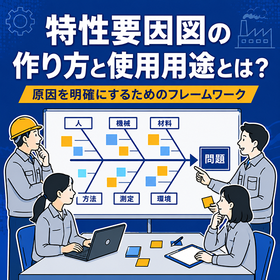
In small and medium-sized manufacturing industries struggling with high defect rates, human errors, and task specialization, there is a demand for reproducible improvement methods rather than ad-hoc measures. This document systematically explains a practical guide for improving defect rates, organizing the causes of defects from the perspective of "5M + 1E (Man, Machine, Method, Material, Measurement, Environment)" and providing easy-to-implement concepts and procedures for the workplace. It organizes human error countermeasures focused on mistakes, the establishment of standard operations, and management points for equipment, materials, and inspections with concrete examples. Furthermore, it introduces a four-step improvement process that encompasses 5M analysis, root cause analysis, prioritization, and effectiveness measurement, presenting a mindset that leads to continuous quality improvement. It also discusses realistic goal setting that does not assume a defect rate of 0% and the concept of quality management using sigma metrics, making it an ideal resource for site leaders and personnel who want to embed quality improvement as a culture. *For more details, please download the PDF or feel free to contact us.*

Added to bookmarks

Bookmarks list

Bookmark has been removed

Bookmarks list

You can't add any more bookmarks

By registering as a member, you can increase the number of bookmarks you can save and organize them with labels.

Free membership registration

Understanding the Approach to Autonomous Maintenance! TPM and Equipment Maintenance Guide Materials

Free materials explaining the basics and methods of autonomous maintenance, as well as how to systematize it, for manufacturing sites struggling with equipment troubles and reliance on specific individuals.

Frequent equipment troubles, variations in quality, and the personalization of technology are challenges faced in many manufacturing sites, where "systematizing equipment maintenance" has become a key issue. Autonomous maintenance involves operators themselves performing cleaning, inspections, and preventive measures on the equipment, based on the idea of "protecting one's own equipment." This approach is expected to lead to benefits such as preventing breakdowns and minor stoppages, stabilizing quality, improving productivity, and ensuring safety. This document systematically explains the concept of autonomous maintenance, which is the foundation of TPM activities, the seven steps of autonomous maintenance (preventing deterioration → measuring → standardizing), and specific initiatives that can be utilized on-site (activity boards, meetings, one-point lessons, etc.). Additionally, it addresses the issues of formalism and personalization caused by paper-based management, along with the concept of utilizing digital solutions as a resolution. This material is recommended for companies looking to start improvement activities in manufacturing sites, as well as for site leaders and personnel who wish to systematically understand TPM and equipment maintenance. *For more details, please download the PDF or feel free to contact us.*

Added to bookmarks

Bookmarks list

Bookmark has been removed

Bookmarks list

You can't add any more bookmarks

By registering as a member, you can increase the number of bookmarks you can save and organize them with labels.

Free membership registration

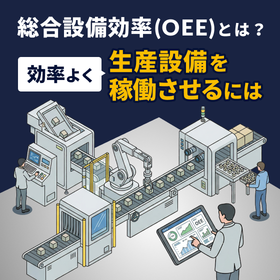
OEE Utilization Guide | Introduction to Visualizing and Improving Overall Equipment Efficiency

Introductory materials for small and medium-sized manufacturing companies that want to visualize equipment losses and quantitatively identify areas for improvement using OEE.

Even if you feel that "somehow it's inefficient," it can be difficult to grasp losses such as machine downtime, speed reductions, and defects solely through daily reports or intuition, making it hard to prioritize improvements. This document explains the concept of using Overall Equipment Efficiency (OEE) to visualize equipment efficiency along three axes: "Availability Rate," "Performance Rate," and "Quality Rate." It introduces a method to quantify the often-invisible equipment losses and objectively identify areas for improvement. It includes calculation examples, evaluation perspectives, the relationship with the international standard ISO 22400, the seven types of equipment losses, and improvement approaches, making it suitable for site leaders and personnel in small and medium-sized manufacturing industries who want to shift from intuition-based management to data-driven improvement activities. *For more details, please download the PDF or feel free to contact us.*

Added to bookmarks

Bookmarks list

Bookmark has been removed

Bookmarks list

You can't add any more bookmarks

By registering as a member, you can increase the number of bookmarks you can save and organize them with labels.

Free membership registration
Prev 12 Next
  • あなたの設計時間 CADに奪われていませんか? 制約から解放される新たな設計環境へ
  • 金属・化学・窯業・食品・医療品などのほぐし・解砕・ふるい分けがこれ一台 解砕機構付き佐藤式振動ふるい機 つばさ デモ実施中!
    • Contact this company

      Inquiry Form

    Products

    • Search for Products

    Company

    • Search for Companies

    Special Features

    • Special Features

    Ranking

    • Overall Products Ranking
    • Overall Company Ranking

    support

    • site map
    IPROS
    • privacy policy Regarding external transmission of information
    • terms of service
    • About Us
    • Careers
    • Advertising
    COPYRIGHT © 2001-2026 IPROS CORPORATION ALL RIGHTS RESERVED.
    Please note that the English text on this page is automatically translated and may contain inaccuracies.