1~7 item / All 7 items
Displayed results

Added to bookmarks
Bookmarks listBookmark has been removed
Bookmarks listYou can't add any more bookmarks
By registering as a member, you can increase the number of bookmarks you can save and organize them with labels.
Free membership registration
Contact this company
Contact Us OnlineBefore making an inquiry
Download PDF1~7 item / All 7 items

Raman spectroscopy can be applied to cell culture and medium component monitoring in the pharmaceutical field, as well as to fermentation processes and quality analysis of dairy products in the food sector. By using probe-type Raman, it is possible to insert the probe directly into the culture medium or fermentation tank, allowing for real-time tracking of component changes while maintaining a sterile environment. Since it can measure complex multi-component systems quickly and non-destructively, it contributes to the optimization of media, understanding of fermentation conditions, and efficiency in quality control.
Added to bookmarks
Bookmarks listBookmark has been removed
Bookmarks listYou can't add any more bookmarks
By registering as a member, you can increase the number of bookmarks you can save and organize them with labels.
Free membership registration
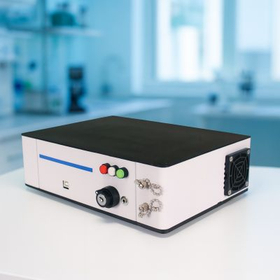
Compact, robust, and domestically supported. Bringing Raman closer from the laboratory to the field. A compact Raman that excels from the lab to the field. Covers 421 to 1709 cm⁻¹, suitable for a wide range of applications including crystals, liquids, and raw materials. High reliability with Japanese manufacturing and comprehensive after-sales support.
Added to bookmarks
Bookmarks listBookmark has been removed
Bookmarks listYou can't add any more bookmarks
By registering as a member, you can increase the number of bookmarks you can save and organize them with labels.
Free membership registration
At the JASIS 2024 "New Technology Presentation," we jointly presented with Tech Analysis Co., Ltd. on the topic "Case Study of Analyzing Moisture-Proof Packaging of Pharmaceuticals Using Raman Spectroscopy." We introduced a case where model formulations packaged in a humidity-controlled environment were set up, and the physical property changes of the model formulations were analyzed and evaluated in real-time using Raman spectroscopy.
Added to bookmarks
Bookmarks listBookmark has been removed
Bookmarks listYou can't add any more bookmarks
By registering as a member, you can increase the number of bookmarks you can save and organize them with labels.
Free membership registration
In the pharmaceutical industry, there are active pharmaceutical ingredients with multiple crystal structures, which are said to influence various physicochemical properties such as solubility, depending on the intellectual property rights of the drug and polymorphism. Furthermore, it is known to affect the bioavailability of drugs, making it one of the most important tasks for originator, generic, and pharmaceutical companies, where crystal forms and impurities are often selected as Critical Quality Attributes (CQA). In industrial crystallization, the goal is to separate impurities and control the crystal structure and particle size distribution of the product crystals; however, many phenomena remain unclear despite the operation and examination of inline analytical techniques such as FBRM, FT-IR, near-infrared, and Raman spectroscopy. Raman spectroscopy is known to have a distinct advantage over other inline analytical techniques in that it can quantitatively monitor crystal transitions. This paper presents the practical applicability and usefulness of low-frequency Raman spectroscopy by equipping a Raman spectrometer with a low-frequency Raman module, which has recently been commercialized and enables the measurement of low-frequency Raman spectra, to conduct real-time observation of crystal transitions using CBZIII form as a model formulation.
Added to bookmarks
Bookmarks listBookmark has been removed
Bookmarks listYou can't add any more bookmarks
By registering as a member, you can increase the number of bookmarks you can save and organize them with labels.
Free membership registration
The stability testing guidelines state that stability tests, which determine the shelf life of formulations and storage conditions for pharmaceuticals under various environmental factors such as temperature, humidity, and light, are necessary tests for drug approval applications. Therefore, using Raman spectroscopy, which allows for non-contact measurements and is used for identifying polymorphs similar to powder X-ray diffraction, we focused on one of the environmental factors, "humidity," and analyzed and evaluated the crystal transition from hydrate to anhydrous form of caffeine, a model formulation, under humidity conditions using Raman spectra. This demonstrated that Raman spectroscopy is effective for observing the crystal forms of active pharmaceutical ingredients under humid conditions.
Added to bookmarks
Bookmarks listBookmark has been removed
Bookmarks listYou can't add any more bookmarks
By registering as a member, you can increase the number of bookmarks you can save and organize them with labels.
Free membership registration
The TH-RamanProbe system consists of a control unit made up of a laser light source and power supply, and a probe that irradiates the sample with laser light and receives Raman scattered light from the sample. A special notch filter that cuts the excitation laser is built into the probe section. The probe, equipped with a sapphire lens that has high throughput, is available in two types: short focus and long focus, depending on the measurement purpose.
Added to bookmarks
Bookmarks listBookmark has been removed
Bookmarks listYou can't add any more bookmarks
By registering as a member, you can increase the number of bookmarks you can save and organize them with labels.
Free membership registration
We handle Raman probes for low wavenumber region measurements manufactured by Coherent (formerly Ondax). Peaks appear in the fingerprint region, which is called 200 to 1800 cm-1, representing the molecular structure of substances, including functional groups, geometric isomers, conformations, hydrogen bonding, and the state of chemical structures. The region below 200 cm-1 is referred to as the low wavenumber region. Peaks that represent structural information, such as the crystal form of compounds, appear, and it is known that in the low wavenumber region, the intensity of Raman scattered light is stronger than that in the fingerprint region. 【Applications of THz-Raman(R) Probe】 - Evaluation of physical properties such as polymorphism of pharmaceutical active ingredients - Evaluation of content uniformity of active ingredients in formulations - Crystal transformation of active ingredients - Co-crystal screening - Evaluation of polymorphism in fats and oils *For more details, please download the PDF or feel free to contact us.
Added to bookmarks
Bookmarks listBookmark has been removed
Bookmarks listYou can't add any more bookmarks
By registering as a member, you can increase the number of bookmarks you can save and organize them with labels.
Free membership registration