1~23 item / All 23 items
Displayed results
Filter by category

Added to bookmarks
Bookmarks listBookmark has been removed
Bookmarks listYou can't add any more bookmarks
By registering as a member, you can increase the number of bookmarks you can save and organize them with labels.
Free membership registration
Contact this company
Inquiry FormBefore making an inquiry
Download Profile1~23 item / All 23 items
Filter by category
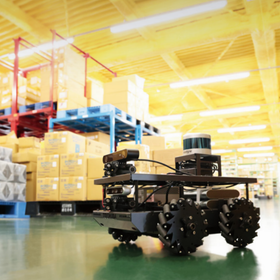
Are there any challenges related to "self-localization and environmental recognition (SLAM)" in manufacturing sites and autonomous systems? ● Unable to determine self-location in factory or indoor environments where GPS cannot be used ● Decreased localization accuracy due to environmental changes (lighting, layout changes) ● High-precision self-localization is computationally intensive and cannot operate in real-time ● Difficulties in integrating multiple sensors such as cameras, IMUs, and odometry ▼ Leave it to our SLAM solution! ――― Features ―――――――――――――――――――――― ◆ Visual SLAM that operates with low resources ◆ Improved accuracy and robustness through sensor fusion ◆ Recognition of the surrounding environment using surrounding map generation functionality ――――――――――――――――――――――――――― SLAM is a technology that allows mobile entities (AGVs and autonomous systems) to map their surrounding environment while moving and to identify their own location. It observes features in the environment, estimates self-location based on that information, and simultaneously creates an environmental map. Our company primarily develops self-localization technology/SLAM using cameras.
Added to bookmarks
Bookmarks listBookmark has been removed
Bookmarks listYou can't add any more bookmarks
By registering as a member, you can increase the number of bookmarks you can save and organize them with labels.
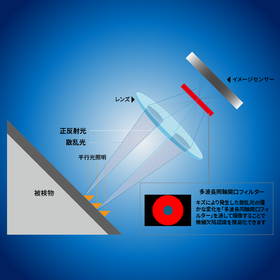
Free membership registrationAre there any issues with "curved and fine defect inspection" in the manufacturing site and appearance inspection process? ● Fine scratches and unevenness are not visible due to curved and 3D shapes ● Strong reflections on glossy and matte surfaces make stable inspection difficult ● Imaging from multiple directions is necessary, slowing down the inspection cycle ● The equipment configuration is complex and high-cost due to the need for curved surface compatibility ▼ Leave it to the optical inspection technology OneShotBRDF! ――― Features ―――――――――――――――――――――― ◆ Compatible with curved and 3D shapes ◆ High-speed inspection through one-shot imaging ◆ Scattered light is color-separated to visualize fine defects ――――――――――――――――――――――――――― OneShotBRDF is an optical inspection technology that utilizes Toshiba's unique scattered light analysis technology. By using a multi-wavelength coaxial aperture filter that selects the angle of light reflection, it visualizes fine scratches and unevenness in complex surface conditions such as curved, glossy, and matte surfaces in a single shot.
Added to bookmarks
Bookmarks listBookmark has been removed
Bookmarks listYou can't add any more bookmarks
By registering as a member, you can increase the number of bookmarks you can save and organize them with labels.
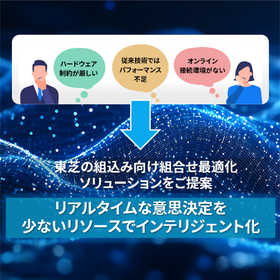
Free membership registrationAre there any issues with "optimization and decision-making" in manufacturing sites and control systems? ● There are too many combinations, making it impossible to provide optimal decisions in real-time. ● Calculations take too long, resulting in control delays and performance degradation. ● We want to perform high-precision optimization, but cannot use servers or the cloud. ● In embedded environments, optimization processes are heavy, leading to abandonment of implementation. ▼ Leave it to our combination optimization solution for embedded systems! ――Features―――――――――――――――――――――― ◆ Our quantum-inspired optimization technology rapidly calculates good solutions for combination optimization problems. ◆ Supports low-latency and real-time processing, contributing to advanced control and decision-making. ◆ Compatible with various hardware such as FPGA and CPU, making it implementable in embedded environments. ――――――――――――――――――――――――――― This is a combination optimization solution for embedded devices utilizing Toshiba's unique quantum-inspired optimization technology. It can process combination optimization problems such as allocation, route exploration, and matching quickly and securely at the edge in embedded devices like automotive equipment, industrial machinery, and robots.
Added to bookmarks
Bookmarks listBookmark has been removed
Bookmarks listYou can't add any more bookmarks
By registering as a member, you can increase the number of bookmarks you can save and organize them with labels.
Free membership registration
Automatically encrypt software for various platforms such as Windows, Mac, Linux, .NET, Java, and embedded OS without modifying the source code, protecting it from malicious reverse engineering. Additionally, strong anti-debugging features and on-demand decryption capabilities allow for countermeasures against cracking attacks such as memory analysis. We can establish a variety of flexible licensing models that meet customer needs, including validity periods, usage limits, single-user licenses, device binding, and pay-per-use. Licenses are provided as hardware (dongles) or as files that are securely protected.
Added to bookmarks
Bookmarks listBookmark has been removed
Bookmarks listYou can't add any more bookmarks
By registering as a member, you can increase the number of bookmarks you can save and organize them with labels.
Free membership registration
This is an IoT product and service equipped with a radio device that has a built-in sensor operating at 920MHz LPWA, a function to collect the acquired data in the cloud, and a function to analyze the collected data. The radio device operates on batteries, making it easy to install. It can form a mesh network, making it suitable for building wide-area IoT systems. Additionally, the cloud can be easily configured by simply uploading an Excel sheet with the necessary information, allowing for straightforward IoT system construction.
Added to bookmarks
Bookmarks listBookmark has been removed
Bookmarks listYou can't add any more bookmarks
By registering as a member, you can increase the number of bookmarks you can save and organize them with labels.
Free membership registration
Our proprietary analysis technology detects runtime errors with high precision, which are difficult to identify using code reviews or static analysis tools.
Added to bookmarks
Bookmarks listBookmark has been removed
Bookmarks listYou can't add any more bookmarks
By registering as a member, you can increase the number of bookmarks you can save and organize them with labels.
Free membership registration
This is malware protection software that operates quickly with minimal resources and does not use virus definition files like traditional antivirus software, making it ideal for standalone systems, closed network environments, and embedded systems.
Added to bookmarks
Bookmarks listBookmark has been removed
Bookmarks listYou can't add any more bookmarks
By registering as a member, you can increase the number of bookmarks you can save and organize them with labels.
Free membership registration
The Rambus TLS Toolkit Standard FIPS Edition is a high-reliability cryptographic library compliant with FIPS 140-3, as well as a TLS protocol library compatible with TLS 1.3. It provides robust security features for embedded systems.
Added to bookmarks
Bookmarks listBookmark has been removed
Bookmarks listYou can't add any more bookmarks
By registering as a member, you can increase the number of bookmarks you can save and organize them with labels.
Free membership registration
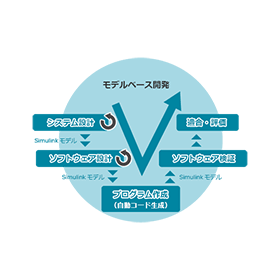
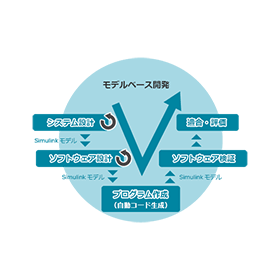
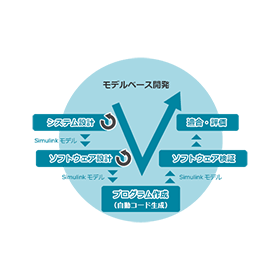
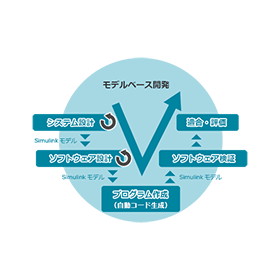
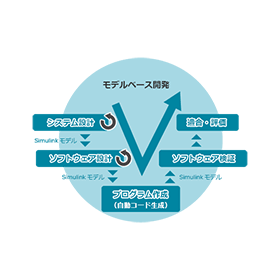
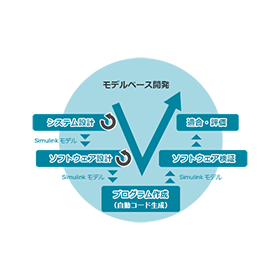
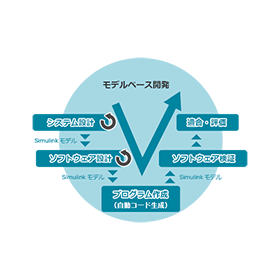
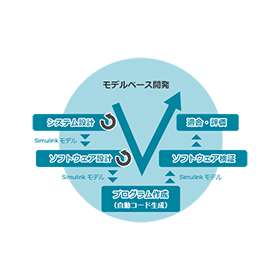
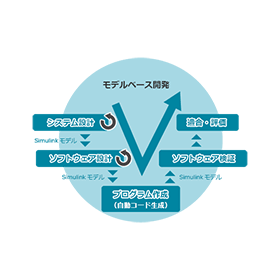
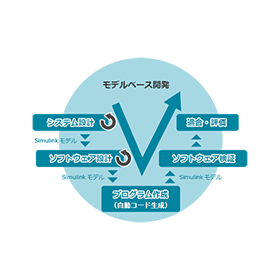
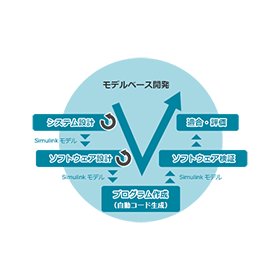
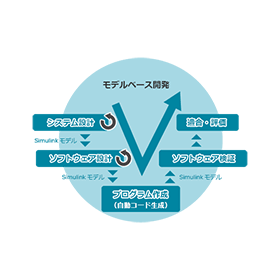
Model-based development is a development process that leverages simulation technology to achieve both quality and productivity improvements. By creating models in the upstream process and conducting simulations, it enhances design quality. Additionally, the models created in the upstream process can be utilized in all stages, including automatic program generation and verification using real-time simulators (HILS*1), thereby contributing to improvements in productivity and quality. However, implementing model-based development presents many challenges, such as training developers, establishing development processes, introducing tools, determining how to create models, and efficiently utilizing models.
Added to bookmarks
Bookmarks listBookmark has been removed
Bookmarks listYou can't add any more bookmarks
By registering as a member, you can increase the number of bookmarks you can save and organize them with labels.
Free membership registration
We provide comprehensive support for Bluetooth development, from proposal to application development, SIG (logo) certification, and product commercialization. Our support system is backed by a specialized Bluetooth team with high technical expertise in Japan. Additionally, by using the Bluetooth SDK "NetNucleus Bluetooth," Bluetooth development becomes easy. It is an embedded Bluetooth SDK that supports Bluetooth 5.0 (Classic, Low Energy) and iAP2.
Added to bookmarks
Bookmarks listBookmark has been removed
Bookmarks listYou can't add any more bookmarks
By registering as a member, you can increase the number of bookmarks you can save and organize them with labels.
Free membership registration
The "DNN Acceleration Service" is an engineering service that takes in DNN models, training data, accuracy evaluation metrics, and other materials from customers to provide DNN models that meet the target processing performance and inference accuracy. Please utilize this service to address the trade-off challenges between processing performance and inference accuracy, especially when implementing large-scale, high-precision DNN models on embedded systems with limited specifications.
Added to bookmarks
Bookmarks listBookmark has been removed
Bookmarks listYou can't add any more bookmarks
By registering as a member, you can increase the number of bookmarks you can save and organize them with labels.
Free membership registration
In the development of autonomous driving technology, ensuring safety and reliability is the top priority. To efficiently develop complex systems, model-based development is essential. By utilizing simulation technology, improvements in quality during the design phase, automatic generation of programs, and verification through Hardware-in-the-Loop Simulation (HILS) can be expected to enhance quality and productivity throughout the entire development process. However, since autonomous driving systems require advanced technology, there are many challenges, such as building the development process, selecting tools, and effectively utilizing models. 【Application Scenarios】 - Development of control logic for autonomous driving systems - Development of sensor fusion technology - Development of vehicle motion control systems - Real vehicle behavior simulation using HILS 【Effects of Implementation】 - Improvement in design quality - Reduction of development time - Cost savings - Enhancement of safety
Added to bookmarks
Bookmarks listBookmark has been removed
Bookmarks listYou can't add any more bookmarks
By registering as a member, you can increase the number of bookmarks you can save and organize them with labels.
Free membership registration
In the aerospace industry, flight control systems require high safety and reliability. To efficiently develop complex systems, verification at the design stage is essential. Model-based development utilizes simulation technology to improve design quality, automate program generation, and achieve verification through real-time simulators. This contributes to shortening development time and enhancing quality. 【Usage Scenarios】 - Design and development of flight control systems - Function verification through simulation - Verification of actual systems using HILS (Hardware-in-the-Loop Simulation) 【Effects of Implementation】 - Early detection of defects at the design stage - Reduction of development time - Improvement in quality - Cost reduction
Added to bookmarks
Bookmarks listBookmark has been removed
Bookmarks listYou can't add any more bookmarks
By registering as a member, you can increase the number of bookmarks you can save and organize them with labels.
Free membership registration
In the medical device industry, the safety and reliability of products are the top priorities. To protect patient health and safety, thorough elimination of defects at the design stage is required. Model-based development allows for the identification and correction of potential issues early in the design process through simulation. This contributes to improved product quality and reduced risk. 【Application Scenarios】 - Development of control systems for medical devices - Verification of safety-related functions - Compliance with regulations 【Effects of Implementation】 - Improved design quality - Reduced risk - Shortened development time
Added to bookmarks
Bookmarks listBookmark has been removed
Bookmarks listYou can't add any more bookmarks
By registering as a member, you can increase the number of bookmarks you can save and organize them with labels.
Free membership registration
In the industrial machinery sector, the complexity and diversification of products are advancing, leading to demands for shorter development periods and improved quality. Particularly in the development of machine control and embedded systems, it is crucial to reduce defects at the design stage and establish an efficient development process. Model-based development contributes to improving design quality, shortening development periods, and reducing costs by utilizing simulations. 【Application Scenarios】 - Development of machine control systems - Development of embedded software - Performance evaluation and optimization of products 【Effects of Implementation】 - Early detection of defects at the design stage - Shortened development periods - Improved quality and reduced costs
Added to bookmarks
Bookmarks listBookmark has been removed
Bookmarks listYou can't add any more bookmarks
By registering as a member, you can increase the number of bookmarks you can save and organize them with labels.
Free membership registration
In the energy industry, there is a demand for system efficiency and stable operation. Especially with the advancement of renewable energy adoption, the optimization of the entire system is essential for the stability of power supply. Model-based development enables the design of optimal control parameters through system simulation, contributing to improved energy efficiency. 【Application Scenarios】 - Control systems for power plants - Operation simulation of power systems - Energy management systems 【Effects of Implementation】 - Improved energy efficiency through system optimization - Enhanced system stability - Reduced development time and costs
Added to bookmarks
Bookmarks listBookmark has been removed
Bookmarks listYou can't add any more bookmarks
By registering as a member, you can increase the number of bookmarks you can save and organize them with labels.
Free membership registration
In the railway industry, signal control systems require high safety and reliability. As systems become more complex, insufficient verification during the design phase increases the risk of serious accidents. Model-based development is an effective means to enhance design quality and improve safety through simulation. Our model-based development solutions propose the optimal development process tailored to our customers' needs. 【Usage Scenarios】 - Design and verification of signal systems - Development of highly safe control logic - Simulation of the entire system 【Benefits of Implementation】 - Early detection of defects during the design phase - Improved system reliability - Reduced development time
Added to bookmarks
Bookmarks listBookmark has been removed
Bookmarks listYou can't add any more bookmarks
By registering as a member, you can increase the number of bookmarks you can save and organize them with labels.
Free membership registration
In the home appliance industry, functional verification is increasingly demanding shorter development periods and improved quality due to the diversification and complexity of products. In particular, product malfunctions and performance deficiencies directly lead to decreased customer satisfaction, making thorough verification essential. Model-based development leverages simulation technology to enhance quality during the design phase and achieve an efficient verification process, addressing these challenges. 【Application Scenarios】 - Functional verification of home appliances - Verification of control system design - Software testing 【Benefits of Implementation】 - Improved design quality - Shortened development period - Enhanced quality - Cost reduction
Added to bookmarks
Bookmarks listBookmark has been removed
Bookmarks listYou can't add any more bookmarks
By registering as a member, you can increase the number of bookmarks you can save and organize them with labels.
Free membership registration
In the robotics industry, motion simulation is essential for performance evaluation during the design phase of robots and for streamlining the verification of operations with actual machines. In particular, verifying complex movements and operations in various environments in advance is necessary for improving design quality and shortening development time. Model-based development solutions leverage simulation technology and can be utilized in all processes, including enhancing design quality, automatic program generation, and verification using real-time simulators (HILS). This leads to improvements in productivity and quality. 【Application Scenarios】 - Robot motion simulation - Simulation of collaboration with various sensors - Verification of control systems 【Benefits of Implementation】 - Early detection of issues during the design phase - Reduction of development time - Improvement in quality
Added to bookmarks
Bookmarks listBookmark has been removed
Bookmarks listYou can't add any more bookmarks
By registering as a member, you can increase the number of bookmarks you can save and organize them with labels.
Free membership registration
In the telecommunications industry, particularly in protocol development, the increasing complexity and diversity of specifications have made the quality of design and development efficiency critical issues. Errors and defects in protocols can not only undermine the reliability of communication but also lead to significant costs and time losses. Model-based development solutions leverage simulation technology to enhance design quality through model verification in the upstream process. This contributes to improving the accuracy and reliability of protocols, shortening development time, and reducing costs. 【Usage Scenarios】 - Design and verification of protocol specifications - Development of control software for communication devices - Network simulation 【Benefits of Implementation】 - Improved error detection rates during the design phase - Reduced development time - Enhanced quality and cost savings
Added to bookmarks
Bookmarks listBookmark has been removed
Bookmarks listYou can't add any more bookmarks
By registering as a member, you can increase the number of bookmarks you can save and organize them with labels.
Free membership registration
In the semiconductor industry, design verification is essential to ensure product reliability and performance, requiring accurate simulation and validation. Particularly in increasingly complex semiconductor devices, early-stage verification of designs becomes crucial, leading to demands for improved design quality and shortened development periods. Model-based development solutions contribute to enhancing design quality and reducing development time by leveraging simulation technology. 【Usage Scenarios】 - Verification of semiconductor designs - Improvement of design quality through simulation - Verification using real-time simulators (HILS) 【Benefits of Implementation】 - Early detection of issues in the design phase - Shortened development periods - Improved quality
Added to bookmarks
Bookmarks listBookmark has been removed
Bookmarks listYou can't add any more bookmarks
By registering as a member, you can increase the number of bookmarks you can save and organize them with labels.
Free membership registration
In the field of agricultural automation, precise control and efficient operation are required. Especially in complex systems such as harvesting robots and autonomous tractors, accurate movement and high reliability are essential. Inadequate control can lead to crop damage and reduced work efficiency. Our model-based development solutions utilize simulation technology to support the development of automation systems in agriculture through improved design quality, automatic program generation, and verification using real-time simulators. 【Application Scenarios】 - Development of control systems for harvesting robots - Development of control systems for autonomous tractors - Development of greenhouse environment control systems 【Benefits of Implementation】 - Improved system reliability - Reduced development time - Cost savings
Added to bookmarks
Bookmarks listBookmark has been removed
Bookmarks listYou can't add any more bookmarks
By registering as a member, you can increase the number of bookmarks you can save and organize them with labels.
Free membership registration
In the defense sector, particularly in weapon control systems, high safety and reliability are essential. As systems become more complex, insufficient verification during the design phase increases the risk of serious accidents. Model-based development addresses these challenges by utilizing simulation technology to improve design quality, automate program generation, and verify through real-time simulators. Our model-based development solutions aim to enhance both quality and productivity in the development of weapon control systems. 【Application Scenarios】 - Missile control systems - Radar systems - Autonomous weapon systems 【Benefits of Implementation】 - Early detection of defects during the design phase - Reduction of development time - Improvement of system reliability
Added to bookmarks
Bookmarks listBookmark has been removed
Bookmarks listYou can't add any more bookmarks
By registering as a member, you can increase the number of bookmarks you can save and organize them with labels.
Free membership registration