46~73 item / All 73 items
Displayed results
Filter by category

Added to bookmarks
Bookmarks listBookmark has been removed
Bookmarks listYou can't add any more bookmarks
By registering as a member, you can increase the number of bookmarks you can save and organize them with labels.
Free membership registration
Contact this company
Inquiry Form46~73 item / All 73 items
Filter by category

Steel increases in rigidity when it contains boron and other impurities, but too many impurities can make it brittle. Therefore, managing the impurity content is extremely important in the production of high-quality steel. As an analytical method, the nitric acid-hydrochloric acid (aqua regia) decomposition is commonly used, but it is time-consuming and labor-intensive, and generates a significant amount of harmful acid decomposition gases, making it difficult to safely and rapidly process multiple samples. To address this, we examined the automatic pretreatment using nitric acid-hydrochloric acid (water) for impurity analysis in iron and steel with DEENA2, which can perform tasks such as acid addition, stirring, and dilution control fully automatically via PC control. As a result, we were able to automate tasks that were previously done manually. Additionally, we successfully reduced human exposure to the acid decomposition gases. ■ Purpose ■ Overview ■ Keywords ■ Equipment Used ■ Analysis Flow ■ Results *For more details, please refer to the PDF document or feel free to contact us.
Added to bookmarks
Bookmarks listBookmark has been removed
Bookmarks listYou can't add any more bookmarks
By registering as a member, you can increase the number of bookmarks you can save and organize them with labels.
Free membership registration
This document introduces the examination of fully automated pretreatment methods using sulfuric acid and nitric acid in the "Ministerial Ordinance on Standards for Ingredients of Milk and Dairy Products" and "Standards for Foods and Additives" using "DEENA3." The pretreatment methods for non-mineral water soft drinks involve complicated reagent addition operations during acid digestion, making them very labor-intensive. Additionally, the use of acidic reagents such as sulfuric acid and nitric acid poses exposure risks to humans, making the analysis hazardous. Therefore, using the automated pretreatment device "DEENA3" for acid addition, we automated the pretreatment of samples for ICP-OES and ICP/MS analysis. [Contents (Excerpt)] ■ Overview ■ Keywords ■ Equipment Used ■ Reagents Used ■ Analysis Flow *For more details, please refer to the PDF document or feel free to contact us.
Added to bookmarks
Bookmarks listBookmark has been removed
Bookmarks listYou can't add any more bookmarks
By registering as a member, you can increase the number of bookmarks you can save and organize them with labels.
Free membership registration
It is used by water quality testing institutions in government offices, universities, and private measurement certification businesses. It can measure total nitrogen and total phosphorus simultaneously at a rate of 20 samples per hour. It is equipped with a fully automatic autoclave digestion system. 【Features】 ■ High precision and high sensitivity analysis based on the principle of bubble segmentation continuous flow method ■ Capable of measuring total nitrogen and total phosphorus simultaneously at a rate of 20 samples per hour ■ Incorporates a fully automatic autoclave digestion system ■ Listed in JIS and Ministry of the Environment notification methods *For more details, please refer to the PDF document or feel free to contact us.
Added to bookmarks
Bookmarks listBookmark has been removed
Bookmarks listYou can't add any more bookmarks
By registering as a member, you can increase the number of bookmarks you can save and organize them with labels.
Free membership registration
This document introduces the establishment of a component analysis method for olive oil using the "NIR Olive Checker." Component analysis of olive oil has become possible through non-destructive analysis methods. Using NIR (Near Infrared Analysis Device), we have established a method to rapidly and easily measure 21 components in olive oil, including "acidity," "oleic acid," "linoleic acid," and "polyphenols." [Contents] ■ Overview ■ What is Near Infrared Analysis? ■ Keywords ■ Equipment Used ■ Examination Method *For more details, please refer to the PDF document or feel free to contact us.
Added to bookmarks
Bookmarks listBookmark has been removed
Bookmarks listYou can't add any more bookmarks
By registering as a member, you can increase the number of bookmarks you can save and organize them with labels.
Free membership registration
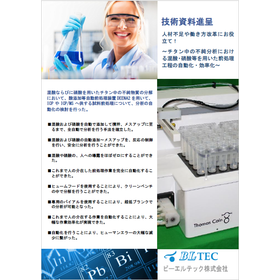
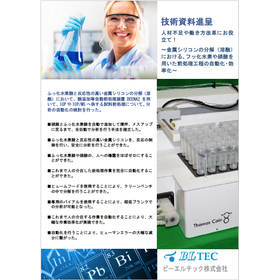
This document introduces the examination of automatic pretreatment using hydrofluoric acid and nitric acid for the decomposition (melting) of silica (SiO2) with the use of "DEENA2." Silica (SiO2 and its compounds) involves complicated reagent addition operations in acid decomposition, making it very labor-intensive. Additionally, there are concerns about human exposure to acidic reagents like hydrofluoric acid, which poses risks during analysis. Therefore, we automated the sample pretreatment for ICP and ICP/MS using the automatic pretreatment device "DEENA2" for acid addition and other processes. 【Contents】 ■ Overview ■ What is DEENA2 ■ Keywords ■ Equipment Used ■ Examination Method *For more details, please refer to the PDF document or feel free to contact us.
Added to bookmarks
Bookmarks listBookmark has been removed
Bookmarks listYou can't add any more bookmarks
By registering as a member, you can increase the number of bookmarks you can save and organize them with labels.
Free membership registration
In materials such as batteries and semiconductor materials, silica as an impurity can lead to a decrease in product performance, necessitating separation and analysis. Silica contained in steel above a certain amount can be analyzed by the weight method specified by JIS, but this method has been complicated and has accuracy issues. Therefore, our company has devised a method to separate silica contained in samples as a gas, collect it in an absorbent solution, and measure it using molybdenum blue through a continuous flow analysis method. This document presents the results of our study titled "Separation and Analysis of Low Concentration Silica Using Continuous Flow Analysis Equipment (STAA-3) in Semiconductor Materials, Tantalum, Niobium, Steel, etc." in an easy-to-understand manner. *For more details, please see the download button. Feel free to contact us with any inquiries.
Added to bookmarks
Bookmarks listBookmark has been removed
Bookmarks listYou can't add any more bookmarks
By registering as a member, you can increase the number of bookmarks you can save and organize them with labels.
Free membership registration
The pre-treatment methods for non-mineral water soft drinks specified in the "Ministerial Ordinance on Standards for Components of Milk and Dairy Products (Ministry of Health and Welfare Ordinance No. 52 of 1951)" and the "Standards for Food, Additives, etc. (Ministry of Health and Welfare Ordinance No. 370 of 1959)" involve complicated reagent addition operations in acid decomposition, making it very labor-intensive. Additionally, the use of acid reagents such as sulfuric acid and nitric acid poses exposure risks to humans, making the analysis hazardous. Therefore, we have automated the sample pre-treatment for ICP-OES and ICP/MS using the automatic pre-treatment device DEENA2, which includes: ■ Acid addition heating pre-treatment ■ Reagent addition ■ Cooling ■ Dilution ■ Prevention of human exposure to acids *For more details, please refer to the PDF document or feel free to contact us.
Added to bookmarks
Bookmarks listBookmark has been removed
Bookmarks listYou can't add any more bookmarks
By registering as a member, you can increase the number of bookmarks you can save and organize them with labels.
Free membership registration
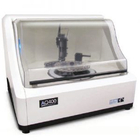
"DEENA2" is a device that can automate the pretreatment processes for measuring metal components, such as the addition of reagents, stirring, heating, and dilution. The maximum heating temperature is 180°C. For highly reactive samples, it can initially heat at a low temperature and then switch to high temperature once the reaction stabilizes. It can set up to 8 types of reagents, including pure water, hydrofluoric acid, nitric acid, and hydrochloric acid. The addition of acids is performed automatically, and the dilution process is also automated, significantly reducing manual labor and eliminating concerns about operator exposure. 【Features】 ■ Up to 60 positions (when using 50mL vials) ■ Up to 36 positions (when using 36mL vials) ■ Compatible with various samples, including wastewater, environmental water, metals, non-ferrous metals, and semiconductor materials ■ Non-contact dilution is possible using ultrasonic sensors *For more details, please refer to the materials. Feel free to contact us with any inquiries.
Added to bookmarks
Bookmarks listBookmark has been removed
Bookmarks listYou can't add any more bookmarks
By registering as a member, you can increase the number of bookmarks you can save and organize them with labels.
Free membership registration
This document introduces the establishment of an automatic measurement method for component analysis of coffee beans using the NIR coffee bean checker. A method has been established to quickly and easily measure the components in coffee beans, including "sucrose," "trigonelline," "caffeine," "moisture," "lipids," "phosphoric acid," "citric acid," "malic acid," "quinic acid," and "glycolic acid." For coffee beans, measurements can now be easily and rapidly conducted using our calibration curve. 【Contents】 ■ Overview ■ What is Near Infrared Analysis? ■ Keywords ■ Equipment Used ■ Examination Method *For more details, please refer to the PDF document or feel free to contact us.
Added to bookmarks
Bookmarks listBookmark has been removed
Bookmarks listYou can't add any more bookmarks
By registering as a member, you can increase the number of bookmarks you can save and organize them with labels.
Free membership registration
This document introduces the establishment of an automatic measurement method for component analysis of green coffee beans using a NIR coffee bean checker. Near-infrared spectroscopy is a component measurement method that does not use reagents or consumables. We have established a method to rapidly and easily measure the components in green coffee beans, including "moisture," "caffeine," "potassium," "ash," "chlorogenic acid," "protein," and "trigonelline." 【Contents】 ■ Overview ■ What is Near-Infrared Analysis? ■ Keywords ■ Equipment Used ■ Examination Method *For more details, please refer to the PDF document or feel free to contact us.
Added to bookmarks
Bookmarks listBookmark has been removed
Bookmarks listYou can't add any more bookmarks
By registering as a member, you can increase the number of bookmarks you can save and organize them with labels.
Free membership registration
This document introduces the establishment of an automated measurement method for component analysis of roasted coffee beans using an NIR coffee bean checker. To ensure quality assurance in roasted coffee beans, the parameters measured include "roasting depth," "moisture," and "caffeine." In the component analysis of roasted coffee beans, a calibration curve that can be measured in the near-infrared range has been created. The parameters "roasting depth," "moisture," and "caffeine" can now be measured simultaneously. Therefore, we have established a measurement method for automating the analysis of components in roasted coffee beans using NIR (near-infrared analysis equipment). [Contents] ■ Overview ■ What is Near-Infrared Analysis? ■ Keywords ■ Equipment Used ■ Research Methods *For more details, please refer to the PDF document or feel free to contact us.
Added to bookmarks
Bookmarks listBookmark has been removed
Bookmarks listYou can't add any more bookmarks
By registering as a member, you can increase the number of bookmarks you can save and organize them with labels.
Free membership registration
This document introduces the establishment of an automated measurement method for component analysis in feed using an NIR feed checker. Component analysis of feed is primarily conducted on "moisture," "protein," "lipids," "fiber," "ash," "calcium," "phosphorus," and "salt." In the component analysis of feed, a calibration curve that can be measured in the near-infrared range is created. Therefore, we have established an automated measurement method for the analysis of feed components using NIR (near-infrared analysis equipment). 【Contents】 ■ Overview ■ What is Near-Infrared Analysis? ■ Keywords ■ Equipment Used ■ Discussion Method *For more details, please refer to the PDF document or feel free to contact us.
Added to bookmarks
Bookmarks listBookmark has been removed
Bookmarks listYou can't add any more bookmarks
By registering as a member, you can increase the number of bookmarks you can save and organize them with labels.
Free membership registration
This document introduces the establishment of an automatic measurement method for component analysis in cookies using a snack checker. To ensure quality assurance in cookies, the items measured include "moisture," "lipids," and "sugars." The measurement of components requires the use of hazardous reagents and involves labor-intensive and skilled techniques. Therefore, in the analysis of cookie components, a calibration curve that can be measured using near-infrared (NIR) was created. Simultaneous measurement of the items is possible, and thus, we established an automated measurement method for the analysis of cookie components using NIR. [Contents] ■ Overview ■ What is Near-Infrared Analysis? ■ Keywords ■ Equipment Used ■ Method of Examination *For more details, please refer to the PDF document or feel free to contact us.
Added to bookmarks
Bookmarks listBookmark has been removed
Bookmarks listYou can't add any more bookmarks
By registering as a member, you can increase the number of bookmarks you can save and organize them with labels.
Free membership registration
Regarding the cadmium contained in rice, the standard limit was previously set at 1 ppm (mg/kg), but in April 2010, a revision was issued to amend part of the standards for food and food additives, changing the limit for cadmium and its compounds in rice (both brown and white rice) to 0.4 ppm (mg/kg) or less. Traditionally, wet digestion methods using nitric acid, sulfuric acid, or perchloric acid have been employed; however, these methods are time-consuming and labor-intensive, making it difficult to process multiple samples quickly. Therefore, we examined the automatic pretreatment of rice (both brown and white) and rice ears using the nitric acid reflux method with DEENA2, which can perform tasks such as acid addition, stirring, and dilution under PC control in a fully automated manner. - Acid addition heating pretreatment - Reagent addition - Cooling - Dilution - Prevention of human exposure to acids *For more details, please refer to the PDF document or feel free to contact us.*
Added to bookmarks
Bookmarks listBookmark has been removed
Bookmarks listYou can't add any more bookmarks
By registering as a member, you can increase the number of bookmarks you can save and organize them with labels.
Free membership registration
This document introduces a case study on the measurement of fluoride in factory wastewater using the continuous flow analysis method (CFA method) as per JIS K 0102 34.4. Contents ■ Overview of the analysis ■ Introduction of the equipment ■ Actual measurement case ■ Results of recovery rate *For more details, please refer to the PDF document or feel free to contact us.
Added to bookmarks
Bookmarks listBookmark has been removed
Bookmarks listYou can't add any more bookmarks
By registering as a member, you can increase the number of bookmarks you can save and organize them with labels.
Free membership registration
Contributing to the improvement of customer productivity through the automation of analysis. BL Tech is currently holding an online exhibition.
Added to bookmarks
Bookmarks listBookmark has been removed
Bookmarks listYou can't add any more bookmarks
By registering as a member, you can increase the number of bookmarks you can save and organize them with labels.
Free membership registration
This device is a modified continuous flow analysis system for laboratory equipment that automatically samples the effluent collected in an overflow tank, allowing for automatic distillation and measurement at regular intervals. It uses the principle of the bubble segmentation flow analysis method (CFA) as described in JISK0126. The sample is automatically distilled, mixed with reagents, reaches the flow cell, and is quantitatively analyzed. If an abnormal value is detected, it can send a signal to a designated location to alert of the anomaly. 【Usage Examples】 ● Wastewater management in plant factories ● Process management in factories *For detailed specifications, please download the PDF. Feel free to contact us.
Added to bookmarks
Bookmarks listBookmark has been removed
Bookmarks listYou can't add any more bookmarks
By registering as a member, you can increase the number of bookmarks you can save and organize them with labels.
Free membership registration
This is a device that has been partially modified from a continuous flow analysis system for laboratory equipment, which automatically samples the effluent collected in the overflow tank, and can perform automatic distillation and measurement at regular intervals. It uses the principle of bubble segmentation flow analysis (CFA) as described in JISK0126. The sample is automatically distilled, mixed with reagents, reaches the flow cell, and is quantitatively analyzed. If an abnormal value is detected, it is possible to send a signal to a designated location to alert about the anomaly.
Added to bookmarks
Bookmarks listBookmark has been removed
Bookmarks listYou can't add any more bookmarks
By registering as a member, you can increase the number of bookmarks you can save and organize them with labels.
Free membership registrationThe pretreatment methods for factory wastewater, environmental water, groundwater, etc., use substances such as nitric acid, as specified in factory wastewater testing methods and standards set by the Ministry of the Environment. However, the analytical procedures are complicated and require significant effort for decomposition, and care must be taken to avoid splashes of nitric acid reagents on the skin and eyes, as well as exposure to acidic gas emissions. To ensure the safety of analysts, improve work efficiency, and eliminate human error, our company introduces a device capable of automating the entire process from pretreatment to measurement in environmental analysis, wastewater analysis, and soil analysis. <Some introduction examples> ■ Inorganic analysis of wastewater using ICP/MS ■ Inorganic analysis of environmental water (river water, seawater) using ICP/MS ■ Inorganic analysis of soil (content/leaching) using ICP/MS ■ Inorganic analysis of groundwater and drinking water using ICP/MS *For detailed specifications, please download the PDF. Feel free to contact us.
Added to bookmarks
Bookmarks listBookmark has been removed
Bookmarks listYou can't add any more bookmarks
By registering as a member, you can increase the number of bookmarks you can save and organize them with labels.
Free membership registration
SDmatic 2 measures the content of damaged starch by electrochemically measuring the iodine-starch reaction of diluted wheat flour samples based on an amperometric method that does not use enzymes.
Added to bookmarks
Bookmarks listBookmark has been removed
Bookmarks listYou can't add any more bookmarks
By registering as a member, you can increase the number of bookmarks you can save and organize them with labels.
Free membership registration
In a bread-making factory, the physical properties of the final product, such as volume and color, are important quality control parameters. These characteristics largely depend on the amount and functionality of proteins, starches, fibers, and enzymes that make up the majority of the flour. The Mixolab 2 is equipped with a unique function to evaluate the combined effects of these components during the mixing process, automatically assessing the rheological properties of the dough and predicting its behavior during the manufacturing process in heating and cooling cycles.
Added to bookmarks
Bookmarks listBookmark has been removed
Bookmarks listYou can't add any more bookmarks
By registering as a member, you can increase the number of bookmarks you can save and organize them with labels.
Free membership registration
The AgriCheck series of near-infrared spectroscopy (NIR) analysis devices from Bruins Instruments is a cost-effective, high-performance device specialized in the analysis of whole grains such as wheat, corn, soybeans, sorghum, and rice, equipped with specific calibration line libraries. Every day, AgriCheck analysis devices around the world measure reliable parameters such as moisture, protein, starch, as well as oil, fiber, gluten, zeleny, and other product types for incoming grains, in-process samples, and final products. AgriCheck offers rapid, accurate, and reliable quality measurements at an attractive price point for producers, millers, and processors.
Added to bookmarks
Bookmarks listBookmark has been removed
Bookmarks listYou can't add any more bookmarks
By registering as a member, you can increase the number of bookmarks you can save and organize them with labels.
Free membership registration
The method for the pretreatment of selenium specified in the industrial wastewater testing method (JIS K 0102) involves complex reagent addition operations during acid digestion, making it very labor-intensive. Additionally, the use of acidic reagents such as nitric acid and sulfuric acid poses exposure risks to humans, making the analysis hazardous. Therefore, using the automated pretreatment device DEENA2 for acid addition and other processes, we automated the sample pretreatment for atomic absorption spectrometry, ICP, and ICP/MS. [Summary] ■ Conducted a study on the pretreatment of selenium (Se) in wastewater analysis ■ Used DEENA2 ■ Performed digestion using nitric acid, sulfuric acid, etc. ■ Considered automation *For more details, please download the PDF or feel free to contact us.
Added to bookmarks
Bookmarks listBookmark has been removed
Bookmarks listYou can't add any more bookmarks
By registering as a member, you can increase the number of bookmarks you can save and organize them with labels.
Free membership registration
The pre-treatment method for arsenic specified in the industrial wastewater testing method (JIS K 0102) involves complicated reagent addition operations during acid digestion, making it very labor-intensive. Additionally, the use of acid reagents such as nitric acid and sulfuric acid poses exposure risks to humans, making the analysis hazardous. Therefore, using the automated pre-treatment device DEENA2 for acid addition and other processes, we automated the sample pre-treatment for atomic absorption spectrometry, ICP, and ICP/MS. [Summary] - Conducted a study on the pre-treatment of arsenic (As) in wastewater analysis - Used DEENA2 - Performed digestion using nitric acid, sulfuric acid, etc. - Considered automation *For more details, please download the PDF or feel free to contact us.*
Added to bookmarks
Bookmarks listBookmark has been removed
Bookmarks listYou can't add any more bookmarks
By registering as a member, you can increase the number of bookmarks you can save and organize them with labels.
Free membership registration
The acid decomposition of impurities in titanium involves complicated reagent addition operations and is very labor-intensive. Additionally, there are issues related to human exposure to acidic reagents such as mixed acids and nitric acid, making the analysis hazardous. Therefore, using the automated pretreatment device DEENA2 for acid addition and other processes, we automated the sample pretreatment for ICP and ICP/MS. 【Summary (Partial)】 ■ Established a method for fully automated analysis, from the automatic addition of mixed acids and nitric acid to stirring and dilution. ■ Controlled the reaction during the automatic addition of mixed acids and nitric acid to safely conduct the analysis. ■ Achieved nearly zero exposure of mixed acids and nitric acid to humans. ■ Completely automated pretreatment tasks that previously required human intervention. ■ Conducted decomposition within a clean bench by using a fume hood. *For more details, please download the PDF or feel free to contact us.
Added to bookmarks
Bookmarks listBookmark has been removed
Bookmarks listYou can't add any more bookmarks
By registering as a member, you can increase the number of bookmarks you can save and organize them with labels.
Free membership registration
Silica (SiO2 and its compounds) involves complicated reagent addition operations in acid decomposition, making it very labor-intensive. Additionally, there are concerns about human exposure to acidic reagents such as hydrofluoric acid, which poses risks during analysis. Therefore, using the automated pretreatment device DEENA2 for acid addition and other processes, we automated the sample pretreatment for ICP and ICP/MS. 【Summary (Partial)】 ■ Established a method for fully automated analysis, from the automatic addition of nitric acid and hydrofluoric acid to stirring and dilution. ■ Successfully conducted safe analysis by controlling the reaction with highly reactive metallic silicon and hydrofluoric acid. ■ Achieved nearly zero human exposure to hydrofluoric acid and nitric acid. ■ Completely automated pretreatment tasks that previously required human intervention. ■ Conducted decomposition within a clean bench by using a fume hood. *For more details, please download the PDF or feel free to contact us.
Added to bookmarks
Bookmarks listBookmark has been removed
Bookmarks listYou can't add any more bookmarks
By registering as a member, you can increase the number of bookmarks you can save and organize them with labels.
Free membership registration
Methods established by the Minister of Health, Labour and Welfare based on the standards of the ministerial ordinance concerning water quality standards (Notification No. 61 of the Ministry of Health, Labour and Welfare, 2003) and the water quality testing methods for drinking water (2011 edition) involve complex reagent addition operations in the acid digestion process, making it very labor-intensive. Additionally, the use of nitric acid as an acid reagent raises concerns about human exposure, posing risks during analysis. Therefore, we automated the sample pretreatment for ICP-OES and ICP/MS using the automatic pretreatment device DEENA2. [Summary] ■ Conducted a study on the pretreatment of drinking water analysis ■ Used DEENA60 ■ Performed digestion using nitric acid ■ Added internal standard solution ■ Examined the automation of the process from acid addition to dilution *For more details, please download the PDF or feel free to contact us.
Added to bookmarks
Bookmarks listBookmark has been removed
Bookmarks listYou can't add any more bookmarks
By registering as a member, you can increase the number of bookmarks you can save and organize them with labels.
Free membership registration
The acid decomposition of tobacco leaves involves complicated reagent addition operations, making it very labor-intensive. Additionally, there are concerns about human exposure to acidic reagents such as nitric acid, which poses risks during analysis. Therefore, we automated the sample pretreatment for ICP and ICP/MS using the automatic pretreatment device DEENA2 for acid addition and other processes. 【Summary (partial)】 ■ Established a method for fully automated analysis from automatic addition of nitric acid to stirring and dilution. ■ Achieved nearly zero exposure of nitric acid to humans. ■ Completely automated pretreatment tasks that previously required human intervention. ■ Conducted decomposition within a clean bench by using a fume hood. ■ Enabled analysis with ultra-low blanks by using dedicated vials. *For more details, please download the PDF or feel free to contact us.
Added to bookmarks
Bookmarks listBookmark has been removed
Bookmarks listYou can't add any more bookmarks
By registering as a member, you can increase the number of bookmarks you can save and organize them with labels.
Free membership registration