Tohoku Univ. Technology : Method for Determining Sleep Apnea Syndrome (SAS) : T23-008
Determining the likelihood of SAS based on responses to medical interviews and glaucoma examination
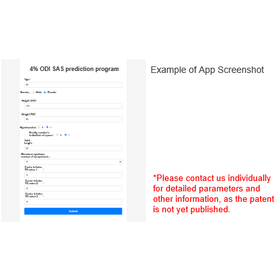
SAS can lead to the development of cardiovascular diseases and other complications, resulting in severe symptoms. However, the symptoms of SAS are challenging to recognize, and it is estimated that 1 in 20 people in Japan are potential sufferers. Patients with glaucoma are known to have a higher probability of concurrent SAS, making it beneficial to recommend SAS testing for these individuals to identify undetected cases. However, conducting tests on all glaucoma patients is not practical. This invention introduces a machine learning model and an app that incorporates this model, designed for ophthalmologists to easily assess the likelihood of glaucoma patients having SAS. More than 500 glaucoma patients were recruited and underwent basic ophthalmic examinations, along with the collection of age, gender, BMI information, and home sleep SAS testing for nocturnal oxygen saturation measurements. Patients whose nocturnal oxygen saturation dips below the baseline exceeded a specified threshold were defined as having SAS. The machine learning approach combines systemic and ophthalmic parameters to predict the occurrence of SAS. The app facilitates the input of systemic parameters, including responses to medical inquiries, and ophthalmic parameters, including visual field test results, thus enabling the calculation of the likelihood of having SAS with high accuracy.
Inquire About This Product
basic information
For details, please contact us or refer to the PDF.
Price range
Delivery Time
Applications/Examples of results
For details, please contact us or refer to the PDF.
catalog(1)
Download All Catalogs
Company information
The revenue generated from technology transfer is reinvested as new research funding for universities and researchers, and is utilized to create further research outcomes. To ensure the smooth operation of this cycle, known as the "Intellectual Creation Cycle," we will vigorously promote technology transfer. The types of seeds we handle include patents, know-how, databases, and programs. We have established a collaborative framework by signing basic technology transfer agreements with the following universities (as of June 1, 2025): Tohoku University, Hirosaki University, Iwate University, Akita University, Fukushima University, Yamagata University, Tohoku Gakuin University, Iwate Medical University, Fukushima Medical University, Aizu University, Miyagi University, Hokkaido University, Muroran Institute of Technology, and Showa Medical University.