Hokkaido Univ.Technology :Embolizing agent and kit for blood vessel Embolization : HK24-005

No dosage restrictions and no catheter adhesion
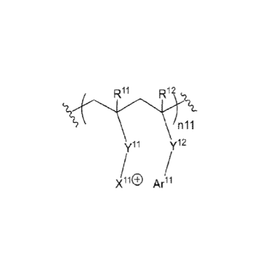
Vascular embolization treatment, a minimally invasive surgery for various blood vessel‐related conditions, has emerged as a crucial method in treating such as hemorrhage, arteriovenous malformation, aneurysms, and hypervascular tumors. Liquid agents present unique advantages, penetrating distal peripheral vasculature inaccessible to solid counterparts while allowing modulation of penetration depth through compositional adjustments. Conventionally used liquid embolic substances include N-butyl cyanoacrylate (NBCA) and ethylene vinyl alcohol copolymer (Onyx ). NBCA embolizes blood vessels by polymerization reaction with blood, and Onyx embolizes blood vessels by precipitation and aggregation in blood. However, in NBCA and Onyx , there is a problem that the embolic substances may stick to the tip of the catheter, injure the inner wall of the blood vessel and the catheter insertion site, and cause bleeding. According to the present invention, it is possible to provide an embolic agent and a kit for blood vessel embolization comprising the embolic agent and the embolic agent having excellent injectability with a syringe and safety and stability in vivo while having blood vessel embolization properties equivalent to those of conventional embolic agents. The present invention comprises as an active ingredient a copolymer of a monomer containing a cationic functional group and a monomer containing an aromatic group, wherein at least a part of the copolymer has a structure represented by general formula.
Inquire About This Product
basic information
For details, please contact us or refer to the PDF.
Price range
Delivery Time
Applications/Examples of results
For details, please contact us or refer to the PDF.
catalog(1)
Download All Catalogs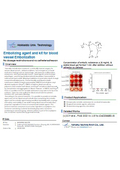
Company information
The revenue generated from technology transfer is reinvested as new research funding for universities and researchers, and is utilized to create further research outcomes. To ensure the smooth operation of this cycle, known as the "Intellectual Creation Cycle," we will vigorously promote technology transfer. The types of seeds we handle include patents, know-how, databases, and programs. We have established a collaborative framework by signing basic technology transfer agreements with the following universities (as of June 1, 2025): Tohoku University, Hirosaki University, Iwate University, Akita University, Fukushima University, Yamagata University, Tohoku Gakuin University, Iwate Medical University, Fukushima Medical University, Aizu University, Miyagi University, Hokkaido University, Muroran Institute of Technology, and Showa Medical University.


![Amenities Meter: Creating a Comfortable Working Space with IoT [Work Style Reform]](https://image.mono.ipros.com/public/product/image/6fb/2001027009/IPROS12754886358639934309.png?w=280&h=280)