Combustion IC that enables high-precision monitoring of halogens and sulfur.

An analytical method that achieves high sensitivity and low background even in complex matrices.
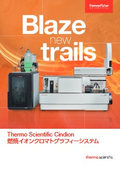
This document provides a detailed explanation of the usefulness of combustion ion chromatography (C-IC), the latest analytical method, for the high-precision monitoring of halogen and sulfur elements, which are becoming increasingly important in the chemical industry. As halogen regulations tighten, the comprehensive management of fluorine, chlorine, bromine, and even PFAS (perpetual chemicals) that pose environmental persistence issues is an unavoidable challenge from the perspectives of product quality, equipment maintenance, and regulatory compliance. For chemical manufacturers dealing with particularly complex solid and liquid matrices, traditional sample preparation and analysis processes have been labor-intensive and have faced challenges in ensuring reproducibility and sensitivity. C-IC achieves automation and high reproducibility in analysis by integrating matrix removal through combustion with IC analysis. This document details the processes of sample introduction, combustion control, absorption, and IC detection, emphasizing the importance of low background and high sensitivity detection enabled by PFAS-free structures. It also introduces the compact design of the Cindion C-IC system, the reduction of PFAS contamination, and stable operability provided by the eluent generator. *The main text is in English.*

Inquire About This Product
basic information
Please take a look at the PDF.
Price range
Delivery Time
Applications/Examples of results
Please see the PDF.
catalog(3)
Download All Catalogs

Company information

Thermo Fisher Scientific K.K., the Japanese subsidiary of Thermo Fisher Scientific Incorporated, is a sales company for comprehensive system analysis instruments, bio-related equipment, and research reagents. In Japan, it has bases in Yokohama, Tokyo, Osaka, Fukuoka, and Nagoya, handling various analytical instruments including mass spectrometers, various bio-related equipment, measuring instruments, medical devices, lab software, and research reagents.