Micro-pulverization of food drying materials and health food ingredients!
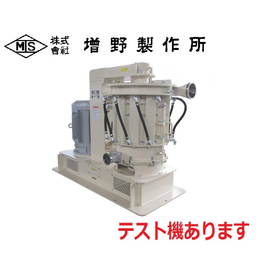
In the food industry, the fine grinding of raw materials is required to improve product quality and texture. This is particularly important in the production of rice flour and powdered tea, where uniform particle size and smooth texture are crucial. Improper grinding can compromise the flavor of the product and worsen its texture. The New Micro Cyclomatt is a grinder that causes the raw materials to self-destruct through pressure fluctuations caused by high-speed airflow. By adjusting the rotation speed and the amount of suction air, the desired particle size can be achieved, contributing to the improvement of food quality. 【Application Scenarios】 - Production of rice flour, powdered tea, and health food ingredients - Grinding of various food drying materials 【Effects of Introduction】 - Achieves uniform particle size, enhancing product quality - Prevents contamination with metal powders, ensuring safety - Easy particle size adjustment, accommodating diverse needs
Inquire About This Product
Related Videos
basic information
**Features** - Minimal temperature rise due to airflow grinding - No metal-to-metal collisions or sliding parts, preventing metal powder contamination - Easy particle size adjustment through control of rotation speed and air suction volume - Product particle size can be adjusted using a recycling circuit - Casing can be easily opened and closed for complete cleaning **Our Strengths** Since our founding in 1913, we have contributed to solving customer challenges with our core crushing and grinding technology. We focus on selling fine grinding systems in the food sector and provide products tailored to our customers' needs.
Price information
-
Delivery Time
Applications/Examples of results
<Crushing of Plants and Food Products> Rice, rice bran, wheat, grains (seeds and husks), soybeans and soybean meal, tea leaves, dried fish, bones, seaweeds, dried vegetables and fruits, various processed foods, health foods, fragrances, spices, nuts, pollen, leaves, roots, bamboo grass, etc. <Crushing of Mineral Products> Clay, kaolin, barite, bauxite, manganese dioxide, limestone, tantalite, mica, graphite, white clay, talc, etc. <Crushing of Plastics> - Thermoplastic resins… Polyvinyl chloride, polyethylene, polypropylene, polycarbonate, etc. - Thermosetting resins… Phenolic resin, urea resin, etc. <Crushing of Chemical Products> Carbon, rubber accelerators, animal glue, gelatin, stearic acid, ferrite, red lead, pigments, cosmetic powders, etc.
Line up(5)
| Model number | overview |
|---|---|
| MCM-3 | Outer diameter: 280 mm, inlet dimensions: 20 mm × 70 mm, motor: 5.5 kW, air flow rate: up to 3 m³/min, capacity: 3 to 100 kg/h, approximate machine weight: 250 kg. |
| MCM-5 | Outer diameter: 390 mm, inlet dimensions: 30 mm × 80 mm, motor: 11–15 kW, generated air volume: up to 5 m³/min, capacity: 7–250 kg/h, approximate machine weight: 1,100 kg. |
| MCM-15 | Outer diameter: 680 mm, inlet dimensions: 50 mm × 100 mm, motor: 30–37 kW, generated air volume: up to 15 m³/min, capacity: 15–600 kg/h, approximate machine weight: 1,500 kg. |
| MCM-30 | Outer diameter: 850 mm, inlet dimensions: 60 mm × 160 mm, motor: 55 kW, generated air volume: ~30 m³/min, capacity: 20–900 kg/h, approximate machine weight: 3,800 kg. |
| MCM-50 | Outer diameter: 1,000 mm, inlet dimensions: 70 mm × 230 mm, motor: 90–110 kW, generated air volume: up to 50 m³/min, capacity: 40–1,500 kg/h, approximate machine weight: 4,500 kg. |
catalog(2)
Download All Catalogs

Company information

Since our founding in 1913, our company has focused on developing and manufacturing machinery for the powder industry, centered around crushing, grinding, classification, drying, and calcination, as well as general industrial machinery for sectors such as chemicals, glass, cement, steel, and mining, along with machinery related to environmental protection and recycling. The applications and demand for our products span a wide range of industries, contributing to the development of various sectors including chemicals, glass, carbon, cement, silica sand, steel, lime, building materials, new materials, and food (such as tea leaves, rice, kelp, young barley leaves, buckwheat, soybeans, corn, and bonito flakes).